|
 |
Fighting for journalism and profitable news media
Meta signs AI licensing deals | NYT and Chicago Tribune sue Perplexity
And a US judge has ruled that OpenAI must share 20 million output logs to help assess the extent to which it steals publisher content.
|

| |||||||||||||||


Hello from the team at Press Gazette on Monday, 8 December. Here’s our daily round-up of media news.
🤖Meta has become the latest tech giant to announce AI licensing deals with publishers.
Some of the biggest publishers in the US are involved – including People Inc and CNN.
The deals will allow Meta to crawl publisher websites to inform Meta-AI news-related answers. In return publishers will get links, citations and likely some cash (the exact terms of the deals are, as ever, secret).
The move follows Microsoft launching its Publish Content Marketplace in September with launch partners including the FT, Reuters, People Inc and Axel Springer. That licensing deal seeks to figure out a way to pay publishers on commission when their content is used to deliver AI answers.
Both these deals follow one of the world’s largest internet hosting platforms Cloudflare announcing that it was blocking AI scrapers by default in July this year.
That move has forced tech companies to the negotiating table.
Google is the one AI giant yet to announce publisher content licensing deals and (not coincidentally) it is the only bot not blocked on Cloudflare by default.
The search giant continues to scrape pretty much the entire internet because access for its AI tools can’t be separated from visibility on search.
Speaking to Wired, Cloudflare founder Matthew Prince said on Friday: “It shouldn’t be that you can use your monopoly position of yesterday in order to leverage and have a monopoly position in the market of tomorrow.”
⚖️Meanwhile, litigation continues apace as publishers fight against the wholesale theft of their content by AI companies.
The Chicago Tribune alleged on Friday that AI platform Perplexity has copied millions of stories, videos, images and other content to feed its answer engine, enterprise chatbot and Comet web browser.
The New York Times is similarly suing Perplexity for copying its journalism without permission or compensation.
See our full round-up of publisher AI deals and litigation here (it’s a long list!).
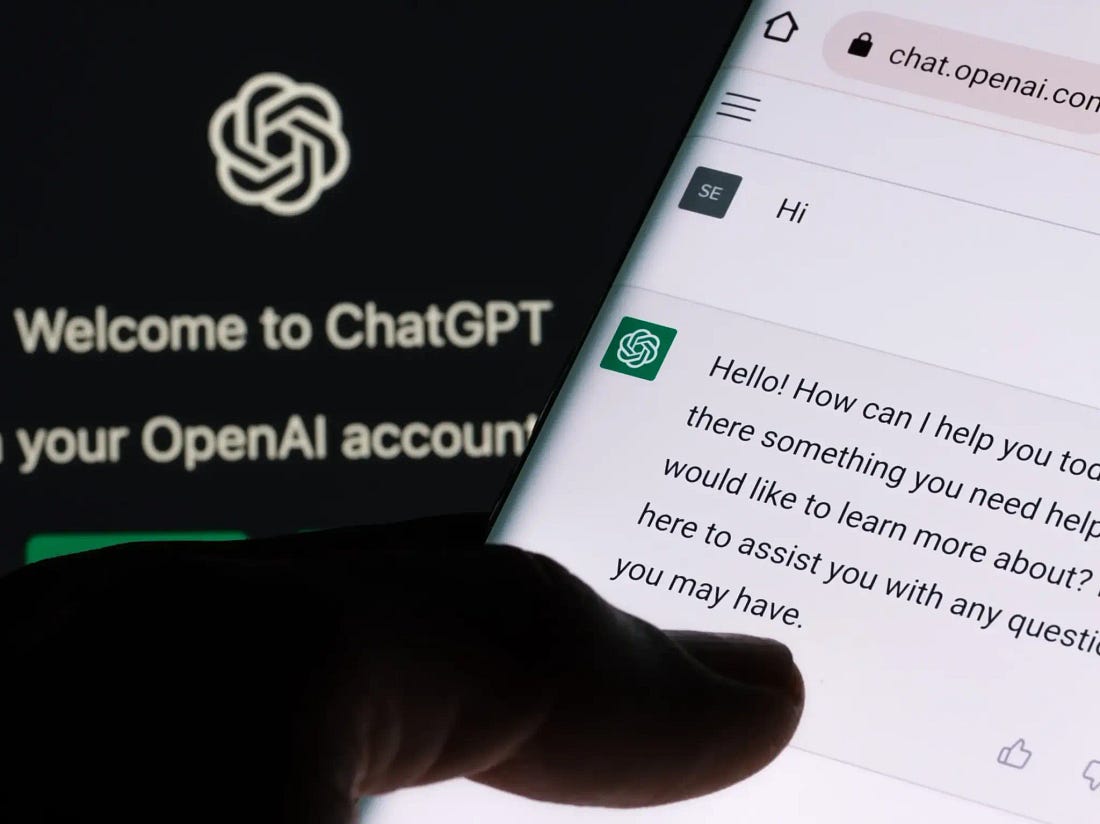
🖥️Still looking at the world of AI, The New York Times has won a preliminary ruling in its fight with OpenAI. A US judge has ruled that the ChatGPT founder must share a sample of 20 million output logs to help assess the extent to which it steals publisher content.
Some 17 other US publications have joined the same case against OpenAI.
OpenAI appears to believe it should be allowed to copy and repurpose the entire free internet regardless of copyright. And it also helps itself to paywalled content too, as Press Gazette has found.
Unlike Google search, which only used to share headlines and intros, the value exchange is far harder to discern when it comes to publishers appearing in ChatGPT.
At Press Gazette, ChatGPT accounts for one-sixtieth of the referral traffic we get from Google. But balancing that, I’ve heard publishers say that readers who come via ChatGPT are far more likely to turn into subscribers.
 |
🧳Travel trade title TTG Media’s move to a digital-only operation is being powered by a new tech stack that will help it develop a deeper understanding of its readers and achieve its goal of 90% market capture within its industry vertical (SPONSORED).
 |