You Can’t Make “Everything” the Strategy. Your strategy can’t tackle everything at once. To create lasting value, Octopus Organizations make tough trade-offs, focus on a select few customer needs, and carefully choose where to play—and crucially, where not to. Here’s how. Anchor on durable problems. Get together with your leadership team and write down what you collectively believe the lasting needs of your customers will be over the next 10 years. Then prioritize which of these needs you’ll aim to serve.

Read online 

Manage email preferences

Harvard Business Review | The Management Tip of the Day
 

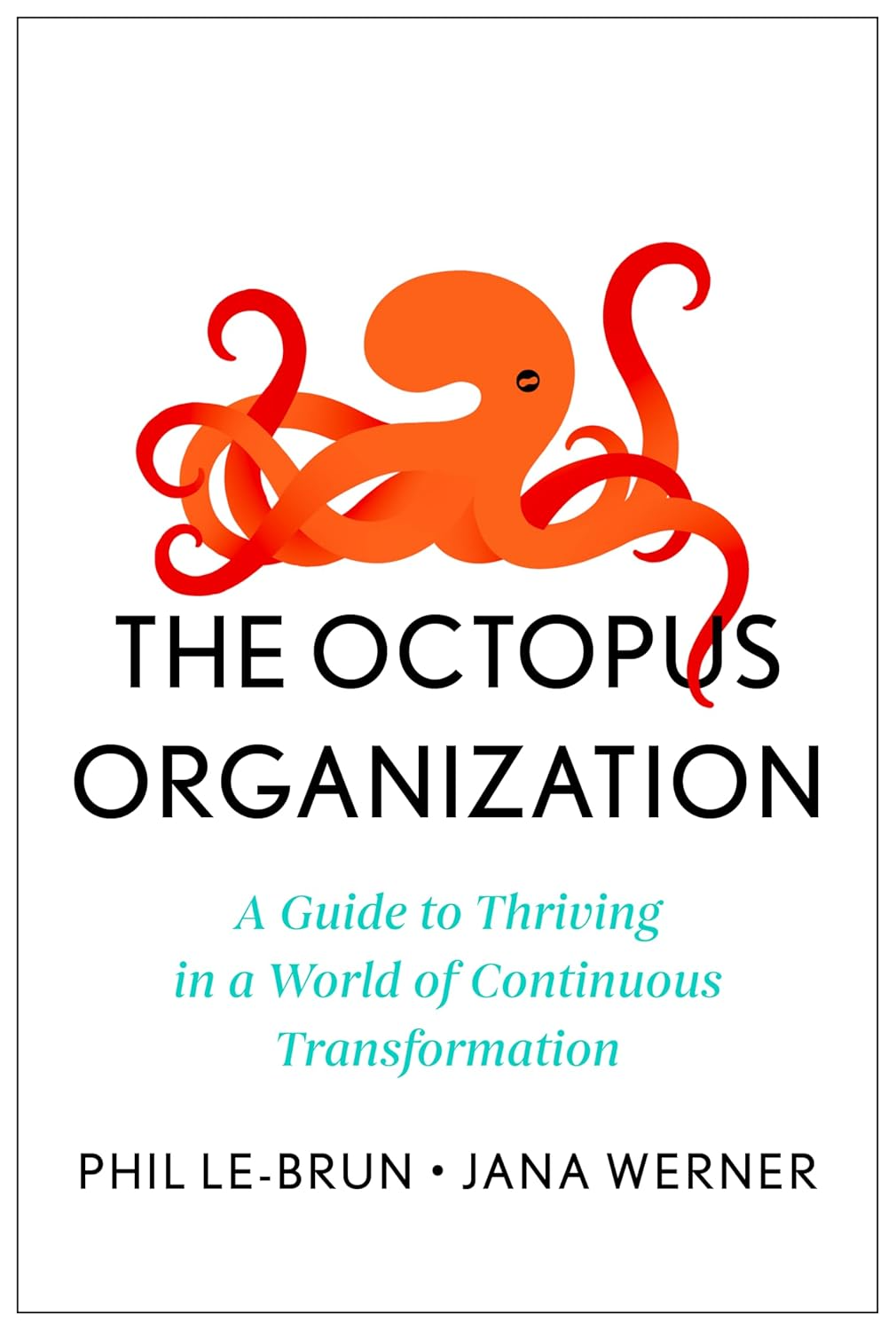
This week’s tips are adapted from Phil Le-Brun and Jana Werner’s new book, The Octopus Organization: A Guide to Thriving in a World of Continuous Transformation (HBR Press). An “Octopus Organization” is flexible, decentralized, and built for change. The journey to becoming one begins with identifying “antipatterns”: formulaic responses to complex challenges that can set organizations back. This week, we’re outlining five of these antipatterns—and how to overcome them.  

Today’s Tip

You Can’t Make “Everything” the Strategy 

Your strategy can’t tackle everything at once. To create lasting value, Octopus Organizations make tough trade-offs, focus on a select few customer needs, and carefully choose where to play—and crucially, where not to. Here’s how. 
 
Anchor on durable problems. Get together with your leadership team and write down what you collectively believe the lasting needs of your customers will be over the next 10 years. Then prioritize which of these needs you’ll aim to serve. 

Make strategy accessible. Write a two-page narrative that describes your strategy in simple language. Test it with employees, then implement their feedback. 

Communicate continuously. Every employee should know your top three strategic priorities. Hold monthly sessions where teams share their interpretation of the strategy and how it’s playing out. Ask employees to draw a line from their daily work to the company’s strategic priorities. Notice where they struggle, and focus on improving strategy and communication there. 

Write “this over that” statements. Each statement should explain how your strategy values one thing over another. If these trade-offs don’t cause strong debates and create defensible opposites, you don’t have a strategy. 

Test strategy specifically with a “competitor swap” exercise. Remove your company’s logo from your strategy document and replace it with a competitor’s. Test with your leadership team to see whether the strategy still makes sense. If it does, it’s not differentiated. Iterate until your strategy is wholly yours and couldn’t possibly be another company’s. 

 
Book cover for The Octopus Organization: A Guide to Thriving in a World of Continuous Transformation.

Adapted from

The Octopus Organization: A Guide to Thriving in a World of Continuous Transformation

by Phil Le-Brun and Jana Werner

Book cover for The Octopus Organization: A Guide to Thriving in a World of Continuous Transformation.

Adapted from

The Octopus Organization: A Guide to Thriving in a World of Continuous Transformation

by Phil Le-Brun and Jana Werner


ADVERTISEMENT


A person holding a tablet displaying the HBR subscriptions webpage.

Stay ahead of the issues shaping modern leadership

An HBR subscription gives leaders steady insight when priorities shift fast.

Choose your plan

 
Coaching Real Leaders with Muriel Wilkins

Podcast

Do I Really Want to Be CEO?

A leader struggles with defining what she can do, versus what she wants to do.

Listen now
 

The HBR App:
Get the best in leadership thinking on-the-go.

Download on the App Store.
Get it on Google Play
 
X Icon Facebook IconInstagram Icon

You are receiving this because you registered at hbr.org to receive The Management Tip of the Day emails, or you provided us with your email address.

If you prefer not to receive The Management Tip of the Day emails, please unsubscribe.

You may also Manage Email Preferences, view our Privacy Policy, or Contact Us.

To ensure email delivery, add emailteam@emails.hbr.org to your address book, contacts, or safe sender list.


Harvard Business Publishing, 20 Guest St, Suite 400, Brighton, MA 02135  

Copyright © 2025 Harvard Business School Publishing. All rights reserved.