|
|
|
|
|
|
|
|
|
The Home of the Week is a lakefront cottage in Toronto. Alexander Rothe
|
|
|
|
|
This week: A closer look at how Toronto’s condo market could recover, and a new way Millennials are becoming home-owners. Plus, the best and worst renovations to maximize your home value and one property worth a look. |
|
|
|
|
|
|
|
|
|
|
What might a Toronto condo market recovery look like? |
|
|
|
|
|
|
|
|
|
|
|
|
|
The Florian 2 luxury condo project in Toronto’s Yorkville neighbourhood will likely begin to be marketed this year, a rarity in the slumping condo industry. Sammy Kogan/The Globe and Mail
|
|
|
|
|
Looking at the condo market in the Greater Toronto and Hamilton Area, there isn’t much to inspire confidence. A glut of newly-completed but unsold condos – whose prices are still in freefall – sit empty, and developers are cancelling, pausing or converting approved projects. The pre-construction buyers that fuelled the boom have dried up, and mom-and-pop investors have gone to ground. |
|
|
|
|
|
|
|
|
|
|
|
|
|
|
|
|
Millennials are turning to prefabricated housing to become home-owners |
|
|
|
|
|
|
|
|
|
Maggie Chao and William Bowden opted for a pre-fabricated home to be able to afford a larger space in Vancouver. Tyler McLeod/Tyler McLeod
|
|
|
|
|
Younger home-buyers priced out of all but the smallest condos (which they seemingly don’t want) are taking a new path to home ownership: prefabricated housing.
In Vancouver, Maggie Chao and William Bowden pivoted from the pricey condo market to building a laneway home when they saw how much more bang they could get for their buck. As Kerry Gold reports, the unconventional solution was possible because they had a location already – the backyard of Bowden’s parents’ home – and a trailblazing prefab builder, Smallworks, that helped them get a grant from the Canadian Mortgage and Housing Corporation. |
|
|
|
|
The timeline from breaking ground to moving into the 911-square-foot home was eight months, and cost about one-third the $2-million most first-time buyers in the city are paying for ground-oriented housing. Though not everyone has parents who can provide a place to build, Bowden says he’s grateful he and Chao received family help. “We’re very fortunate there,” he said. |
|
|
|
|
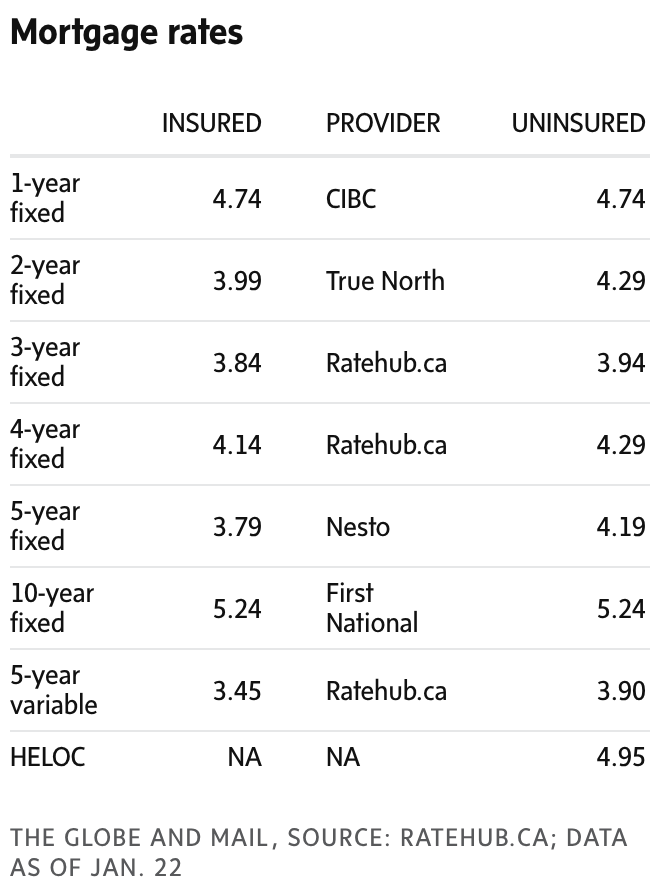
This week’s lowest fixed and variable mortgage rates in Canada |
|
|
|
|
|
|
Rates shown are the lowest available for each term/type and category (insured vs. uninsured) as of market close on Thursday, Jan. 22. |
|
|
|
|
|
|
|
|
|
|
The best (and worst) renovations to maximize your home value |
|
|
|
|
In a lagging housing market, curb appeal is becoming more important than ever. Sellers are turning to home renovations to distinguish their homes and get a good price as home values and sales drop, while buyers are looking for updated and move-in ready listings to feel like they’re getting the most bang for their buck. |
|
|
|
|
But not all home renovations are created equal – and some could actually be a turnoff for would-be buyers. Sal Farooqui spoke with realtors and contractors about which home renovations will help maximize your home value, and which won’t give you a good return on your investment. From kitchens to bathrooms and DIY jobs, here are the four best and worst changes to make before selling.
|
|
|
|
|
|
|
|
|
|
|
A rental that feels entirely your own |
|
|
|
|
|
|
|
|
|
This Toronto loft proves classic design isn't out of reach for renters. The Globe and Mail
|
|
|
|
|
Interior designer Dimitri Chris’s moody yet bright Toronto loft is proof you don’t have to own your space to make it feel like home. He and his husband focused on low-cost, high impact solutions to make the 1,200-square-foot piece of a former bubblegum factory become more “them.” Take a peek inside their space and how they made it happen. |
|
|
|
|
|
|
|
|
|
|
A work-in-progress on a Lake Ontario beach |
|
|
|
|
|
|
|
|
|
|