| | The ceasefire between Israel and Lebanon appeared to falter, Panama Canal fees soar to record highs,͏ ͏ ͏ ͏ ͏ ͏ |
| |  | Flagship |  |
| |
|
The World Today | 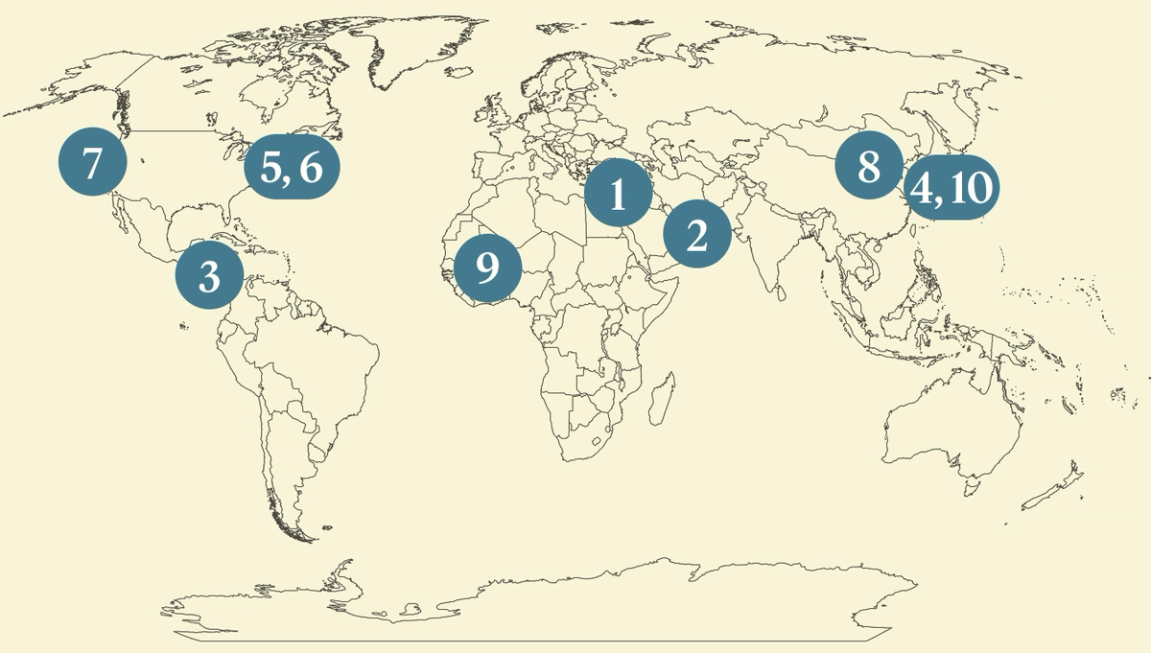 - Israel-Lebanon truce talks
- Strait standoff intensifies
- Panama Canal fees surge
- S. Korea economy boost
- Hegseth fires Navy chief
- US turns to Ukraine drones
- Iran war boosts solar, EVs
- China’s deflation trap
- Russia boosts Africa ties
- Robot wins at table tennis
 A Matisse exhibition featuring the artist’s later works. |
|
Lebanon truce at risk despite talks |
 Zohra Bensemra/Reuters Zohra Bensemra/ReutersMultiple attacks undermined a fledgling ceasefire between Israel and Lebanon ahead of negotiations between the two countries in Washington today. Lebanon said Israeli strikes targeting Hezbollah in the south of the country killed at least four people on Wednesday, with the Iran-backed group saying it had carried out drone attacks in response. The 10-day truce is due to expire on Sunday, though hope remained that US-brokered peace talks today could lead to an extension. Meanwhile Beirut, caught between its adversary Israel and a powerful armed domestic group in Hezbollah, risks being squeezed out, an expert argued. The actions of Israel and Hezbollah “are converging in undermining the Lebanese state,” a deputy director at the Carnegie Endowment’s Middle East Center said. |
|
Hormuz standoff intensifies |
 EU Copernicus via Reuters EU Copernicus via ReutersIran tightened its grip on the Strait of Hormuz, as US peace talks remained distant. Just one ship passed through the waterway Tuesday; on Wednesday, more ships tried, and Iran attacked two and reportedly seized two more. The White House played down the episode, but it demonstrated Tehran’s continuing stranglehold, The New York Times reported. Progress toward reopening the passage remains stalled: Iran’s parliament speaker said the US blockade was “bullying” and a “flagrant breach of the ceasefire,” adding that negotiations would not resume with it in place. US President Donald Trump said the blockade would continue, but he may be on the clock: Presidents can wage war without Congressional approval for 60 days, a deadline which expires May 1. |
|
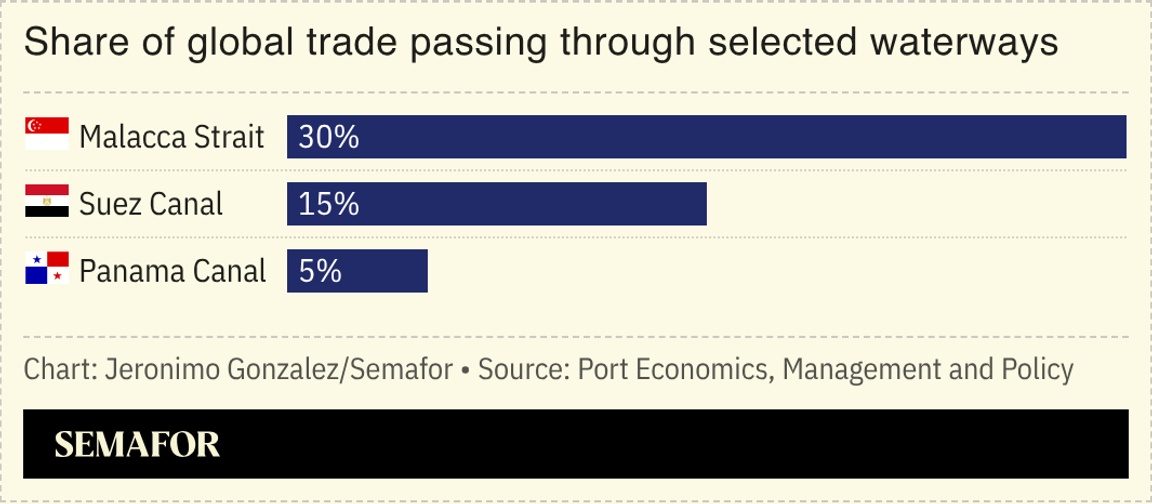 The Iran war has sent prices for crossing the Panama Canal to record highs as Asian oil and gas buyers seek new routes through which to source energy, though analysts cautioned the waterway risks becoming another global chokepoint. Auction prices for some crossings jumped almost tenfold after Iran and the US effectively shut the Strait of Hormuz, through which 80% of Asia’s oil imports passed before the war. The Iran war has underscored how reliant the global economy is on certain passages — virtually all seaborne trade passes through just five waterways — raising fears of their vulnerability: If the Malacca Strait were to close, the Hormuz shutdown would be “just a dry run” by comparison, Singapore’s foreign minister said. |
|
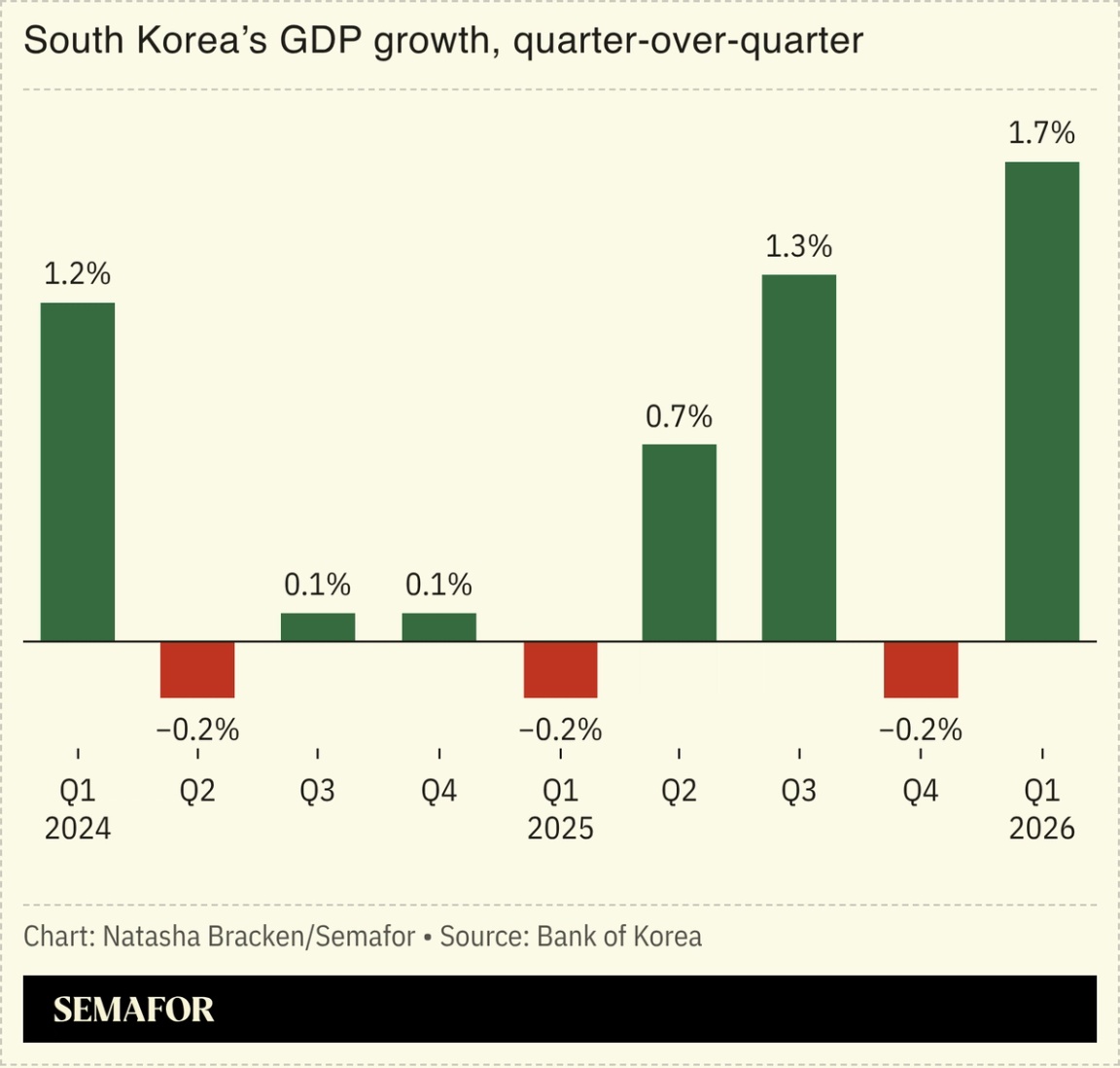 South Korea reported buoyant economic news despite concerns over the country’s vulnerability to the Strait of Hormuz crisis. Overall quarter-on-quarter economic growth in the first three months of 2026 was the strongest since 2020, while chip giant SK Hynix announced record profits, both largely driven by a boom in AI demand boosting orders for the memory chips that South Korean firms dominate. But short- and long-term issues remain for Asia’s fourth-biggest economy. For one, the country is heavily reliant on fossil fuel and helium imports from the Gulf. And the tech surge is feeding worries about labor unrest amid questions over the distribution of bumper profits, while the ensuing K-shaped recovery “poses challenges for the Bank of Korea,” ING warned. |
|
 US Defense Secretary Pete Hegseth and John Phelan. Jessica Koscielniak/File Photo/Reuters US Defense Secretary Pete Hegseth and John Phelan. Jessica Koscielniak/File Photo/ReutersUS Defense Secretary Pete Hegseth fired his Navy secretary, exacerbating turmoil within the Pentagon in the midst of the Iran war. John Phelan clashed with Hegseth and other senior officials over efforts to revive US shipbuilding. It follows the sacking of the Army chief of staff this month, and an increasingly public feud between Hegseth and the Army secretary. Though Phelan’s removal is not likely to have a direct impact on the Iran war or Washington’s blockade of the Strait of Hormuz, one lawmaker called the dismissal “troubling,” saying it “sends the wrong signal to our sailors and Marines, to our allies, and to our adversaries.” |
|
US adopts cheap anti-drone tech |
 Kim Hong-Ji/Reuters Kim Hong-Ji/ReutersThe US military has reportedly started using Ukrainian anti-drone technology to protect an air base in Saudi Arabia, highlighting a broader shift in defense away from expensive solutions to low-cost threats. The “Sky Map” system detects incoming attacks, often cheap Iranian Shahed drones, and responds with its own interceptors, according to Reuters. Ukraine has become a leader in anti-drone countermeasures after four years of facing mass-produced Russian ordnance. The US move follows President Donald Trump last month saying “we don’t need their help in drone defense.” Existing US anti-air systems, though capable, are expensive: A $5 million Patriot missile destroying a $50,000 Shahed is not cost-effective. “We cannot keep throwing Ferraris at frisbees,” a US lawmaker told Congress yesterday. |
|
EVs, solar gain on fuel price hikes |
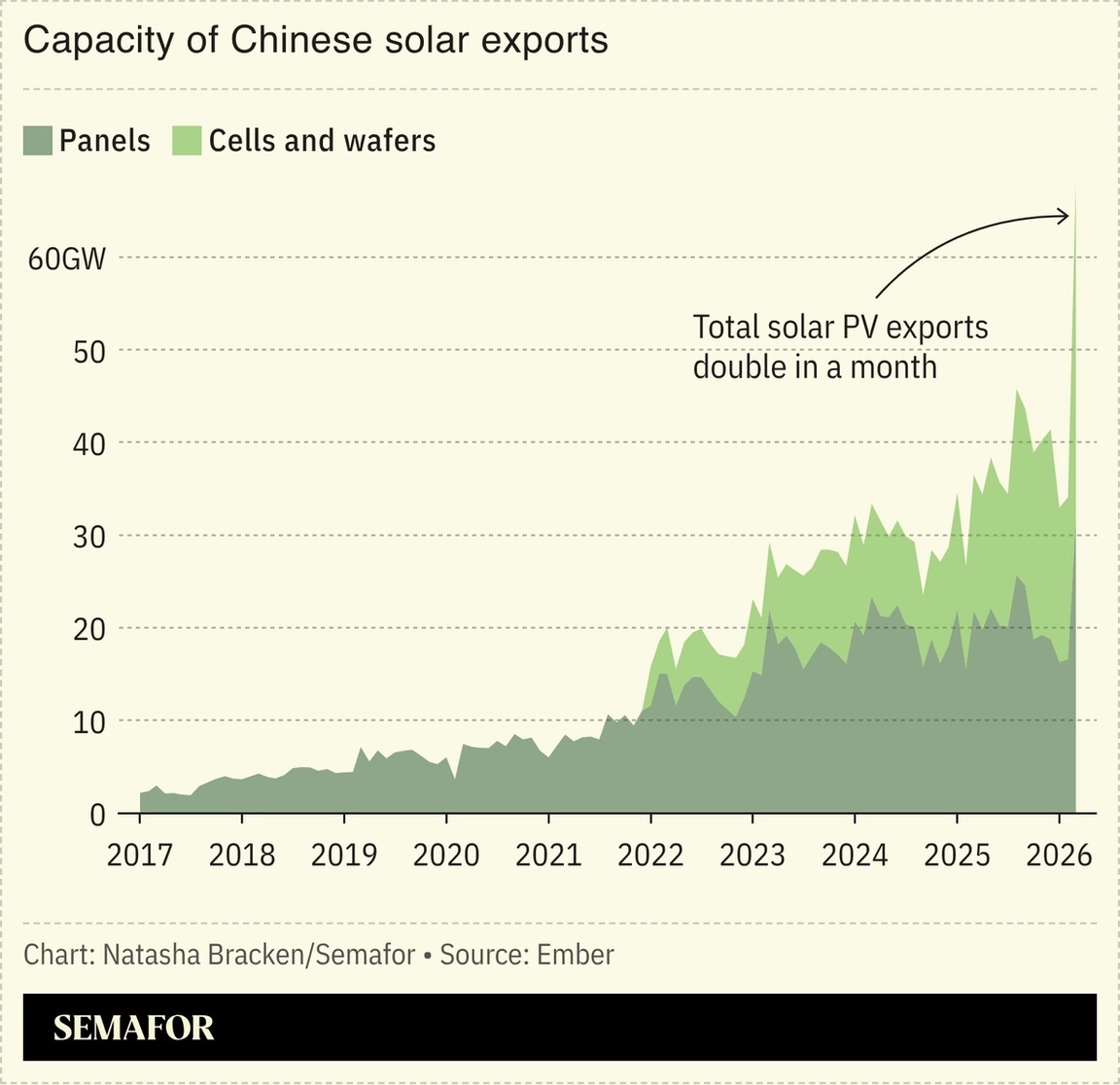 Tesla reported a resurgence in sales and Chinese solar exports doubled in a month, as the global energy crisis showed no signs of easing. Fifty countries saw record Chinese solar imports in March, the think tank Ember reported, especially in Asia and Africa; battery and EV sales were up as well. Soaring gasoline prices in the US have renewed interest in hybrids and EVs there too, and Tesla, which had seen demand slump since the White House removed green subsidies, announced increased profits and revenues. The firm also saw a European revival, with an 84% year-on-year sales increase in March, although Chinese rival BYD reported an even bigger boost, with fuel price rises pushing consumers away from combustion engines. |
|
 Why do more than 1.5 million professionals start their day with The Hustle? Because it’s the only business newsletter that makes you smarter without boring you to death. Get growth stories, biz and tech trends, and insights, all in five engaging minutes. Subscribe today. |
|
China locked in deflation ‘trap’ |
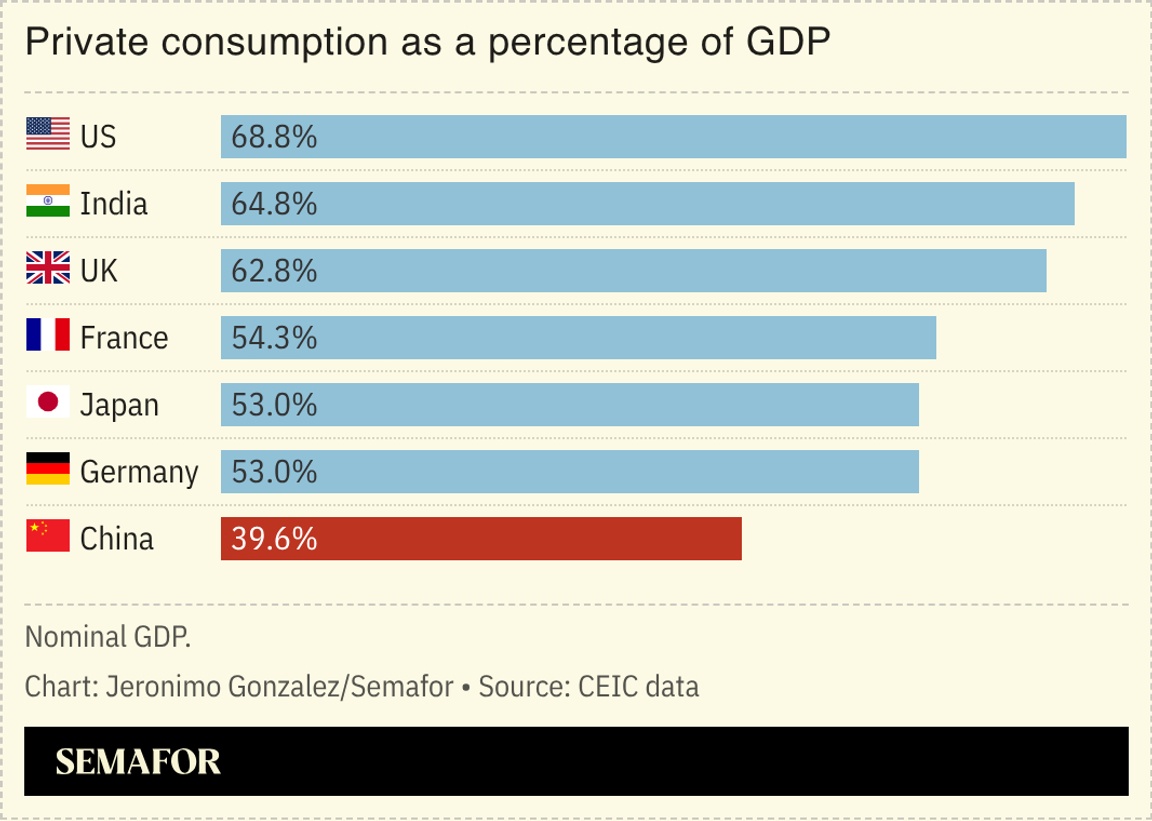 China appears to be stuck in a deflationary trap, with even the pressures sparked by the Iran war failing to boost prices. Beijing has long struggled to drive domestic consumption, while brutal competition in many industries has pushed producers to cut prices, triggering a vicious cycle in which people hold off on purchases in anticipation of coming discounts. And while the conflict in the Middle East temporarily warded off deflation, the gains have since subsided as Chinese industry continues to run below capacity, the chief economist for Asia Pacific at French bank Natixis argued. Few expect the downward pressure to let up soon. “The world’s second-largest economy will remain stuck in a trap of its own making,” Eurasia Group predicted. |
|
Russia boosts W. Africa ties |
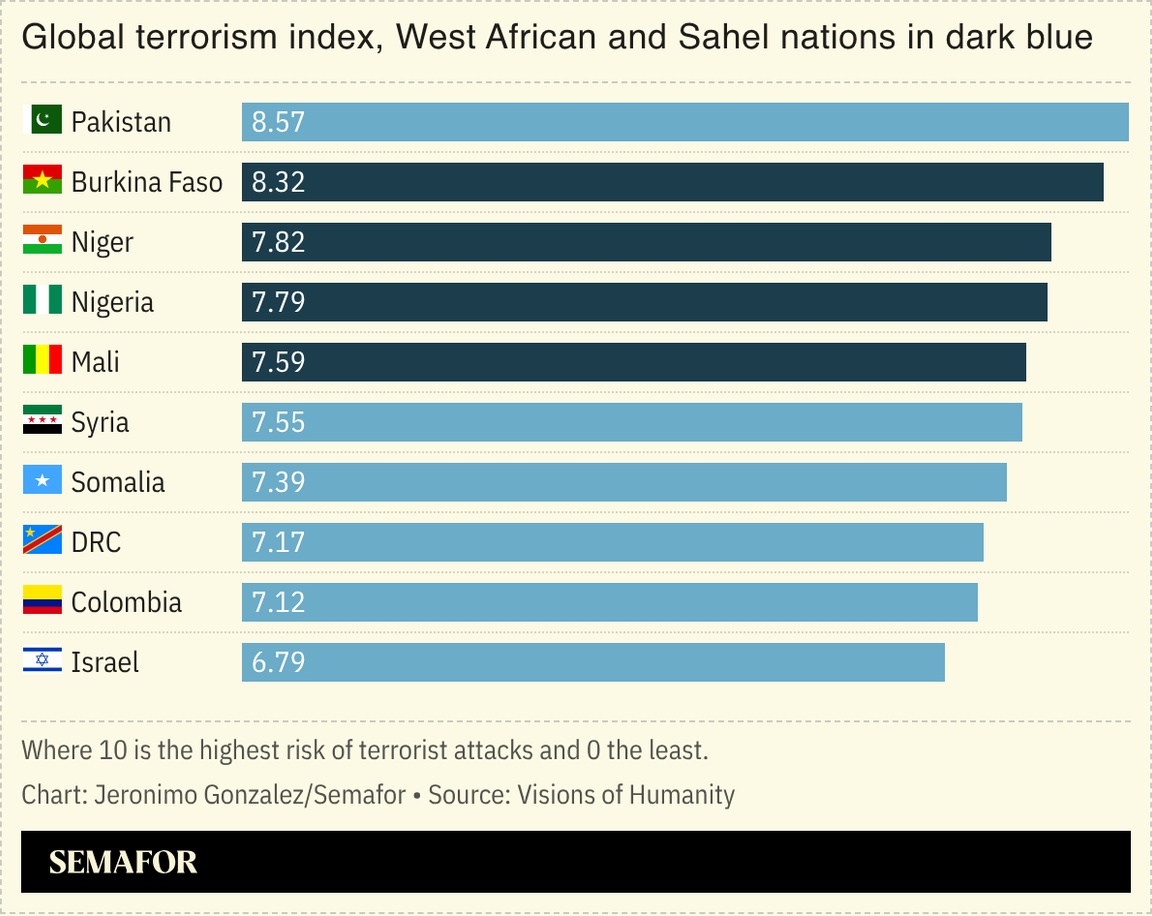 Russia is expanding its military presence across West Africa, aiming to fill a vacuum left by the breaking of ties between the region and the US and Europe. An investigation by The Sentry showed that Moscow was using its shadow fleet to transport heavy equipment to its African allies, bypassing Western sanctions. Experts have warned regional countries against cozying up to the Kremlin, which often extracts major economic concessions in exchange for assistance. Meanwhile, the security situation in the region has deteriorated further: The Islamist militia Boko Haram killed dozens in Nigeria on Wednesday, adding to the hundreds of people murdered there so far this year. And Niger said it may introduce military conscription as it looks to combat armed groups. |
|
|


