It was a big day yesterday for CEO changes. First,
Best Buy announced the departure of CEO Corie Barry, who took over the electronics retailer seven years ago.
My colleague Phil Wahba has
a smart analysis of the arc of Barry’s tenure. Best Buy benefitted from the pandemic boom in home electronics; then came the bust. When she started as CEO in 2019, she announced a goal of reaching $50 billion in revenue by 2025. Best Buy actually hit that milestone early, during the pandemic—but its sales sit around $42 billion today. The retailer was one of the hardest hit by Trump’s tariff regime, thanks to the extremely complex global supply chain for consumer electronics.
While Barry’s comeback strategy didn’t last, and Best Buy is under pressure to rethink its approach, Barry’s impact is felt beyond the business she ran. Last year, she sat at
No. 30 on the Fortune Most Powerful Women list; Best Buy is
No. 108 on the Fortune 500. She
was one of the first CEOs
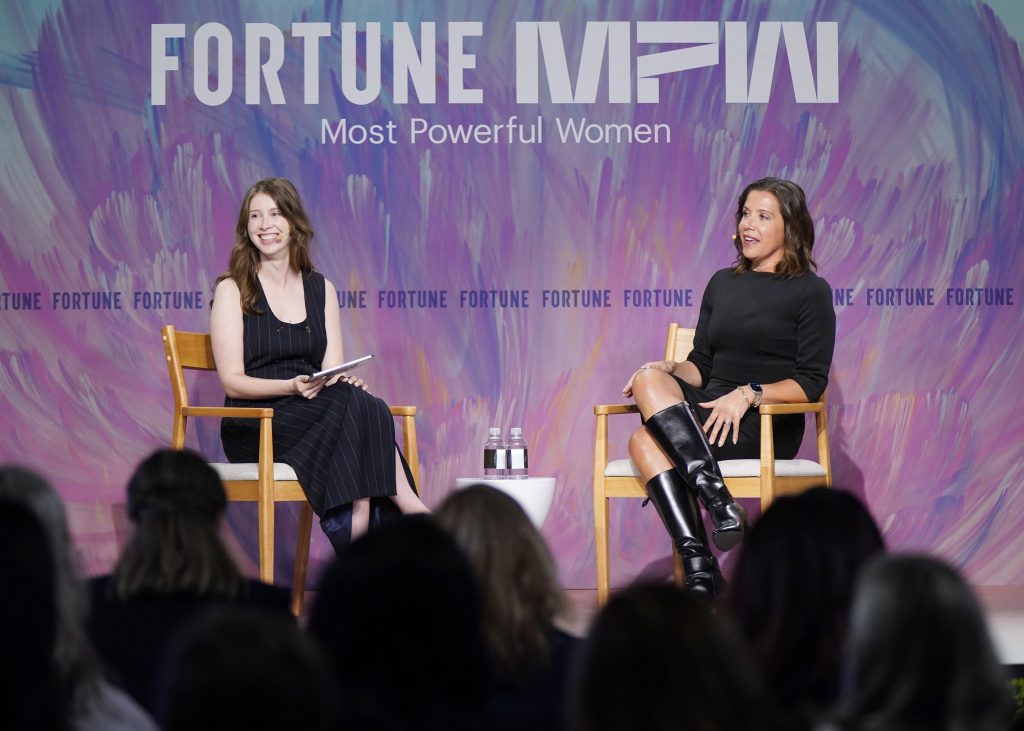
to speak in-depth on an earnings call about the impact of tariffs on her business, and helped people understand the rapidly changing economic impact during peak volatility. I’ve interviewed Barry onstage twice at the Fortune Most Powerful Women Summit, and both times she’s left us with a deeper understanding of the macroeconomic climate—from
coining the term “funflation” to describe the post-pandemic economy in 2023 (people weren’t shopping at Best Buy because they were buying Eras Tour tickets, essentially) to sharing in 2025 that a growing divide between the spending of high earners and the low-income
was keeping her up at night as she thought about the health of the economy.
Meanwhile, another piece of news yesterday shows us what can come next for an exec after a high-profile departure. Heidi O’Neill, who was Nike’s president of consumer and marketplace as part of a 25-year career at the sports apparel giant,
is becoming the CEO of Lululemon. Her exit from Nike was closely watched because it was part of Nike’s strategic reset as new CEO Elliott Hill
implemented a turnaround strategy. When she left, her job was essentially split into three, between consumer and sport, marketing, and product creation.
O’Neill is taking over another complex job. Lululemon, like Nike, needs a turnaround. The brand’s vocal founder Chip Wilson and activists have both pushed for change. O’Neill will need to make a mark with her own strategy while deftly managing these stakeholders, who aren’t afraid to criticize current management in public.
It won’t be easy. But whether it’s managing through tariffs or turning around a brand that’s lost its way, women execs are often up for the challenge.
Emma Hinchliffeemma.hinchliffe@fortune.comThe Most Powerful Women Daily newsletter is Fortune’
s daily briefing for and about the women leading the business world. Subscribe here.