Dear Educator, The situation in the Middle East continues to evolve. To help your students think critically about the news they see, whether on TV, TikTok, or elsewhere, they need a basic understanding of foreign policy concepts and U.S.-Iran Relations. |
In this newsletter, you will find a range of content from the experts at the Council on Foreign Relations that breaks down what has occurred over the past week, the history of U.S.-Iran relations, and what the future of this conflict could hold. Thank you for doing this important work, Caroline Netchvolodoff
Vice President, Education
Council on Foreign Relations |
|
|
Ground Your Students in History and Foundational Foreign Policy Concepts |
This week, CFR Education published a blog post to help you ground your students in history and foundational concepts, enabling them to evaluate the developing conflict and form their own opinions about the evolving situation. |
|
|
What Has Happened Over the Past Week? |
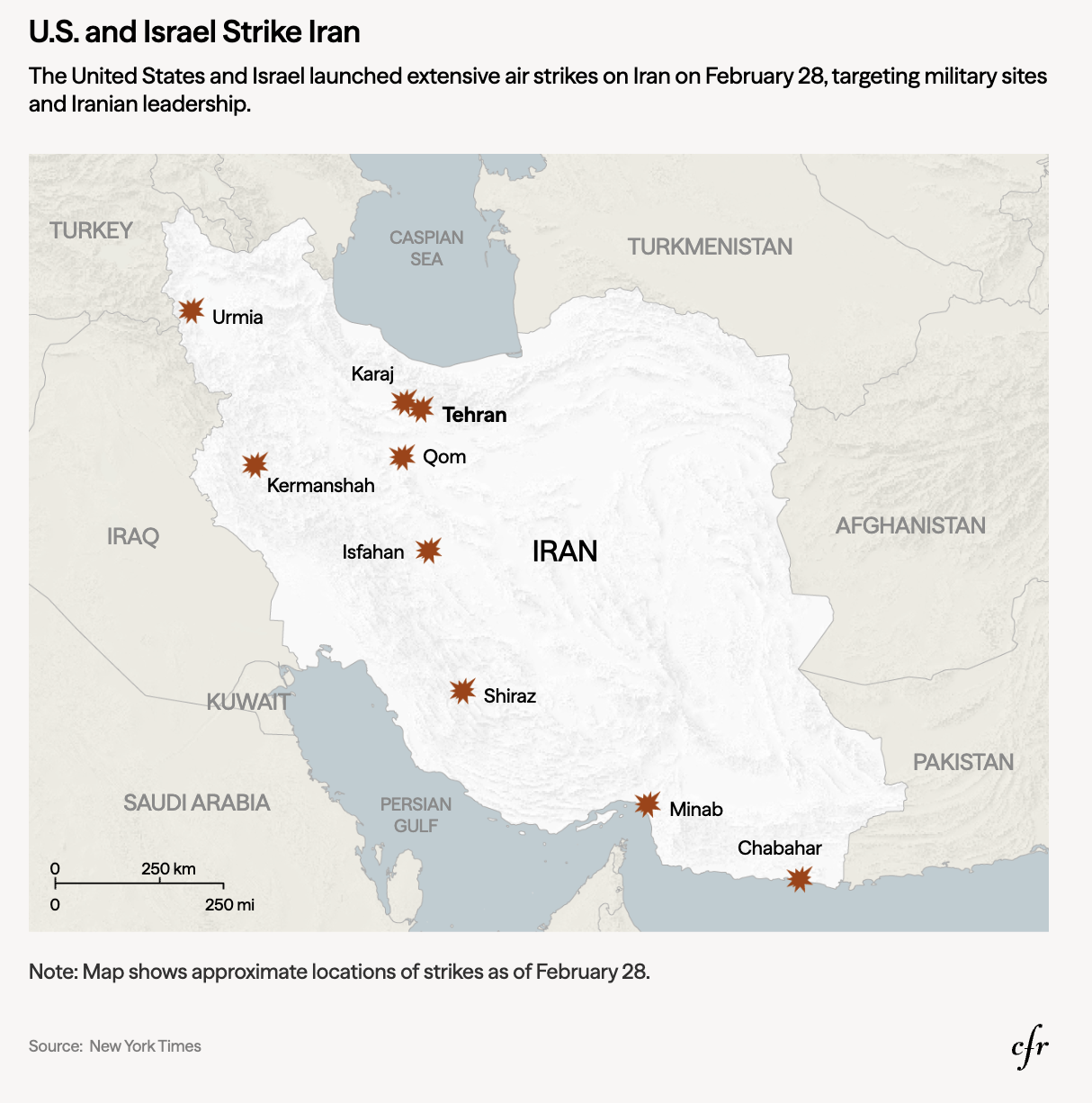
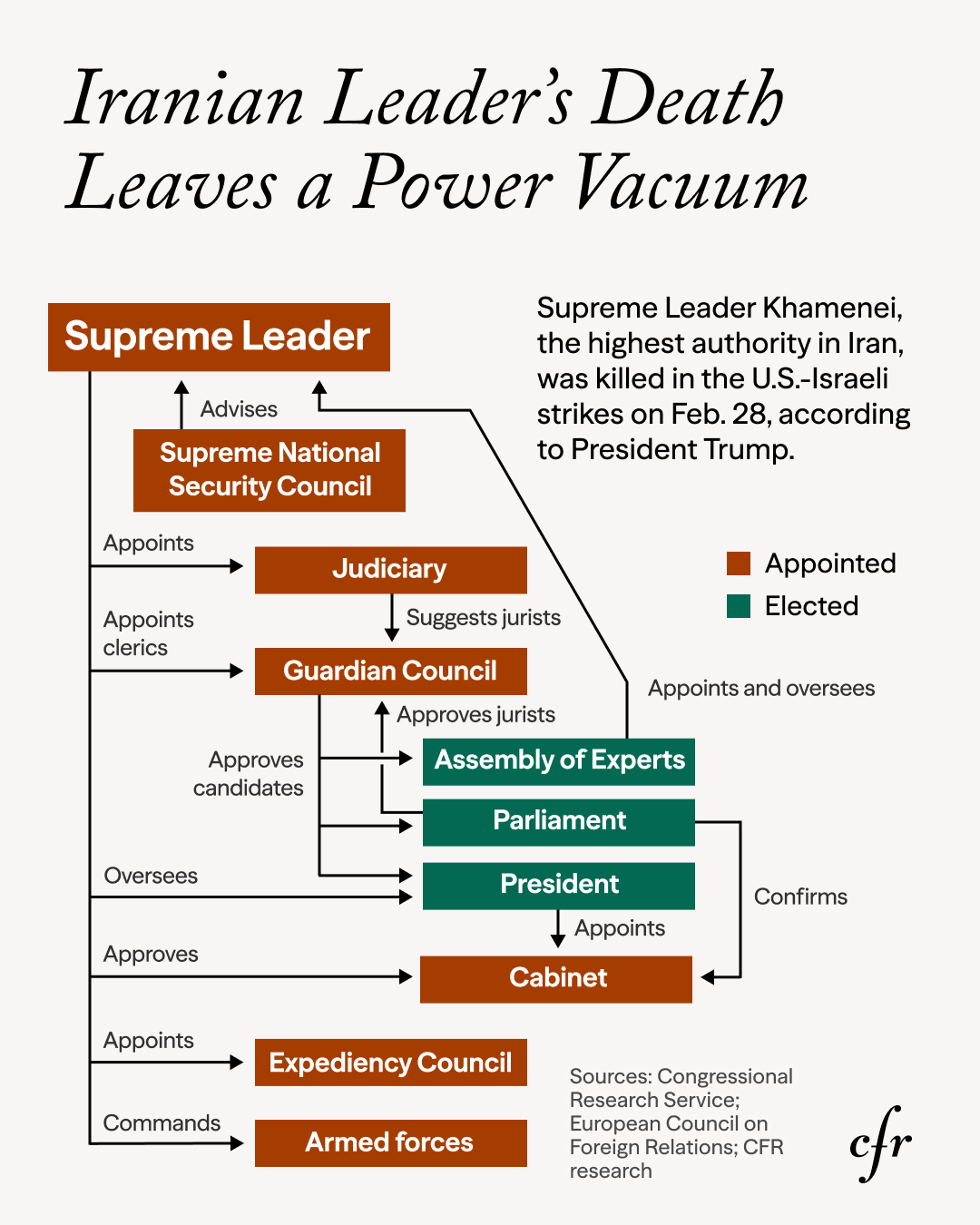
On February 28, the United States and Israel launched coordinated strikes on Iran, targeting nuclear facilities and military installations. The strikes killed Supreme Leader Ali Khamenei and much of the regime’s senior leadership.
In response, Iran launched retaliatory attacks throughout the region, striking military, civilian, and infrastructure targets in eleven countries so far.
The following resources from the Council on Foreign Relations can provide you with analyses of the strikes and the immediate aftermath: |
|
|
What Should I Know About Iran and Its Relationship with the U.S.? |
In 1979, the Iranian people revolted against the country’s Western-backed government, replacing it with an anti-Western Islamic Theocracy. Since then, the United States has viewed the country as an adversary, levying heavy economic sanctions over the decades. While several administrations have pursued diplomatic and economic approaches to Iran, U.S. policymakers have also entertained the idea of military action to force a change of regime. Go further in depth with these resources: |
|
|
While the future of Iran and the effects this war will have on the region more broadly are unknown, experts at CFR are already examining the possibilities: |
| |
Partner Spotlight: PBS News Hour Classroom |
|
|
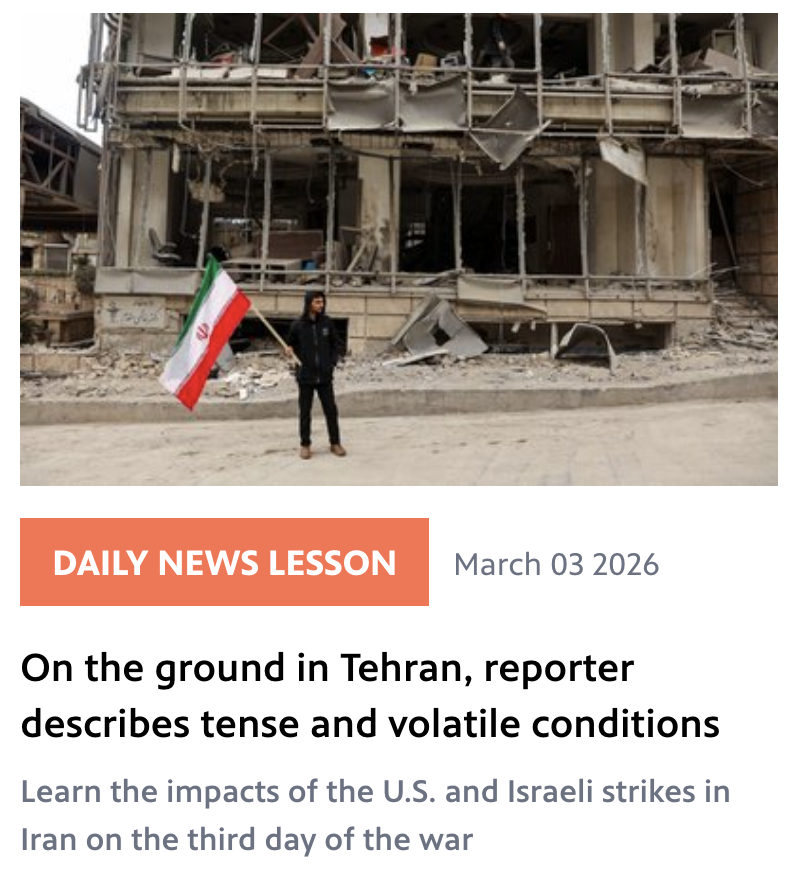
PBS News Hour Classroom delivers current events lessons for middle and high schoolers based on its newsroom's nonpartisan, trusted reporting.
Their signature Daily News Lessons feature a video, a summary, warm up questions, essential questions, and a “What Students Can Do” section that provides students with ideas to become civically involved.
Explore their lessons on the war with Iran here. |
| |
|
Council on Foreign Relations. All rights reserved. |
58 East 68th Street – New York, NY 10065 1777 F Street, NW – Washington, DC 20006 |
|
|
|