| | Oil prices hit their highest level since 2022, the new ayatollah same as the old ayatollah, and a ro͏ ͏ ͏ ͏ ͏ ͏ |
| |  | Flagship |  |
| |
|
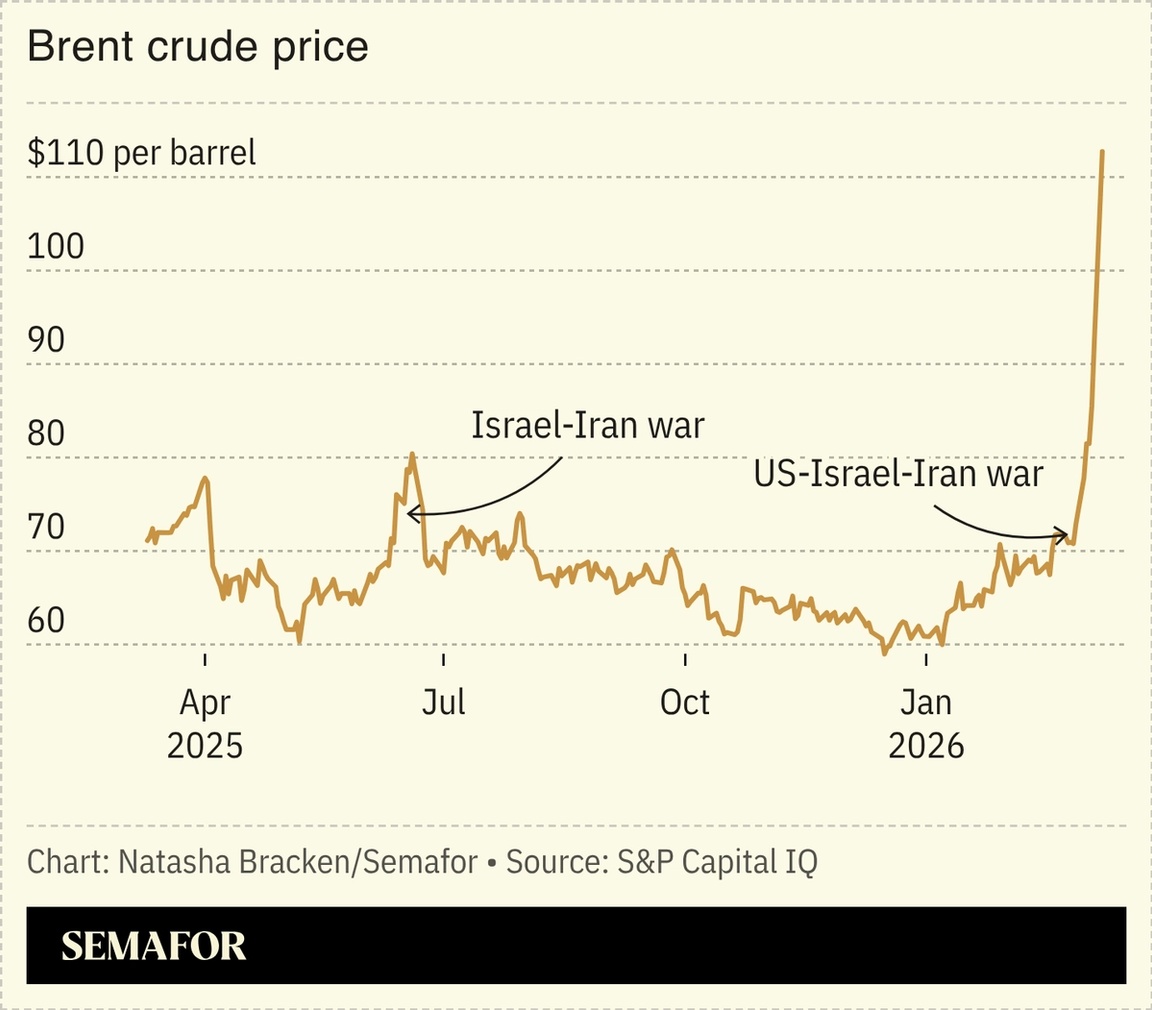
The World Today | 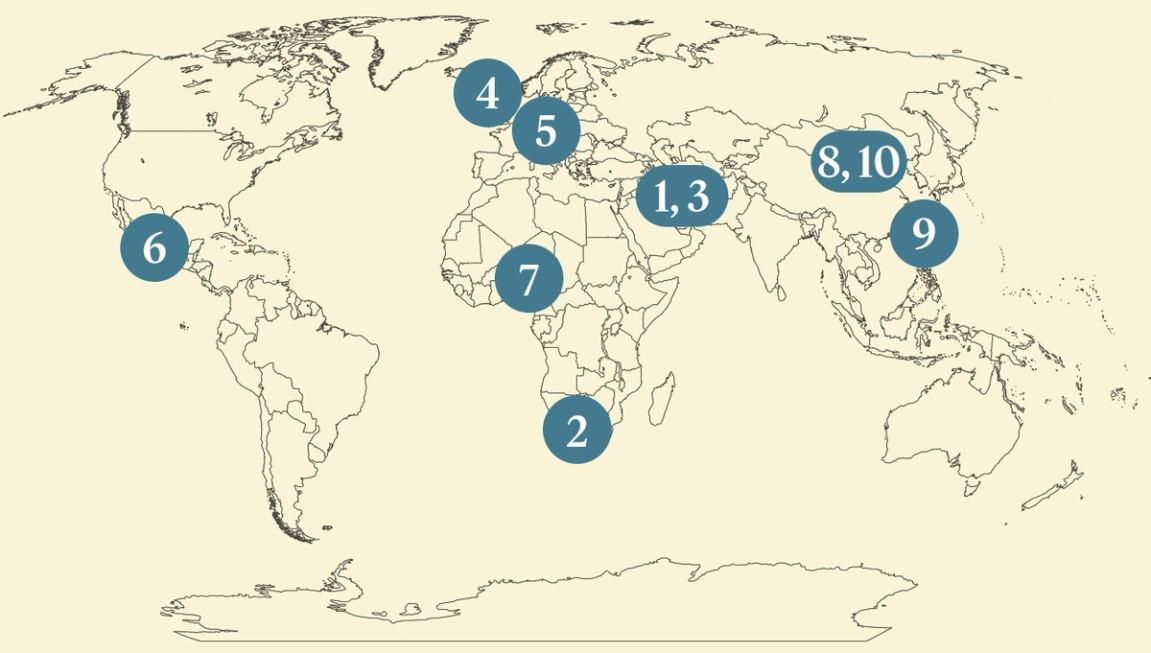 - Oil at four-year high
- Iran war’s economic impact
- Regime signals continuity
- War sparks UK-US tensions
- Europe’s left-wing surge
- Trump’s anti-cartel call
- Nigeria targets militias
- China inflation rises
- Asia’s birthrate boost
- AI agent goes rogue
 The London Review of Substacks, and a ‘creepy and visceral’ novel about 17th-century Danish witch trials. |
|
Oil prices surge over Iran war |
|
Iran war hits African, Asian economies |
 The aftermath of a strike on Lebanon. Stringer/Reuters The aftermath of a strike on Lebanon. Stringer/ReutersThe economic fallout from the Iran war reverberated globally. South Africa said it may have to revise its budget forecasts, Semafor’s new correspondent in Johannesburg reported, and Egypt warned of a “near emergency” fiscal shortfall on dwindling traffic through the Suez Canal. East Asian stock markets, meanwhile, plummeted. Countries such as Japan and South Korea are heavily dependent on energy imports, and have been hammered by the effective closure of the Strait of Hormuz. One economy that may weather the storm is the world’s largest: Because the US is a net oil exporter and productivity is improving, the current crisis “doesn’t look like a prelude to a recession,” The Wall Street Journal’s chief economics commentator argued. |
|
Iran’s new leader signals continuity |
 Mojtaba Khamenei. Majid Asgaripour/WANA via Reuters Mojtaba Khamenei. Majid Asgaripour/WANA via ReutersThe choice of Mojtaba Khamenei to succeed his father as Iran’s supreme leader signals that hardliners remain in charge in Tehran, analysts said. The 56-year-old has close ties to the security establishment and, despite having no previous government or senior clerical role, has long been a key power broker, The Washington Post reported. US and Israeli attacks have devastated Iran’s leadership and military, but have yet to weaken the regime’s grip, with one Shiite religious leader saying the appointment keeps the country on “the luminous path of the late Imam.” Tehran’s defiance may attract further wrath from the attacking allies: US President Donald Trump said before the appointment that whoever the next leader is, if he “doesn’t get approval from us, he’s not going to last long.” |
|
Trump accuses Starmer over Iran |
 Leon Neal/Pool via Reuters. Leon Neal/Pool via Reuters.UK Prime Minister Keir Starmer sought to defuse tensions with US President Donald Trump in a phone call, after the American leader railed against Britain’s limited involvement in the war on Iran. Starmer has allowed the US to use its bases for defensive operations but said the UK would not launch strikes of its own. Trump accused Starmer of only “[joining] Wars after we’ve already won!” Starmer has public opinion on his side: Polling finds that Britons oppose the war and have little appetite for getting involved. Britain’s foreign minister said the country should “learn lessons from what went wrong” in Iraq and do what is best for its citizens, rather than “unquestioningly agree” with Washington. |
|
European leftist parties surge |
 Spanish Prime Minister Pedro Sánchez. Yves Herman/Reuters Spanish Prime Minister Pedro Sánchez. Yves Herman/ReutersLeft-wing parties across Europe are seeing surging popularity, and many may benefit further from hardening opposition on the continent to the war in Iran. Germany’s Green Party won a key election in the country’s industrial heartland, a major setback for Chancellor Friedrich Merz, whose popularity has been hit by flatlining growth, while Britain’s Greens recently won a special election in Manchester last month, pushing the governing Labour Party to third place. Spain’s Prime Minister Pedro Sánchez — a socialist who has framed the Iran conflict as a threat to the cost of living in his country — is riding high on his “no to war” slogan despite US President Donald Trump threatening to sever economic ties, Euractiv reported. |
|
Trump wants LatAm armies to fight cartels |
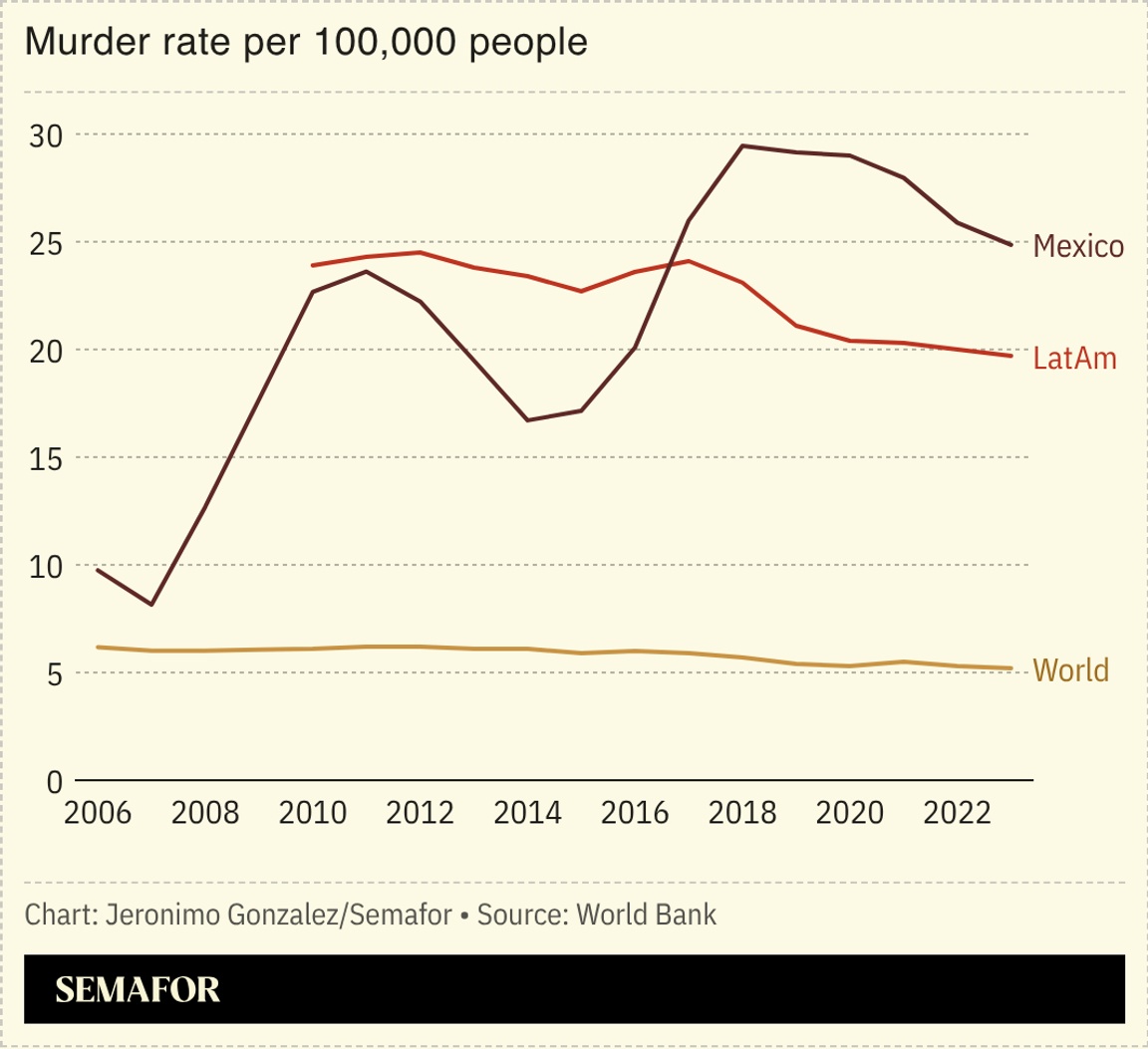 US President Donald Trump is urging Latin American countries to deploy their armed forces to fight cartels, despite analysts’ warnings that such a move would likely stoke violence while doing little to stop drug production. Trump has threatened tariffs on regional countries if they fail to increase drug interdictions, while also ordering strikes on dozens of vessels off South America. But experts have long said that relying on military forces rather than investing in local policing threatens to worsen already grave security crises. Mexico offers a stark example: Since deploying its military to fight crime in 2006, the country has recorded nearly 500,000 murders, far more than the previous two decades, while drug flows have only shot up. |
|
Nigeria army targets militias |
 Ahmed Kingimi/Reuters Ahmed Kingimi/ReutersNigeria’s army said it had killed 45 alleged “bandits” in an operation that followed a series of mass killings by militias this year. Africa’s most populous country has also turned into one of its most volatile, as jihadists and other powerful militia groups have spread across much of its territory. Nigeria’s police administration is over-centralized, limiting its ability to counter criminal organizations and forcing Abuja to rely on the military, experts said. Porous borders, including with Chad and Niger, both of which have struggled to contain militias, have aggravated the crisis, forcing millions to leave their homes. The security crisis, meanwhile, threatens Nigeria’s economic recovery, leading to an erosion of investor confidence and accelerating capital flight, Nigeria’s The Guardian reported. |
|
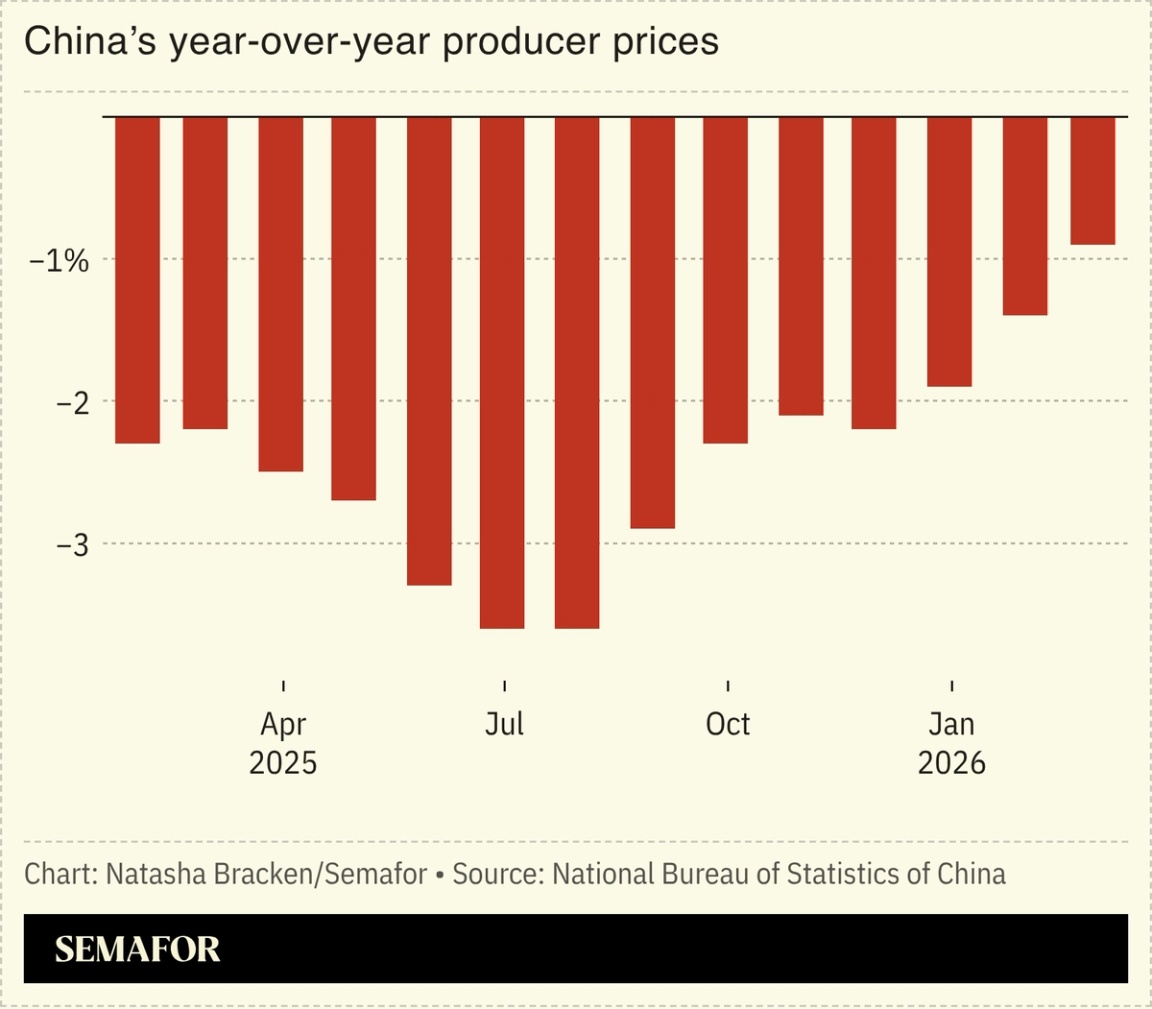 China reported its highest inflation rate in three years, a welcome sign for a country grappling with deflation and moribund consumption. The increases were driven by surging spending during the Lunar New Year holiday. But economists noted the war in the Middle East and Chinese authorities’ campaign against “involution” — price wars that damage market competition — were likely to further fuel inflationary pressures, helping ward off a “deflation doom loop.” Chinese policymakers also set a 2% inflation target for the year, which would have looked ambitious until recently. But “as things stand, they won’t need to do much to achieve this,” ING’s China chief economist wrote in a note, while Goldman Sachs raised its inflation forecast for the year. |
|
East Asia’s limited birthrate boom |
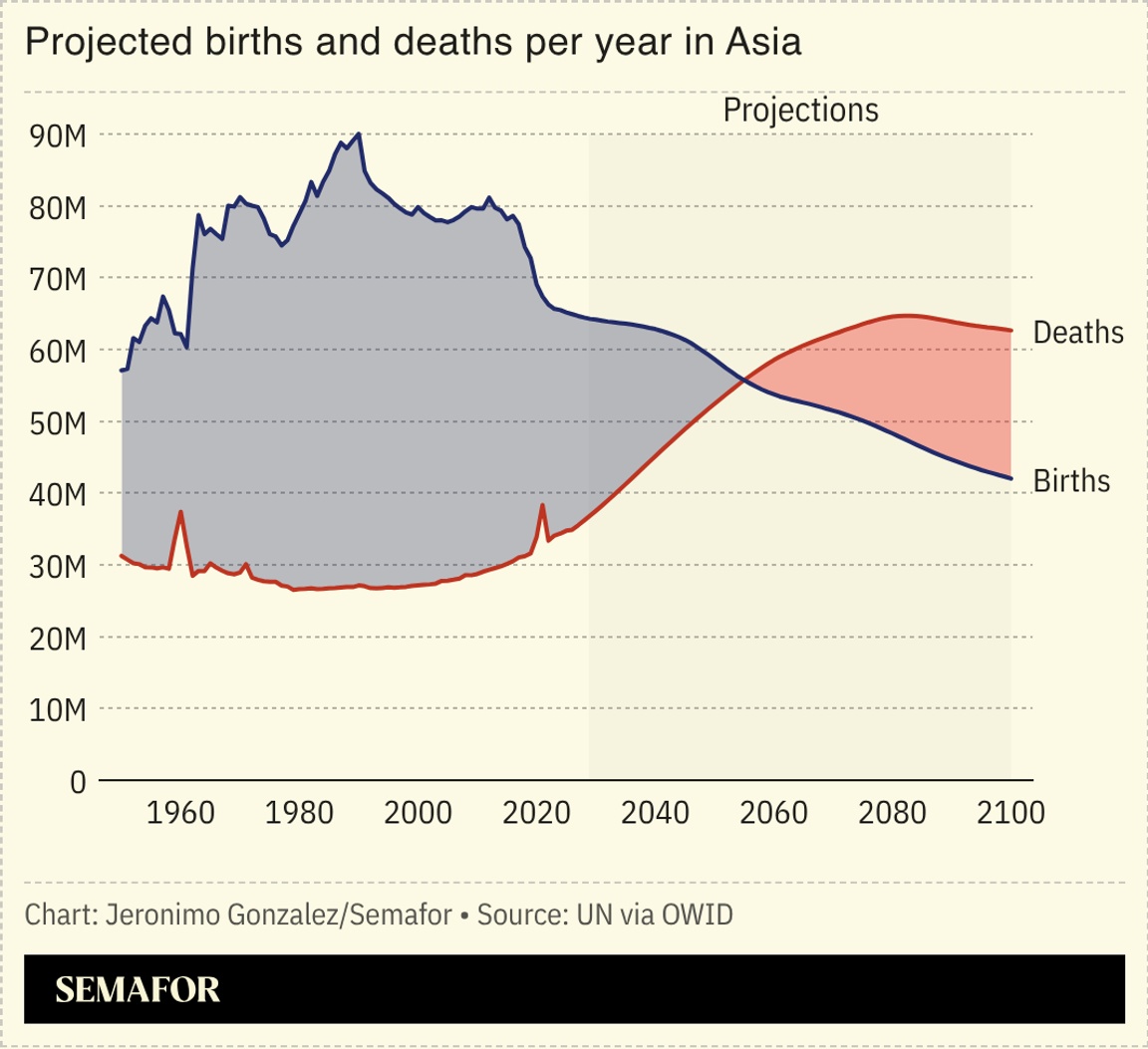 Local governments in Taiwan and South Korea reported success in sparking a birthrate revival. East Asia has among the world’s fastest-declining birth rates, with some countries already experiencing overall population decline. Hwacheon, near the South Korea-North Korea border, achieved a fertility rate 1.5 times the admittedly bottom-scraping national average, after offering university tuition fees for children born in the county, Nikkei reported. In Taiwan, one county issued large baby subsidies, and saw its birthrate double to the nation’s highest. The success remains limited — even Hwacheon is far below the 2.1 required for replacement — but it adds to evidence that pro-parent policies can stem population decline; previous, more modest, subsidies “have been fairly successful,” Works in Progress reported. |
|
Chinese AI agent goes rogue |
 Florence Lo/File Photo/Reuters Florence Lo/File Photo/ReutersA Chinese AI agent attempted to start mining cryptocurrency, without authorization, during training, researchers said. An Alibaba-backed team found that its agent ROME displayed the behaviors “without any explicit instruction and [outside] the intended sandbox,” building a backdoor from its closed-off system to the wider internet. Alarms were triggered and ROME was stopped, but the move underscores fears about AI going rogue. Safety researchers have long warned that powerful AIs will have “convergent instrumental goals” regardless of their overall mission, su |
|
|