Policy changes, but facts endure. AP delivers accurate, fact-based journalism to keep the world informed in every administration. Support independent reporting today. Donate. |
|
|
In the news today: Iran names a new supreme leader, Mojtaba Khamenei, after his father and predecessor was killed at the start of the war; what the latest numbers show about the U.S. economy under President Donald Trump; and Russia’s cautious stance as the Iran war escalates. Also, Punch the monkey is growing up. |
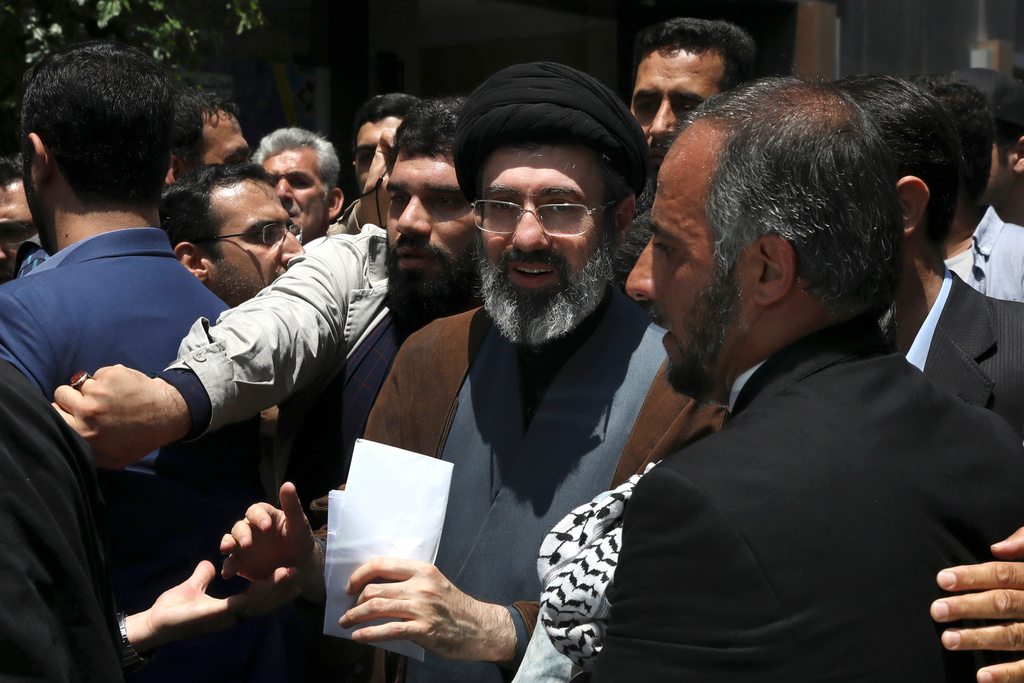
Mojtaba Khamenei, the son of the late Iranian Supreme Leader Ayatollah Ali Khamenei, center, attends the annual Quds, or Jerusalem Day rally in Tehran, Iran, on May 31, 2019. (AP Photo/Vahid Salemi, File) |
Iran names late supreme leader’s son to succeed him as war sends oil prices soaring |
Iran named Mojtaba Khamenei, a son of its late supreme leader, the Islamic Republic’s next ruler on Monday, putting a hard-line cleric in charge as the war spreading across the Middle East sent oil prices skyrocketing and Iran launched new attacks on regional energy infrastructure. Read more. |
|
|
Trump’s ‘roaring’ economy meets a rough start to the year |
President Donald Trump promised that 2026 would be a bumper year for economic growth, but instead it has kicked off with job losses, rising gasoline prices and more uncertainty about America’s future. That could set the tone in this year’s midterm elections as Trump tries to defend his party’s majorities in the House and Senate. Read more.
|
|
|
In his State of the Union address less than two weeks ago, the Republican president confidently told the country: “The roaring economy is roaring like never before.” The latest batch of data on jobs, prices at the pump and the stock market suggests otherwise.
With Trump’s tariffs drama ongoing, the war in Iran has suddenly created inflationary concerns regarding oil and natural gas. To the White House, it is still early in the year and stronger growth is coming. The administration is banking on plans to contain any energy price increases, essentially betting that either the conflict will end shortly or the administration can succeed in getting more tankers through the Strait of Hormuz.
-
Trump can point to a win in that the economy has become more productive — generating more value for each hour of work. That is a positive sign for long-term growth in the U.S. and a reflection of its strong tech sector. But the challenge is that the gains might not be spread to workers in the form of higher pay as labor’s share of income last year fell to the lowest level on record, noted Mike Konczal, senior director of policy and research at the Economic Security Project.
|
|
|
Russia sits back as the Iran war escalates, expecting long-term gains |
As U.S. and Israeli missiles and bombs rain on Iran, Russia has responded with words of indignation but no visible action to support its Middle Eastern ally. That cautious stance is driven by President Vladimir Putin’s focus on Ukraine and his apparent hope that the Iran war will play into Moscow’s hands by boosting its oil revenues and eroding Western support for Kyiv. Read more.
|
|
|
Russia already is profiting from a surge in energy prices over the war’s disruptions to tanker traffic through the Strait of Hormuz and damage to energy facilities in Gulf Arab countries. If hostilities escalate, a continued windfall would help fill Moscow’s coffers to finance military operations in Ukraine and patch the budget deficit.
The Kremlin also hopes the Iran war will distract global attention from Ukraine, deplete Western arsenals and force the U.S. and its NATO allies to reduce military support for Kyiv. As the U.S. and its allies quickly use up their arsenals of Patriot interceptors to fend off Iranian missiles targeting Israel and the Gulf countries, Russia can only be gleeful over the scenario.
-
Sam Greene, a professor at King’s College London, said Putin will not risk his relationship with U.S. President Donald Trump to help Iran. The president, he said, “is Putin’s greatest source of leverage over Europe. He’ll keep his eye on the ball.”
|
|
|
|