|
 |




Andrew bought a Toyota hybrid a couple months ago, and at one point the thought occurred to him: You know, this gas mileage would be even sweeter if gas weren’t pretty cheap right now. So he can’t help but feel like, at some cosmic level, he might be a little bit responsible for all this. If so, you know—he’s sorry. Happy Monday.
|

 |
Why Would There Be a War?
by Andrew Egger
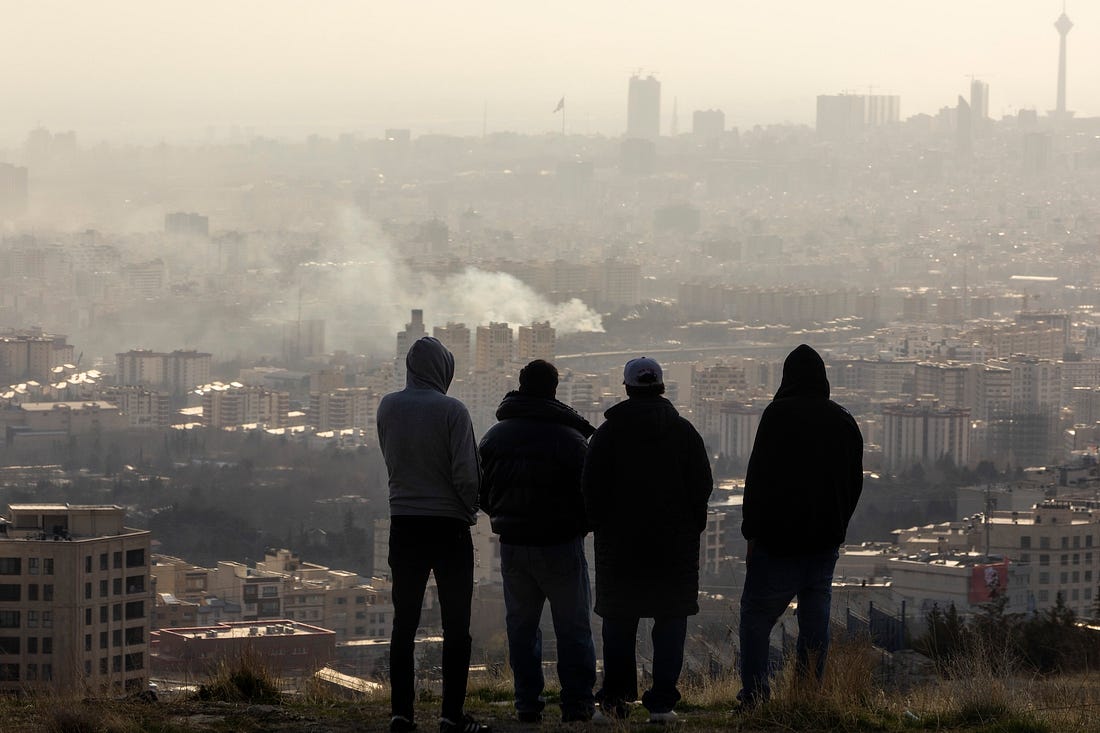
What did the White House think it was getting into in Iran? A strike against Iran’s oppressive and fanatical regime, sure. A display of America’s awesome military might, definitely. But it’s become increasingly, painfully clear: They didn’t think there was going to be a war.
The Trump administration developed no real theory of the objectives of the Iran war, because they didn’t think there was going to be a war. Instead, the administration has backfilled a dizzying array of post-hoc goals for the strikes against Iran. Judd Legum counts seventeen different rationales offered by many different officials, from the president’s “feeling, based on fact” that Iran was about to strike the United States to a desire to free the Iranian people to a need to destroy a nuclear program the White House had claimed was already “obliterated.”
The Trump administration made no effort to get the American people on board with war, because they didn’t think there was going to be a war. A majority of the public is already opposed to war with Iran, and what support the war does have seems to be based on the questionable assumption that the conflict will be shortly resolved: 44 percent of Americans support the strikes so far, but only 12 percent would be in favor of sending U.S. ground troops into the country. But the White House has made no broad effort to convince the public on a bipartisan basis that they should be prepared for a long-haul conflict.
They didn’t think there was going to be a war, and so the White House seemingly gave no thought to what the economic ramifications of war would be. After several days of strikes on Iran, President Trump seemed suddenly to realize last week that the ongoing conflict was going to be terrible for energy prices. He tried to slap a band-aid on the problem by announcing risk insurance and military escorts for all oil tankers through the Strait of Hormuz, but it wasn’t enough: Suddenly, oil prices went through the roof, and the White House was scrambling to contain the damage—rushing to reassure consumers that the price hikes would be temporary and even waiving some sanctions on Russian oil to try to ease pressures on global supply. “Short term oil prices, which will drop rapidly when the destruction of the Iran nuclear threat is over, is a very small price to pay for U.S.A, and World, Safety and Peace,” Trump posted on Truth Social yesterday. “ONLY FOOLS WOULD THINK DIFFERENTLY!”
They didn’t think there was going to be a war, and so the president assumed he’d be in charge of picking Iran’s next political leadership. This plan, admittedly, hit an unexpected snag early on: The initial round of strikes that took out Iran’s top leaders also killed a number of lower-ranking regime figures that the White House had identified as pragmatists who might be willing to negotiate. “The attack was so successful it knocked out most of the candidates,” Trump said a day after the strikes began. “It’s not going to be anybody that we were thinking of because they’re all dead. Second or third place is dead.” Still, Trump made it clear he expected to be involved in picking Iran’s next supreme leader, and absolutely ruled out Mojtaba Khamenei, the son of the slain ayatollah: “They are wasting their time . . . Khamenei’s son is unacceptable to me.” But this morning, Iran went ahead and proclaimed Mojtaba Khamenei their next supreme leader anyway.
Somehow, the president seems to remain so confident Iran will be buttoned up in no time that he’s already openly licking his chops over the next triumphant blitzkrieg. “Cuba is gonna fall pretty soon, by the way,” Trump told CNN Friday. “I’m going to put Marco over there and we’ll see how that works out. We’re really focused on this one right now.”
Others in the administration, however, are starting to wake up to the fact that they have plunged into a morass with no easy way out. The success of last year’s strikes on Iran’s nuclear program and the capture of Venezuela’s Nicolás Maduro had pumped them full to bursting with the purest hubris: The United States could simply impose its will on smaller countries, getting in and out with little cost. But this conflict couldn’t look more different: no end in sight, no end even conceptualized, no base of popular support, Americans suffering economically at home and militarily abroad, Iran bloodied but determined to keep on fighting.
They didn’t think there was going to be a war. But now they’ve got one, and they don’t have the faintest idea how to end it.