| | Iran’s attacks on its neighbors slow but market disruptions continue, a strike on a girls’ primary s͏ ͏ ͏ ͏ ͏ ͏ |
| |  | Flagship |  |
| |
|
The World Today | 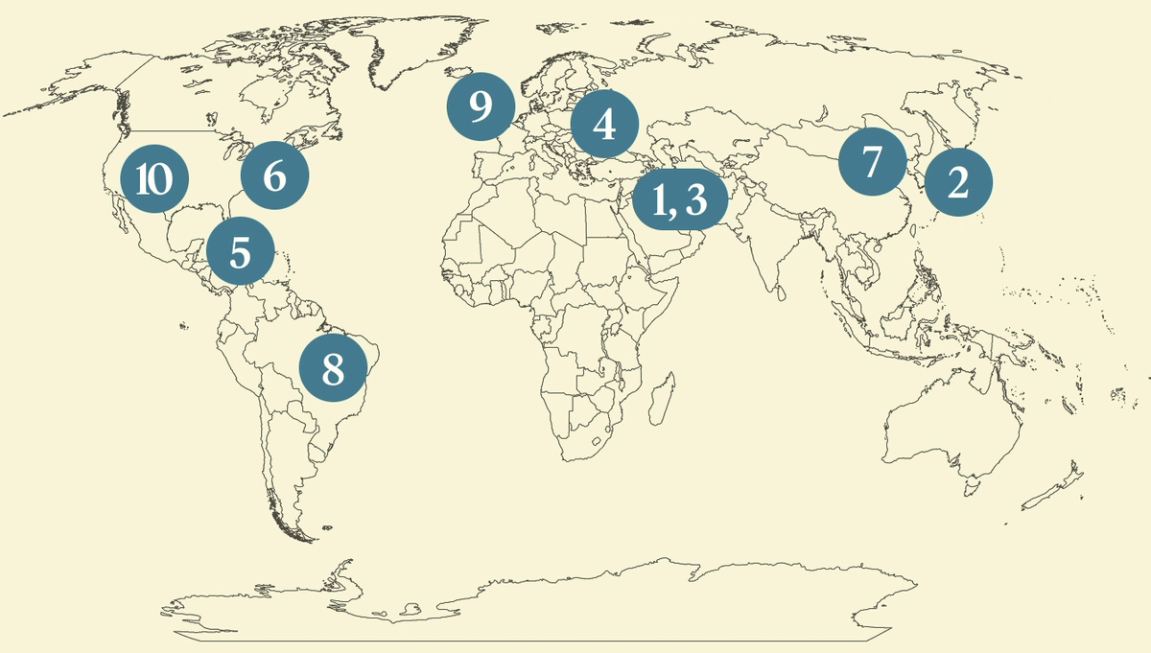 - Iran war pace slows
- Europe, Asia oil scramble
- School attack likely US
- Zelenskyy’s drone offer
- US steps up Cuba threat
- Trump China trip questions
- China exports surge
- Ramaphosa in Brazil
- US theater heads to London
- Phone calls, 150 years on
 Revisiting a classic deck-building game in time for its sequel. |
|
Iran attacks on Gulf neighbors ease |
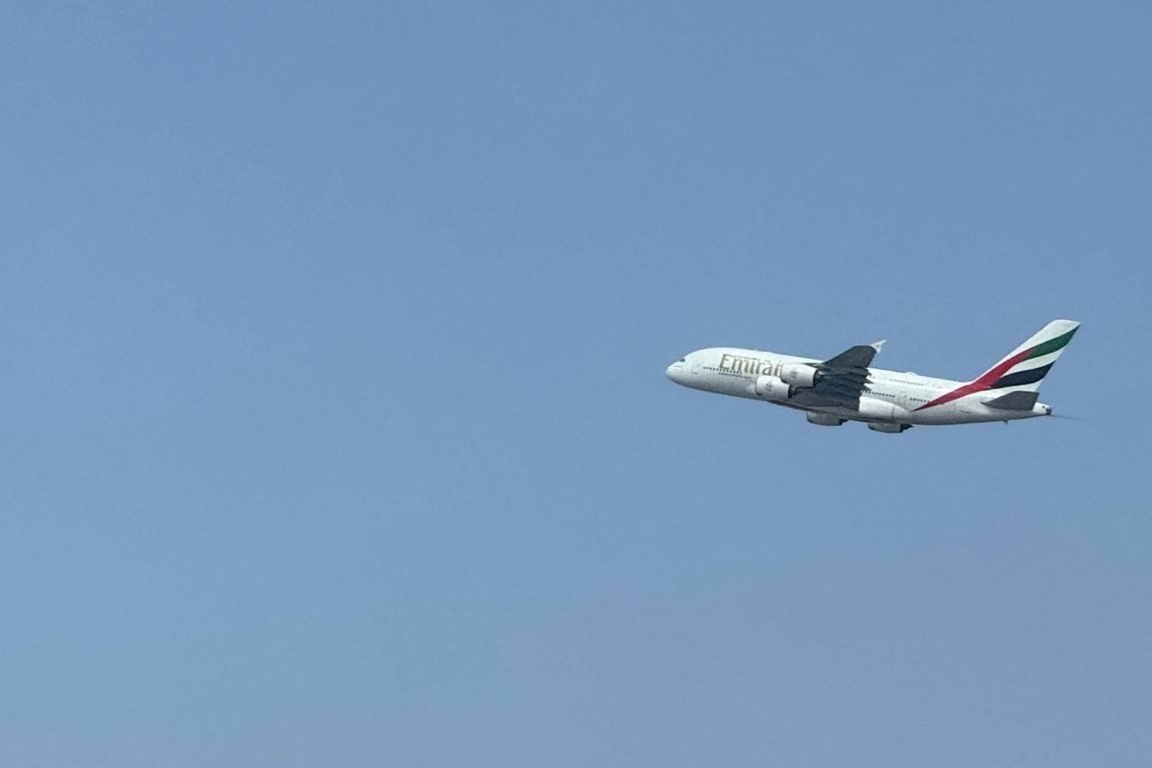 Stringer/Reuters Stringer/ReutersIran slowed its attacks on neighbors, helping pull oil prices back from multi-year highs, with adversaries hoping its ordnance stockpiles were running low. Tehran fired just 33 missiles and drones at the UAE Monday — only one hit its target — down from around 350 a day at the start of the war, Gulf-based airlines said some flights will resume, and oil prices fell back below $90 a barrel after nearly touching $120 recently. Still, tanker traffic through the Strait of Hormuz remains effectively paralyzed, and although US President Donald Trump at one point yesterday said the war was “very complete, pretty much,” he later walked those comments back, and Americans are already feeling the pinch: Gas prices are up 17%. |
|
Energy prices roil global markets |
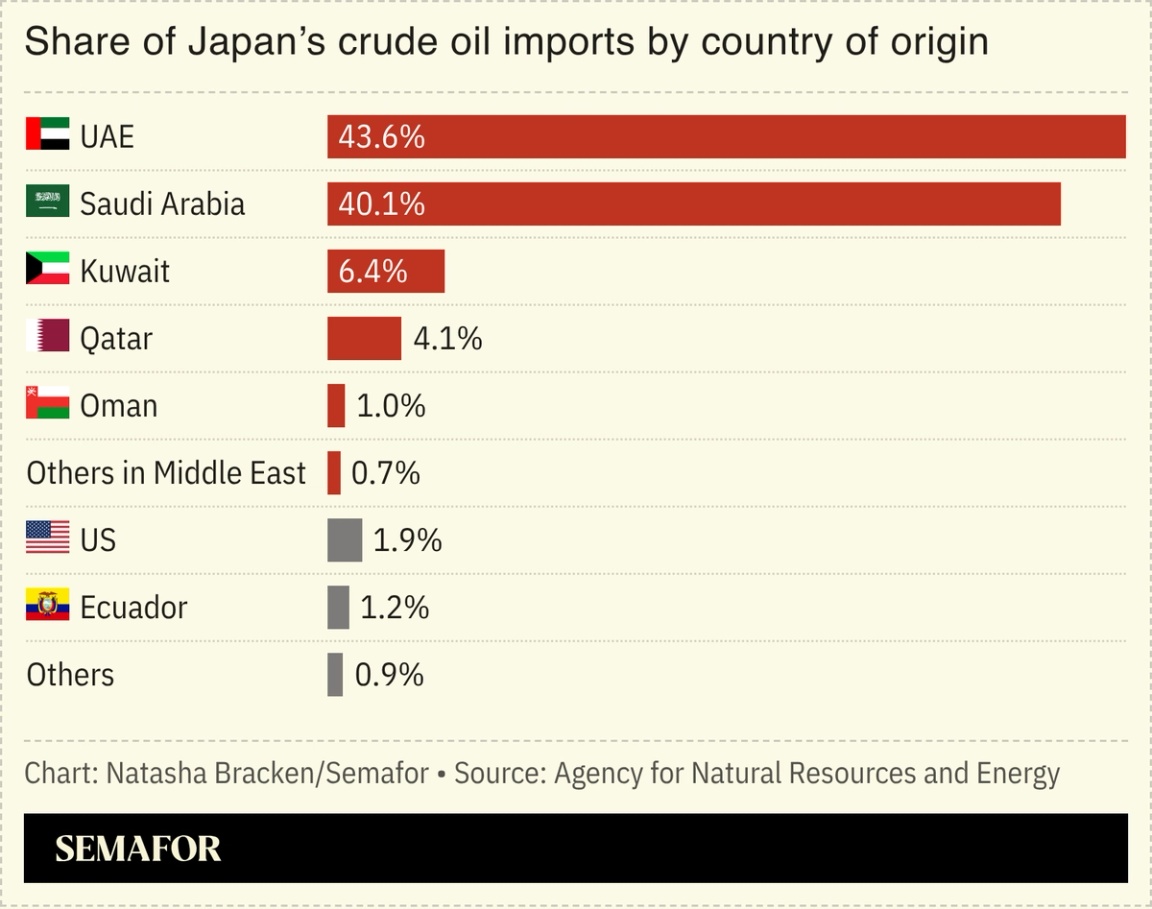 High energy prices roiled global economies, even after they fell from their peaks. Japan’s reliance on energy imports has left Tokyo considering dipping into oil reserves. European nations, meanwhile, were fretting over surging prices, with EU leaders set to discuss the issue today, according to Politico: European gas prices have more than doubled since the war began. As a result, Asia and Europe are scrabbling over what little gas is making it through the Strait of Hormuz: Several tankers have changed course, presumably as Asian buyers stepped up their offers. US President Donald Trump waived some sanctions on countries buying Russian oil to bring prices down, but it will be “a drop in the ocean,” analysts said. |
|
Trump vows to probe Iran school strike |
 DVIDS/Handout via Reuters DVIDS/Handout via ReutersUS President Donald Trump pledged to investigate an explosion that hit an Iranian primary school, reportedly killing 175 people, which multiple outlets said was likely caused by a US cruise missile. Video showed a missile hitting a base next to the school; the projectile appears to be a Tomahawk, analysis by The Washington Post and BBC found, and reports suggest the target received multiple strikes. Trump had said that the attack was carried out by Iran, arguing that “they’re very inaccurate,” but the analysts said it was implausible that a single Iranian missile would hit the area during the US strikes. American military investigators also believe US forces were behind the attack, Reuters reported, despite the president’s earlier doubts. |
|
Ukraine offers drone advice in Iran war |
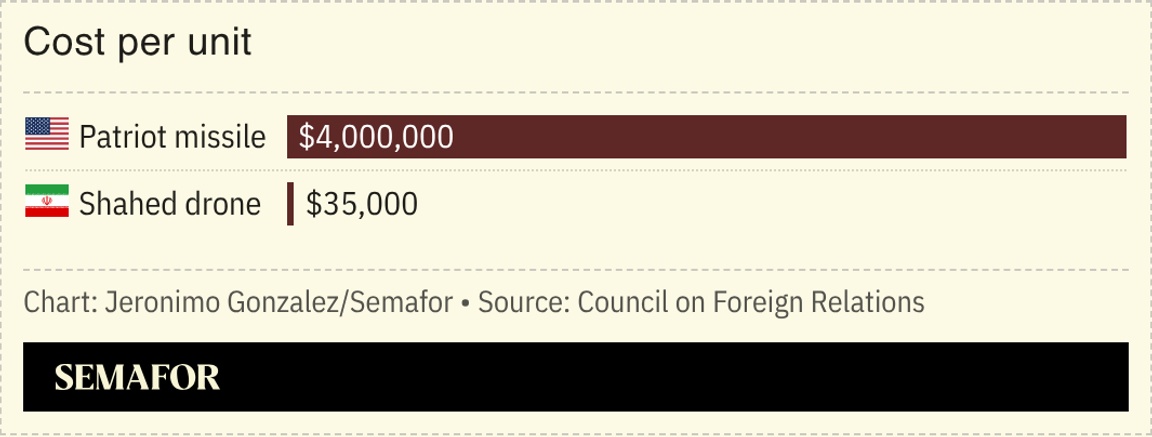 Ukraine’s president said Western and Gulf nations should trade the expensive missiles they’re using to shoot down Iranian drones for much cheaper Ukrainian alternatives. Kyiv has long sought to obtain more Patriot batteries to defend against Russian attacks. The missiles are in short supply, and their use to shoot down inexpensive Iranian drones is akin to “using a bazooka to kill a fly,” The New York Times reported. Ukraine’s President Volodymyr Zelenskyy said experts from his country are headed to the Middle East to provide defense advice. Meanwhile, Ukrainians were facing their harshest winter since Russia’s invasion: Many urban residents have decamped to villages where some homes are still heated. |
|
Trump escalates Cuba threat |
 Norlys Perez/Reuters Norlys Perez/ReutersUS President Donald Trump said Washington’s threatened takeover of Cuba may or may not be “friendly,” affirming his push to oust the island’s communist rulers. Economic conditions in Cuba have rapidly deteriorated since the US tightened its oil embargo. The crisis is so deep that, despite the threat of arrest, university students in Havana staged a rare protest after classes were cancelled due to power outages. Trump has said the country is down to “fumes” as it runs out of fuel, with even hospitals struggling to run. Still, what could follow a possible regime change remains unclear: The US is still looking for someone who could take over. |
|
Details scant on US-China visit |
 Florence Lo/Reuters Florence Lo/ReutersPlanning for US President Donald Trump’s upcoming trip to Beijing remains scattershot, dampening hopes for the highly anticipated meeting. The White House has no final list of officials and executives joining the US leader in Beijing, barely three weeks ahead of the trip, people familiar with the visit’s planning told Semafor. A White House official said it was not unusual for the administration to wait until closer to the time to send invites — Trump is set to arrive in China on March 31. But the process nevertheless reflects the gulf that remains between the two countries, along with the stark difference in approach between the generally last-minute preparation of the Trump administration and the careful planning of Chinese officials. |
|
Chinese exports weather US tariffs |
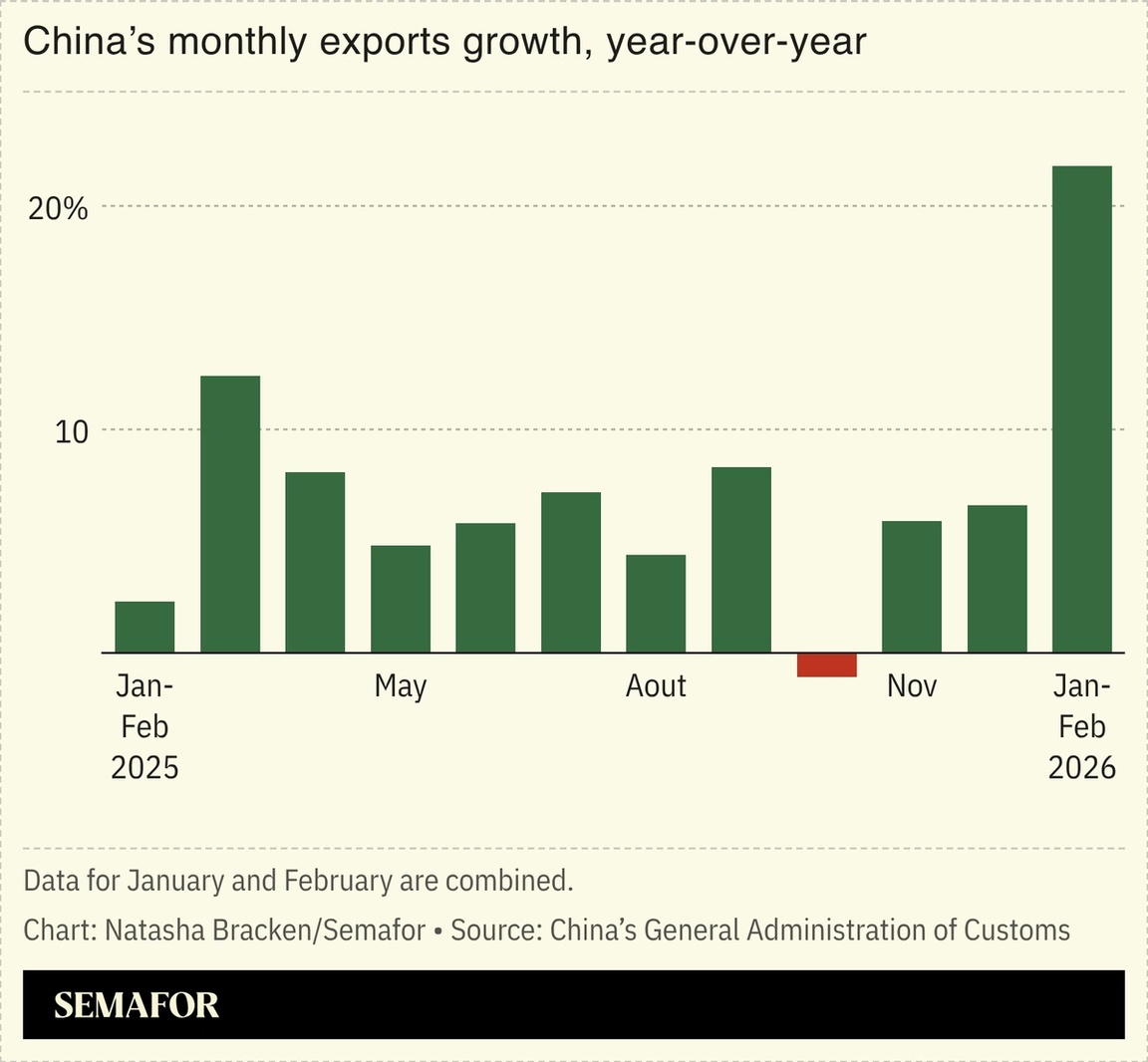 Chinese exports surged 22% in the first two months of 2026 compared to the previous year, the latest sign that Beijing is weathering Washington’s tariffs. Though US-bound exports have dropped significantly since the start of President Donald Trump’s second term, overall shipments have remained strong: Beijing registered a record trade surplus of more than $1 trillion last year. Still, the export numbers have also pointed to China’s two-speed economy. While industrial output remains sturdy, Chinese authorities have failed to boost domestic consumption, and experts are warning that the country’s deflationary spiral could worsen in 2026. Beijing last week cut its economic growth forecast to its lowest level in decades. |
|
 Semafor Washington, DC, is expanding to twice a day, with an afternoon edition of the must-read email briefing. This new edition harnesses the expertise and intelligence of our extremely well-sourced Semafor Washington, DC team, now strengthened by new congressional reporter Nicholas Wu. Delivered to inboxes every weekday around 4:30 p.m. ET, the afternoon edition delivers a sharp snapshot of the day’s developments driving Washington and a clear-eyed preview of the narrative shaping the next 12 hours. |
|
S. Africa, Brazil seek to bolster ties |
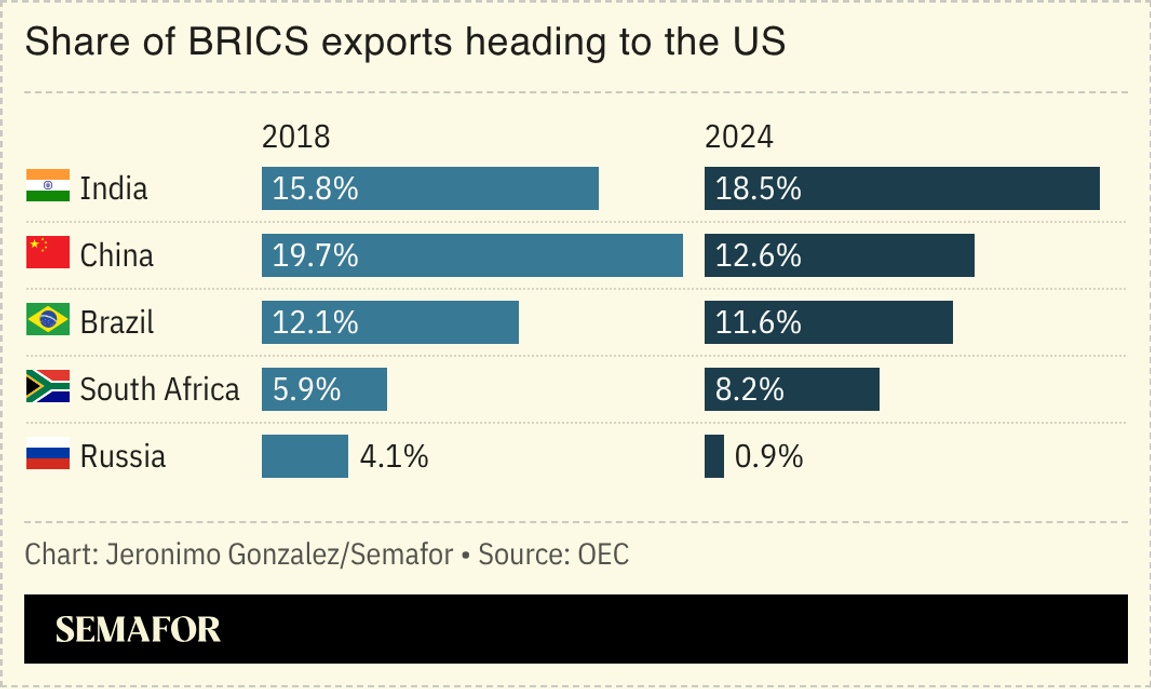 South Africa’s president arrived in Brazil for a state visit aimed at bolstering ties amid the upheaval sparked by US tariffs. Brasília and Pretoria have each been the target of President Donald Trump’s wrath: The US leader imposed steep tariffs on Brazil over what he said was the unfair prosecution of a political ally. Though levies were later lowered, the risk was sufficient for Brasília to seek partners elsewhere. Meanwhile, Trump has repeatedly criticized Pretoria for what he says is its discrimination against white South Africans, assertions denied by experts. Brazil’s leader called for greater economic and defense cooperation among the BRICS nations in response to Washington’s unpredictability: “No one will help us except ourselves,” he said. |
|
 Mike Segar/Reuters Mike Segar/ReutersSoaring costs are driving US theater producers to debut their shows in Britain. Broadway stagings, always expensive, have become prohibitively so: Budgets regularly reach $20 million, and just four out of 48 new musicals released since 2020 have become profitable. Investors have become skittish and are looking for value. London has skilled theater workers and offers cheaper rents and staff — West End actors’ wages are half of Broadway’s — while the union landscape is less complicated and the British government offers tax support. “For American artists telli |
|
|


