| | The former US Secretary of State John Kerry argues that the US is entering a new chapter in nuclear ͏ ͏ ͏ ͏ ͏ ͏ |
| |  | Energy |  |
| |
|
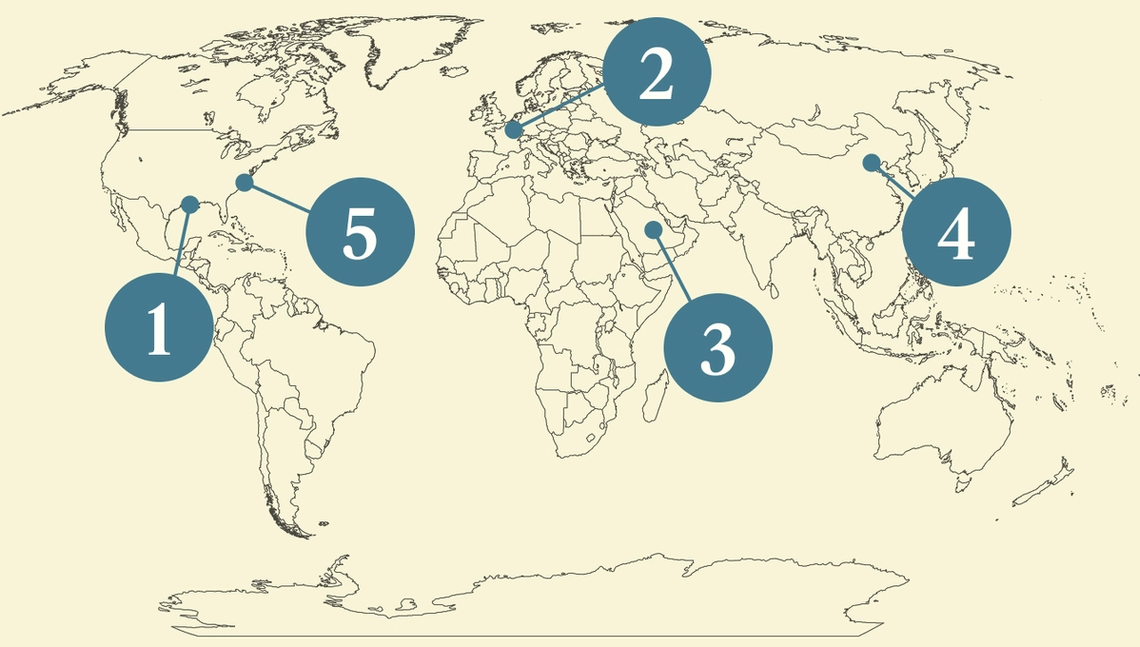 - Stockpiles on standby
- Europe scrambles for gas
- Aramco’s warning
- Mining’s big carbon footprint
- Kerry’s nuclear call to action
 Exxon relocates, and Jefferies sees a bull market for clean energy stocks. |
|
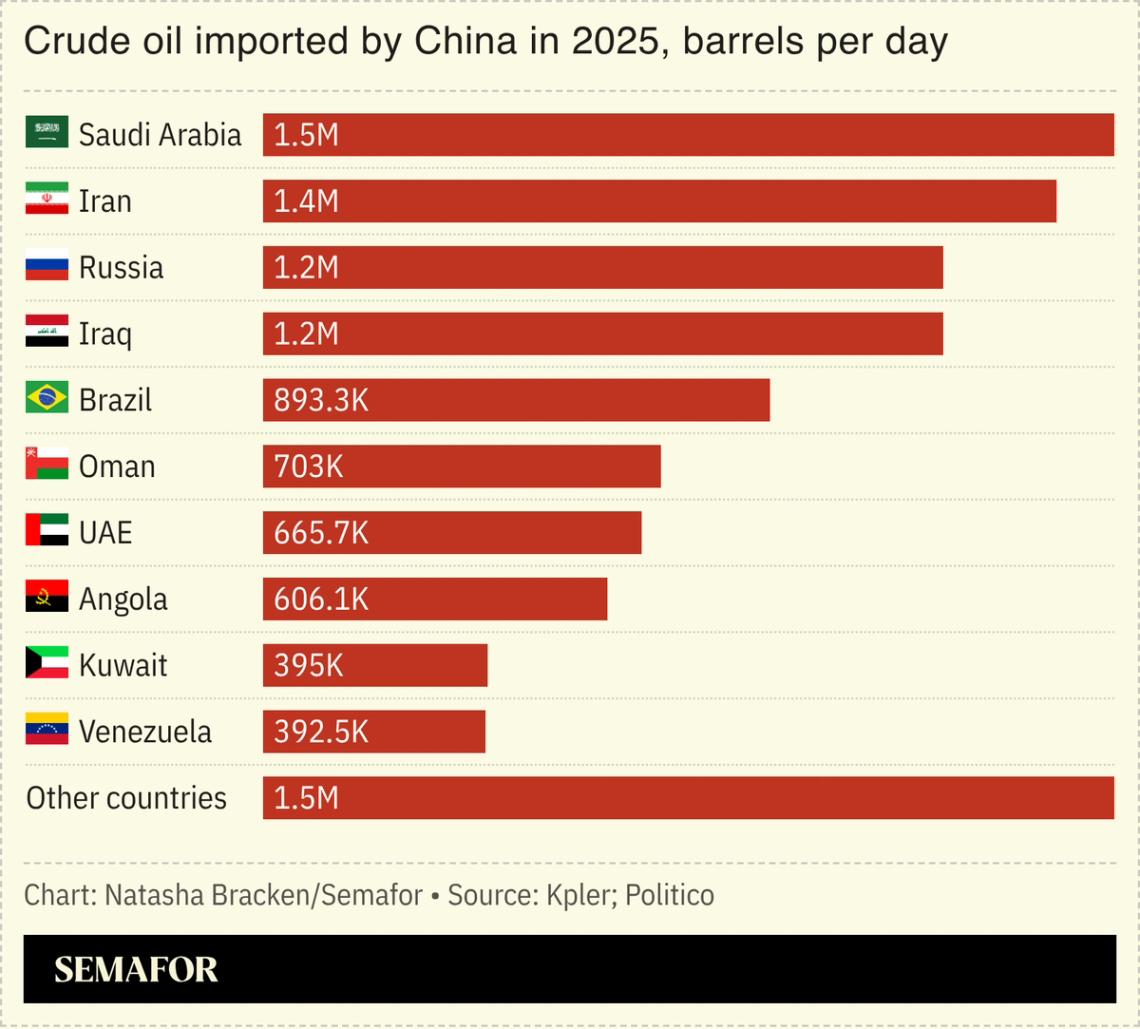
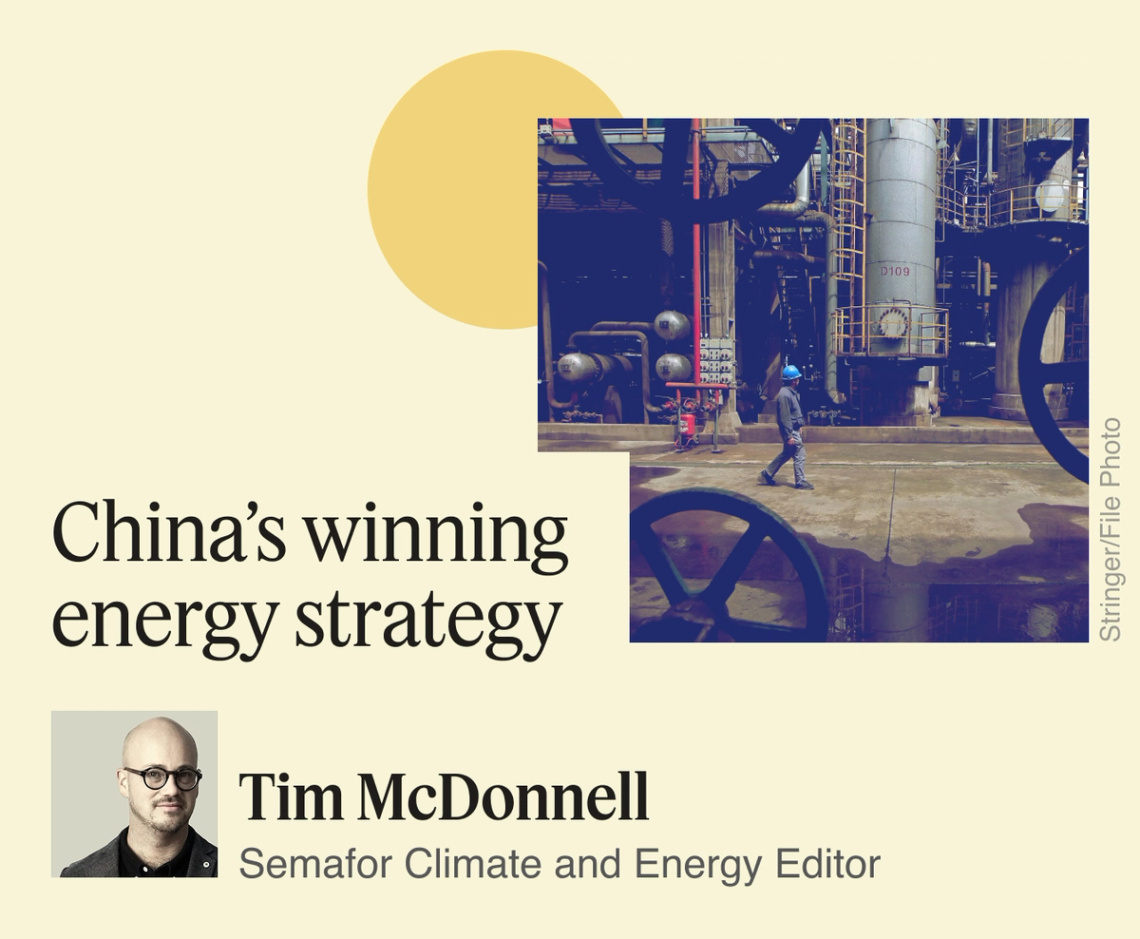 The market fallout from the war in Iran is a testament to the long-term strengths of China’s energy security strategy. China is the world’s top importer of oil and LNG, so the runup in oil and gas prices, if it lingers for long, will exact a cost. But as Columbia University’s Jason Bordoff recently observed, China has been preparing for a moment like this for years, with a multipronged strategy aimed at reducing its exposure to global energy price volatility and positioning itself as a more reliable trading partner than the usual cast of fossil fuel exporters, including the US. China has enough oil in onshore storage to serve its needs for more than two months, plus a record volume of sanctioned oil from Russia, Iran, and Venezuela that is currently parked in tankers offshore. It also produces more oil domestically than Japan and other regional rivals. Meanwhile, it’s by far the world leader in deployment of EVs and renewable energy, which has helped to equip it with an economy that consumes far less oil per unit of GDP than the US. And it is aggressively shopping this hardware around the world. Middle-income countries can learn an important lesson from this moment, similar to the one Europe learned in 2022 following the invasion of Ukraine. Obviously there are risks with all kinds of energy imports, and some European leaders have been vocal about not wanting to replace reliance on Russian or even US fossil fuels with dependence on Chinese clean tech. But not all dependencies are equivalent. Fossil fuels are inherently volatile in price and always will be. The muted effect of all the maneuvering by the Trump administration in recent days to tamp down oil prices is evidence of how little power it ultimately possesses to meaningfully control the global market after disrupting the normal flow of trade; even if the military situation calms down soon, some Gulf producers have already begun to shut down wells, which will take time to restart and which in some cases may never return to pre-war levels. All of this makes a compelling argument in favor of turning to an electrostate like China as your energy equipment supplier — especially since power from renewables, once they’re installed, doesn’t vary in price when geopolitical winds shift. That argument even applies to the US itself, since simply drilling more at home doesn’t provide full cover for US consumers. I’m visiting London this week, and over beers with some well-connected analysts last night, I asked what their biggest takeaway from this whole energy crisis is: “In one word, decarbonization.” |
|
 Leaders of G7 nations declined to authorize an emergency release of oil from their strategic stockpile, leaving a powerful but risky price control tool unutilized for now. The price of Brent crude fell Tuesday morning below $90 per barrel, after soaring on Monday to nearly $120, its highest level since 2022, after US President Donald Trump said the war is “very complete.” In a statement, the G7 said it “stands ready” to release oil but doesn’t see that step as necessary yet. The US has also so far declined to tap its Strategic Petroleum Reserve, in part because it is still significantly depleted from when the Biden administration authorized a release in 2022. Congress authorized $171 million for SPR refill purchases last year, but that’s only a fraction of the roughly $20 billion it would take to restore it completely. |
|
Europe scrambles for gas alternatives |
|
 Semafor Washington, DC is expanding to twice a day, with an afternoon edition of the must-read email briefing. This new edition harnesses the expertise and intelligence of our extremely well-sourced Semafor Washington, DC team, now strengthened by new congressional reporter Nicholas Wu. Delivered to inboxes every weekday around 4:30 p.m. ET, the afternoon edition delivers a sharp snapshot of the day’s developments driving Washington and a clear-eyed preview of the narrative shaping the next 12 hours. Sign up for the twice-daily briefing here. |
|
 The amount Saudi Aramco, the world’s largest oil company, approved in its first-ever share buyback in a bid to reassure investors as market disruptions in the Middle East drag on. The state-owned oil giant also raised its dividend payout, ultimately benefiting the Saudi government and its sovereign wealth fund, which together own more than 97% of Aramco. The company’s CEO said it expects to export around 70% of its normal crude shipments within days by rerouting through its Red Sea port of Yanbu, as it scrambles to restore sales disrupted by the US-Iran war. Still, the CEO warned of “catastrophic consequences” for global oil markets should the disruption drag on. |
|
Mining’s big carbon footprint |
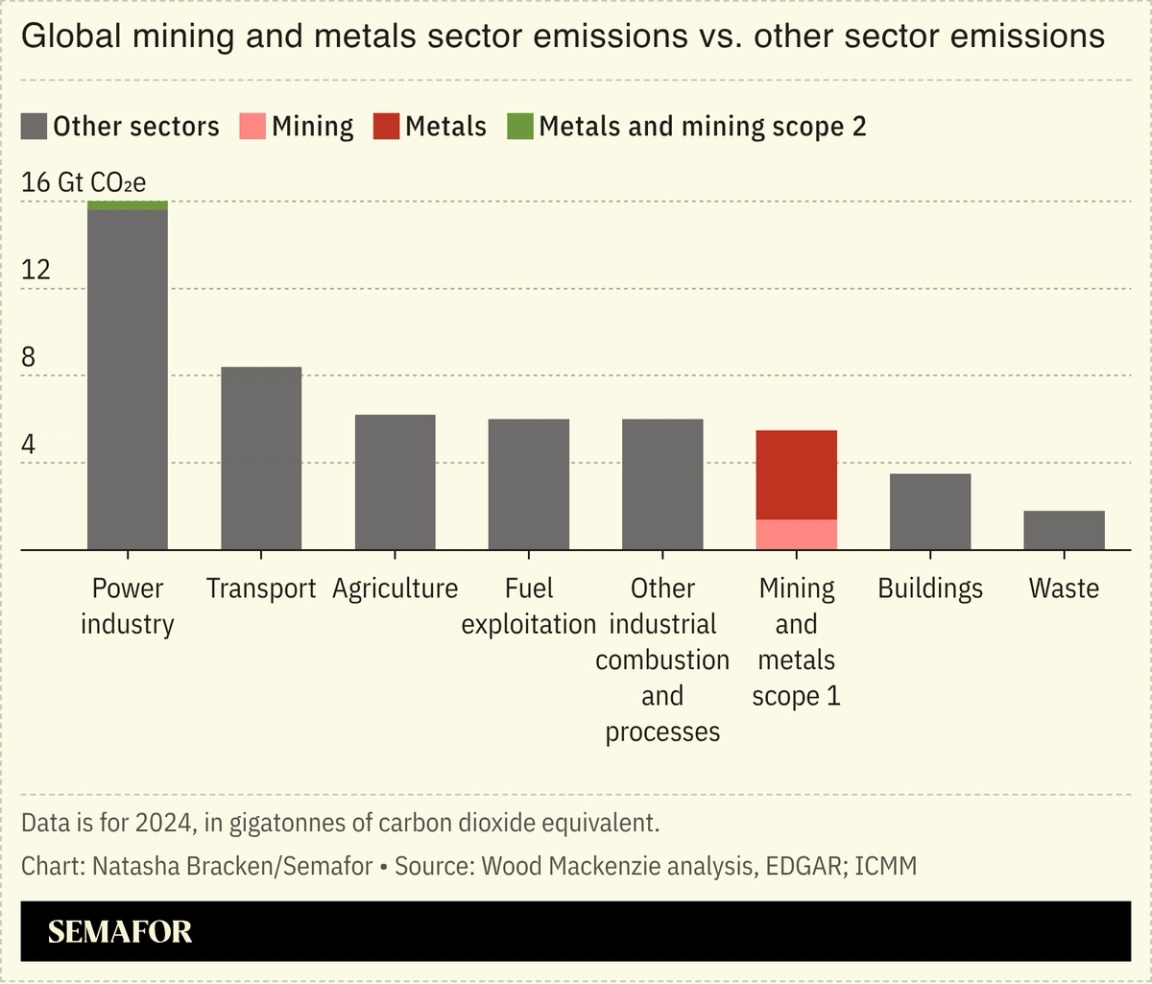 Mining and metals accounted for roughly 11% of global scope 1 and 2 greenhouse gas emissions in 2024, with a large majority originating from Asia, highlighting the sector’s role as both a major emitter and a linchpin of the clean energy transition. Within the sector, metal production accounts for 8% of total emissions, while mining, driven largely by fugitive emissions from coal, makes up the remaining 3%. Steel and aluminum production, alongside coal mining, are responsible for 93% of the sector’s emissions, according to the International Council on Mining and Metals. Yet the sector and its largest emitters are also among the most important to achieving a net-zero future. More steel will be needed for wind turbines, more aluminium for lightweight EVs, and thermal coal consumption is expected to rise in the short term as electricity demand surges. The main challenge, then, is producing more while emitting less, through emerging solutions including shifting from coal-fired blast furnaces to electric furnaces in steelmaking; and, in aluminium production, powering smelters with clean electricity and developing new processes that eliminate carbon from the smelting stage, the report’s lead researcher said. —Natasha Bracken |
|
View: John Kerry’s nuclear call to action |
 Eduardo Munoz/Reuters Eduardo Munoz/ReutersThe US is entering a new chapter in nuclear energy, driven by a simple reality, former US Secretary of State John Kerry argues in a new Semafor column: The shifting fundamentals of power demand have made it a necessity. “After decades of flat demand, electricity is once again central to economic strategy,” he wrote. “The question before us is clear: Can we deliver reliable, affordable, carbon-free baseload power at the scale, speed, and discipline this new economy demands? One of the most encouraging signals comes from something Washington rarely delivers: continuity. The missing ingredient now is execution at scale. Too many projects remain announcements rather than deployments.” |
|
 Fossil Fuels- China increased its crude imports by 16% in the first two months of the year from a year earlier, leaving the country with roughly six months of supply if Middle Eastern imports are cut off.
 Finance- US investment bank Jefferies is advising clients to increase their exposure to clean energy stocks, even amid rising oil and gas prices, pointing to an anticipated wave of investment in renewables.
- Cushman & Wakefield, a major real estate company, is being sued by a former employee over claims that it failed to protect its workers’ retirement savings from climate-related risks.
Politics & Policy- The war in Iran, and the strain it could place on energy and food prices abroad, is creating a major first challenge for Japan’s Prime Minister Sanae Takaichi since her landslide electoral victory last month.
 Minerals & Mining- The US interior secretary pushed for greater access to Venezuela’s critical minerals and gold reserves during a visit to Caracas last week, with the interim president pledging to work at “Trump speed” in accelerating the process.
|
|
|


