Japan enters the arms market, Mircea body wash and Helsinki’s new landmark.
|
Wednesday 22/4/26
|

|
|
London
Paris
Zürich
Milan
Bangkok
Tokyo
Toronto
|
|
|
|

Good morning from Midori House. For more news and views, tune in to Monocle Radio or visit monocle.com. Here’s what’s coming up in today’s Monocle Minute:
THE OPINION: Greenland gets a new airport as tourism surges
IN THE BASKET: Japan enters the international arms market
DAILY TREAT: Give peace a chance with Mircea body wash
URBANISM: Helsinki’s new landmark is a pedestrian bridge
THE LIST: Three stories that you might’ve missed
|
|
Can Greenland’s new airport put it on the map for the right reasons?
By Gabriel Leigh
|
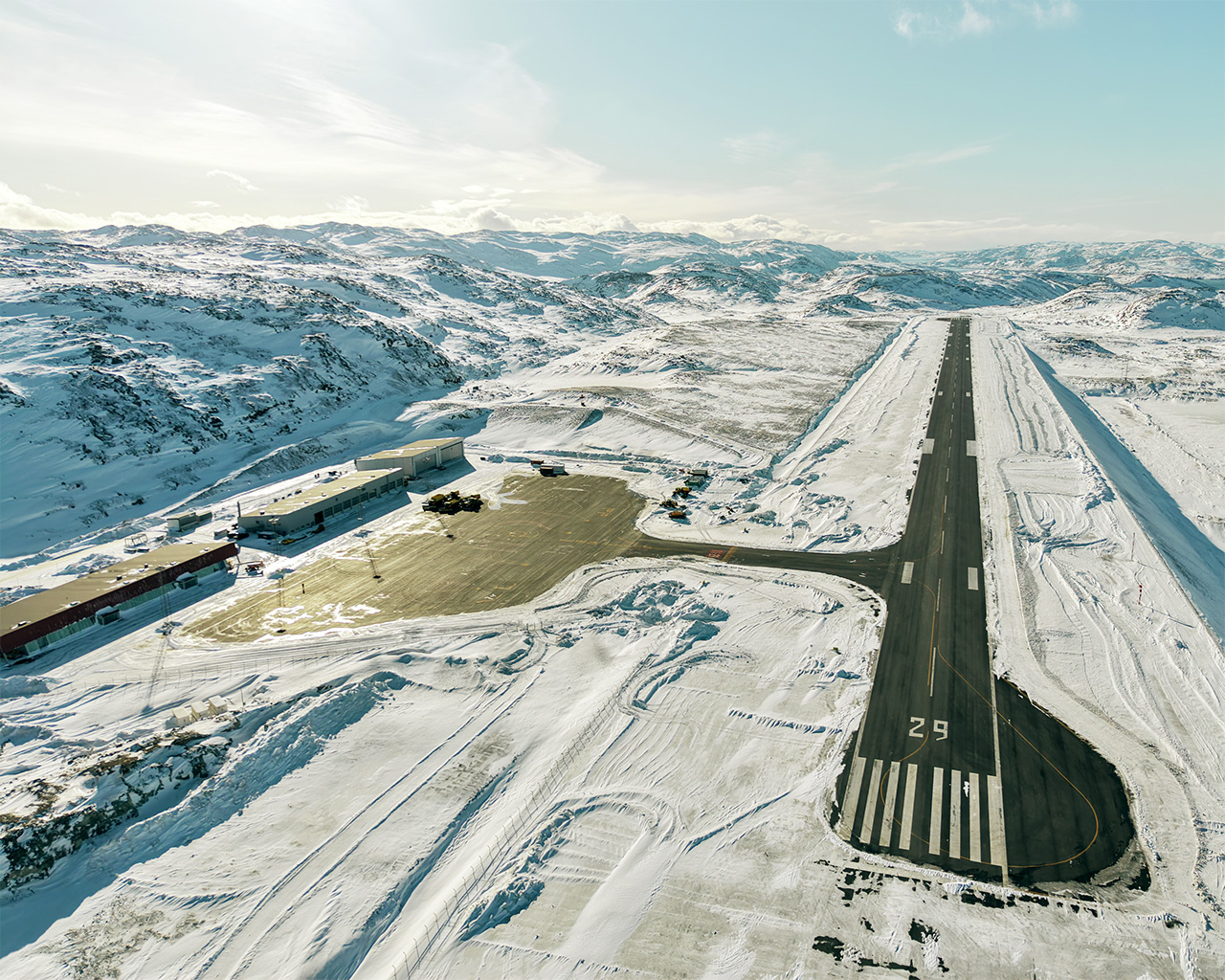
You’ll no doubt have heard a fair bit about Greenland lately and that publicity, thanks in no small part to the US president’s public yearning for the island, has led to a surge in tourism. And yet planning a visit to the country, especially without the help of White House staffers and Air Force Two, has always proved tricky. But last week Greenland celebrated a major milestone in its quest to expand and improve its transport infrastructure with the opening of a new airport in Qaqortoq, the largest town in South Greenland, which was previously only reachable by scheduled helicopter or boat. It is the second of three airport openings to reach completion, with the main hub at Nuuk opening in 2024 and the new airfield for tourist-magnet Ilulissat due this autumn. Aside from benefiting locals, the hope is that this addition can now become an appealing new gateway for tourists heading to the less-visited southern part of the country.
One of the airline’s classic red Dash 8’s operated the inaugural flight from Nuuk, most of the seats filled by a who’s who of Greenlandic politics, tourism and aviation, including the current prime minister and two of his predecessors. We touched down about an hour and a half later in the colourful town of 3,000 inhabitants. Greenland flags were handed out and speeches were given (in both Greenlandic and Danish) by Captain René and First Officer Peter, the latter of whom grew up in Qaqortoq.
| |
|
Runway success: Qaqortoq’s new airport opens
|
|
After a low flyby of the town, the first-ever commercial landing on the runway cut from rocky terrain was greeted by locals perched on hillsides. This project has been in the works for more than a decade and the excitement was palpable. The new terminal is modelled after Nuuk, with big windows and high-angled ceilings in light wood. For the moment there is no café and the vending machines are empty, so do bring snacks.
In this corner of the world where few roads connect communities, air travel is crucial. As Greenland seeks to grow its economy, being able to attract more tourists is a significant part of its strategy. Every incoming narrow-body flight from the US brings about $200,000 (€172,000) in local spending.
The new hub at Nuuk has seen its fair share of teething issues since opening. “Baby steps,” said one Air Greenland pilot of the progress. One major factor isn’t going away: the weather. Nuuk’s coastal location means highly changeable weather and frequent storms, in comparison to the old inland gateway for Air Greenland’s sole wide-body jet at Kangerlussuaq, which had relatively stable conditions. Diversions have been closely watched. When a jet can’t land at Nuuk, it will often head back to Reykjavík or Copenhagen. The knock-on effects and disruption are painful, though Flightradar24 data shows that since December 2024, the A330neo has made 337 flights to Nuuk and diverted 11 times, or about 3 per cent of the time. Not insignificant but hardly a weekly occurrence either. Pilots might have a tougher day at the office than before but it is by no means unsafe. And now larger cargo can arrive in Nuuk by air – not possible in the days when everything had to be transferred to a small prop plane.
There have also been some high-profile issues, such as the brief removal of Nuuk’s security certification by Danish authorities and a much-talked-about multi-hour delay due to security staff being out hunting. There have been problems sourcing de-icing fluid and other key materials, and delays still happen due to staff shortages. But these are the realities of Greenland, where different rules apply, availability of goods is never guaranteed and sticking to strict schedules is not always possible.
And yet, Greenland Airports, the company tasked with building, developing and operating the new terminals, is working hard to improve things. “Nuuk being the first airport that we opened has definitely been a very, very steep learning curve,” says Jens Lauridsen, the CEO of Greenland Airports. “If we had to open it again, we would do things differently. Last summer was not the brightest of moments in Greenland’s aviation history but we have definitely learnt a lot and trained all winter to make sure that things should be better next summer. We’re getting there.”
After about an hour of speeches and celebrations at the new airport, people began returning to town for a celebratory kaffemik (coffee and cakes for all) at the local community centre. At a moment when Greenland is in the public eye more than ever, the weathering of snowstorms and blowhard politicians is becoming second nature. Perhaps it’s worth a visit to see for yourself.
|
|
in the basket: Australia & Japan
Frigate-hungry Australia entices Japan into the international arms market
In the basket: 11 Mogami-class frigates
Who’s buying: Australia
Who’s selling: Japan
Price: AU$10bn (€6.08bn)
Delivery date: December 2029 onwards
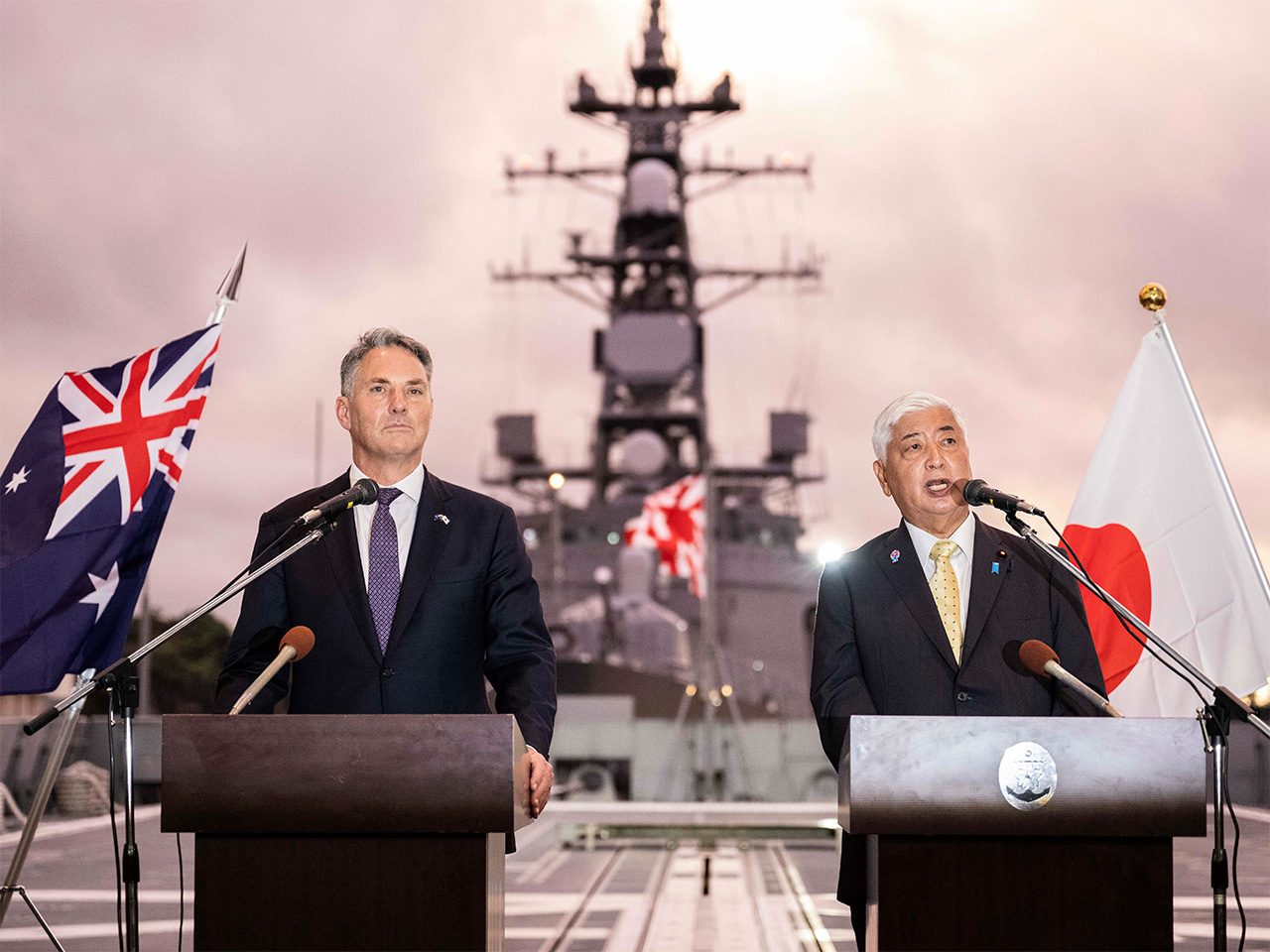
Europe is not alone in rethinking its dependency on the US where defence is concerned. Australia is pivoting all the way to buying warships from the last country to have attacked it. Mitsubishi Heavy Industries will, in the near term, supply Australia with three Mogami-class frigates to be built at Mitsubishi’s Nagasaki shipyard; eight more will be built in Western Australia by Austal.
| |
|
All aboard the friendship: Australian defence minister Richard Marles and Gen Nakatani
|
|
The Mogami-class ships edged out Germany’s offering, ThyssenKrupp’s MEKO A-210, the successor to the MEKO A-200, on which the Royal Australian Navy’s current Anzac-class frigates are based. Both Australia and Japan are enthused about the prospect of closer co-operation on defence.
It’s a particularly big moment for Japan. These will be the first warships that the nation has ever exported and the deal is Japan’s biggest-ever overseas arms sale. It’s another important step towards Japan becoming a normal military power and a significant player in armaments manufacture. Prime minister Sanae Takaichi is keen to revise Article 9 of Japan’s constitution, which officially committed the country to pacifism at the end of the Second World War.
|
|
• • • • • DAILY TREAT • • • • •
Give peace a chance with Mircea body wash
After spending two decades developing global cosmetic brands, Stéphane Chambran decided to start his own line of body care. Mircea is a body wash made in France that uses natural, locally sourced ingredients.
“As I was working on Mircea, I read a lot about ancient rituals and myths,” says Chambran. The brand’s name also references the Slavic word “mir”, which carries the dual meaning of peace and world. “It is a beautiful symbol for this moment that is akin to entering a cathedral for the senses.” We recommend picking up a body wash in cypress and eucalyptus or fig tree and peppermint.
mircea.care
|
|
urbanism: finland
Ahead of the curve: Finland’s longest bridge just opened – but don’t try to drive on it
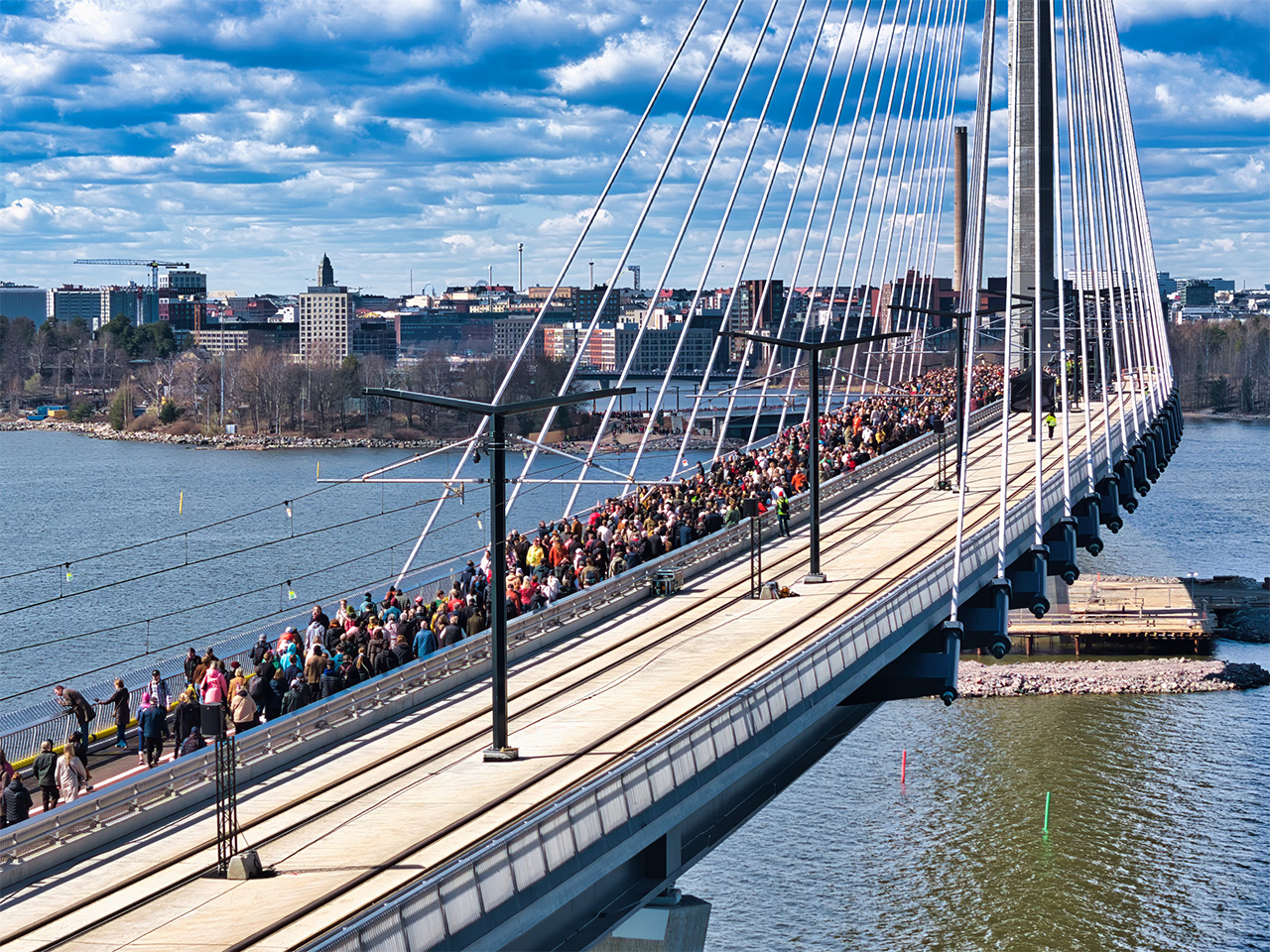
A new bridge opened in Helsinki last weekend, which connects the island of Laajasalo to the city centre (writes Sonia Zhuravlyova). As part of the city’s drive to reduce car use, the 1.2km bridge – the largest in Finland – is only open to cyclists and pedestrians (and a tram service from 2027). Called the Kruunuvuorensilta, or crown bridge, the slender structure has a slight curve, meaning that those crossing it feel less daunted by its length. Benches at the halfway point offer a pitstop to rest and take in the views of the archipelago.
| |
|
Bridging the gap: Kruunuvuorensilta links Laajasalo to the city centre
|
|
Designed to withstand Helsinki’s extreme weather conditions, the bridge has been engineered to last for 200 years and is emblematic of the city’s people-first approach to urban development and mobility. “The bridge reflects our commitment to sustainable solutions and embraces Helsinki’s unique maritime setting,” says Daniel Sazonov, mayor of Helsinki. Five years in the making and at a cost of €150m, the bridge will facilitate 3,750 cyclists per day and 23,000 daily tram journeys by 2030. It’s a fitting addition to a city that prizes lifestyle and accessibility.
Further reading?
– The 10 best bridges in the world, selected by architect Ezra Groskin
– An architects’ retreat where mid-century cottages stand amid unspoiled Finnish woodland
– Helsinki’s urban oasis: Iittala brings the Finnish sauna into the city at Bob W Helsinki Kamppi
|
|
the LIST: FROM monocle.com
Stories you might have missed
Not been on monocle.com recently? Here are three updates worth your while.
|
|
| | |