Bill Cassidy’s roles as a lawmaker, a doctor and a political candidate collide on Wednesday as he questions Health Secretary Robert F. Kennedy Jr. in two high-stakes Senate hearings. A physician who has clashed with Kennedy’s anti-vaccine ideas — even though he provided crucial support for the health secretary's nomination last year — the Louisiana Republican is fighting for his political future in next month’s primary, where President Donald Trump has endorsed one of his opponents in an unusual attempt to oust a sitting senator from his own party.
Plus, White House bunker history, Virginia's redistricting vote and warning signs in polling data on Trump's handling of the economy. |
|
|
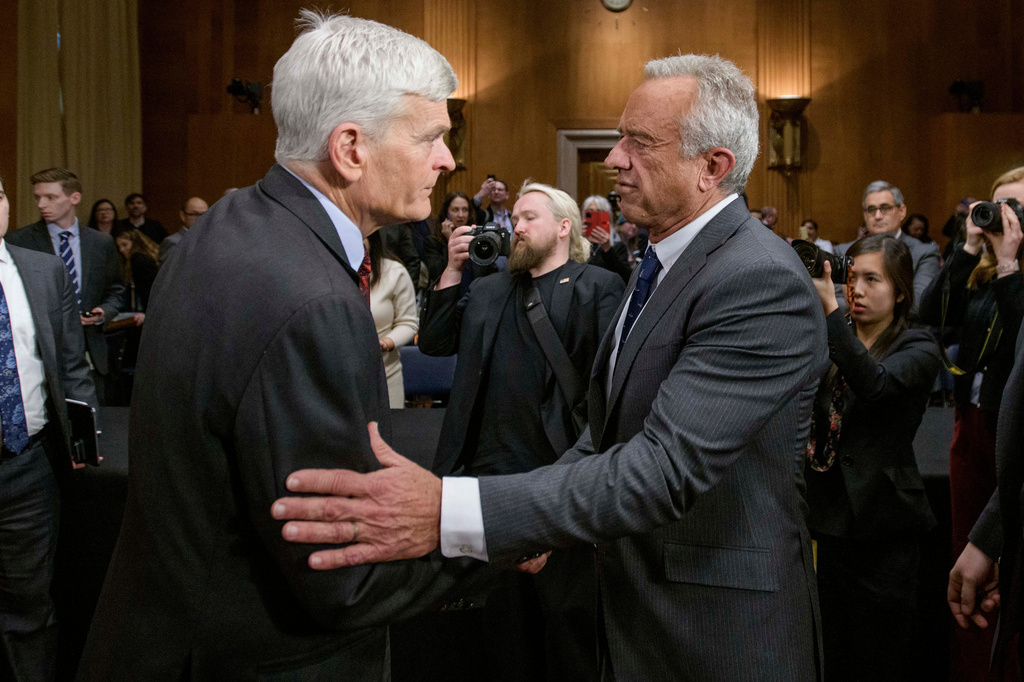
Robert F. Kennedy, Jr., right, President Donald Trump's nominee to serve as Secretary of Health and Human Services, talks with Committee Chairman Sen. Bill Cassidy, R-La., following his confirmation hearing on Capitol Hill, Jan. 30, 2025, in Washington. (AP Photo/Rod Lamkey, Jr.) |
Senate hearings with RFK Jr. put Cassidy’s competing loyalties to Trump and science on display — By Ali Swenson
How Cassidy handles Wednesday's hearings could affect his chances at a pivotal moment of his reelection campaign and set the tone for how Congress oversees the nation's health agenda at a time of rampant distrust and misinformation. Since they last publicly faced each other in September, Kennedy has attempted a dramatic rollback of vaccine recommendations that, if not blocked by an ongoing lawsuit, could undermine protections against diseases like flu, hepatitis B and RSV. As a liver doctor, Cassidy advocated for babies to receive hepatitis B vaccines shortly after birth, a step that could have prevented the disease in his patients. When Trump nominated Kennedy, Cassidy supported him after securing various commitments, including that Kennedy would work within the current vaccine approval and safety monitoring system and support the childhood vaccine schedule. The vote for Kennedy did not appear to mollify Trump, who endorsed U.S. Rep. Julia Letlow, one of Cassidy's two primary opponents. Cassidy also faces opposition from Kennedy's allies in the “Make America Healthy Again” movement, a group that includes both anti-vaccine activists and a wide variety of other crusaders for health and the environment. Read more of Swenson's reporting on Cassidy's split screen moment. |
|
|
From the bureau: Mike Catalini on White House bunker history |
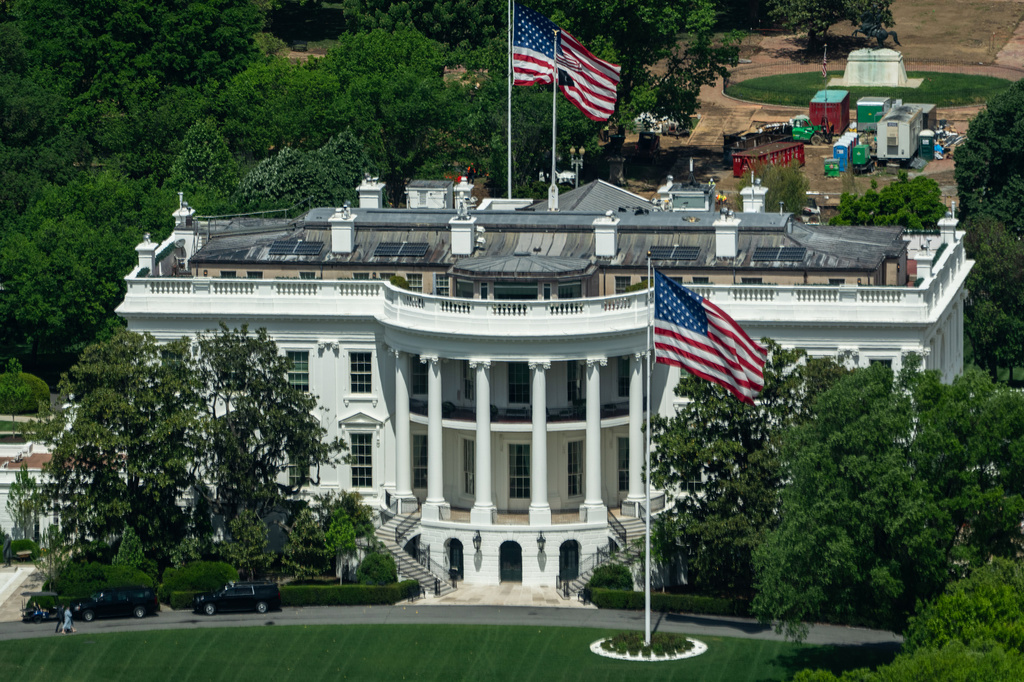
The White House is seen from the Washington Monument, Monday, April 20, 2026, in Washington. (AP Photo/Julia Demaree Nikhinson) |
What a secret bunker means for the White House's East Wing demolition — By Mike Catalini |
Here's what national politics reporter Mike Catalini thinks you should know about the history of White House bunkers:
"Secrecy surrounding presidential security means there typically isn't much information available about the White House bunker beneath the former East Wing. But the facility has been in headlines recently due to its role in Trump's construction of a ballroom that would sit atop it, and a trickle of details because of a court challenge to the project.
In response to a federal court judge, Trump has said that it's not possible to halt ballroom construction but also continue work on the bunker. As an appeals court lets construction move ahead for now, I took a look at the president's comments about the bunker, what little we know since its construction more than eight decades ago, and what we've learned recently — thanks to court filings." Read more of Catalini's reporting on White House bunkers. |
|
|
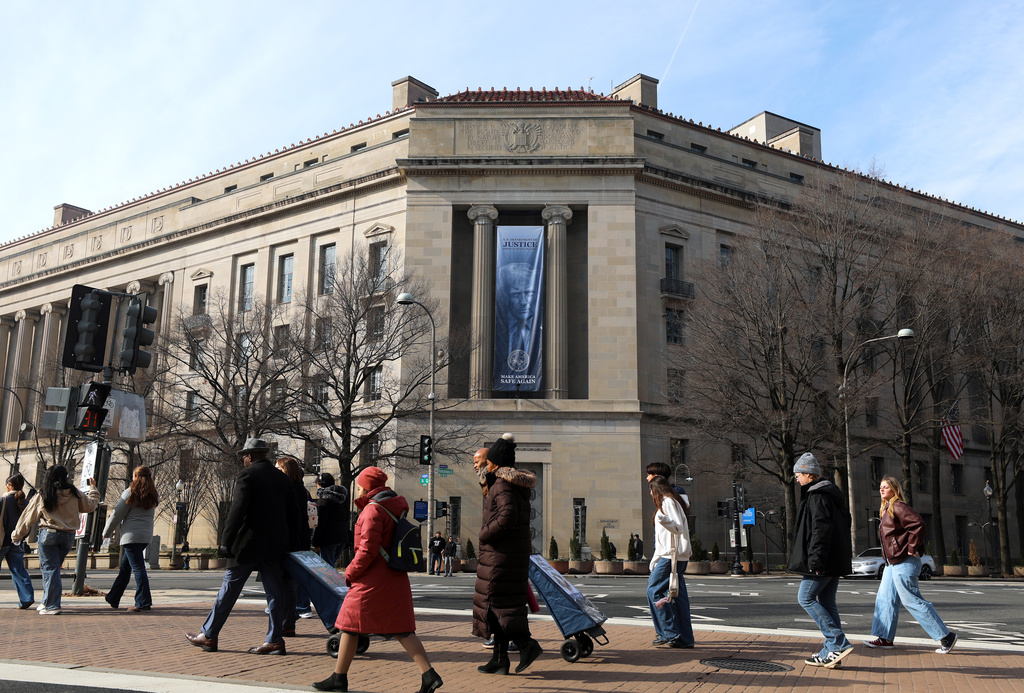
Tourists walk past a banner with President Donald Trump hanging on the Department of Justice, Feb. 27, 2026, in Washington. (AP Photo/Rahmat Gul) |
Fears of looser standards as the FBI and Justice Department scramble to fill a depleted workforce — By Eric Tucker & Alanna Durkin Richer
— Eric and Alanna’s expertise and strong beat reporting are on display in their story about how the FBI and DOJ are scrambling to rebuild a depleted workforce after a wave of departures. |
|
|
AP Elections Spotlight: Virginia voters approve redistricting plan |
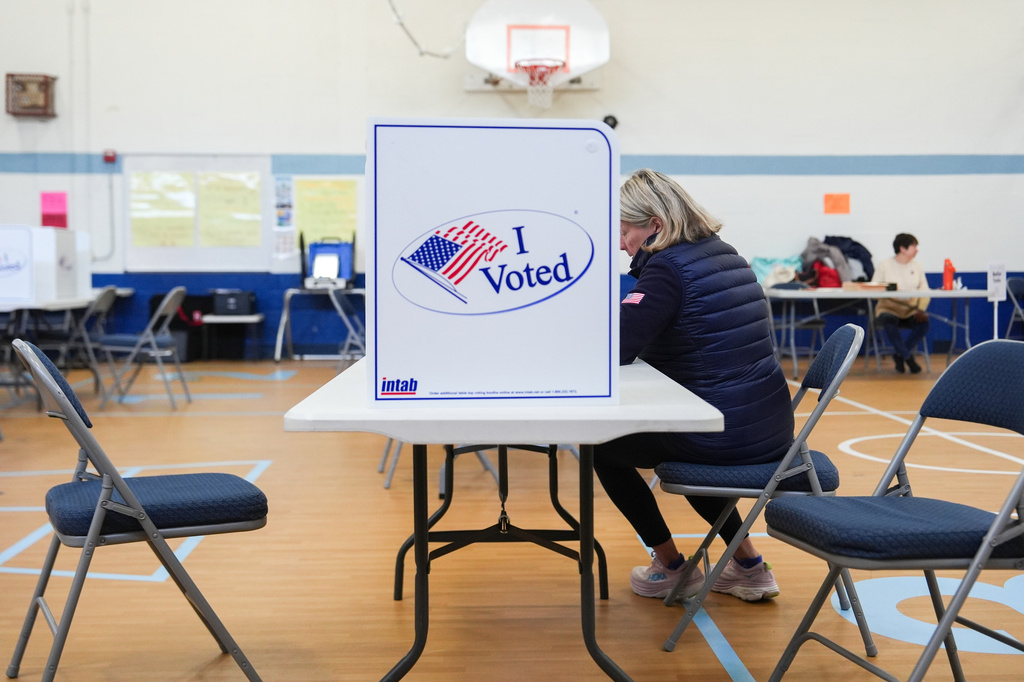
A person votes in the Virginia redistricting referendum at Lyles-Crouch Traditional Academy, Tuesday, April 21, 2026, in Alexandria, Va. (AP Photo/Julia Demaree Nikhinson) |
Virginia voters approve redistricting plan that could boost Democrats’ seats in Congress — By David A. Lieb
The big picture: Virginia voters approved a mid-decade redistricting plan Tuesday that could boost Democrats’ chances of winning four additional U.S. House seats in November’s midterm elections that will decide control of the closely divided Congress.
The constitutional amendment narrowly backed by voters bypasses a bipartisan redistricting commission to allow the use of new districts drawn by Virginia’s Democratic-led General Assembly.
Redrawing districts across the U.S.: The Virginia redistricting referendum marked a setback for Trump, who kicked off a national redistricting battle last year by urging Republican officials in Texas to redraw districts. The goal was to help Republicans win more seats in the November elections and hold on to a narrow House majority in the face of political headwinds that typically favor the party out of power during midterm elections. So far, Republicans believe they can win up to nine more House seats in newly redrawn districts in Texas, Missouri, North Carolina and Ohio. Democrats think they can win up to five more seats in California, where voters approved a similar mid-decade redistricting effort last November, and one more seat under new court-imposed districts in Utah. Democrats hope to offset the rest of that gap in Virginia, where they decisively flipped 13 seats in the state House and won back the governor’s office last year.
Courts may have their say: The public vote may not be the final word in Virginia, though. The state Supreme Court is considering whether the plan is illegal in a case that could make the referendum results meaningless.
Read more of Lieb's reporting on Virginia's redistricting vote. |
|
|
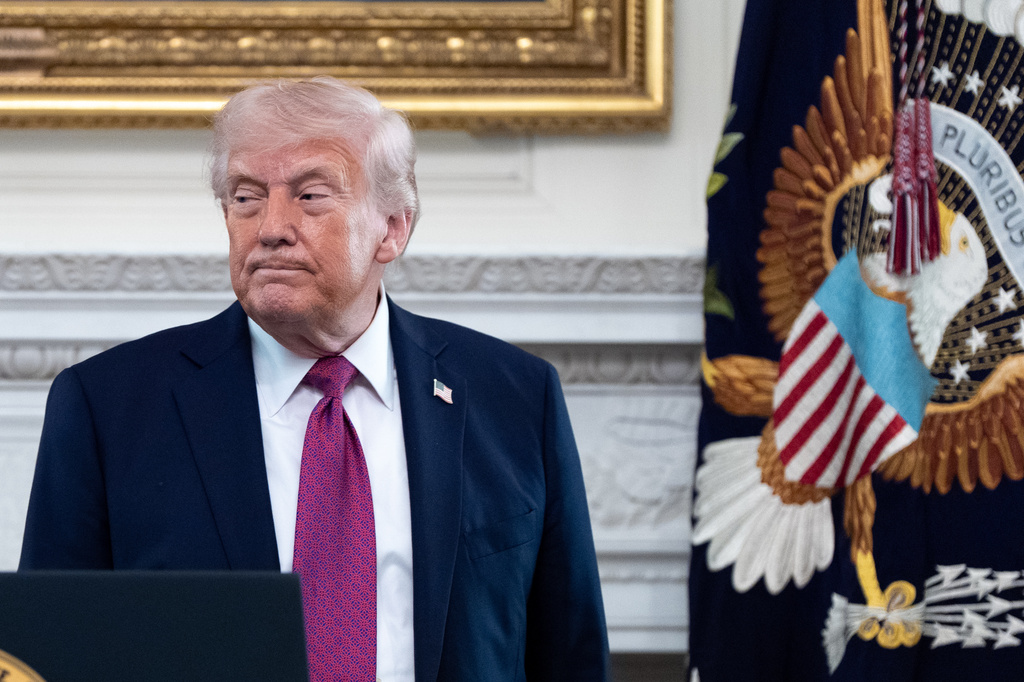
President Donald Trump departs after speaking at an event for NCAA national champions in the State Dining Room of the White House, Tuesday, April 21, 2026, in Washington. (AP Photo/Alex Brandon) |
Trump’s approval on economy falls in AP-NORC poll, showing new warning signs for president — By Josh Boak, Jesse Bedayn & Linley Sanders
Trump’s approval rating on the economy has slumped over the past month as the Iran war drives prices higher, according to a new AP-NORC poll, with even Republicans showing less faith in his leadership.
Trump’s approval rating on the economy dropped to 30% in April from 38% in a March AP-NORC poll. A similarly low share of U.S. adults, 32%, approve of the president’s leadership on Iran, which is unchanged since last month.
The findings from The Associated Press-NORC Center for Public Affairs Research show a president who is struggling with unfulfilled promises to tame inflation and testing Americans’ patience with a conflict in the Middle East that has dragged on longer than expected.
Read more on the AP-NORC poll from Boak, Bedayn & Sanders. View the AP-NORC Polling tracker. |
|
|
|