Hello!
Today’s newsletter focuses on the impact of issues such as the U.S.-Israeli war with Iran and the U.S. tariffs that companies warn will be driving up costs, disrupting supply chains and hurting consumer confidence.
Supply chain disruption and the financial impact on companies and consumers fall squarely within the governance aspect of environmental, social and governance (ESG) policies. It may seem like dry corporate plumbing, but it has real-world implications.
The Iran crisis has affected various facets of everyday life for people around the world, including for example shortages of medicines and fertilizers for farmers because shipments have been held up.
Feel free to reach out via email to Sharon.kimathi@thomsonreuters.com if you’ve also been hit by shipping delays of various goods and if you found alternative routes to receiving them.
Before we get into the major effects of soaring costs of fuel, here are some top tech and human rights stories that are on my radar: |
|
|
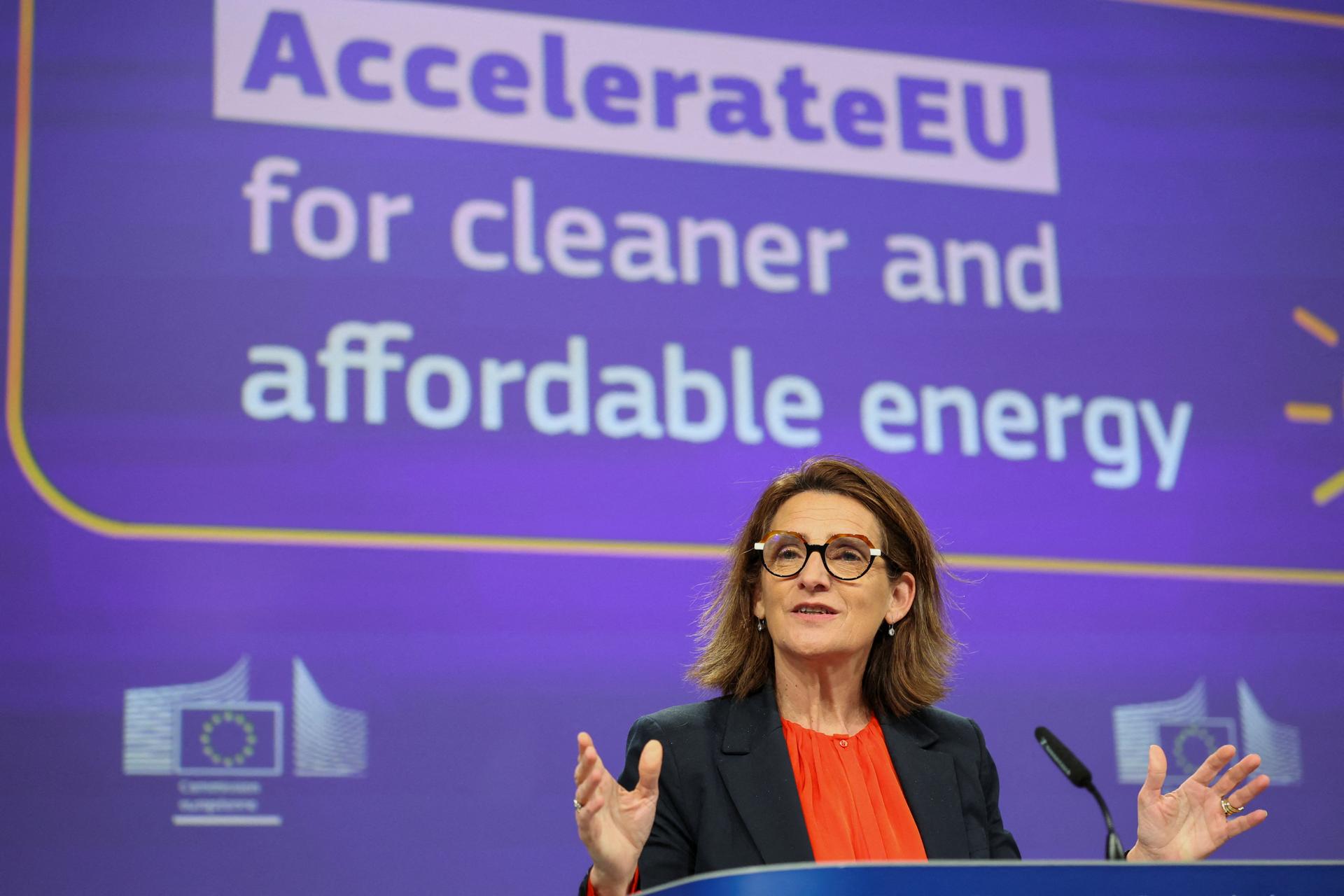
European Commission Executive Vice-President for Clean, Just and Competitive Transition Teresa Ribera holds a press conference in Brussels, Belgium. REUTERS/Omar Havana |
The companies feeling the pinch |
Oil prices jumped on Wednesday after Iran's seizures of container ships in the strait.
According to a Reuters review of company statements since the start of the war, 21 companies have withdrawn or cut financial guidance, 32 have signalled price hikes and 31 have warned of a financial hit from the conflict.
Dettol soap maker Reckitt warned of lower first‑half margins, citing high oil prices, sending its shares to October 2024 lows. French food group Danone highlighted how pressures are filtering through supply chains, citing war-related disruption to baby formula shipments alongside a baby formula recall in Europe.
In China, a warning of higher condom prices by the world's top maker has gone viral with the hashtag "condom prices rising" garnering more than 60 million views by Thursday on Chinese social media and stoking talk of stockpiling following comments by the boss of condom maker Karex Bhd, Goh Miah Kiat, who said the Malaysian company planned to raise prices by 20%-30% and possibly more if supply chain disruptions due to the Iran war drag on.
The Middle East conflict has caused a shortage of Diet Coke in India, where it is sold only in aluminium cans that have run short because of delayed shipments from the Gulf.
Elevator maker Otis Worldwide said its new equipment sales were hurt by war-related shipment delays and tariffs. TE Connectivity will have to pass on higher freight and prices of oil-based products such as resin to customers if the war is prolonged, Chief Executive Terrence Curtin told Reuters.
Travel companies have been hit hard as higher jet fuel prices force airlines and tour operators to hike fares, add fuel surcharges or ground aircraft, while geopolitical tension dents consumer confidence. "The longer this war lasts, the more we'll see these companies with less pricing power reduce guidance," Brian Madden, chief investment officer at First Avenue Investment Counsel, said.
"And the more we'll see companies that do have pricing power pass on the price increase to consumers and businesses, resulting in potentially higher inflation." |
|
|
|
Driving off without paying at the pump |
Affordability of energy has been a major issue in Europe. The European Union energy commissioner Dan Jorgensen said the Iran war's damage to Middle Eastern gas infrastructure meant prices would remain higher than expected for "a couple of years".
"Even a best-case scenario where the war ends very soon is still a bad scenario," he told Reuters. "We really do need to get rid of our dependency on gas as fast as possible. So for us, this means speeding up more clean energy."
Britain’s Petrol Retailers Association (PRA) has raised fresh concerns over a sharp rise in fuel theft across the United Kingdom, as increasing pump prices continue to put pressure on motorists and retailers. “‘The increase in pump prices has been matched by a rise in motorists driving off without paying or claiming they have no means to pay,” said Gordon Balmer, executive director of the PRA. |
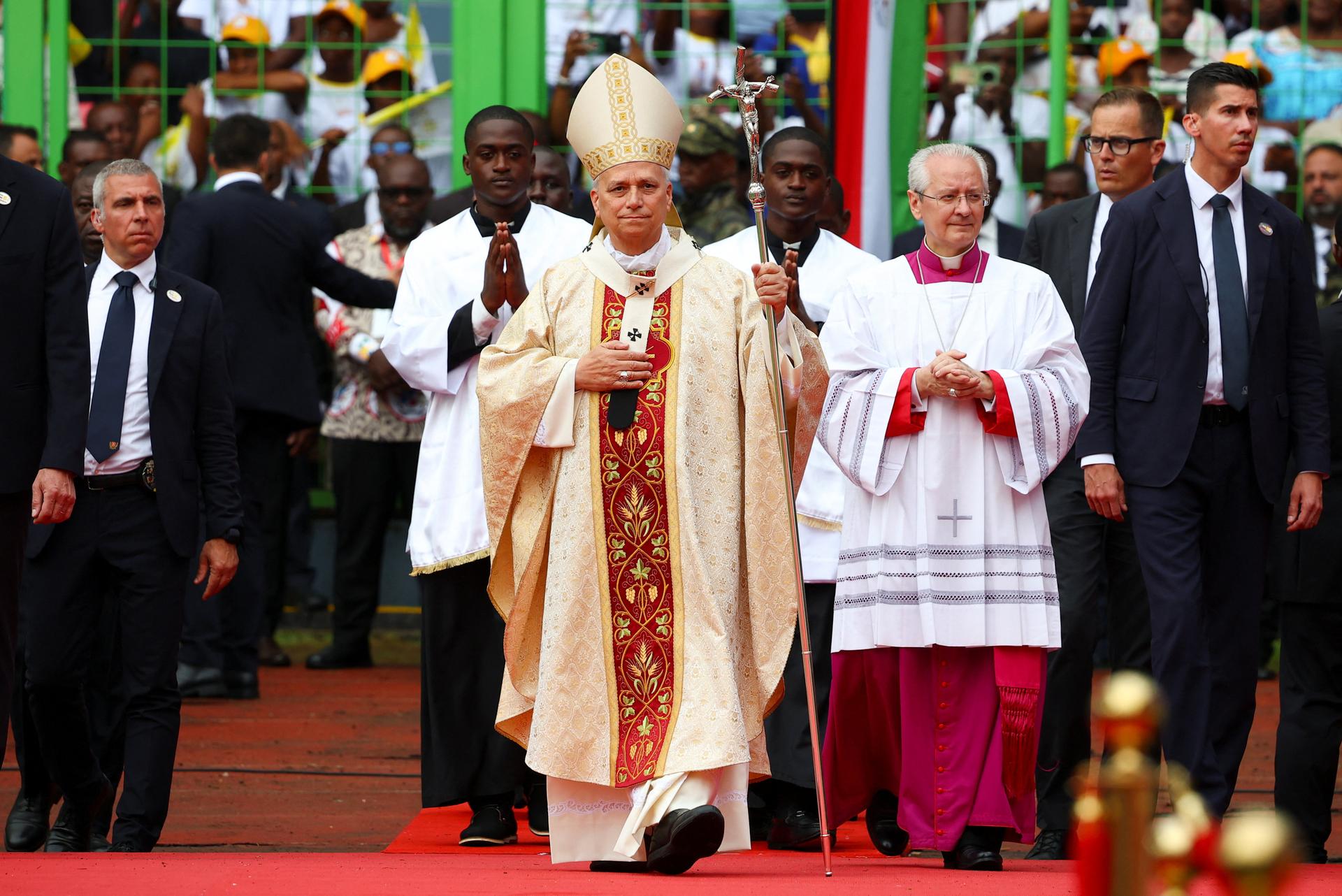
Pope Leo XIV walks, on the day he holds a holy Mass at Malabo Stadium, on the last day of his apostolic journey, in Malabo, Equatorial Guinea. REUTERS/Guglielmo Mangiapane |
-
Pope’s Africa tour: Pope Leo used the last full day of his four-nation Africa tour to speak out against wealth inequality, urging believers to work to bridge the gap between rich and poor as he traversed oil-rich Equatorial Guinea. President Teodoro Obiang Nguema Mbasogo, the world's longest-serving president, struck a deal with the Trump administration to accept deportees from other countries. Activists were hoping Leo would draw attention to the deportees sent from the U.S. to Equatorial Guinea.
-
US deportations to Africa: The U.S. administration has struck several third-country deportation agreements with African nations to further Trump's crackdown on immigration. A plane carrying deportees from Colombia, Peru and Ecuador, landed in the Democratic Republic of Congo’s capital Kinshasa last week. Reuters spoke to a Colombian woman among the group who said she was under pressure to return to Colombia despite the dangers she would face there. Click here for a story on how Washington is in talks with the Democratic Republic of Congo to resettle 1,100 Afghans who have been stranded in Qatar awaiting U.S. visas
-
UN succession: Four candidates are vying to succeed Antonio Guterres as the United Nations secretary-general from the start of next year, with the winner set to face the enormous task of revitalizing an organization in crisis, whose stature has significantly diminished in recent years. So far there are far fewer applicants than in 2016, when Guterres was chosen from a field of 13 contenders, but others can still join the race in coming months.
-
US law school DEI case: Hundreds of law professors, deans, students, lawyers and bar associations are urging the American Bar Association not to eliminate its longstanding diversity and inclusion requirement for law schools in a council vote next month. The rule has come under fire amid the administration of President Donald Trump's widespread campaign against DEI.
-
Looming job crisis: The Middle East war has dominated global finance officials' talks this week in Washington, but World Bank President Ajay Banga is sounding the alarm about a bigger, looming crisis: a huge gap in jobs for the 1.2 billion people who will reach working age in developing countries in the next 10 to 15 years as those economies will generate only about 400 million jobs, leaving a deficit of 800 million jobs, Banga told Reuters.
|
|
|
|
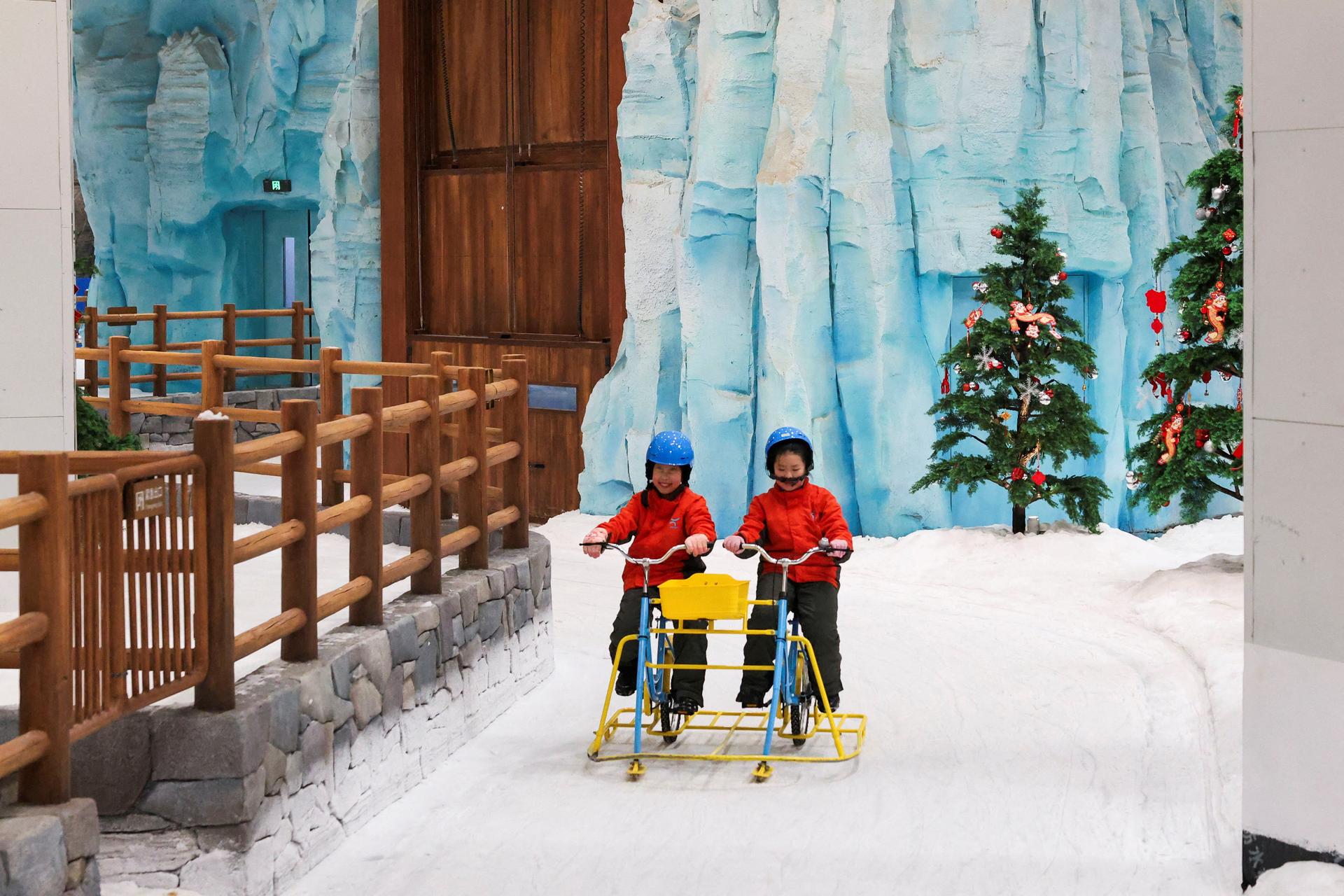
Children ride a snow bicycle at Shanghai L+SNOW Indoor Skiing Theme Resort amid an orange alert for heat in Shanghai, China. REUTERS/Go Nakamura/ |
Today’s spotlight sticks with the ‘social’ focus as we look at how China is urging cities to integrate youth development into urban planning, housing, healthcare, education and public services, in a broader push to make urban life more supportive for young people, children and families.
The blueprint, jointly issued by 15 departments, aims to deepen the construction of "youth-development-oriented cities," with measures spanning jobs, housing, healthcare, family support and urban services. It comes after Beijing said in March that it would build a "childbirth friendly society" from 2026 to 2030. |
|
|
|
Sustainable Switch was edited by Emelia Sithole-Matarise. |
|
|
|
|