The world’s polar-bear capital, Himalayan-inspired incense and a dispatch from the Delphi Economic Forum.
|
Friday 24/4/26
|

|
|
London
Paris
Zürich
Milan
Bangkok
Tokyo
Toronto
|
|
|
|

Good morning. Monocle’s May issue is out now, featuring our 2026 Design Awards – a round-up of the top-25 architects, studios and products to improve your life this year. Inside, we flit from Amsterdam to Cairo, reporting on everything from downtown regeneration to dependable diners. We also meet a pack of handsome watch dogs, catch a train in the Canadian tundra (it was late) and present our Timekeeping Special. Pick up a copy or peruse the issue online at monocle.com. For now, here’s today’s Minute:
THE OPINION: Milan Design Week gets heady
DIPLOMACY: Dispatch from the Delphi Economic Forum
DAILY TREAT: Scent your home with Himalayan-inspired incense
IN PRINT: A 45-hour train journey to the world’s polar-bear capital
|
|
Milan Design Week thinks outside the box as the industry reacts to a fractured zeitgeist
By Grace Charlton
|

|
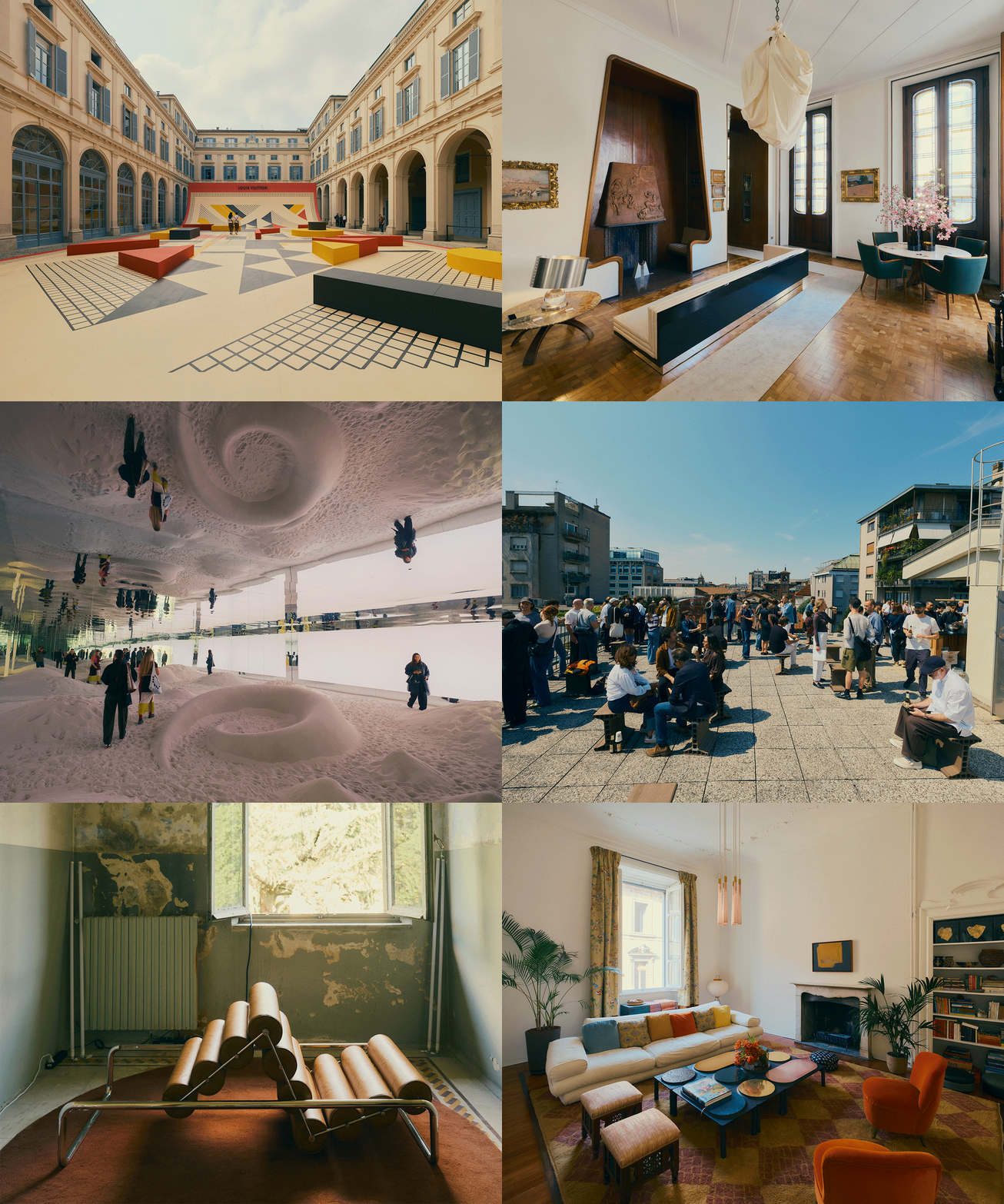
Milan Design Week may come to a close this weekend but not to a neat conclusion. The presence of industries with design adjacencies (namely car brands, hospitality groups and fashion houses) was in retreat for the first time since the coronavirus pandemic, with budgets tightening amid economic and geopolitical volatility. No overarching aesthetic emerged to rival last year’s dominance of stainless steel and its seductive palette of deep reds, nor the cream bouclé and soft shapes of the year before that. It seems that the zeitgeist is too elusive, too fractured to be neatly summed up.
Nonetheless, Milan Design Week did its usual sweeping through the Lombard capital, prying open the courtyard gates of palazzos for events and installations. At cocktail parties in church cloisters, DJs became high priests for the night, lording over congregations of characters plucked out of a film by Paolo Sorrentino – feather dresses and shiny suits included. In the streets of Porta Venezia, negronis were consumed until the early hours of the morning under banners blazing “Design is act” – one to ponder on the walk home.
|
In the light of day, exhibitions offering a more intellectual narrative proved to be the most popular. Visitors to the brutalist Torre Velasca queued for hours to see showcases on Polish modernism and the legacy of Jorge Zalszupin, the Poland-born designer associated with Brazilian modernism. It was a soft-power coup from the Visteria Foundation – the Polish cultural institute dedicated to the global promotion of the country’s design and craft scene. The Triennale Milano, meanwhile, explored the legacy of design across three exhibitions: one chronicling the history of Danish furniture company Fredericia; another about British designers Edward Barber and Jay Osgerby; and finally an inside look at the Eames House, now being developed on by Spanish manufacturer Kettal.
Elsewhere, intellectualisation went a step further by removing design completely from the equation and focusing on ideas. This was most apparent with the fashion houses partaking in Milan Design Week – and perhaps a hint at the deeper existentialism pervading the industry as it recalibrates after a period of change. Jil Sander’s creative director, Simone Bellotti, launched the Reference Library, an exhibition of 60 titles chosen by the likes of Swedish singer Lykke Li and American film director Sofia Coppola. Miu Miu returned with its book club, which explored the politics of desire through the writings of French novelist Annie Ernaux and Ghanaian author Ama Ata Aidoo. Prada’s annual symposium, Prada Frames, looked at the role of image-making as a feature of our contemporary culture.
This all coincides with the rise of collectable design, be it of one-off marvels, rare antiques or objects that blur the line between design and art. Even the week’s anchor event, Salone del Mobile, a bastion of industrial and contract design, is getting in on the action with Salone Raritas, a new section of the fair reserved for collectable work.
Ultimately, there is some irony that the design world – an industry preoccupied with form and aesthetics – is seeking to transcend itself. But as brands compete for buyers and try to make sense of the times, it’s perhaps unsurprising that their first instinct is to search for a deeper meaning – in whichever shape or form it might appear.
Grace Charlton is Monocle’s associate editor of fashion and design. For more opinion, analysis and insight, subscribe to Monocle today.
|
|
DIPLOMACY: greece
Geopolitics might’ve lost its shock value but small-scale diplomacy is still worthwhile
The question that inevitably arises when Monocle Radio’s The Foreign Desk participates in various diplomatic events is whether any of this gabbing is doing much good (writes Andrew Mueller). The Delphi Economic Forum in Greece, from where this dispatch is sent, seems as good a location as any to ponder this question – certainly, many trickier questions have been pondered just up the street at ancient Delphi, where the cloak-clad sages of 20-odd centuries ago consulted the Delphic Oracle.
For most Western democracies that aren’t the US, the set text of the foreseeable future is likely to remain the address given to the World Economic Forum in January by Canadian prime minister Mark Carney – the still-rippling impact of which is in itself something of an advertisement for events such as these. Carney’s speech was a call for co-operation among the world’s middle powers in order to protect each other’s interests in the escalating absence of US leadership.
| |
|
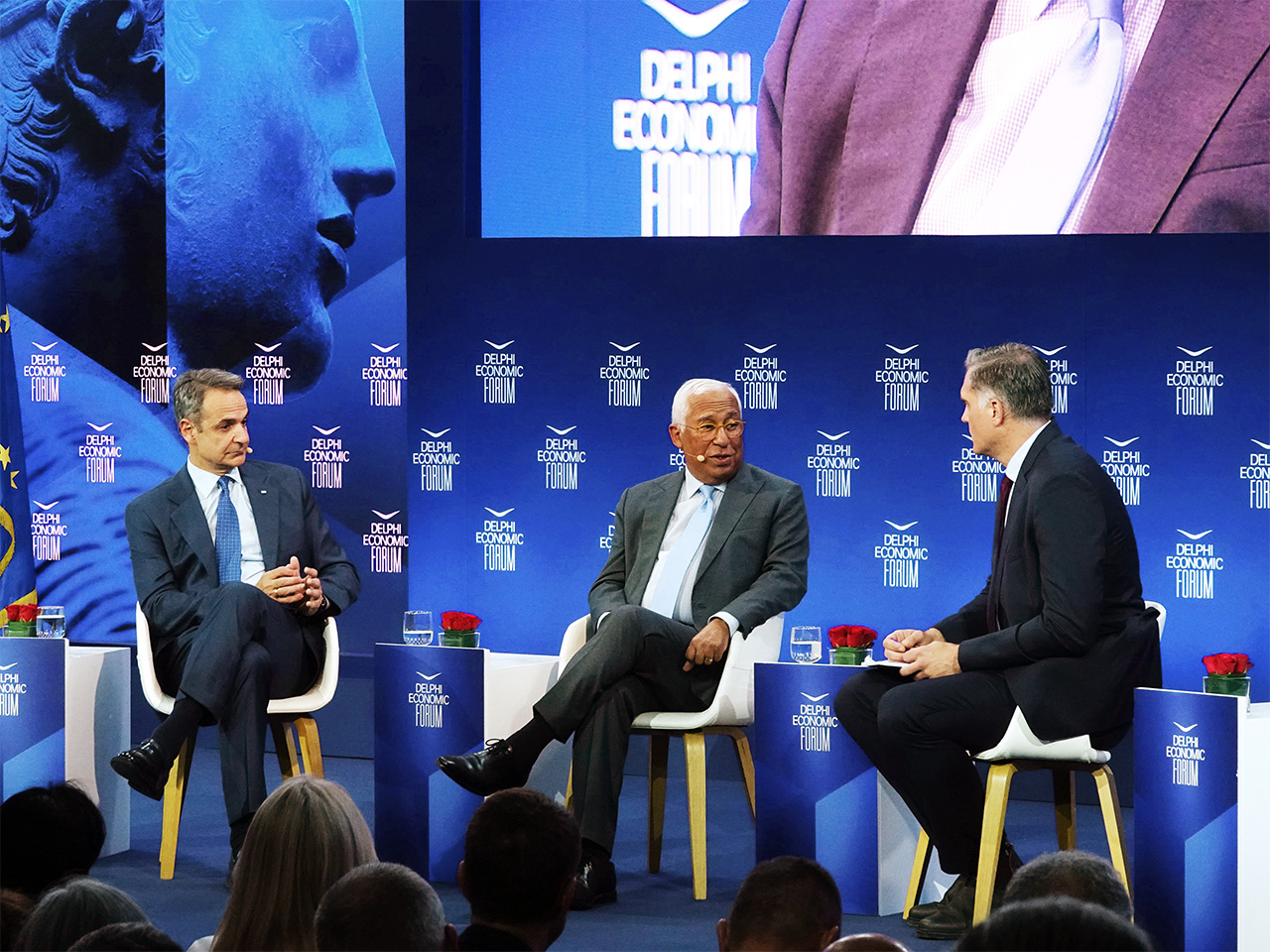
Augur of the day: Greek prime minister Kyriakos Mitsotakis (left) in conversation with European Council president Antonio Costa (centre)
|
|
Countries of roughly that rank are always well represented here at Delphi. Speakers this year include Greek prime minister Kyriakos Mitsotakis, Albanian prime minister Edi Rama, Prince Albert II of Monaco and ministers from all over an Eastern Mediterranean/Balkan region that’s full of small to medium-sized countries with good reason to be nervous about any upsetting of the global order.
As one such leader tells me on the first afternoon of this year’s forum, there is always value in turning up in person. “When you can look them in the eye,” says Estonia’s president, Alar Karis, “you get more confidence: are we dealing with the right people, the right person?” Great things can happen at an espresso station.
Read the full version of Andrew Mueller’s Delphi dispatch here. Or tune in to Monocle Radio for the latest.
|
|
• • • • • DAILY TREAT • • • • •
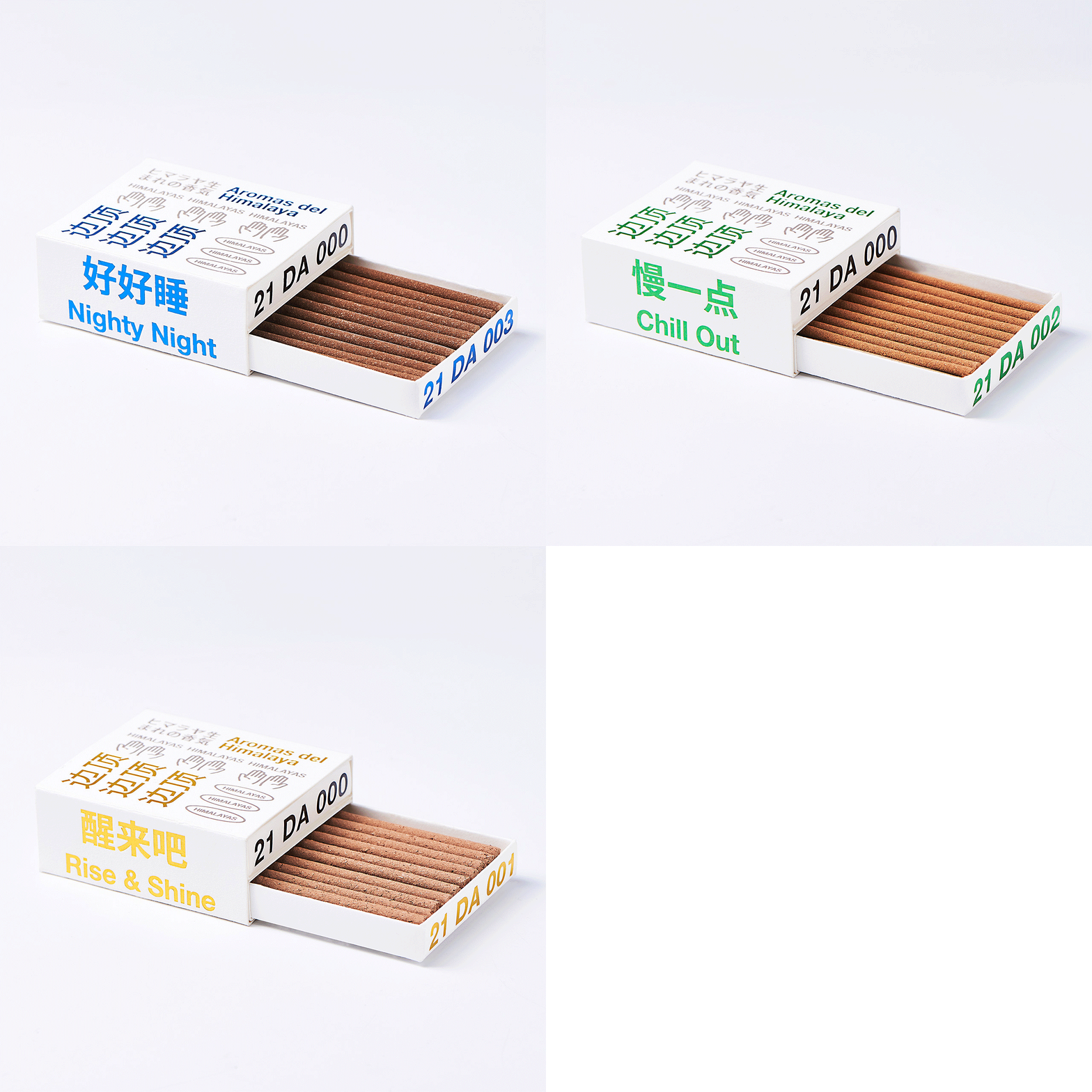
Immerse yourself in the Himalayas with incense from Be Boundless
Beijinger Lydia Wang turned her personal interest in Tibetan medicine, meditation and yoga into a business in 2020 when she established incense brand Be Boundless. The label’s all-natural sticks are shorter than traditional incense from Lhasa, so they fit easily into a carry-on.
Wang tapped one of China’s leading graphic designers, Li Xibin, to create the branding, which features block colours and a bold typeface. A box set comes with 60 sticks in three scents, as well as a small, wooden pull-out tray. The Nighty Night scent – made from dong quai, clove, narra safflower and myrobalan – is a popular pick.
beboundless.info
|
|
in print: Canada
In from the cold: A 45-hour train journey to remote Churchill, Canada in the depths of winter
Residents of Churchill have carved out a living amid the icy wilderness. But how will the region’s growth as a tourism destination and global trade route transform their relationship with its rugged beauty?

| |
|
Stopping cold: The Pas (pronounced ‘The Paw’) station on Via Rail Canada’s Hudson Bay line
|
|
| |
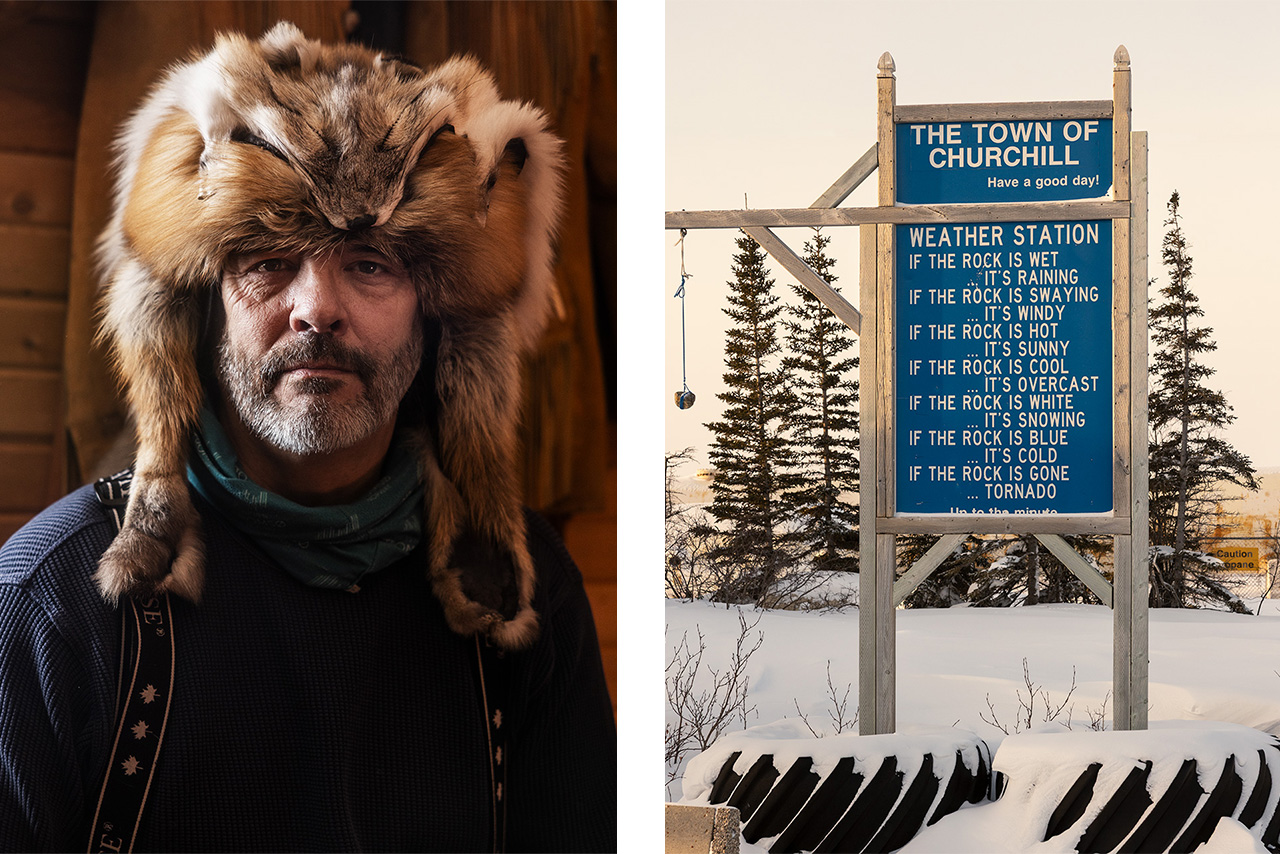
Fur out: Churchill resident Dave ‘The Big Dog’ Daley, who runs Wapusk Adventures
|
|
The Via Rail Canada website promises an “adventure of a lifetime” – a 1,700km train journey through boreal forest and tundra from Winnipeg to the subarctic port town of Churchill, the polar-bear capital of the world (writes Ann Marie Gardner). It all sounds so swashbuckling, even when it’s the off-season for bear spotting (at this time of year they’re out on the ice, hunting seals). After all, there will still be the northern lights and the end-of-the-world remoteness to enthral us. Monocle arrives at Winnipeg’s Union Station an hour early for the 12.05 train. The station is almost deserted and we only have a handful of travellers for company. There are no departure boards, no other trains and no shops (though thankfully there are a couple of vending machines). We end up sitting in this cold, echoey hall for almost seven hours; hour after hour, the train is delayed. It finally sets off at 17.45. The question arises soon after boarding: will the “magic” of Churchill that tourism websites tout be enough to justify this ride?
Click here to find out more about the town – and to join us on the journey – in Monocle’s May issue.
|
|
the LIST: FROM monocle.com
Stories you might have missed
Not been on monocle.com recently? Here are three reads from the new May issue worth your while.
|
|
| | |