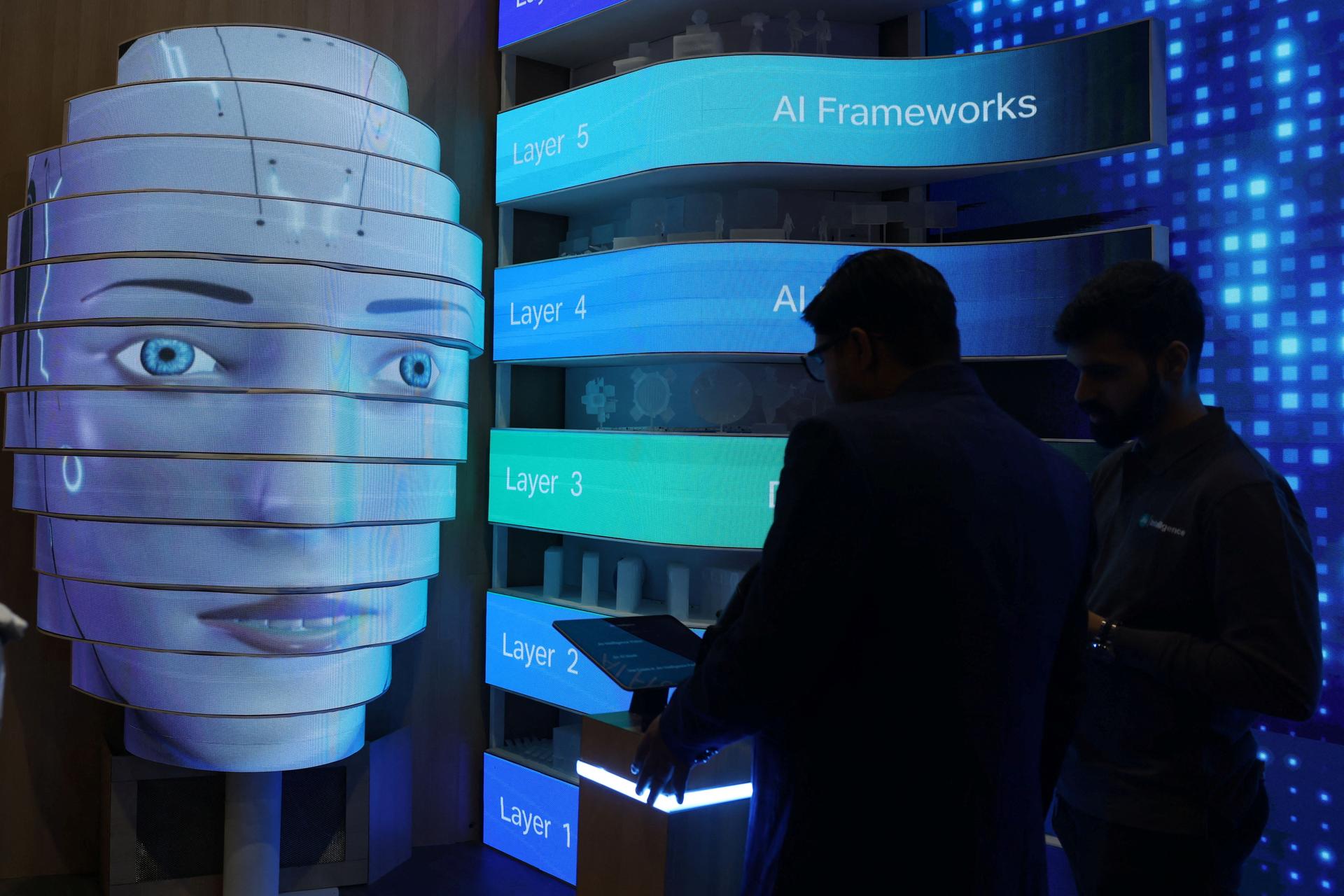
The shift is spreading beyond permanent hiring, with Indian firms increasingly turning to contract and outsourced staffing as AI uncertainty reshapes workforce planning.
“Companies are becoming more cautious about long-term fixed costs,” said TeamLease Services Chief Strategy Officer Subburathinam P. Its CFO Ramani Dathi said firms were being advised to keep “20%-30% of their workforce on outsourced or variable models”.
Click here to read how India’s AI-driven outsourcing shift threatens to deepen pressure on the country’s consumption-led economy as white-collar jobs begin disappearing across global technology centres.
Globally, the changes are starker. Standard Chartered plans to cut more than 7,000 jobs while ramping up AI investments. “It’s not cost-cutting. It’s replacing in some cases lower-value human capital,” CEO Bill Winters said.
Some of the most affected roles will be in the bank’s back-office centres, including Chennai and Bengaluru, two of India’s biggest global technology hubs for multinationals.
The skills companies want are changing too. Kimberly-Clark said employees now needed domain expertise alongside AI literacy as automation handles routine coding tasks more and more.
Even companies that are continuing to hire signalled that the old outsourcing playbook is evolving.
Southwest Airlines plans to scale its Hyderabad technology centre to about 1,000 employees over the next few years. But Krishna Kallepalli, vice president and global head of innovation (India) at the airline, said the new office was not intended to operate as a traditional back-office hub.
"We don't want to just do a lift and shift and create another back office," he said. "We are looking at business capabilities that are technology-infused."
The message is clear: India remains critical to multinational companies, but AI is significantly altering the long-standing link between growth and hiring.