| Daily coverage for the global derivatives industry | SIGN UP ⋅ SHARE |
|
|
 
|
European Central Bank Executive Board member Isabel Schnabel has advocated for an interest-rate increase next month to counter a persistent energy shock, regardless of the Middle East conflict's outcome. "Given the size and the persistence of the current shock, looking through is no longer an option in my view," Schnabel tells Reuters, adding that "even if the war ended today, a lot of damage has already been done to energy infrastructure and global supply chains."
|
|
|
Regulatory changes in the US and UK have allowed major banks to expand balance sheets by about $1.3 trillion over the past two quarters, with research showing further reforms could unlock nearly $2.9 trillion in additional capacity. The shift contrasts with tighter capital requirements facing large EU and Swiss lenders, widening competitive gaps in global banking and helping US firms gain market share in trading and capital markets activity.
|
|
|
|
The rapid expansion of hyperscaler debt has fueled an extraordinary rise in demand for credit derivatives, particularly credit default swaps. Banks, seeking to manage growing exposure to tech giants and unlock further lending capacity, are purchasing record volumes of CDS protection. This demand is driving the cost of CDS on hyperscalers to levels well above those typical for their high credit ratings. CVA desks are among the main drivers, using derivatives to navigate credit limits and hedge exposures linked to both direct loans and cross-currency swaps.
|
|
|
Treasury yields fell as investors reacted to the potential for a US-Iran deal, which has pushed oil prices lower and eased inflation concerns. The yield on the two-year Treasury note dropped to 4.06%, the 10-year to 4.51%, and the 30-year to 5.03%.
|
|
|
Swap rates in India have surged to multi-year highs since the US-Iran war erupted in early 2026, with the three-year overnight index swap reaching its highest point since 2023. This spike is fueled by market expectations of tighter monetary policy in response to oil-driven inflation, with traders pricing in 125 basis points of rate hikes over the next year. Fund managers are capitalizing on these elevated swap rates to enhance returns through innovative bond-swap trades.
|
|
|
South Korea said it will monitor roughly $37 billion of overseas private credit exposure held by financial firms and pension funds following recent global stress in the sector tied to redemption pressures and AI-related risks. Regulators said overall exposure remains manageable relative to total assets, while insurers accounted for the largest share of holdings and liquidity risks were limited by low exposure to open-ended funds.
|
|
|
European banks have tied more than $500 billion of corporate loans to significant risk transfer trades as lenders increasingly use the structures to free up capital and support lending growth, acquisitions and shareholder returns. Regulators including the European Central Bank and Bank of England are stepping up scrutiny of the fast-growing market over concerns about rollover risk, leverage and deeper links between banks and nonbank investors.
|
|
|
|
The US Commodity Futures Trading Commission has undergone significant changes under the Trump administration, particularly regarding prediction markets and cryptocurrency enforcement. Former officials Caroline Pham and Brigitte Weyls played crucial roles in facilitating companies' ambitions in prediction markets, raising concerns about fair treatment of bettors and fraud prevention. Under Chairman Michael Selig, the CFTC has shifted from stringent enforcement to a more industry-friendly approach, reducing workforce and enforcement actions. This transformation has been influenced by the Trump family's ties to the crypto and prediction market industries, posing potential risks to consumers and the financial system.
|
|
|
The US Securities and Exchange Commission has delayed a plan to grant broad exemptions for trading tokenized assets linked to stocks. The "innovation exemption" aimed to encourage trading of tokenized stocks through decentralized finance protocols, but the SEC's analysis highlights the potential for market fragmentation and reduced regulatory protection.
|
|
|
The possibilities are limitless when generations move forward together. Join the AARP Employer Alliance. Learn More |
|
|

|
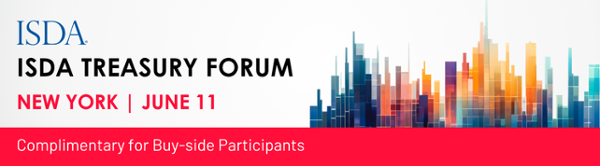
With less than six months to go until market participants are required to clear cash Treasury transactions under a rule introduced by the Securities and Exchange Commission, and 12 months until repo trades are required to be cleared, the ISDA Treasury Forum will explore the milestones that have been achieved and discuss what remains to be done. Featuring leading market participants and infrastructures, the event will cover everything market participants need to know as the deadline approaches. Click here to register today!
|
|
|
This comprehensive 2-day masterclass will provide market participants with the essential knowledge to navigate the complex area of Accounting for Derivatives. Led by a team of senior industry practitioners and accounting specialists, this course will equip professionals with a deep practical knowledge of core accounting issues and strategies, as well as insights into emerging trends reshaping the derivatives business. Click here to register.
|
|
|
| Check out the Latest Research Papers |
|
|
| ISDA® is a registered trademark of the International Swaps and Derivatives Association, Inc. |
|
|
|
|
| Got this from a friend? Subscribe now and stay in the loop! |
|
| | |