| | More fire between Iran and Israel tests the ceasefire and the Trump-Netanyahu relationship, Ukraine ͏ ͏ ͏ ͏ ͏ ͏ |
| |  | Flagship |  |
| |
|
The World Today | 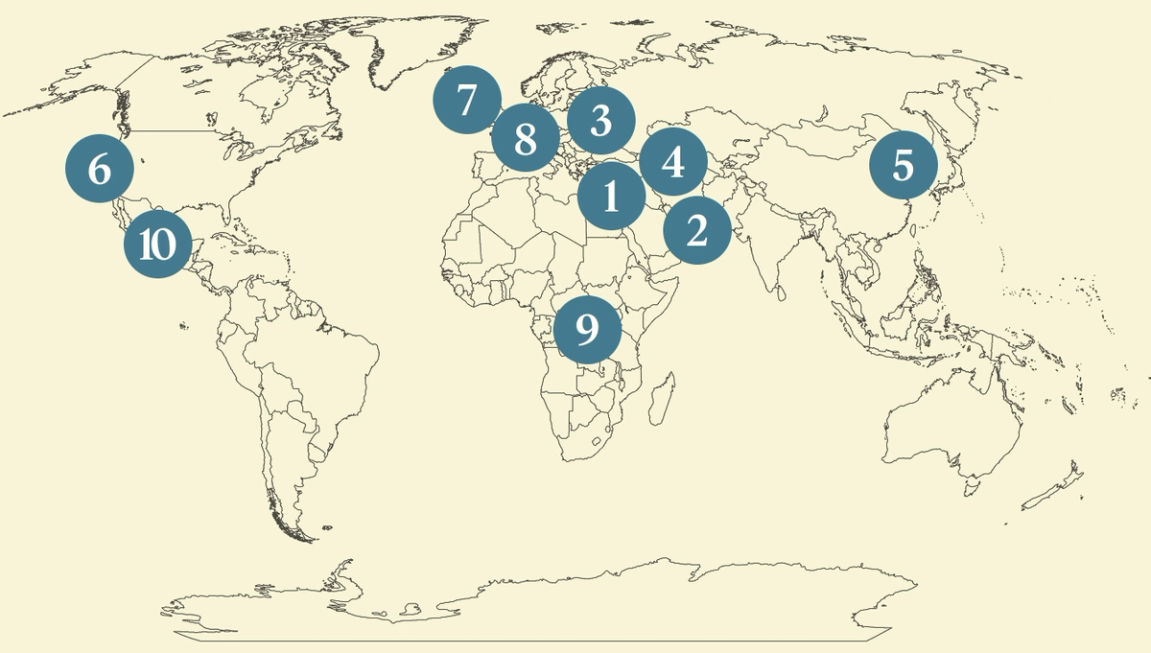 - Iran, Israel exchange fire
- Airlines’ jet fuel crisis
- Ukraine’s growing ambition
- Pro-EU victory in Armenia
- Xi looks to win over Kim
- AI’s double-edged sword
- Data center backlash
- The era of ‘hyperpolitics’
- New fund to fight Ebola
- Iran’s World Cup challenge
 The London Review of Substacks, and a book following in the footsteps of a great American wanderer. |
|
Mideast strikes test ceasefire |
 Ammar Awad/Reuters Ammar Awad/ReutersIran and Israel exchanged their most intense strikes in months, further straining an already shaky ceasefire as well as the US-Israeli relationship. Oil prices jumped 5% and stocks fell on the news. US President Donald Trump had been trying to lower the temperature, telling the Financial Times that Israeli Prime Minister Benjamin Netanyahu would ultimately accept a Washington-Tehran truce. Netanyahu’s apparent refusal underlines tension between the allies: US intelligence is concerned about Israeli spying on American officials, The Wall Street Journal reported. Israel is also increasingly isolated elsewhere. Public opinion towards it has sharply worsened in the last year, with majorities in most countries polled having unfavorable views towards it, and confidence in Netanyahu has plummeted. |
|
Iran war fuel impacts grow |
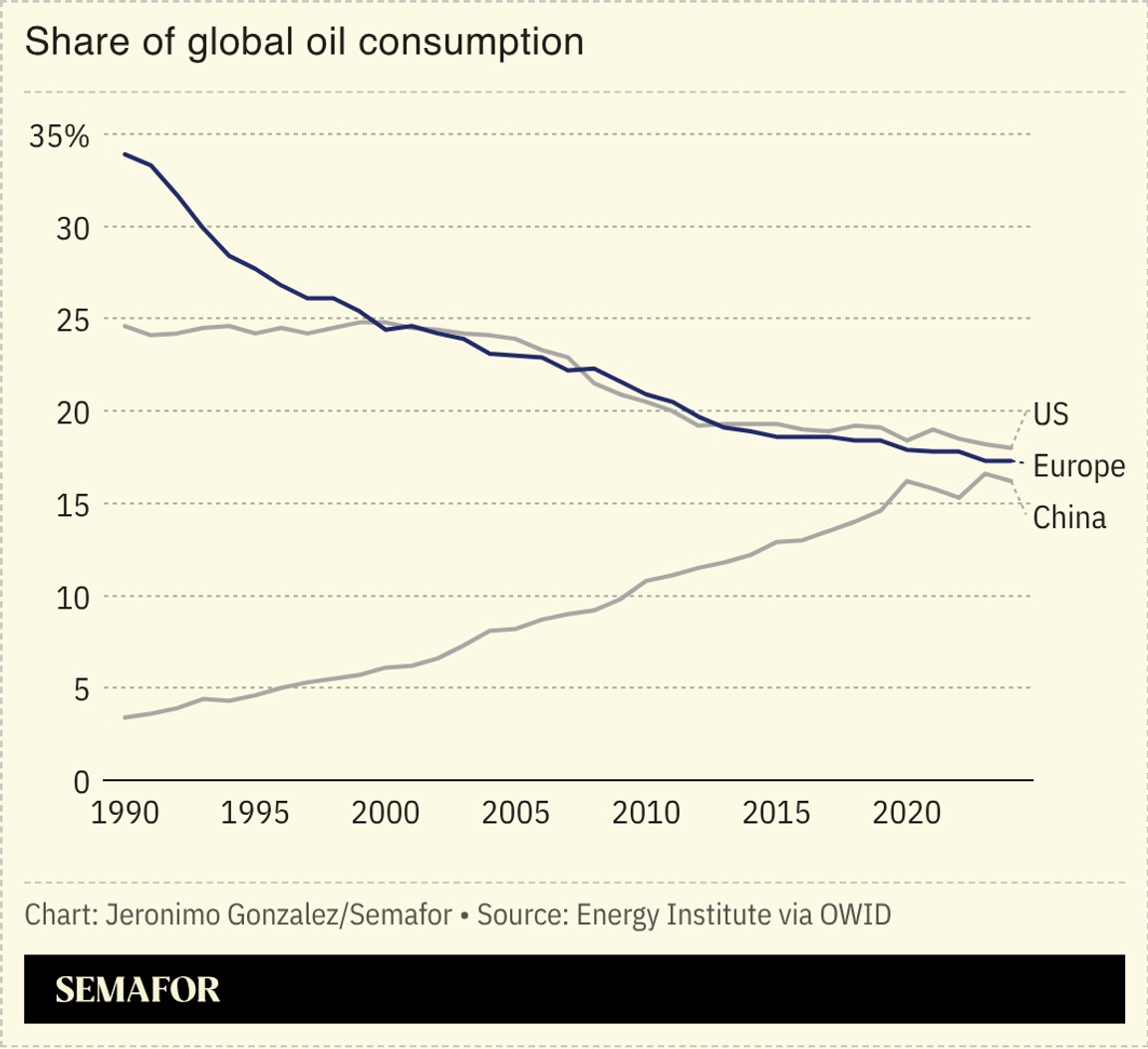 Europeans are driving less and the airline industry is facing a $100 billion fuel hit as the Iran war’s energy impacts expand. Eurozone petrol sales fell 3.5% year-on-year in April, the first drop in almost two years; the UK saw even greater declines. Airlines, meanwhile, warned that margins and profits will halve this year, with the sector especially vulnerable because aircraft makers are behind on deliveries, meaning firms are relying on older, more fuel-hungry planes. British Airways said that air fares will likely rise again if fuel prices stay high, while an industry body noted that global profits per passenger were down to $4.50 and said that some airlines will likely follow the budget carrier Spirit Airlines out of business. |
|
Ukraine’s growing ambitions |
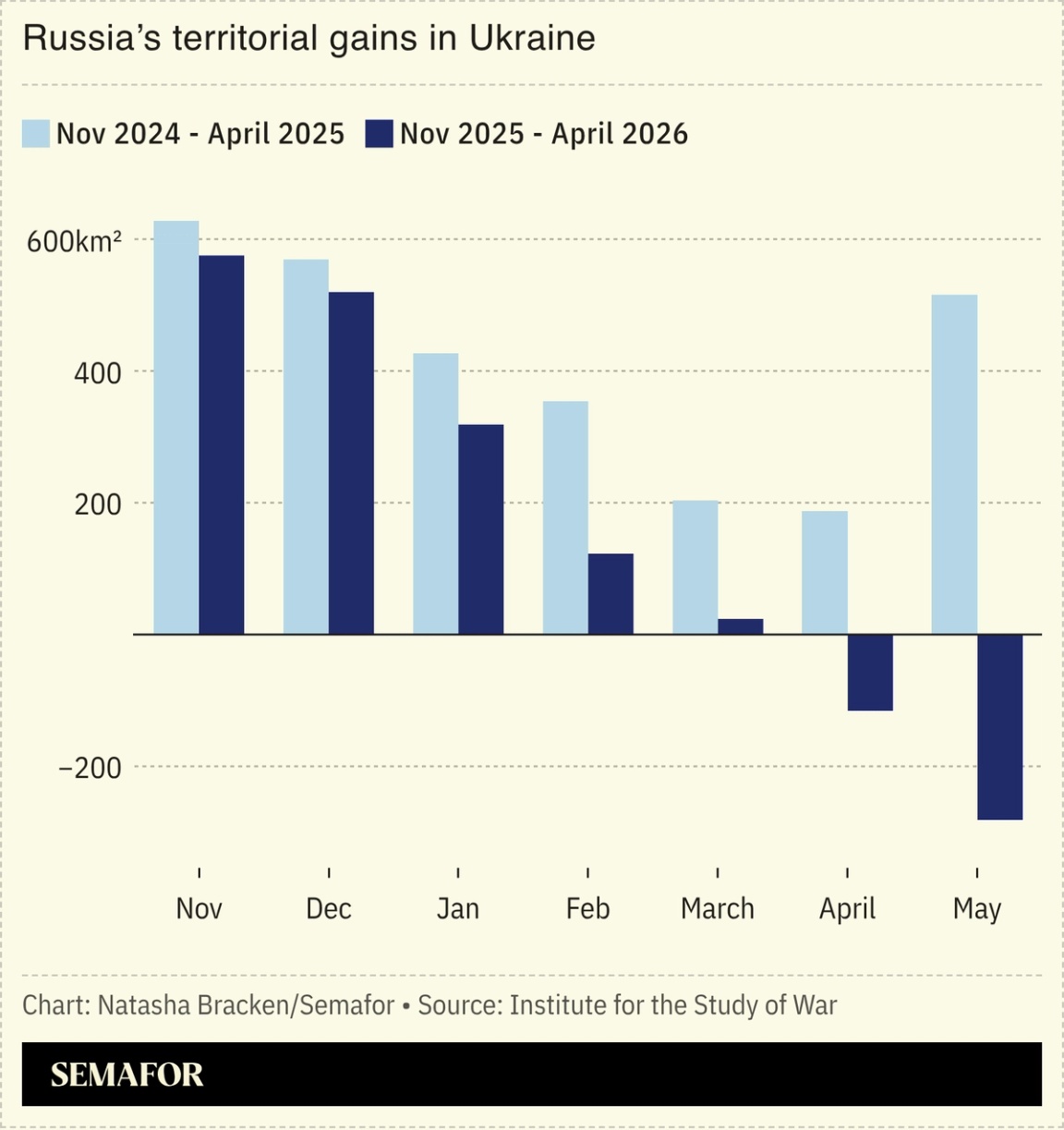 Ukrainian drones struck St Petersburg for the second time in a week, a showcase of Kyiv’s growing confidence and capabilities. Kyiv’s attacks are getting more precise — thanks to the real-time use of commercial satellite imagery, The Wall Street Journal reported — and more ambitious in scope. Ukraine may soon have more backing. Its biggest European allies this weekend set out conditions for peace with Moscow, which had rejected Ukraine’s earlier call for a truce, while NATO countries are weighing a €70 billion military aid package. With US support all but halting, European countries have stepped up, allocating €2 billion a month in the first four months of this year. |
|
AI’s business opportunities |
 Dado Ruvic/Illustration/Reuters Dado Ruvic/Illustration/ReutersAI may be limiting early-career job opportunities, but it is also driving innovation and entrepreneurship, analysts argued. Apollo’s chief economist noted that the number of solo-founder startups formed has skyrocketed since 2023, suggesting that AI tools are “making it dramatically easier for individuals to launch businesses.” Young people in China, meanwhile, are fighting over a relatively small number of jobs, The Wire China noted, but the owners of small businesses are able to expand their offering by using AI tools to do what would once have required large teams. Even apparently non-technological industries such as farming are changing: Driverless tractors, crop-monitoring drones, and precision laser weeders are among the AI systems boosting yields, The New York Times reported. |
|
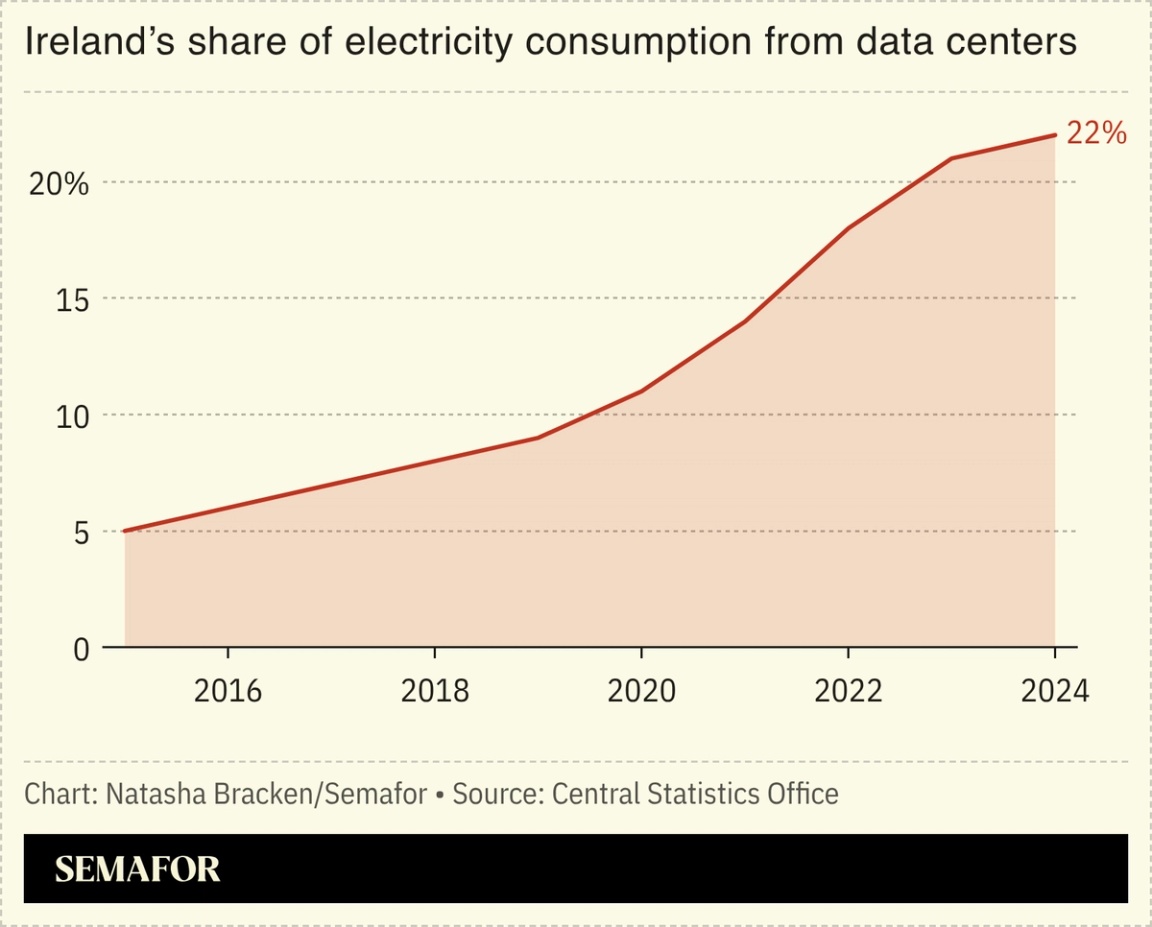
Data center backlash grows |
|
The West’s age of ‘hyperpolitics’ |
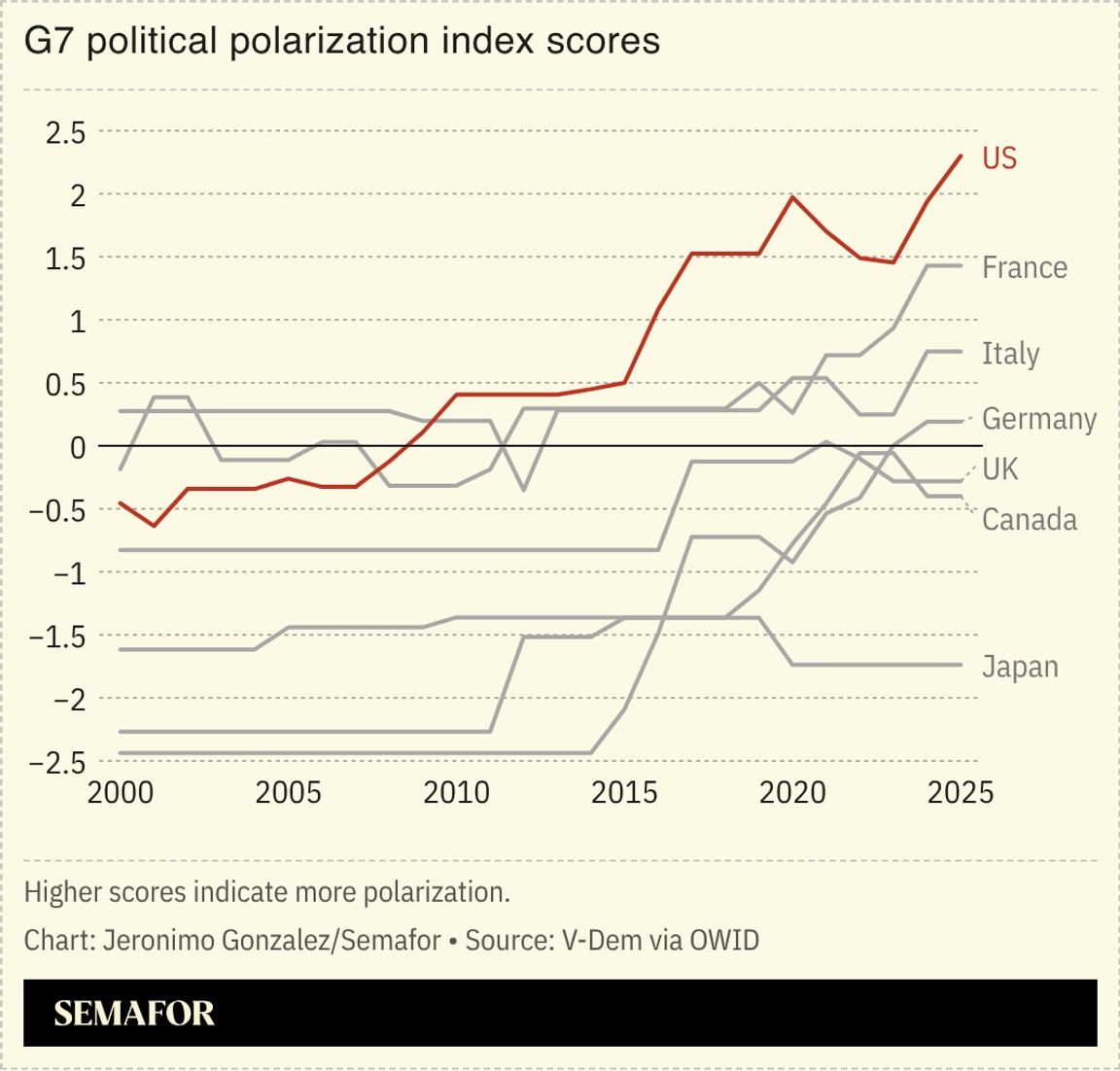 The West is in an age of “hyperpolitics” in which polarization has surged but institutions are incapable of delivering change, a leading researcher argued. Unlike in prior periods of political tension, the Oxford academic Anton Jäger said, people today are able to easily get involved in debates thanks to social media, but do not do so via a party, union, or other group: They “politicize without institutionalizing,” Jäger noted on the European Council on Foreign Relations podcast. That has resulted in a “mania” in contemporary politics in which voters’ demands are ever-easier to express, but because of a lack of durable support or attention, parties and leaders cannot enact long-term change, resulting in a “perfect recipe for frustration.” |
|
WHO readies $500M Ebola fight |
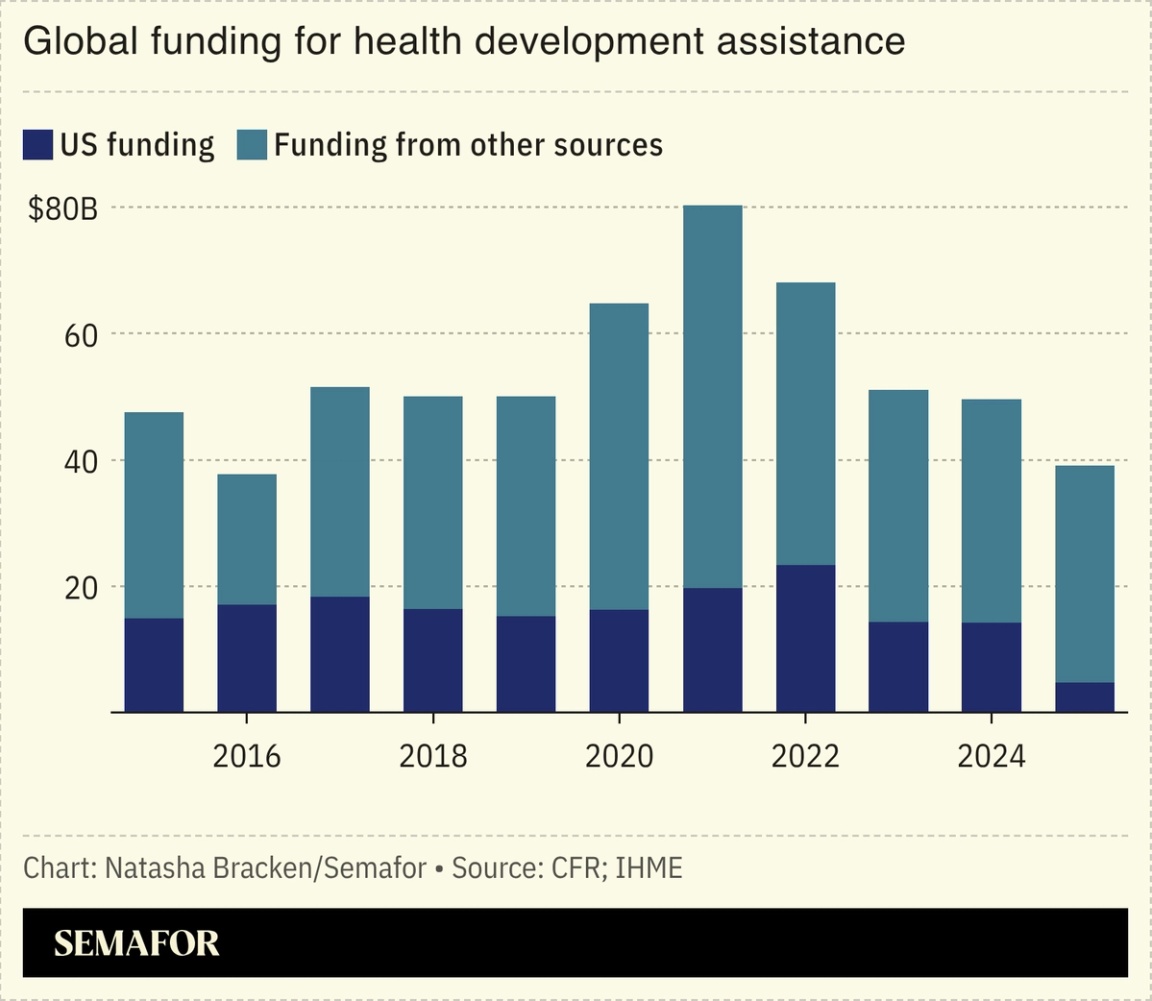 The World Health Organization launched a $500 million plan to curb the spread of Ebola in Africa, though questions remained over its capacity to secure the financing. The campaign came with confirmed cases in the Democratic Republic of Congo topping 500; officials there have struggled to trace exposed contacts and to keep patients in care facilities. Misinformation and roiling regional conflicts have compounded the challenge for authorities, with rangers from the Virunga National Park, Africa’s oldest, being recruited to fight the disease too. Meanwhile modelling from the US Centers for Disease Control and Prevention showed the spread on a “dangerous trajectory” which could make it the worst Ebola outbreak on record. |
|
|