|
June 8, 2026
|
 |
| |
PROTECTING YOUNG WORKERS
|
| |
 |
|
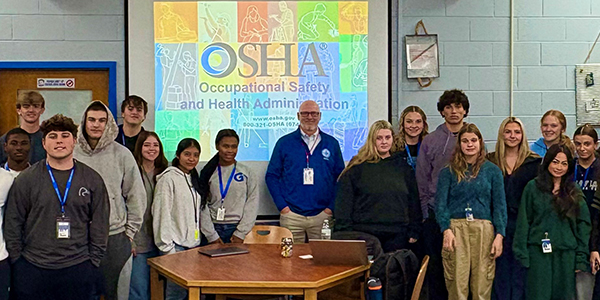
With the end of the school year comes a rush of young workers looking for jobs – often, their first one. That makes it especially important for employers to ensure these new workers understand workplace hazards, their rights to a safe and healthy workplace, and how to speak up about safety concerns.
To help prepare the next generation of workers, OSHA's Alliance partner CareerSafe, brought our Safe & Sound initiative into classrooms in April. Students explored real workplace hazards, learned about their rights, and practiced speaking up about safety concerns. Out of all the participating classes across the country that submitted write-ups of their discussions for a chance to win a prize drawing, interns at Gateway Regional High School in New Jersey were selected for a classroom pizza party and a virtual visit from OSHA leadership.
Visit our website to learn more about young workers' rights.
|
|
| |
TRENCH SAFETY
|
| |
 |
|
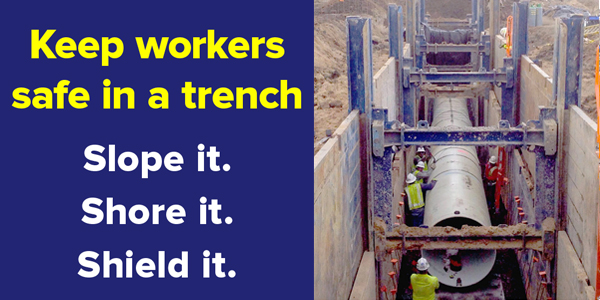
The National Utility Contractors Association is hosting its annual Trench Safety Stand Down event June 15-19. The goal is to reach those working in and around trenches and excavations with information about current excavation requirements and safety procedures. The week presents an opportunity for employers and workers to talk about the importance of safety at the job site.
A trench collapse can happen in seconds, often with devastating consequences. Workers continue to be hurt or fatally injured every year from well-known and preventable trenching hazards. Each of these tragedies could be avoided by following safety measures. That is why OSHA is focused on raising awareness, promoting compliance assistance, and reinforcing the use of protective measures on construction sites. Visit our website to learn more about improving safety in trenching and excavation work.
|
|
| |
BE PREPARED
|
| |
 |
|
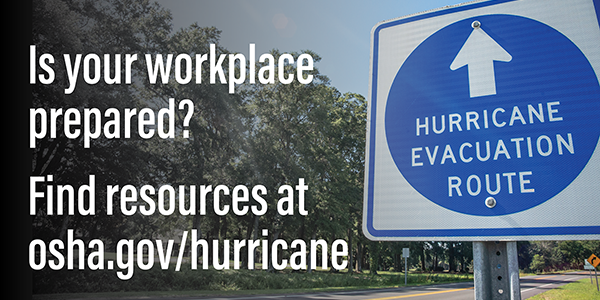
The Atlantic hurricane season began June 1 and lasts until the end of November. Now is the time to prepare, not after severe weather strikes. Storms, including hurricanes, can put workers at risk and cause significant disruptions to operations, equipment and facilities. Having an emergency plan in place can help protect workers and minimize damage to workplaces and equipment.
OSHA and Ready.gov offer resources to help employers prepare for hurricanes and other severe weather events.
|
|
| |
DATES TO REMEMBER
|
| |
|
|
| |
KEEP YOUR COOL IN THE HEAT
|
| |
 |
|
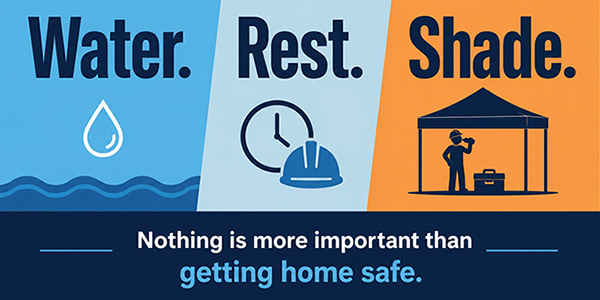
Summer is on the way, and with it, rising temperatures that increase the risk of work-related heat illness. Hazardous heat exposure can occur indoors or outdoors, and during any season if the conditions are right, not only during heat waves. This danger can be prevented by staying hydrated and taking breaks in a cool area. Planning ahead and recognizing the signs of heat illness can help reduce the risk of heat-related incidents.
|
|
| |
SAFETY IS PERSONAL
|
| |
 |
|
Every worker has a reason to work safely. For some, it's a spouse waiting at home. For others, it's a friend or loved one who expects them back at the end of the day. This short video is a reminder that everyone has a reason to follow safety procedures, wear protective equipment, such as fall protection and safety helmets – just as we take other precautions in everyday life – to prevent injuries and illnesses on the job. It matters not just for the worker, but for the loved ones who count on them to come home safe.
|
|
| |
OSHA CARES
|
| |
 |
|
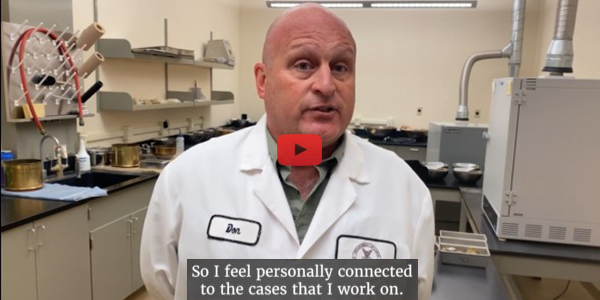
What motivates someone to dedicate a career to workplace safety? Don Halterman, one of the scientists at the OSHA Technical Center, shares why he chose a career in occupational safety and health and why the work he does is the reason he gets up every morning.
Our team of Technical Center scientists supports the work of OSHA inspectors in the field by providing expert analysis and assessments of physical evidence to determine the specific factors contributing to each occupational safety and health incident under investigation. The data they provide is crucial to OSHA's mission of preventing future workplace injuries, illnesses and fatalities.
Visit our website to learn more about the work of our technical experts in every major OSHA program area, from compliance assistance to outreach activities. Explore our OSHA CARES webpage to learn about our agency-wide effort to offer support and guidance to all workplaces.
|
|
| |
SUMMER HAZARDS
|
| |
|
|
| |
SAFETY AT EVERY LEVEL
|
| |
 |
|
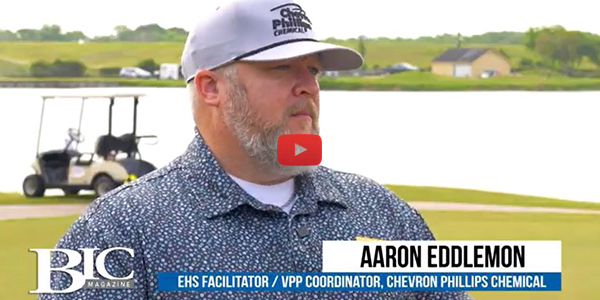
In a recent interview with BIC Magazine, Aaron Eddlemon of Chevron Phillips Chemical discussed the benefits of working with OSHA's Voluntary Protection Programs (VPP) and the role of Special Government Employees in improving workplace safety and health. The interview highlights how collaboration, employee involvement, and a strong safety culture can help organizations achieve lasting results.
For employers who are still building their safety practices, our Safety Champions Program offers a pathway to develop and implement an effective safety and health program.
|
|
| |
PROTECTING YOUR RIGHTS
|
| |
 |
|
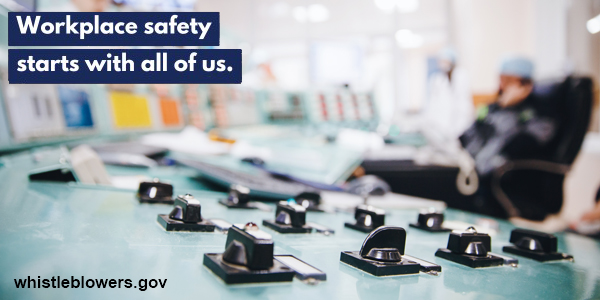
My manager placed me on unpaid administrative leave immediately after I reported defects in a safety component, recalled a worker at a nuclear power plant. After speaking up and filing a complaint with OSHA under the Energy Reorganization Act, an OSHA whistleblower investigator helped the worker reach a settlement from the employer and was able to return to their job.
This case underscores that workplace safety is a shared responsibility – both employers and workers play a crucial role, and it's essential for everyone to speak up when safety concerns arise.
Visit our website to learn more about 50 years of whistleblower protections. If you have a concern that you have been retaliated against by your employer for legally protected actions, file a complaint.
|
|
| |
WORKPLACE SAFETY MILESTONES
|
| |
 |
|
As we approach the celebration of the 250th anniversary of our nation's founding, we continue to feature important events in OSHA's history that have shaped worker safety in America.
During OSHA's third decade in the 1990s we issued the Process Safety Management standard and provided new and stronger protections for workers from falls, bloodborne pathogens, toxic substances, and hazards related to confined spaces, longshoring and marine terminals, and laboratories. Workers also began to receive safety and health training through the first OSHA Education Centers, and the agency expanded collaboration with employers through its Strategic Partnership Program.
Explore OSHA's 50th Anniversary webpage to learn more about how the agency has helped shape workplace safety and how that work continues today.
|
|
| |
YOU ASK...WE ANSWER
|
| |
 |
|
❓ Is the data submitted by employers through OSHA's online Injury and Illness Tracking Application available to the public?
| |