British Prime Minister Keir Starmer speaks outside 10 Downing Street. REUTERS/Jaimi Joy
Prime Minister Keir Starmer announced he would resign, with a new leader to be in place by the time parliament returns in September, paving the way for Britain to have its seventh leader in 10 years. Follow our live page for the latest.
A severe heatwave gripped much of Europe, with temperatures nearing 104 degrees Fahrenheit, prompting health warnings, transport disruption and signs of strain on wildlife. See how today's temperatures compare to the historic averages on our Climate Monitor.
President Trump blamed vandalism for recent problems with the newly renovated Lincoln Memorial Reflecting Pool, including its new blue paint peeling off. US Attorney Jeanine Pirro said Citations for vandalism have been issued.
Business & Markets
People check the flight tracker screens at the Dallas-Fort Worth International Airport in Texas. REUTERS/Alyssa Pointer
Airlines stand to save billions of dollars on jet fuel after an interim US-Iran peace deal sent oil prices lower, but passengers are unlikely to see immediate relief as tight capacity may allow carriers to keep fares well above pre-war levels.
SK Hynix overtook Samsung Electronics to become South Korea's most valuable listed company, marking a dramatic reversal of fortunes for a chipmaker that two decades ago nearly collapsed under debt.
China added MP Materials and USA Rare Earth, as well as eight other US entities it said are linked to the US military, to its export control list in retaliation for Washington placing several Chinese companies under restrictions.
Over the last 10 years in China, foie gras — the fattened livers of force-fed ducks or geese — has gone from a high-end delicacy to a popular, affordable product, spurring farmers to become even more ambitious.
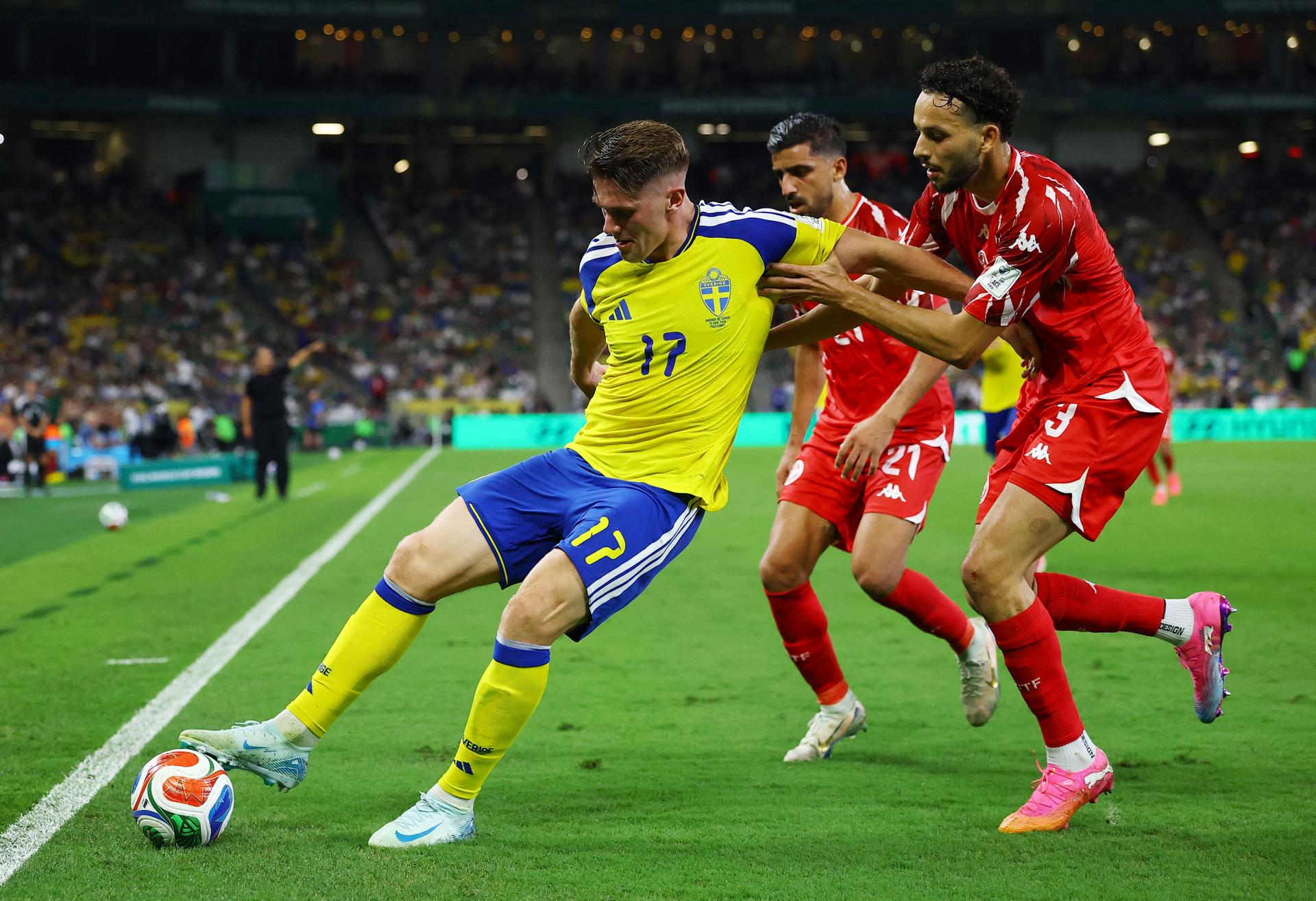
Sweden's Viktor Gyokeres in action with Tunisia's Montassar Talbi and Mohamed Amine Ben Hamida. REUTERS/Daniel Becerril
Technology inside the World Cup ball took center stage on June 14, when it helped award a disputed goal in Sweden’s 5-1 win over Tunisia. Officials used waveform data, similar to cricket’s Snickometer, to detect a slight contact with the ball, allowing the goal.
The incident highlighted how far the World Cup ball has come, from stitched leather models to sensor-equipped designs that can influence match-defining calls. Here is a look at how the ball has changed over time.