Lumina Foundation is working to increase the share of adults in the U.S. labor force with college degrees or other credentials of value leading to economic prosperity.
Much to his surprise, Iván Chaar López learned in February that he would not be awarded tenure at the University of Texas at Austin, despite enthusiastic recommendations from faculty and external reviewers. At some point while the president’s promotion and tenure committee was evaluating his application, his bid for tenure was denied.
Chaar López, who has worked at UT since 2020 as an American studies professor, never received an explanation for the denial, but he has theories based on the university’s recent decisions to consolidate ethnic studies departments and restrict what faculty can talk about in the classroom.
Federal agencies that terminated more than a thousand research grants at the University of California last year admitted that they used keywords related to diversity, gender, vaccine hesitancy, and COVID-19 to screen for projects that ran afoul of the Trump administration’s priorities.
It’s an admission that lawyers for the research professors say is proof that the agencies illegally cancelled nearly $2 billion in grants. And that’s a major development in a lawsuit filed by UC researchers against the Trump administration to permanently get their grants back.
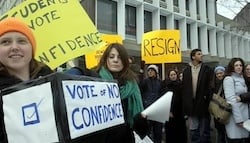
Last year, faculty at the University of Nebraska-Lincoln loudly voiced their concerns about program cuts proposed by then-Chancellor Rodney Bennett to manage a budget deficit. Later, in a first for UNL, faculty members held and passed a no-confidence measure against Bennett when their efforts failed to stall final decisions on the program eliminations. Less than two months later, Bennett resigned unexpectedly, shortly after the governing board approved his cuts.
In a new book, two former college presidents—Michael Nietzel and Charles Ambrose—detail some of the factors driving an increase in no-confidence votes and how the outcomes can lead to leadership exits and lasting tensions. They also have lessons for both college leaders and faculty in a time of ongoing financial, political, and social challenges for higher education.
Federal grant cuts and cancellations are hitting minority-serving institutions particularly hard, as they often serve first-generation, low-income, and minority communities. Without large endowments to fall back on, the cuts have forced some to scale back labs, training programs, and community partnerships.
The cuts have also threatened to crush the aspirations of young researchers who, only a few years ago, were celebrated and hired because of the expertise on race-related topics that many now feel pressure to play down.
Today's college graduates will inevitably work with artificial intelligence. The question is whether they have the judgment to know when to trust it, when to question it, and how to apply it responsibly.
Equipping students for the human + AI economy does not mean producing AI specialists in every field. It means graduating nurses, technicians, teachers, skilled tradespeople, business professionals, and entrepreneurs who combine technical expertise with sound judgment, ethical decision-making, and the human strengths that remain indispensable in an AI-enabled world, suggests the president of College of DuPage in this op-ed.
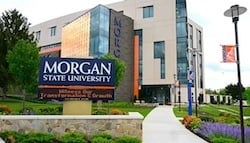
Opeyemi T. Adeniran, a Morgan State doctoral student, advocates for viewing Historically Black Colleges and Universities as "innovation ecosystems," not just talent pipelines. She founded Morgan TechFest, a student-led conference bridging the gap between academic learning and rapid industry changes.
The event is designed to integrate curriculum, community, research, and industry, fostering interdisciplinary innovation. Students present tech-driven projects across diverse fields, from AI in healthcare to racial equity, engaging with major companies like Amazon and Google. The idea is to facilitate internships and job placements, demonstrating HBCUs as vibrant innovation hubs. It also offers a model for sustained corporate partnerships, recognizing HBCUs as centers of knowledge and creativity.

.jpg?width=500&upscale=true&name=istockphoto-948942890-612x612%20(1).jpg)

.jpg?width=500&upscale=true&name=istockphoto-2232813513-612x612%20(1).jpg)