
|
 |
So you read this newsletter, but you haven’t purchased a paid subscription. There are two possibilities:
1. You just can’t afford the price of a subscription ($50/year or $6/month) right now. If that is the case, we get it! That’s exactly why Popular Information does not have a paywall. We want everyone to have access to our work, regardless of their financial resources.
2. You value independent accountability journalism and understand why it is critical to preserving and protecting democracy. You have thought about supporting Popular Information, but you just haven’t gotten around to it. That’s how it goes — life is busy.
But maybe today is the day! It takes a minute, and paid subscribers are the entire reason this newsletter exists. Popular Information has no corporate owners or billionaire backers. We count on readers like you.


 |
On Wednesday, the Trump administration signed a 30-year nuclear agreement with Saudi Arabia that paves the way for the kingdom to enrich its own uranium. The Saudi government has been aggressively seeking such a deal for years, eager to gain an edge over regional rivals. The agreement lacks safeguards that previous administrations, and many independent foreign policy analysts, viewed as essential to prevent nuclear proliferation.
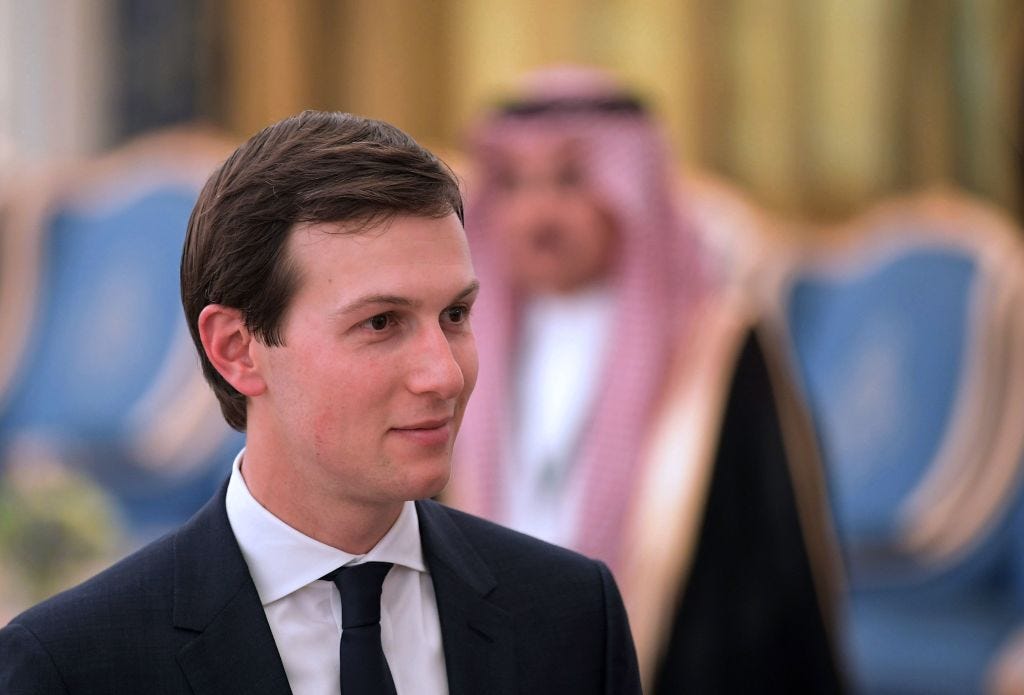
The deal comes after the Saudi government’s Public Investment Fund (PIF) invested $2 billion in Jared Kushner’s private equity fund, Affinity Partners. Since 2021, Kushner, President Trump’s son-in-law, has collected over $110 million from the Saudi government in management fees. In March, Kushner was seeking billions more from the Saudis. (After Kushner’s fundraising was exposed, his efforts were purportedly put on hold.)
Kushner also has a close personal relationship with Saudi Crown Prince Mohammed bin Salman (MBS) — the pair are known to communicate regularly over WhatsApp. In 2021, when the PIF committee originally recommended rejecting Kushner’s proposal due to the high price and Kushner’s inexperience, MBS overruled the recommendation.
As he continues to collect fees from the Saudi government, Kushner has resumed his role as a top foreign policy aide to Trump. He has played a key role in virtually every significant foreign policy negotiation since Trump returned to the White House.
Kushner’s specific involvement in the nuclear pact, if any, has not been disclosed. But the fact that one of the president’s top foreign policy advisors is receiving large, ongoing financial payments from the Saudi government is unquestionably relevant to the story.
 |
|
Nearly all major media coverage of the US-Saudi nuclear agreement ignored Kushner’s financial conflicts — including articles by the Wall Street Journal, Washington Post, AP, and CNN.