| | Fears of escalating conflict in the Middle East drive oil prices up, analysts and executives argue f͏ ͏ ͏ ͏ ͏ ͏ |
| |  | Energy |  |
| |
|
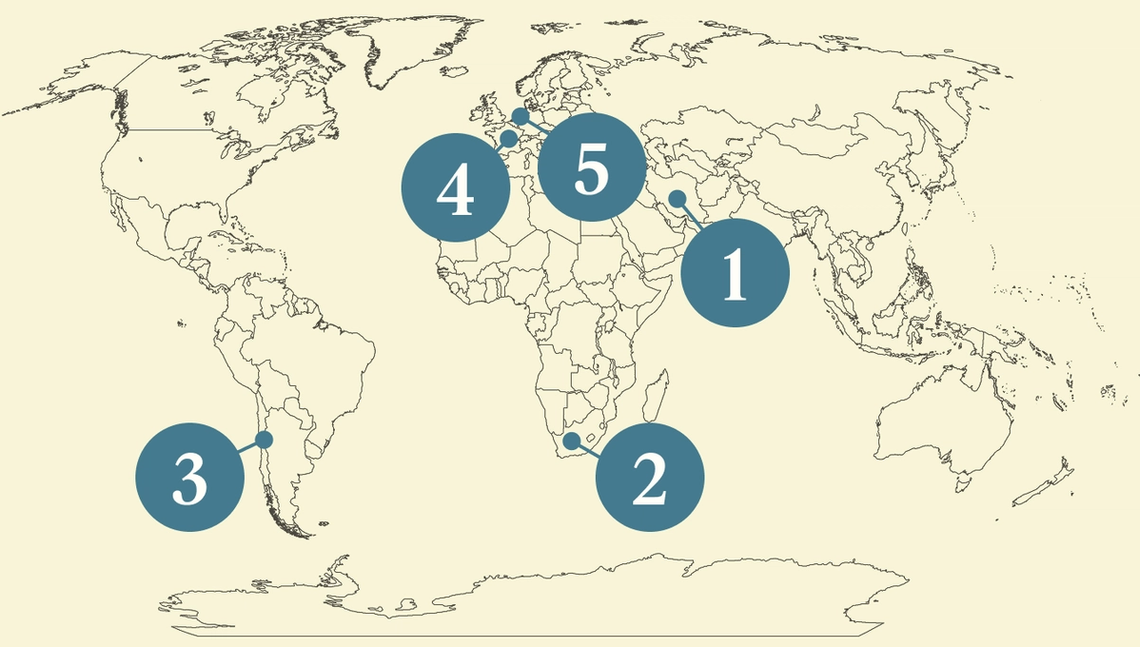 - Mideast escalation fears
- Africa’s power problem
- Chile courts copper sales
- Europe’s worsening drought
- Kerry on Europe’s risks
 India plans on SMRs, Britain readies onshore wind, but China is slowing its pace on solar. |
|
Mideast escalation fears drive oil up |
 A Houthi attack on an oil tanker in the Red Sea earlier this month. Houthi Military Media/Handout via Reuters. A Houthi attack on an oil tanker in the Red Sea earlier this month. Houthi Military Media/Handout via Reuters.Brent crude topped $98 a barrel on growing fears of a metastasizing Middle East conflict. Analysts increasingly see the risks in the US-Iran war as tilting towards escalation: US President Donald Trump raised the possibility that his forces may hit an underground nuclear facility, while his secretary of state said Tehran was “not serious about talks”; Iran’s supreme leader warned the US would suffer “unforgettable lessons.” Goldman Sachs forecasts that Brent could top $120 a barrel by year-end if traffic through the Strait of Hormuz remains curtailed. A Houthi-declared blockade of the Red Sea — tankers off the coast of Saudi Arabia were hit this week — has meanwhile raised the prospect of what Standard Chartered analysts have dubbed a “two-chokepoint problem.” Tankers are shunning the Bab el-Mandeb Strait, threatening a lifeline for Saudi Arabia’s crude exports while the Strait of Hormuz is closed; Asian refiners are considering the one-month longer trip through the Suez Canal. “The immediate risk is not a loss of production,” Kpler analysts said, but increased transport costs and reshaped trade flows. |
|
Semafor Exclusive Africa’s power reforms |
| |  | Alexis Akwagyiram |
| |
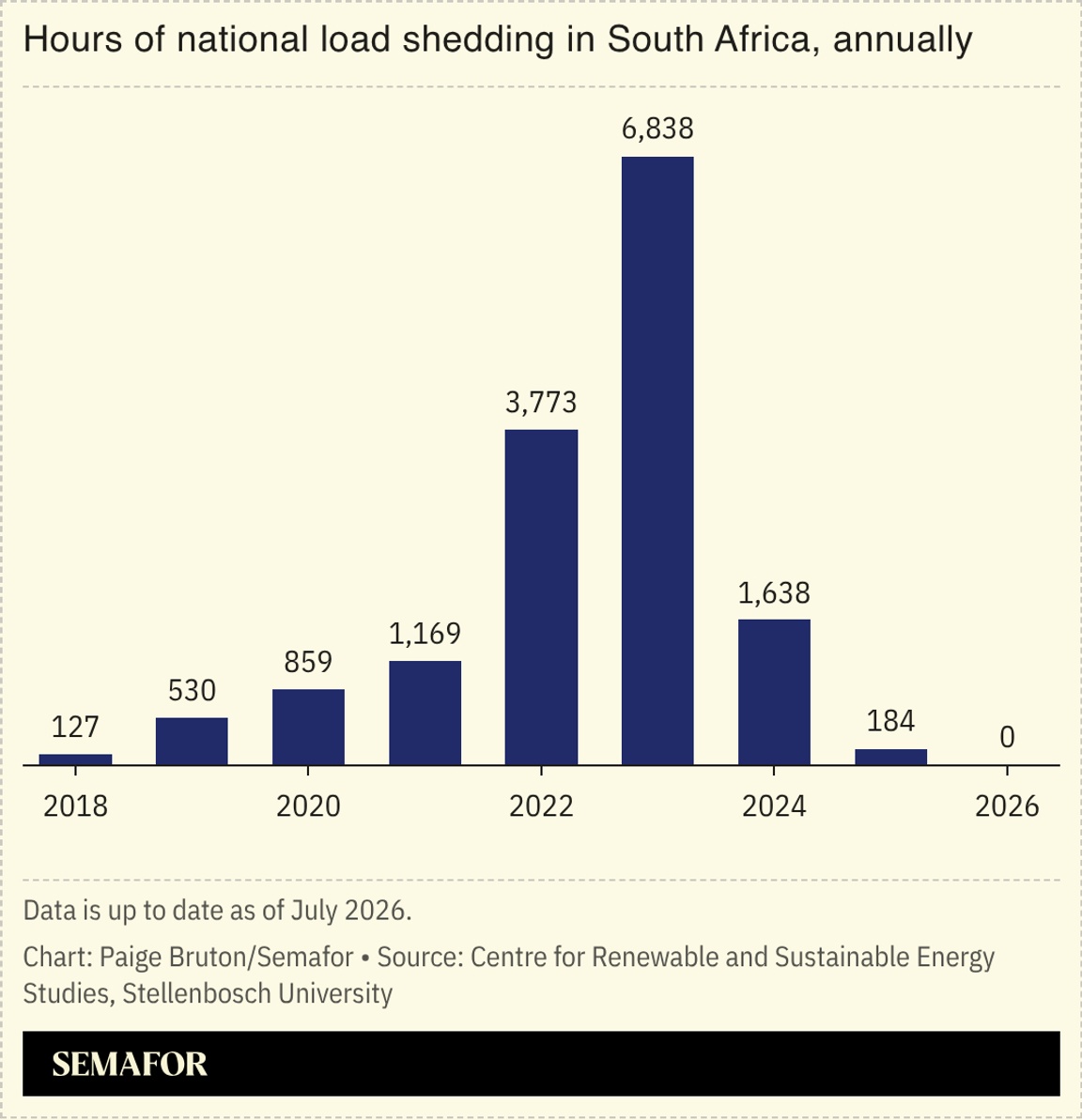 African countries must open up their power markets to court the private investors needed to supply the electricity that AI will demand, a data center executive told Semafor. Africa only hosts about 160 data centers — around 5.5% of the global total — and aging grids in many countries mean access to power is limited. At present, independent power producers across the continent typically sell electricity to state utilities under long‑term power purchase agreements. Robert Skjødt, CEO of Raxio, which operates in six African countries, told Semafor that in many nations, regulatory reform was needed to “allow a private supplier of electricity to supply to a private buyer” while using the grid. South Africa has in recent years seen a surge in private energy generation since the widespread roll-out of power purchase agreements. Both Kenya and Nigeria are now carrying out similar reforms. |
|
Chile courts new copper customers |
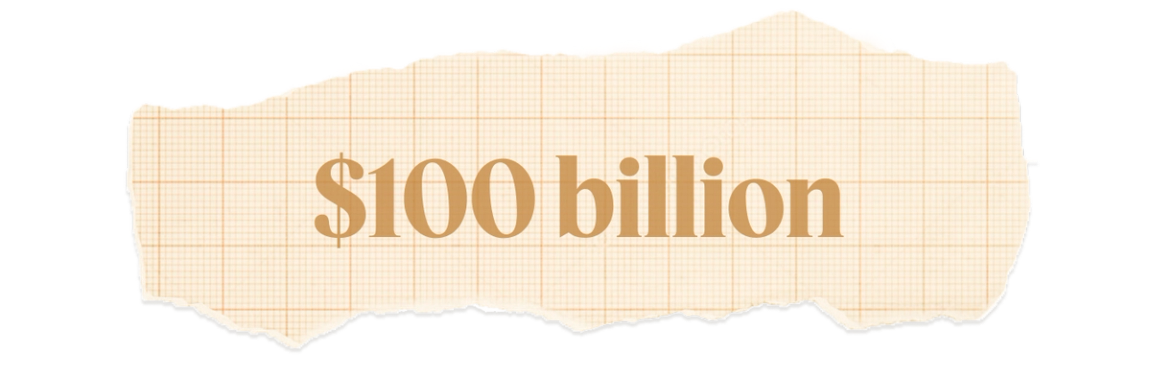 The world’s largest copper producer, Chile, said it was eyeing $100 billion in investment in the sector over the next decade, as it seeks to capitalize on rising demand driven by data center construction and the energy transition. Chile’s foreign minister said the investments would help diversify the country’s customer base beyond China, which imports around 60% of globally traded copper ore. The push comes as Chinese copper demand, while still high, has broadly flattened over the past year, according to JPMorgan. The investments, which will focus on refining as well as mining, come as competition among suppliers intensifies. Copper production has traditionally been concentrated among a handful of countries, but investment has diversified significantly in recent years: Last week, the International Energy Agency cut its projected global copper ore supply gap, largely because of increased production from the Democratic Republic of Congo and Zambia. |
|
 Stephane Mahe/Reuters Stephane Mahe/ReutersEurope’s climate-change-driven heatwaves have caused a continent-wide drought. Major river systems across Europe, including the Rhine and Danube, have seen water levels fall. Low rainfall has impacted some regions, but scientists say heat is the real driver: High temperatures accelerate water loss, both because warm water evaporates faster and because warm air can hold more moisture, meaning river beds dry faster. Low river levels have hit cargo shipping, agricultural harvests, and hydropower; some countries have banned non-essential water use such as residential gardening. Researchers said climate change had made droughts more likely and more severe: In Wales, rivers are approaching all-time lows, killing fish and other wildlife. |
|
View: Europe’s energy vulnerability |
| |  | John Kerry |
| |
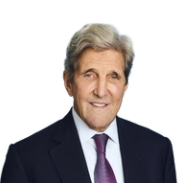
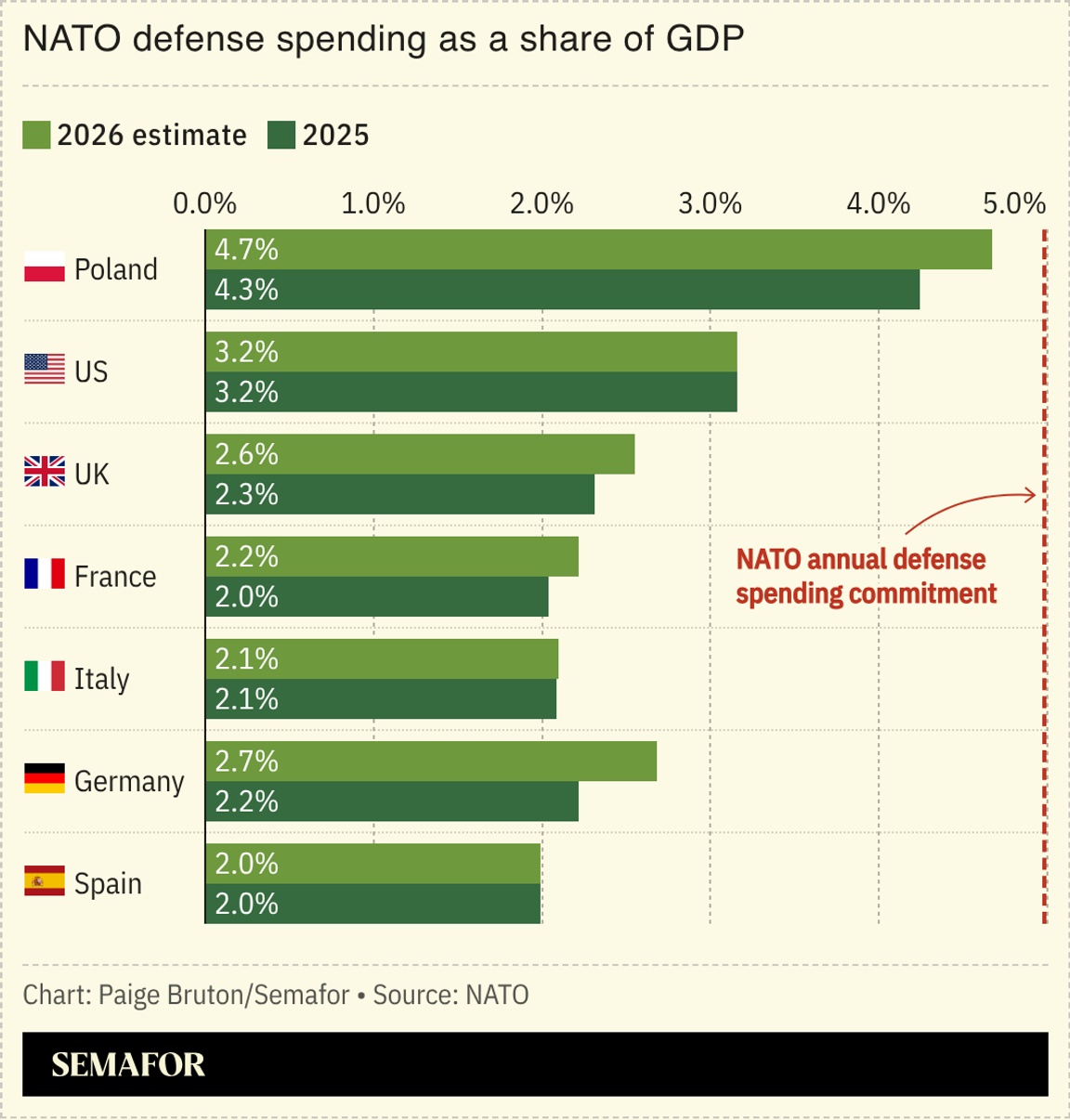 Europe’s energy vulnerability is greater than any of its leaders are willing to admit, former US Secretary of State John Kerry wrote in a new Semafor column. Gas storage is at its lowest starting point since 2022, the continent is still buying Russian LNG, and refilling the tanks before this coming winter will be more expensive than in recent years. Ultimately, Kerry argued, “energy security … has to be run on the same principles as any defensive position: mutual support and strategic stockpiles.” A recent NATO summit showed Europe was willing to put real heft behind a push to rearm, but “deterrence in this decade will be counted in megawatts as well as divisions,” he concluded, “and Europe does not get unlimited winters to learn this lesson.” |
|
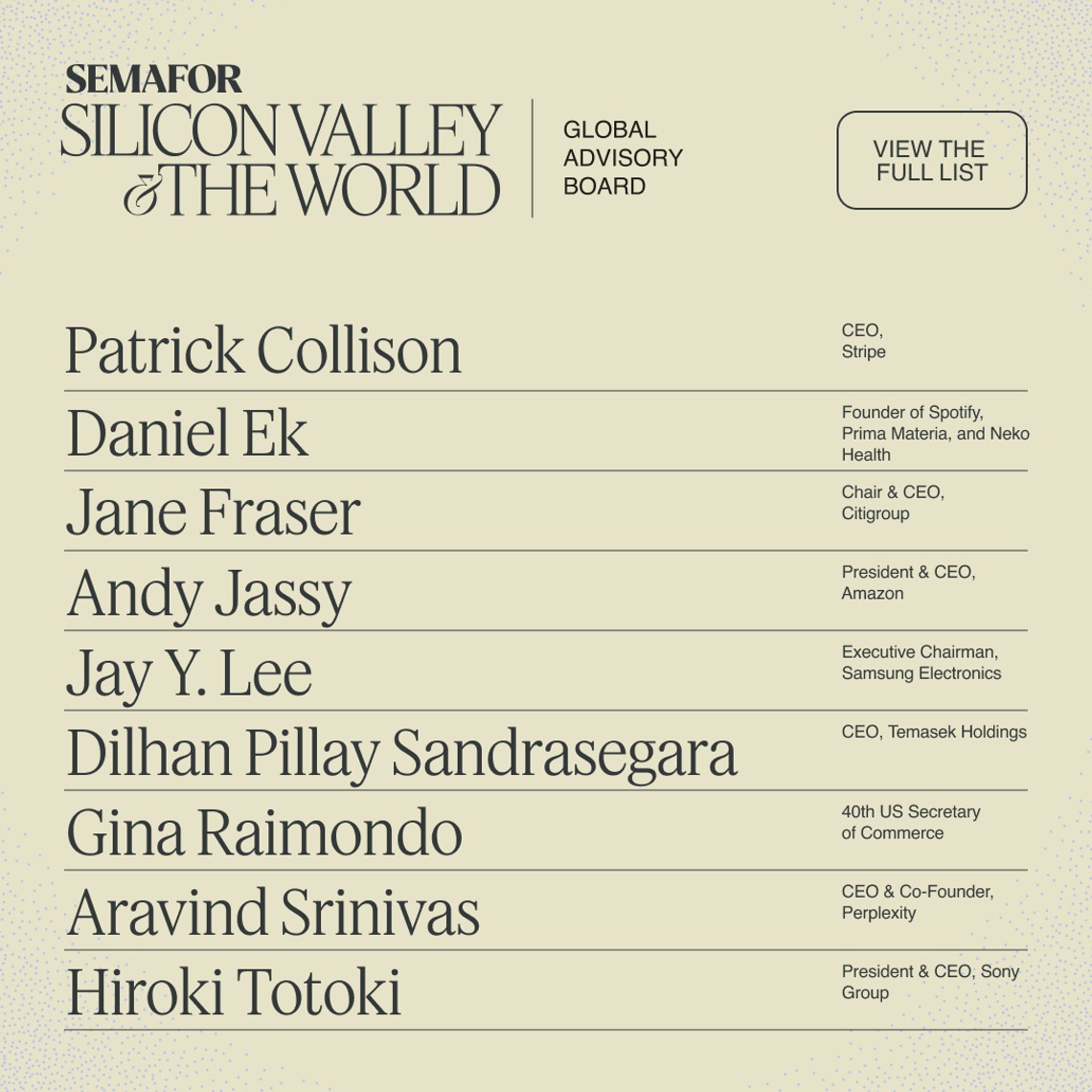 Semafor has announced the expanded Global Advisory Board for Silicon Valley & The World — a first-of-its-kind, multi-year initiative bringing together the leaders building transformative technologies with the policymakers shaping how they are deployed. With more than 40 global figures joining the board — including Patrick Collison, Daniel Ek, Jane Fraser, Andy Jassy, Jay Y. Lee, Dilhan Pillay Sandrasegara, Gina Raimondo, Aravind Srinivas, and Hiroki Totoki, alongside co-chairs Jensen Huang, Divesh Makan, Satya Nadella, Ruth Porat, and Lisa Su — this group reflects the full spectrum of power driving the AI economy. Designed to move the conversation beyond debate, the platform will bring together more than 350 founders, CEOs, investors, and policymakers in November, uniting the leaders with the ability to fund, scale, and implement new ideas. |
|
 New Energy- India plans to bring five new small modular reactors into operation by 2033, as New Delhi seeks to move away from fossil fuels.
- Scottish Power will invest just over $2 billion into the UK’s largest onshore windfarm, a move that will double the site’s capacity.
- China’s new solar installations dropped by two-thirds in the first half of this year, compared to the same period in 2025, following a boom period where firms rushed to install projects before new pricing reforms took effect.
Fossil Fuels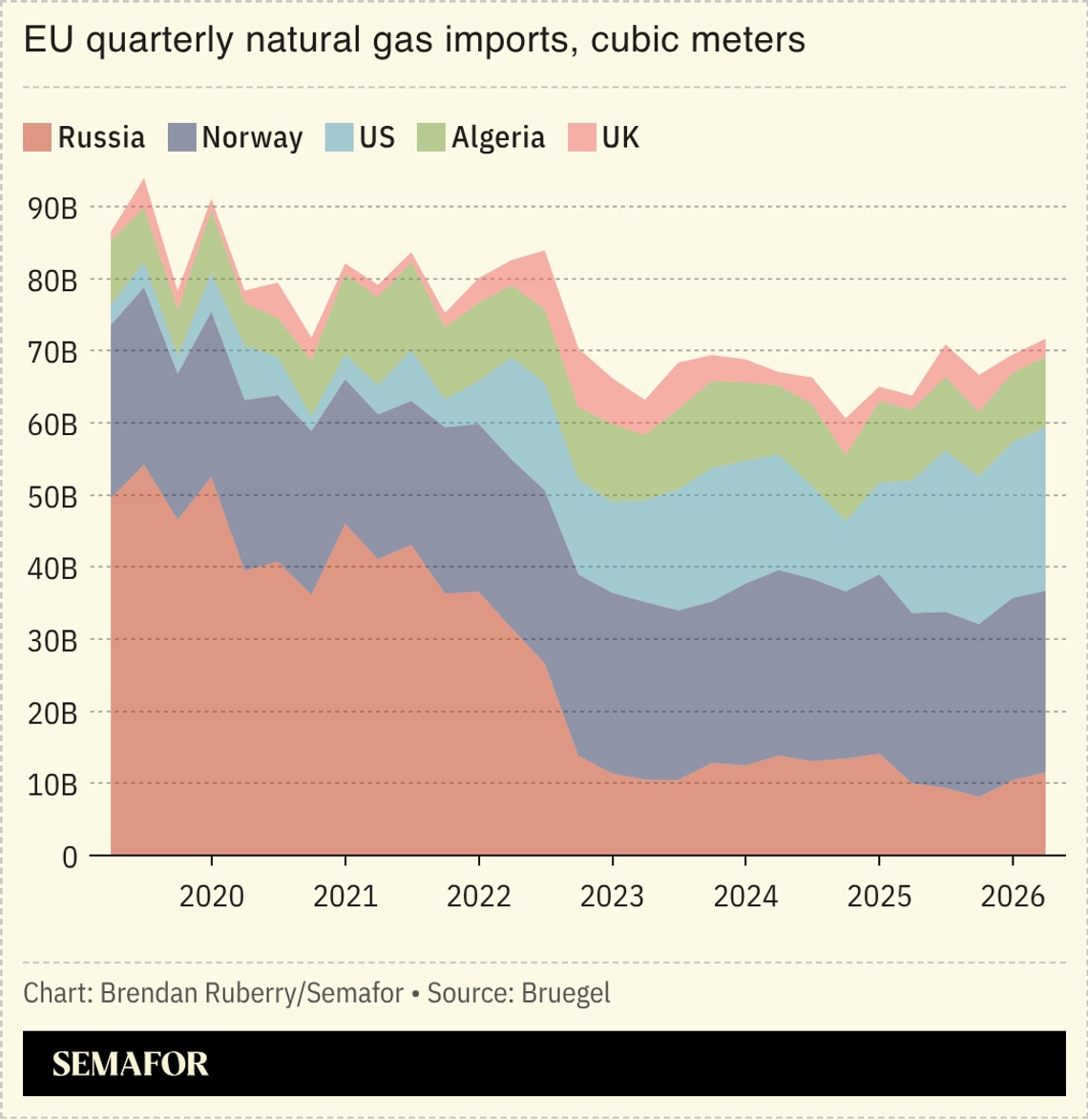 - Europe is unlikely to reach its target of restocking natural gas stockpiles to 80%, Equinor’s CEO said.
- Budget airline EasyJet said its quarterly profit fell 70%, largely driven by lower demand and rising fuel costs sparked by the Iran war.
- French energy giant TotalEnergies said its profit jumped 68% in the second quarter on the back of the surge in oil prices caused by the Iran war.
TechEVs- Tesla’s profits unexpectedly plunged 17% in the second quarter, despite delivering a record number of vehicles over the period, largely on account of overuse of discounts.
Food & Agriculture- Crop prices rose to a three-year high due to heatwaves and the rising attacks on ships in the Black Sea, which threaten to disrupt the global grain trade.
|
|
|


