| | In today’s edition: Delta flights to Saudi Arabia, Fujairah enjoys war windfall, and the Dubai hotel͏ ͏ ͏ ͏ ͏ ͏ |
| |  Riyadh Riyadh | Washington DC | Fujairah |
 | Gulf |  |
| |
|
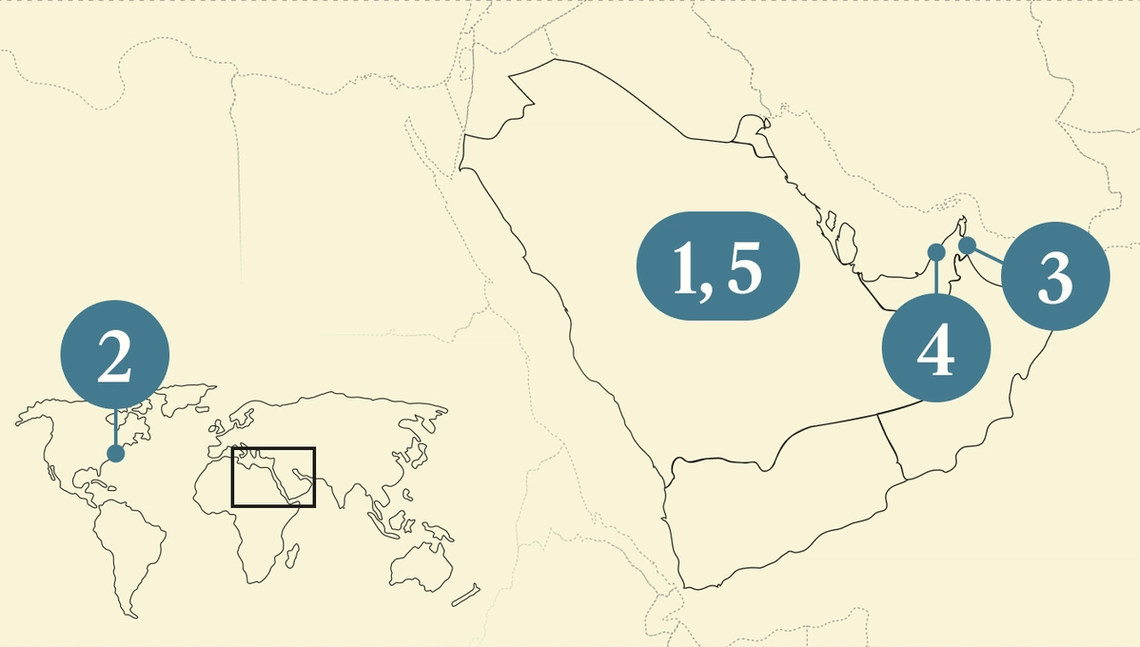 - Oil at six-week high
- Delta flights to Saudi
- Dubai ports, in Fujairah
- Tourist deals in Dubai
- PIF’s arenas platform
 A tour of Bahrain’s strangest dishes. |
|
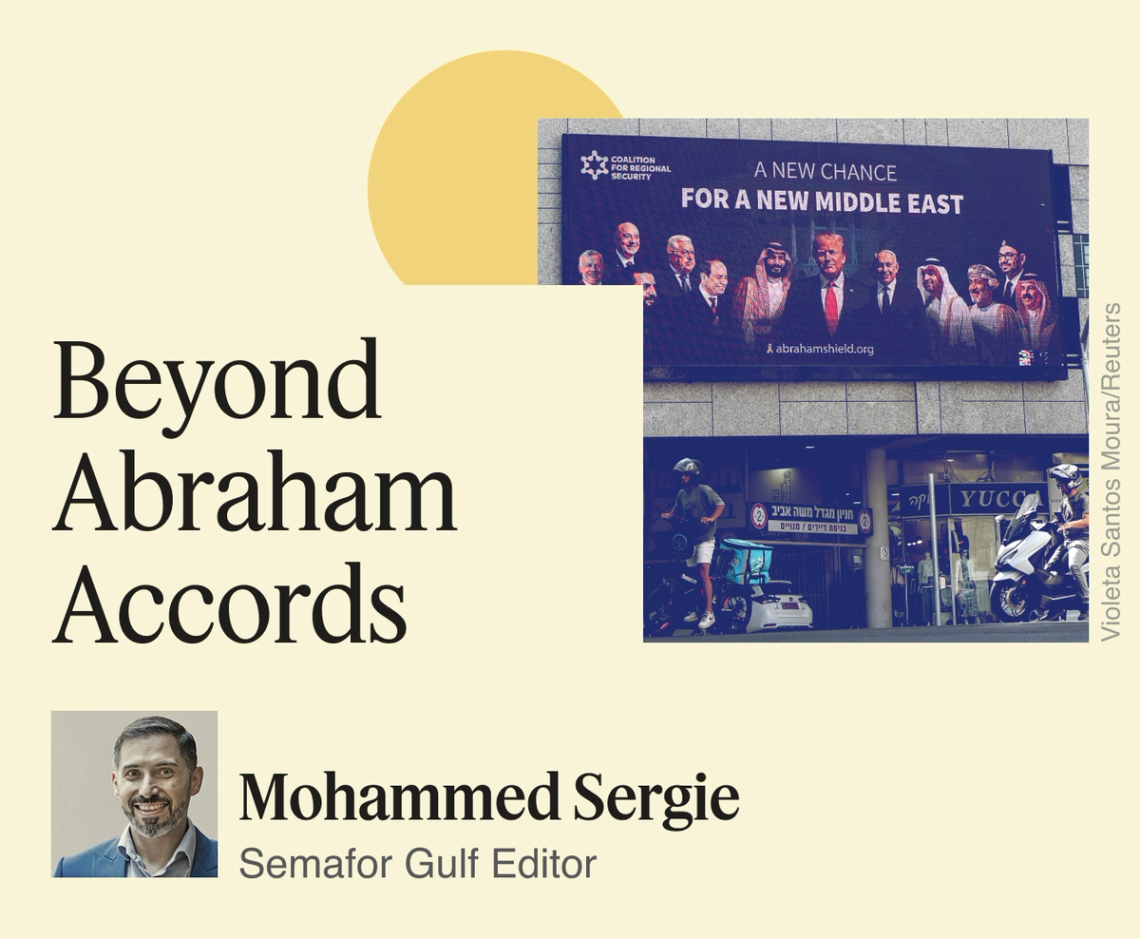 For decades, US-Gulf relations were constrained by Israel. Washington’s commitment to preserving Israel’s qualitative military edge meant some Gulf weapons purchases were delayed or diluted, and the Biden administration made its approval of a Saudi civil nuclear program contingent on normalization with Israel. That dynamic is changing: In conversations with US and European officials in recent weeks, a common theme has been their unusually blunt criticism of Israel’s wartime posture, which they increasingly see as a source of regional instability. The shift is also playing out in US politics. Rahm Emanuel — a longtime defender of Israel whose father was born in Jerusalem — recently proposed a “23-state solution,” largely based on the 2002 Arab Peace Initiative, that would recognize a Palestinian state. If Israel does not sign on and adjust its policies it could lose US backing, Emanuel, a likely Democratic presidential hopeful, warned in a speech in Israel. At the same time, the Iran war is creating an opportunity to rethink the region’s security architecture. Iran’s attacks across the Middle East have, for now, placed most Gulf states and Israel on the same side of the conflict. Shared priorities — from building alternative supply chains to countering Iranian capabilities — require greater cooperation. Military and intelligence ties are already deeper than acknowledged, with Israeli technology deployed in Gulf countries directly or through third parties. Both Gulf and Israeli officials have told me these relationships will be harder to conceal if security cooperation deepens. In an interview with Saudi-owned Al Arabiya last week, Israel’s president said peace with Saudi Arabia remains his “dream” and signaled an openness to direct engagement, backed by the US. But the issues that once served as Washington’s leverage — nuclear cooperation and access to advanced weapons — are increasingly being decoupled from normalization, making it easier for Riyadh to press its core demand for Palestinian statehood. Ultimately, the current alignment — driven by the Iran war — could make normalization easier. |
|
Oil surges on Houthi attacks |
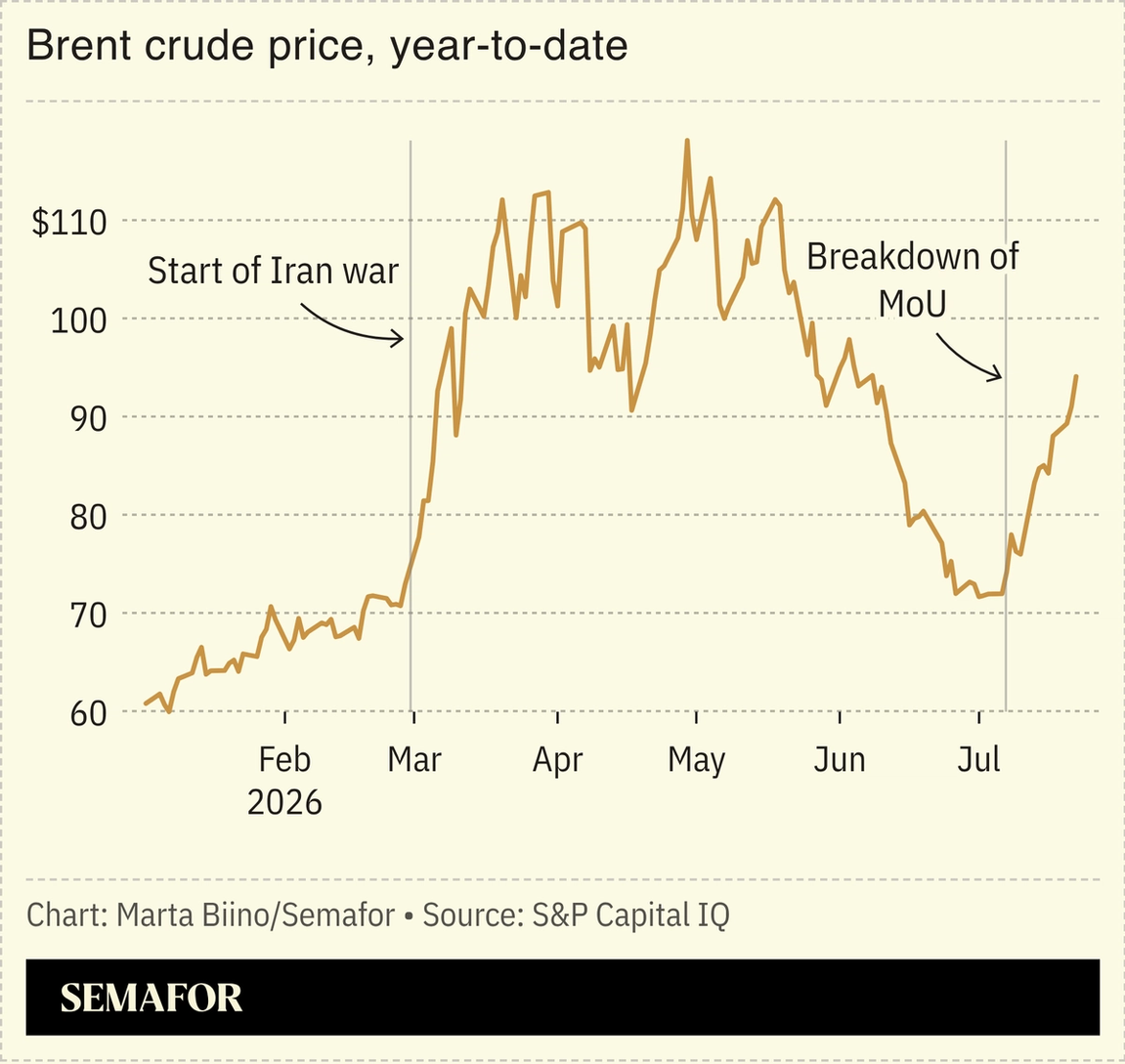 Oil is trading near $100 a barrel, its highest level in six weeks, after Houthi attacks in the Red Sea compounded the crisis in the Strait of Hormuz. The Yemeni group said it hit two Saudi tankers in the Bab el-Mandeb Strait and forced about 10 other ships to turn back. Former US Navy Fifth Fleet commander Kevin Donegan said the Houthis’ focus on Saudi shipping, rather than a full blockade of the strait, may signal they are seeking a new financial arrangement with Riyadh — which the group has been locked in an on/off conflict with for more than a decade — rather than simply acting on Iran’s behalf. Meanwhile, the US is deploying special operations forces, fighter jets, bombers, and more than 150 medics to the Gulf to give President Donald Trump broader military options if he decides to escalate the campaign against Iran or respond to the Houthi attacks, The Wall Street Journal reported. At the same time, the US appears to be trying to strengthen ties with Saudi Arabia. Relations have been strained at times during the Iran war, but Riyadh and Washington’s signing of a civil nuclear cooperation agreement — one which has drawn criticism in Congress over proliferation concerns — was described by US Energy Secretary Chris Wright as part of an “American nuclear renaissance” that will expand exports, create jobs, and strengthen US-Saudi ties. |
|
Semafor Exclusive Delta sticks by planned Riyadh route |
 Jose Luis Gonzalez/File Photo/Reuters Jose Luis Gonzalez/File Photo/ReutersDelta Air Lines will launch direct flights to Saudi Arabia in October, the first US carrier to do so in 25 years, the airline’s president told Semafor. Flights will begin just ahead of Saudi Arabia’s flagship annual conference, the Future Investment Initiative. Ticket sales have so far been “softer than anticipated” due to the Iran conflict, but “we think this is going to be temporary,” Peter Carter said in an interview from Riyadh. Saudi airspace has mostly stayed open during the war, while other regional hubs were disrupted for weeks. That may boost Riyadh’s role in regional travel, said Carter. Delta’s commitment to the Saudi route comes as many other airlines have been cancelling flights: Virgin Atlantic dropped its London-Riyadh route, while Air Canada, Air France, and British Airways have cancelled services to most Gulf cities until at least October. — Matthew Martin |
|
DP World plans two ports in Fujairah |
 Courtesy of Lloyd’s List Intelligence Courtesy of Lloyd’s List IntelligenceDP World said it will open two new ports on the UAE’s east coast, accelerating plans to circumvent the Strait of Hormuz permanently. The war has been a windfall for Fujairah, which has favorable access to the Indian Ocean outside Gulf waters — the UAE’s six other emirates largely sit within the Strait of Hormuz. An overground logistics network will link DP World’s flagship terminal in Dubai with the new ports in Fujairah, the company said, emphasizing the emirate’s growing importance as a maritime gateway. Other projects fueling the boom in Fujairah include a 406-km (252-mile) oil pipeline from Abu Dhabi that would bypass the strait and allow the UAE to double its east coast export capacity into the Gulf of Oman, as well as luxury hotels and residential complexes driven by developers seeking new opportunities outside the crowded markets of Dubai and Abu Dhabi. |
|
Gulf hotels extend wartime deals |
 Courtesy of Anantara Courtesy of AnantaraA night on Palm Jumeirah, long one of Dubai’s priciest addresses, is now going for as little as 349 dirhams ($95), and a second night could be free, reflecting the struggles facing the city’s tourism sector. The island’s resorts are courting residents this summer — the Gulf’s emptiest season even in peacetime — with up to 500 dirhams a day of dining credit, and rates that would have been unthinkable before the war, when many rooms cost thousands of dollars a night. The discounts began as triage in the spring, when occupancy levels sank to 16% and local residents (rather than tourists) became the focus. The deals seemingly worked, even if skeleton crews at times strained to serve the crowds they drew. The government has jumped in, too, offering residents 3,000 dirhams in perks for inviting friends and family to visit and suspending hotel taxes. — Manal Albarakati |
|
Saudi strengthens sports operations |
 A model of the proposed King Salman International Stadium. Hamad I Mohammed/Reuters. A model of the proposed King Salman International Stadium. Hamad I Mohammed/Reuters.Saudi Arabia unveiled a new company that it says will manage the operations of its burgeoning network of arenas, as it gears up for the 2034 men’s soccer World Cup. Radia, a joint venture between Public Investment Fund-owned SURJ Sports, Live Nation, and Oak View Group, is expected to help promote the kingdom’s new wave of music and sports events to global audiences. The deal was first reported by Semafor in April. The Saudi sovereign wealth fund has reduced spending on some sports projects, instead prioritizing infrastructure such as ports and data centers. But entertainment remains a priority: The kingdom is building a $1.4 billion Royal Opera House and a 20,000-seat arena in Diriyah, a UNESCO World Heritage site undergoing a $63 billion redevelopment, alongside a Formula 1 race track and entertainment areas outside of Riyadh. |
|
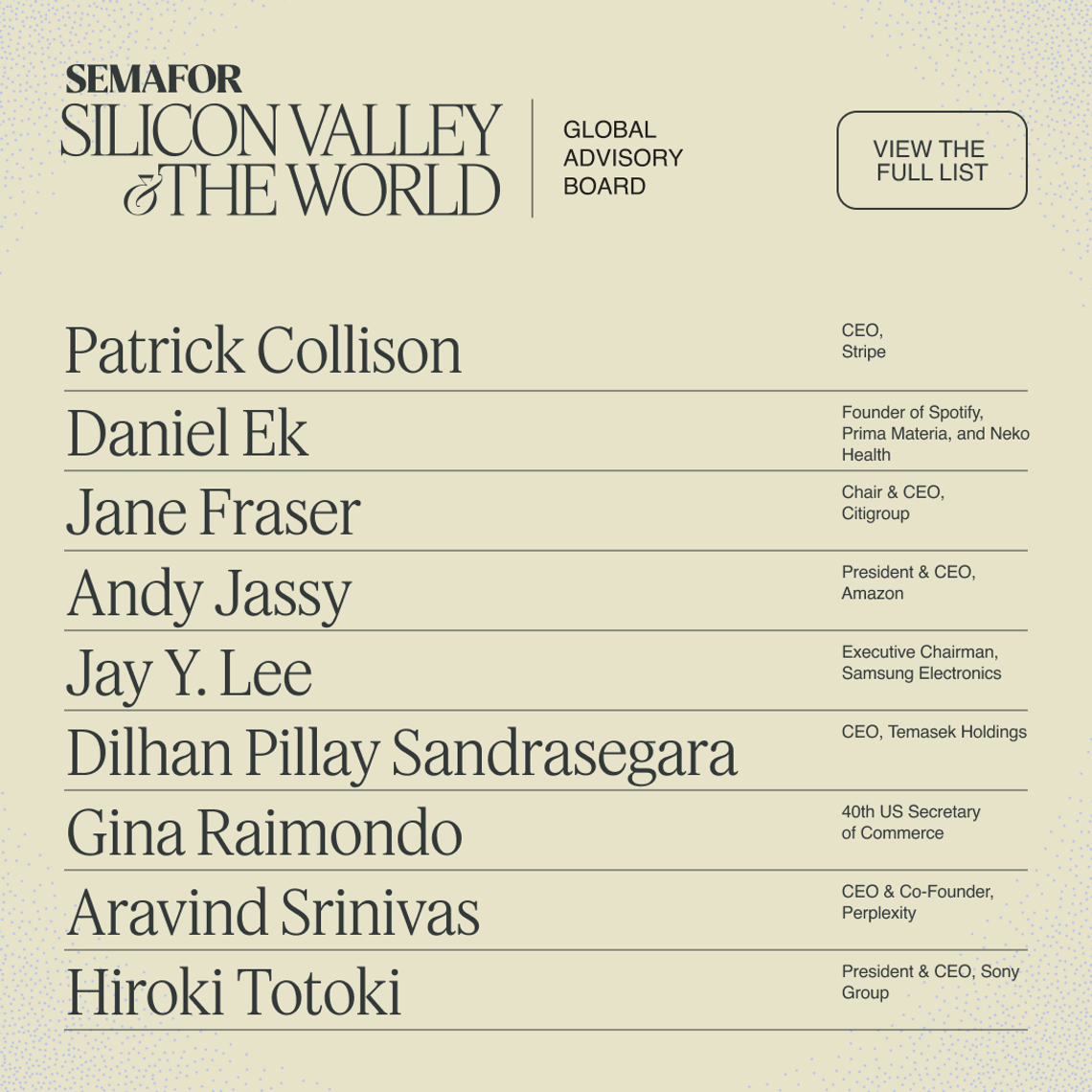 Semafor has announced the expanded Global Advisory Board for Silicon Valley & The World — a first-of-its-kind, multiyear initiative bringing together the leaders building transformative technologies with the policymakers shaping how they are deployed. With more than 40 global figures joining the board — including Patrick Collison, Daniel Ek, Jane Fraser, Andy Jassy, Jay Y. Lee, Dilhan Pillay Sandrasegara, Gina Raimondo, Aravind Srinivas, and Hiroki Totoki, alongside co-chairs Jensen Huang, Divesh Makan, Satya Nadella, Ruth Porat, and Lisa Su — this group reflects the full spectrum of power driving the AI economy. Designed to move the conversation beyond debate, the platform will bring together more than 350 founders, CEOs, investors, and policymakers in November, uniting the leaders with the ability to fund, scale, and implement new ideas. |
|
 Bonds- Kuwait sold $6 billion of bonds. Demand was strong, but the debt sold at a higher premium to US Treasurys than similar deals last year, reflecting the impact of the Iran war. Still, the spread was “among the tightest in emerging markets” because of Kuwait’s high credit rating. — Bloomberg
Checking In- Saudi Arabia’s The Helicopter Company signed a letter of intent with Canada’s Bombardier for up to 60 private jets, its first plane order. The PIF-backed company will use the aircraft to expand in the private aviation market, adding to its fleet of helicopters. — Bloomberg
- The number of airlines flying to Dubai has halved to around 50 since the war began, with Emirates absorbing much of the vacated capacity as the likes of British Airways, Air Canada, and Singapore Airlines have steered clear. Dubai Airports CEO Paul Griffiths said the airport has taken 16 missile impacts. — The National
Jobs- A drop in consumer spending as a result of the war has led to salary reductions and job cuts across the Gulf’s advertising industry, with airlines and hotels in particular pulling their marketing spend as tourist numbers plummet. — AGBI
Logistics- Saudi Arabia’s first logistics investment fund will put 650 million riyals ($173 million) into a facility north of Jeddah. It adds to a rush of investment into the port city, as trade shifts to the west coast. — Al-Eqtisadiah
|
|
|


