Hello Power Up readers,
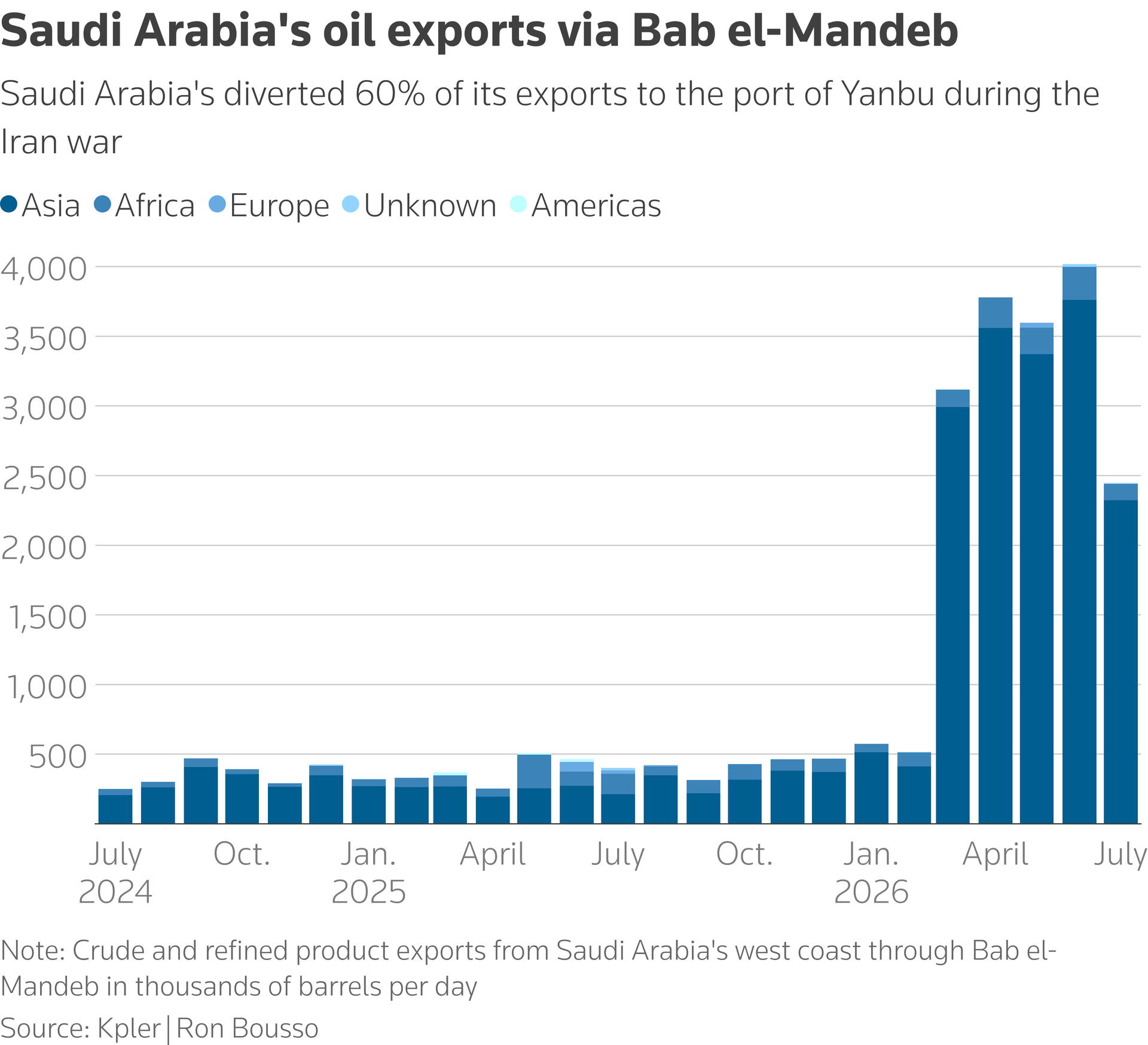
Bab el-Mandeb, the narrow strait at the southern tip of the Red Sea, loosely means the “gate of grief” in Arabic. And that’s exactly what it’s turning out to be for energy markets.
On Thursday, Yemen's Iran-backed Houthi militia said it had attacked two Saudi oil tankers that had violated the naval blockade the group imposed on Saudi Arabia in the Red Sea. The Saudi news agency later confirmed only one vessel was struck near the chokepoint.
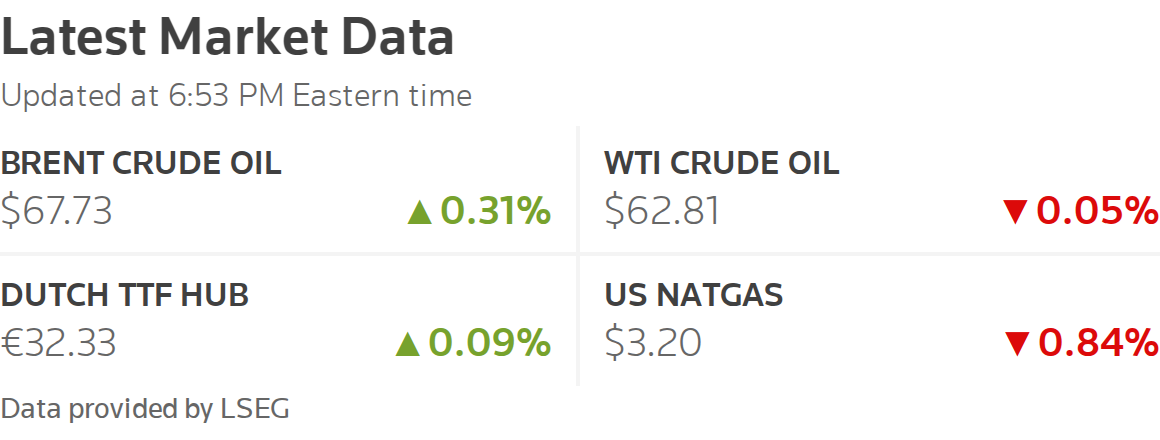
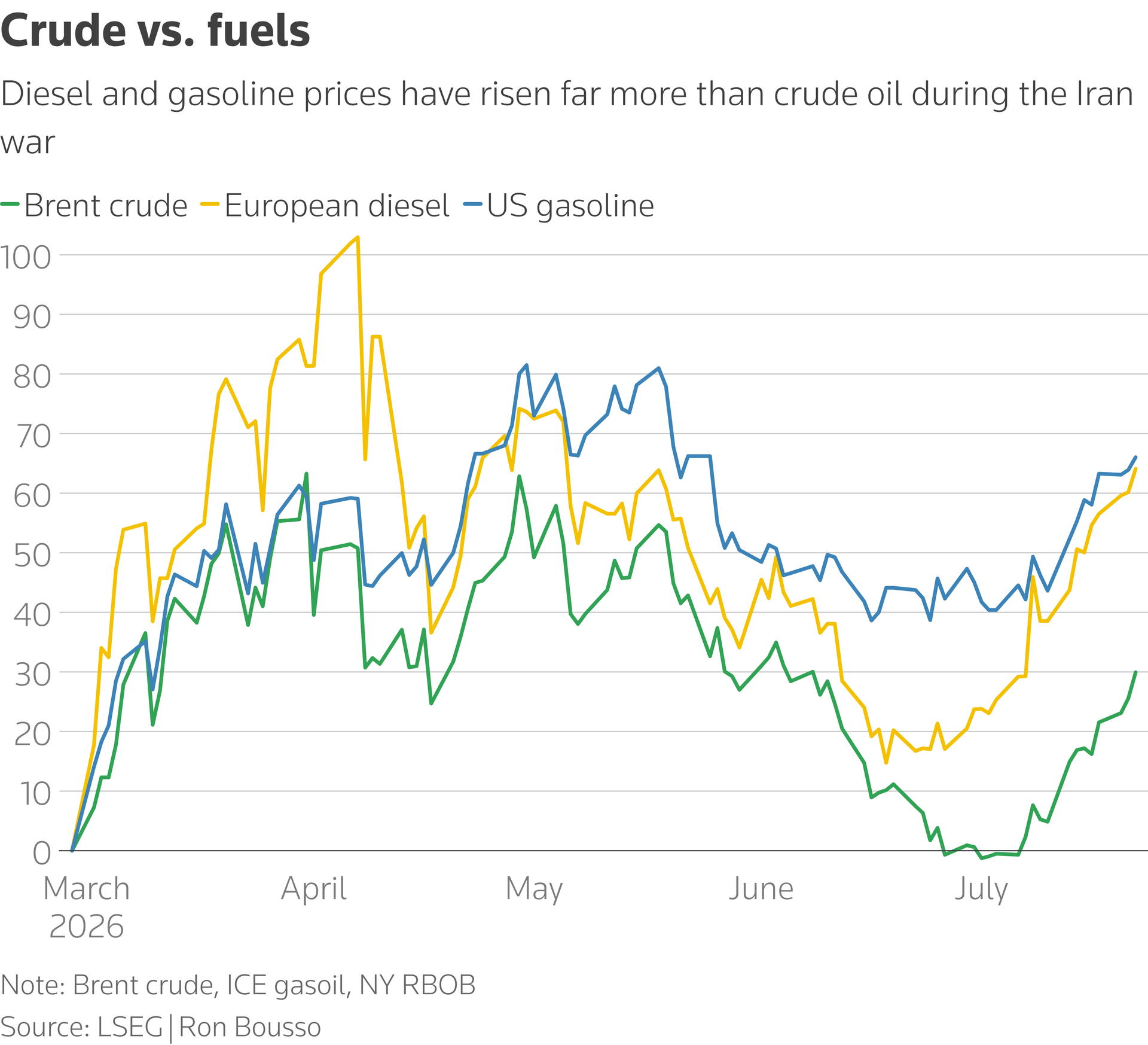
After two weeks of renewed fighting between Iran and the United States – with tanker transits through the Strait of Hormuz sharply down once again due to blockades – this latest escalation in the Red Sea significantly increases concern over the expanding oil supply disruption. In response, Brent crude oil prices rose sharply in recent days to just a few dollars shy of $100 a barrel.
One source of optimism is India, which has bought huge volumes of Russian crude in recent months. This is enabling the country to ramp up fuel exports, offsetting lower shipments from refineries in the Middle East and China, ROI Asia Commodities Columnist Clyde Russell wrote.
But that is unlikely to prevent the unravelling of the fragile recovery in the energy markets that began following the June 17 U.S.-Iran ceasefire agreement, especially now that the Bab el-Mandeb blockade threatens to remove even more supply.
This means the global economy might increasingly have only one way to respond to this escalation: slowing down. More on this below.
Separately, the Iran crisis has pushed many countries to accelerate plans to reduce dependence on fossil fuel imports. In that vein, the European Commission on Friday unveiled an Electrification Action Plan aimed at increasing electricity's share of Europe’s final energy consumption from around 23% today to 46% by 2040.
ROI Energy Transition Columnist Gavin Maguire and I have explored the bloc’s ambitious bet on electrification – a logical strategy that nevertheless faces big challenges. One major issue is simply getting people and factories to use more electricity. Another is that even if the strategy is implemented, it won’t prevent a "death valley" of high energy costs over the next decade that threatens to erode Europe’s industrial base.
Here are a few more headlines: