Thanks for reading The Briefing, our nightly column where we break down the day’s news. If you like what you see, I encourage you to subscribe to our reporting here.
Greetings!
Maybe, just maybe, big tech firms need to do a better job of explaining their AI investment strategies. Shares of Google parent Alphabet fell 7% on Thursday after the company disclosed a further increase in capital expenditures this year—money it will spend on new AI chips, servers and data centers. The drop all but wiped out the gains the stock had enjoyed so far this year.
Sure, the entire stock market sold off, presumably as a result of rising oil prices and the intensification of the Iran war. But Alphabet was among the worst hit, along with Tesla, which also reported sharply higher capex on Wednesday and whose shares fell 15% on Thursday. It’s tough to consider Tesla’s stock valuation on any kind of rational basis, given that it trades based more on its connection to Elon Musk than reality. But Alphabet is a different animal.
There’s little doubt Google is among the best positioned of big tech companies in terms of its ability to take advantage of AI advances, given its strength in chips, AI models and consumer apps that should benefit from AI. But even for Alphabet, you have to wonder how much more money the company will have to spend to reach the promised land.
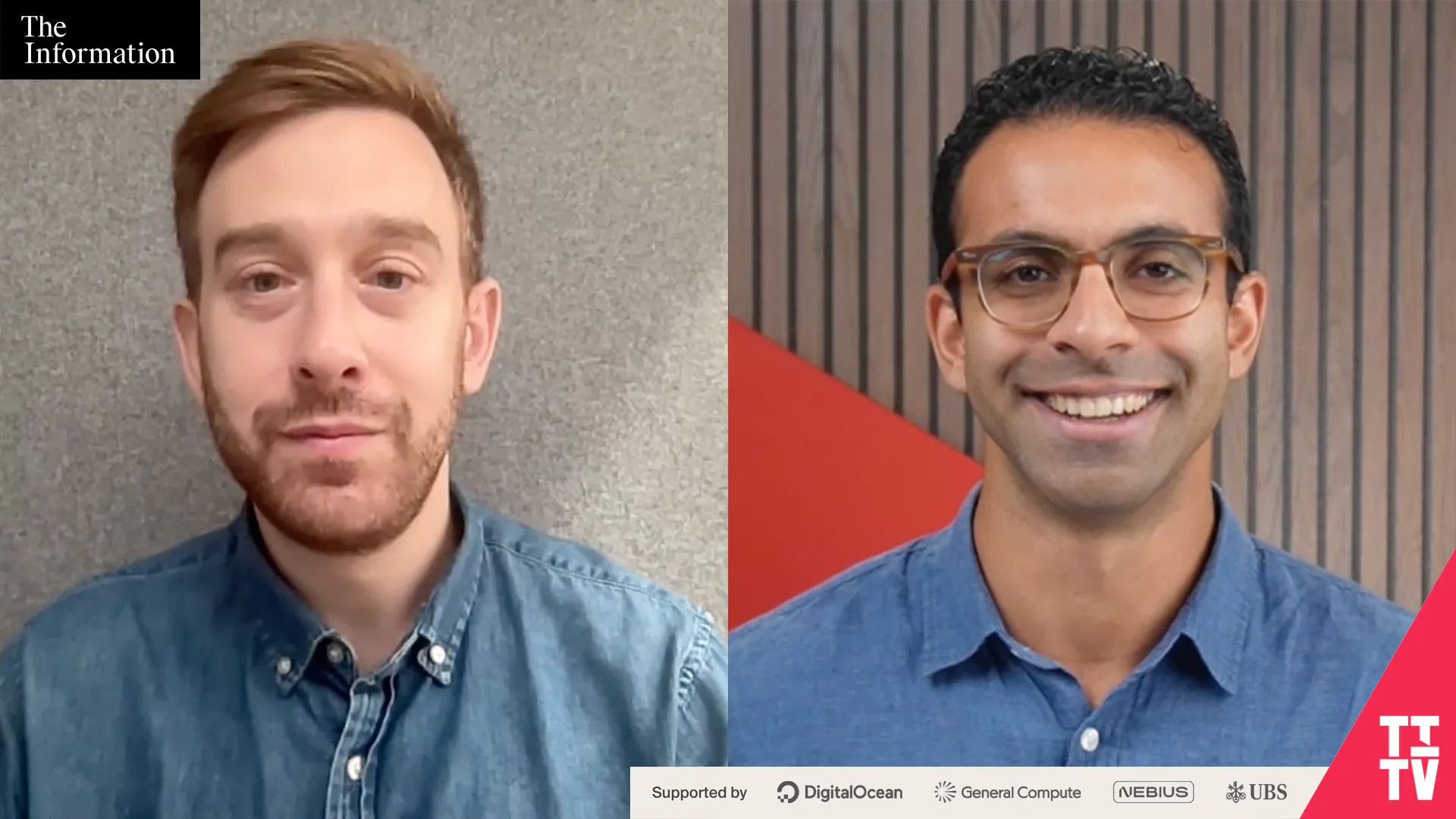
Alphabet’s projected capex for this year—now as much as $205 billion—is more than double what it spent in 2025, which in turn was nearly three times what it was spending two years before that. Next year, Chief Financial Officer Anat Ashkenazi said on Wednesday, capex will “increase significantly” again! Dan Flax, an analyst at Neuberger Berman, said on The Information’s TITV today that Alphabet’s capex “will likely be well over $300 billion.” For context, analysts expect the company to generate $259 billion in cash from operations next year, according to S&P Global Market Intelligence.
That suggests Alphabet could burn $40 billion in cash next year, which is quite a turnabout for a company that before this spending surge routinely generated $60 billion to $70 billion in free cash flow. And when will this end? Alphabet executives are vague about it. CEO Sundar Pichai keeps talking about the industry being in the “early innings” of the AI transition, which implies the heavy spending could go on for a while. Ashkenazi said on Wednesday that “our goal is to invest as long as we see an attractive return on that investment.” In other words, trust us. That may not be enough anymore.
Meta’s Baffling AI Message
One thing Google should not do is emulate Meta Platforms’ AI marketing strategy, as demonstrated by its new “we’re betting on people” ad. Though it’s designed to present a more upbeat view of how AI will affect society than the doomsaying talk coming from elsewhere, the ad’s point for Meta as a company is hard to discern. Why would anyone feel better about Meta because it’s dismissing worries about how AI might disrupt the world?
Coinbase’s Leadership Shuffle
Coinbase is going through its biggest leadership shuffle in recent years. Today, the company said Chief People Officer Lawrence Brock was stepping down to become an adviser. And Greg Tusar, co-head of Coinbase Institutional, is transitioning to a new role focusing on policy, according to a person familiar with the plan.
The changes follow news earlier this month that Chief Legal Officer Paul Grewal was planning to leave to join a startup. And last week, Coinbase executive Jesse Pollak said he’s stepping back from leading the Base app after acknowledging his earlier strategy of focusing on creator coins had failed.
The leadership shake-up comes as Coinbase, navigating a crypto downturn, is transitioning from a crypto platform to an “everything exchange,” a one-stop shop for trading stocks, prediction markets and crypto. At the same time, the company is cutting costs: It laid off 14% of staff in May. Meanwhile, it’s promoting people from within the firm to replace the old guard.—Yueqi Yang
In Other News
• Intel shares rose 12% in after-hours trading after the company said revenue growth hit a 15-year high in the second quarter on the back of chip demand from AI customers (more details).
• BitMEX, one of the oldest crypto exchanges, said it will shut down in September after 11 years in business. Its shuttering comes as the crypto industry struggles with falling prices and diminishing individual investor interest.
• Stripe is in talks to buy OpenRouter, a startup that helps app developers access hundreds of AI models, for close to $10 billion, according to a person with knowledge of the discussions. (For details on why a Stripe-OpenRouter deal would make sense, see here).
• Amazon this week closed its AGI Lab, a San Francisco–based team that was developing foundational models for AI agents, said an Amazon spokesperson. The company shuttered the lab as part of layoffs in its artificial general intelligence unit earlier this week.
• Alphabet’s Google disclosed Thursday that it owns $94.1 billion in SpaceX shares, representing the bulk of $99 billion in unrealized marketable securities gains in the second quarter.
Today on The Information’s TITV
Check out today’s episode of TITV in which we unpack our scoop on the government looking into Moonshot AI’s American chip use.
Recommended Newsletter
Start your day with Applied AI, the newsletter from The Information that uncovers how leading businesses are leveraging AI to automate tasks across the board. Subscribe now for free to get it delivered straight to your inbox twice a week.
Request an invitation to join The Information and EY for an exclusive dinner bringing together senior leaders for candid conversation on closing the trust gap in enterprise AI.
Get ahead of the story. Purchase your ticket to AI Agenda Live, where The Information's reporting team convenes the leaders driving the next era of AI. Early Access pricing available now.
Tickets on sale now: The Information returns to Napa Valley October 27–28 to convene senior women across tech, media, and finance. Join us for two days of intimate, candid conversations with the leaders navigating today’s global shifts.