|
|
|
|
Good morning. On Canada’s busiest online personal finance forum, people anonymously seek advice on their big money questions. Why are they coming here, rather than turning to AI? I spoke to users who explain why they keep coming back. |
|
|
|
|
|
|
|
|
|
|
|
|
|
|
|
|
Tariffs: Canada won’t rule out imposing retaliatory tariffs on the United States if the White House moves ahead with a new wave of trade actions. |
|
|
|
|
More tariffs: U.S. President Donald Trump will impose new forced labour tariffs on dozens of countries, including Canada. |
|
|
|
|
Oil: Crude prices surged to a three-month high yesterday amid concerns that the conflict between the U.S. and Iran is widening. |
|
|
|
|
Infrastructure: Ontario’s strained electricity grid is already thwarting the province’s ambitious plans to build 1.5 million homes. Who will pay for a massive expansion? |
|
|
|
|
|
|
|
|
|
|
|
|
|
|
|
(Left to right) Miller Kriese, Lienke Abdeen, Katherine Wong Too Yen and Allison Dubé. Photo illustration by the GLobe and Mail. Sources: Chad Hipolito/The Globe and Mail, Fred Lum/The Globe and Mail, Nick Iwanyshyn/The Globe and Mail
|
|
|
|
|
|
|
|
|
|
|
|
|
|
|
|
|
|
|
|
|
Hey, I’m Meera, a personal finance reporter at The Globe. Recently, I fell down a TikTok rabbit hole and came across a video that actually made me laugh out loud (and not just that little nose exhale). |
|
|
|
|
|
|
|
|
|
|
If you’ve never ventured there, it’s where Canadians anonymously ask the money questions they might never ask a financial adviser, friend or even their partner. Think: Can I afford this house? Should I invest or pay off debt? Am I saving enough for retirement? And, every now and then, something that looks cooked up by a troll: “I’m 25, own two houses and have $500,000 invested. Am I doing okay?” |
|
|
|
|
The subreddit has been around since 2012 and has built a loyal following for its thoughtful discussions and willingness to help strangers. It has skyrocketed in popularity in recent years as young Canadians feel the whiplash of compounding economic uncertainties. From 2023 to the end of 2025, the subreddit grew 38 per cent in views, according to Reddit. |
|
|
|
|
It also has its fair share of trolls, humble brags and questionable takes, which is exactly what Abdeen’s video was making fun of. |
|
|
|
|
Still, in a world of sponsored content and distrust in financial institutions, many of the people I spoke to said it’s one of the few places on the internet where they genuinely trust the financial advice they’re reading. |
|
|
|
|
On other social platforms like TikTok, the algorithm largely determines what will come across your feed. But on Reddit, users vote on posts and call out bad guidance, leaving good advice to rise to the top. |
|
|
|
|
Even as AI-generated content is seeping into all corners of the internet, and chatbots offer advice and anonymity, the connection and transparency of the subreddit is still shining through. |
|
|
|
|
“People are not on Reddit necessarily to sell things,” says Daniel Richards, an associate professor at York University who specializes in behavioural finance and investment decision-making. “Reddit seems to be more about people just wanting to find out more and share information.” |
|
|
|
|
No online community is perfect, but all of this got me wondering whether some corners of the web are better than others at separating good financial advice from bad. (Of course, the golden rule still applies: Don’t believe everything you read on the internet.) |
|
|
|
|
For this week’s ROB feature story, I spoke with four Canadians who regularly turn to r/PersonalFinanceCanada for help navigating everything from investing to home buying, and looked at why the community has become such a trusted resource for so many people. |
|
|
|
|
Check out the full story to read what they had to say. |
|
|
|
|
P.S. If you’re looking for even more Canadian money communities, Reddit said other popular subreddits for Canadians include r/passive_income, r/middleclassfinance and r/budget. That last one grew 240 per cent in views from 2024 to 2025, according to Reddit. |
|
|
|
|
|
|
|
|
|
|
|
|
|
|
|
|
Talking business, not politics |
|
|
|
|
|
|
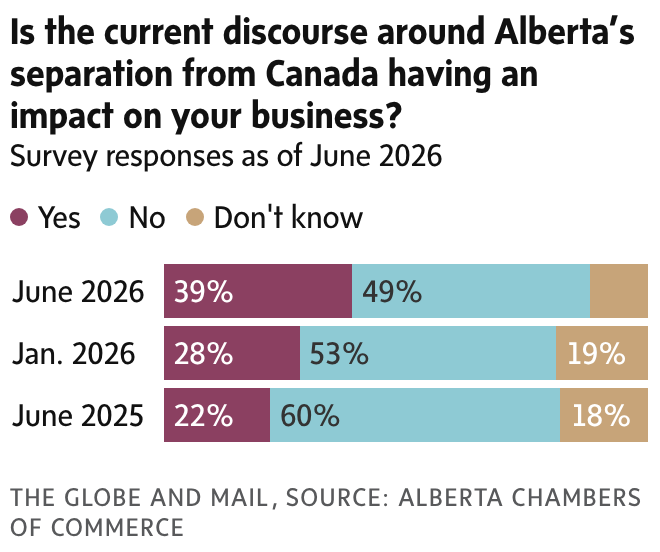
As the separatist vote looms, Alberta’s referendum adds a new layer of uncertainty for businesses. Canada must renew its relationship with the province, writes Candace Laing and Shauna Feth. |
|
|
|
|
|
|
|
|
|
|
|
|
|
|
|
|
|
|