| | In today’s edition: Oil hovers around $100, US’ Middle East bases are vulnerable, and a look at Gulf͏ ͏ ͏ ͏ ͏ ͏ |
| |  Riyadh Riyadh | Amman | Bandar Abbas |
 | Gulf |  |
| |
|
 - Contingent nuclear deal
- US bases under threat
- Gulf banks’ war test
- Dairy’s Hormuz squeeze
 The strait’s invasive stowaways: an ecosystem under attack. |
|
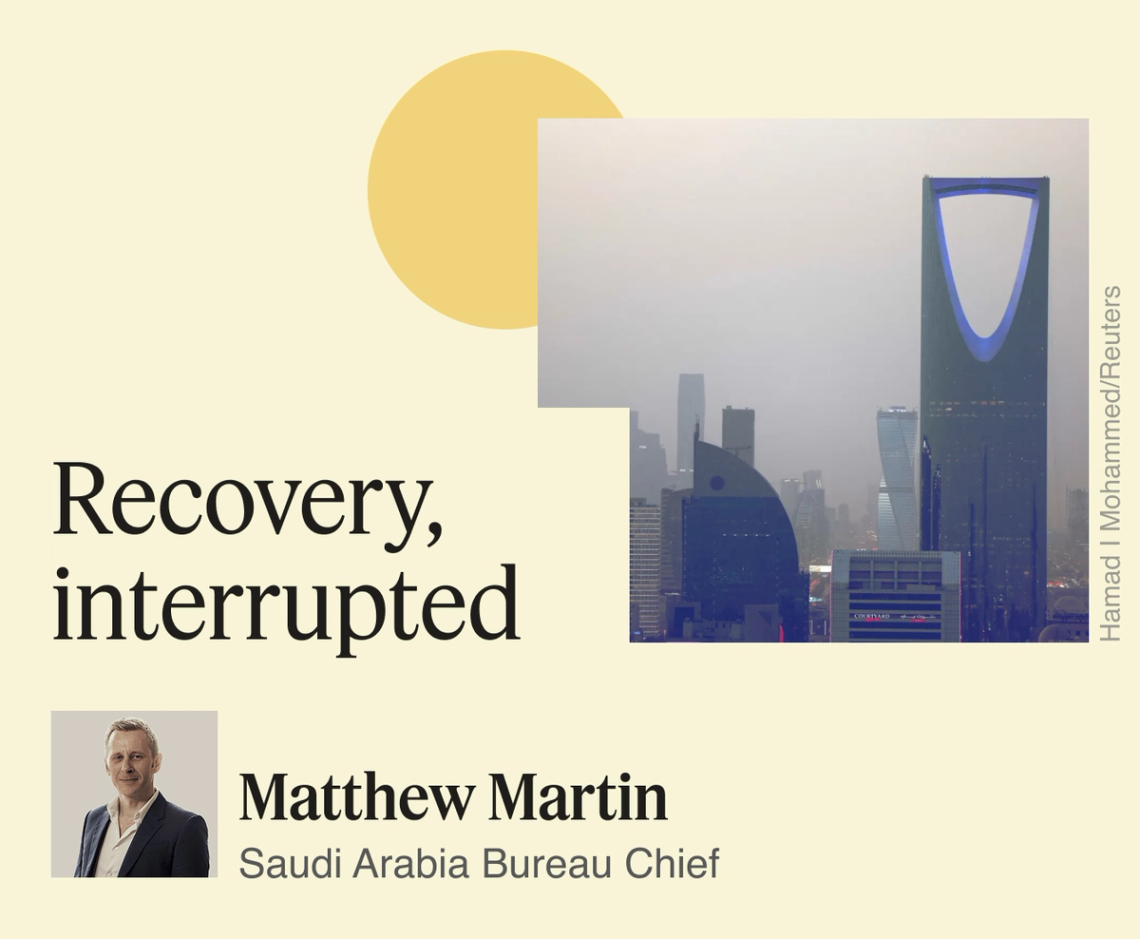 Over the next two weeks, Saudi Arabia will publish data that could offer valuable insight into how the economy and public finances have responded to the Iran war. But a fresh round of attacks makes clear that it will still be too early to look for a postwar recovery. An estimate of second-quarter GDP growth is due on Thursday, followed by Aramco earnings and a first-half budget statement. The data will likely show broad signs of resilience, as well as the strain of five months of conflict in the region. The kingdom is trying to diversify its economy and attract much-needed foreign investors, but there are obvious challenges. Lower oil production dragged down headline growth at the start of the year and the non-oil sector expanded at the slowest pace since the pandemic. Debt-fueled spending soared in early 2026, even as the Iran war began. Since then there have been signs the government has adopted a more conservative approach to its expenditure. Business surveys, meanwhile, show confidence picked up since March and unemployment fell. The last thing the kingdom needs is renewed fighting. Even worse are the Houthi attacks in the Red Sea and blockade of Saudi ships traversing the Bab el-Mandeb Strait, which has been the kingdom’s main oil export route since Iran disrupted traffic through the Strait of Hormuz. Saudi economic data is closely parsed — partly due to its size as the Gulf’s biggest economy, and also because it’s among the more transparent governments in a region that often obscures such information. The indicators will provide a snapshot, but it’s still too soon to draw conclusions about the economic outlook as the war veers toward escalation. |
|
‘No good ways out of this mess’ |
 Evelyn Hockstein/Reuters Evelyn Hockstein/ReutersOil hovered near $100 a barrel after Iran rejected a US ceasefire proposal and President Donald Trump warned of a broader military campaign. Iran hasn’t “received enough pain yet,” Trump told Axios, adding that Israel was prepared to join a new wave of strikes. Tehran, for its part, said it’s ready for a prolonged conflict and has responded to the latest round of fighting — which resumed nearly two weeks ago — by striking Gulf states and Jordan. “There are no good ways out of this mess,” an analyst wrote in Foreign Policy, but the least bad is to “pay off Iran” to open the Strait of Hormuz. Meanwhile, a major breakthrough on a Saudi civilian nuclear program, led by US companies and approved by Washington, hit a hurdle when Trump said the pact was contingent on Riyadh normalizing relations with Israel. Saudi officials were neither consulted nor notified in advance that Trump would add the normalization requirement, according to Asharq Bloomberg, and the new condition threatens to complicate the agreement: Riyadh has long tied normalization with Israel to the establishment of a Palestinian state, which Israel’s government opposes. |
|
The US needs to relocate bases |
 US soldiers at an air base in Iraq in 2020. John Davison/Reuters. US soldiers at an air base in Iraq in 2020. John Davison/Reuters.US military bases across the Gulf have repeatedly been hit by Iran during the war, with at least 18 service members killed, hundreds injured, and billions of dollars of equipment lost. For years, the outposts were seen as a way for Washington to project power and protect allies, but they now represent a vulnerability, Elliott Abrams, a former US special representative for Iran, wrote for the Council on Foreign Relations. The US needs alternative locations. Israel, western Saudi Arabia, and Egypt can all still be hit by Iran, but they are further away, giving personnel more time to shelter. New bases are expensive, but the longer US troops remain vulnerable, “the more the US will pay in readiness, deterrence, and lives,” he wrote. |
|
Investors pick their Gulf bank winners |
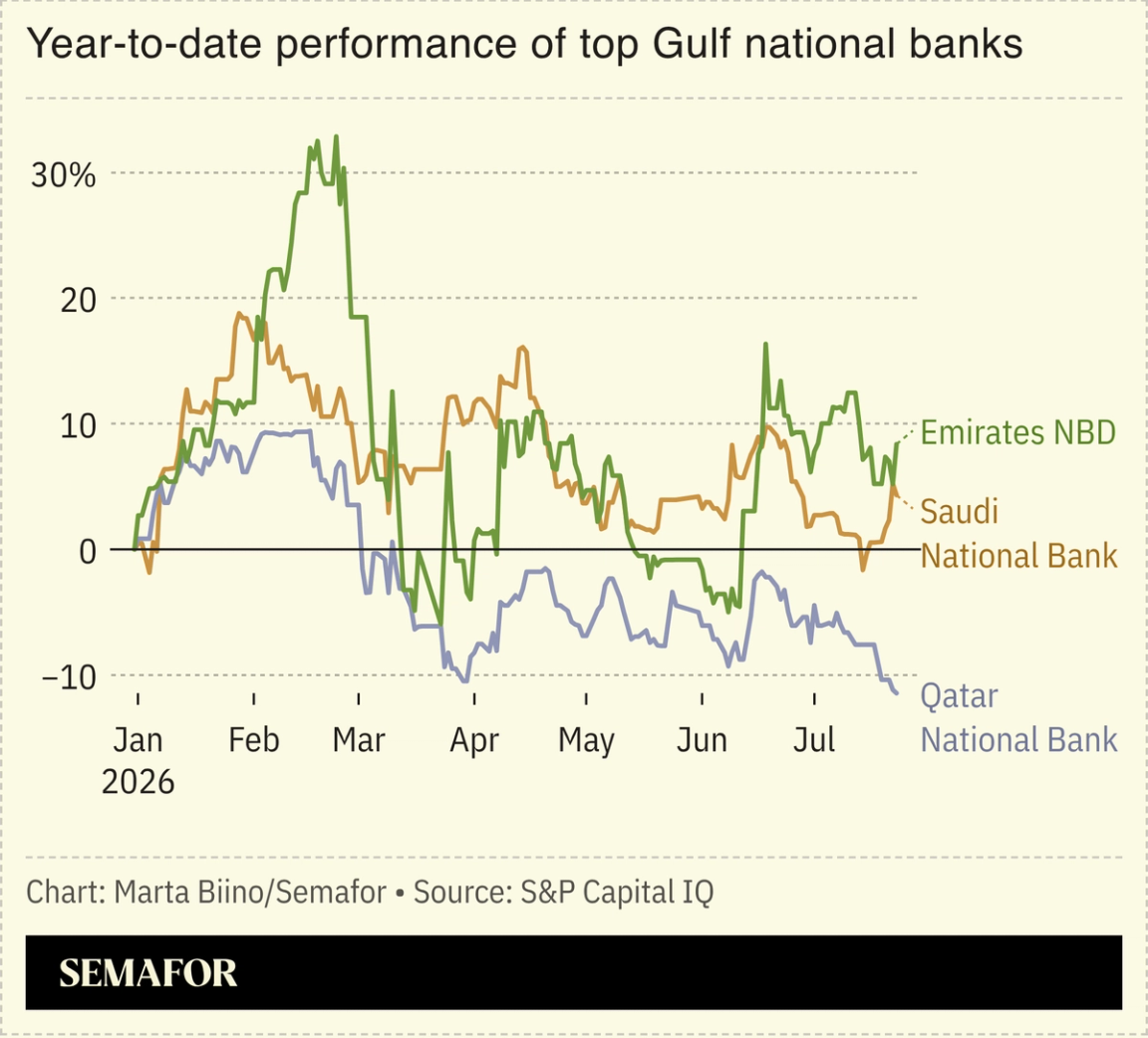 The stock market verdict on the Gulf’s war economy is in: Emirati banks are hot, Qatari banks are not. Emirates NBD and First Abu Dhabi Bank are up 8.4% and 5.7% since January, outpacing every major index in the region, with loan books still growing. Emirates NBD’s May bond sale — the first by a Gulf bank since the war began — was also nearly three times oversubscribed, a sign investors see UAE lenders as the region’s safest bet. Saudi lenders split the difference, with Saudi National Bank ahead of the Tadawul stock exchange, and Alrajhi slightly behind it after digesting higher-than-expected credit costs. The Saudi market is the only index to have risen so far this year, with the kingdom forecasting growth as most of its crude has been diverted to Red Sea ports. The outlier is Doha: Qatar National Bank has shed 13%, falling twice as much as Qatar’s lagging stock market, a verdict on the lender most exposed to an economy whose gas, goods, and confidence all transit Hormuz. — Ed Clowes |
|
Shipping costs dent protein profits |
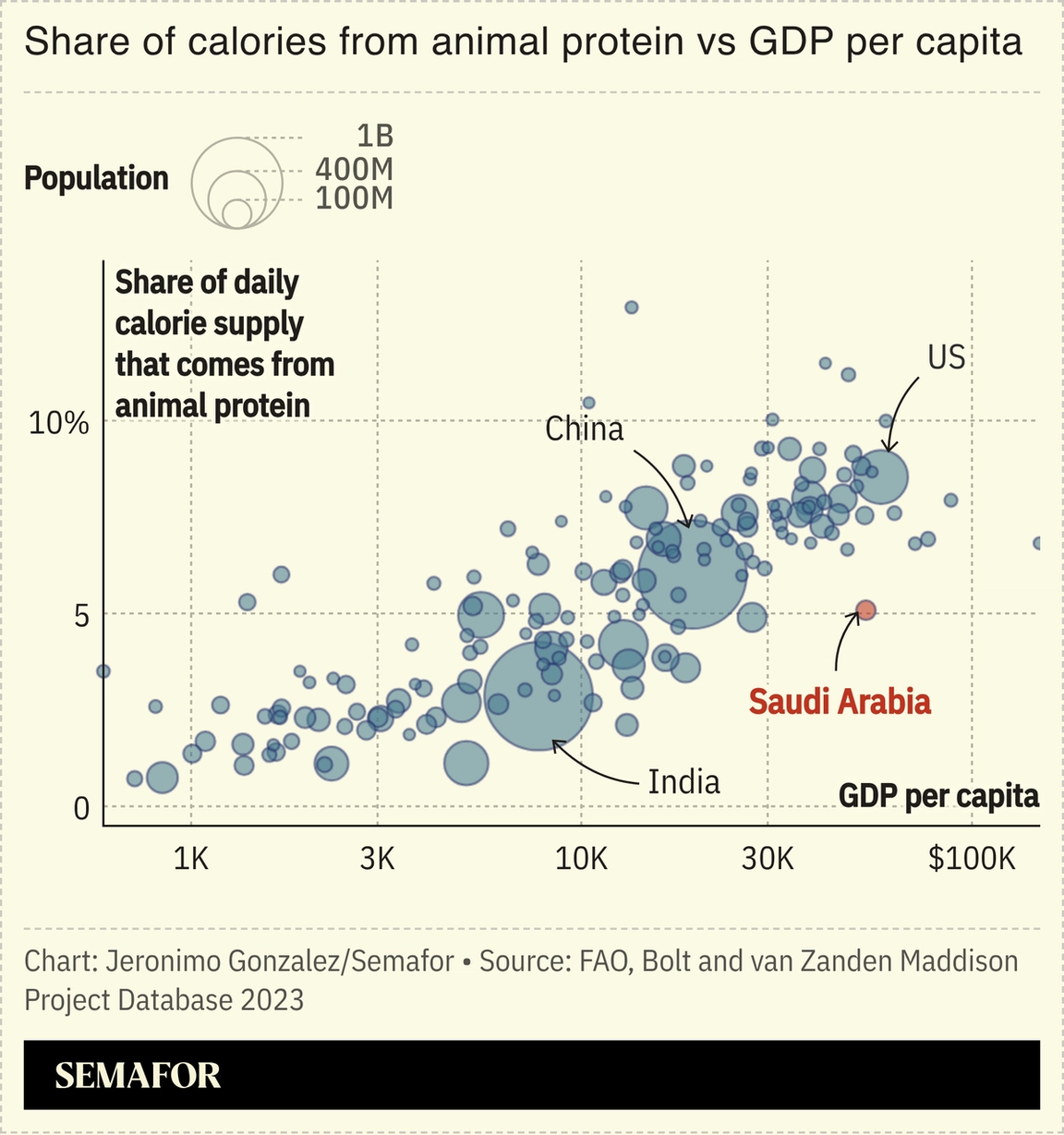 Gulf consumers have long embraced the global protein craze, but the Iran conflict is squeezing the margins of food companies seeking to profit from the trend. Riyadh-based National Agricultural Development Co., better known for its dairy brand Nadec, doubled sales in its protein segment, helping lift second-quarter revenue by 5.5%. But profit for the period fell 44% as higher feed and shipping costs erased those gains. The company said shipping disruptions alone added about 45 million riyals ($12 million) in costs during the quarter, almost equal to its quarterly revenue growth. The results show how even businesses with domestic production, strong local demand, and import routes that bypass the Strait of Hormuz remain vulnerable to the war’s broader supply-chain disruptions. — Mohammed Sergie |
|
 Stringer/Reuters Stringer/ReutersThe Strait of Hormuz blockade could cause a “superspreader event” of invasive species. Marine organisms attach to cargo ships and are carried around the world: The North American Great Lakes ecosystems, which connect to the Atlantic Ocean, are being devastated by invasive mussels. And conflict often acts as a species-transport system: The Colorado potato beetle came to Europe with World War I troop food shipments and the Australasian brown tree snake reached Guam with the US Navy in the postwar years. The 1,500 ships that sat for months in Hormuz will have picked up a particularly heavy load of marine microbes, algae, and invertebrates that rapidly colonize and grow on submerged surfaces, according to Springer Nature. These organisms will then reenter the global shipping network and be transported to new marine ecosystems, creating a “pending ecological crisis.” |
|
| |