While thousands are evacuated in France.

See how companies and governments are responding to climate change and social challenges. Subscribe to Reuters.com for $1/week.


Sustainable Switch

Sustainable Switch

Climate Focus

By Sharon Kimathi, Energy and ESG Editor, Reuters Digital

Hello,

Today’s newsletter continues to focus on Europe’s raging wildfires after the Spanish government declared a national emergency on Thursday following a series of wildfires that threatened communities near Madrid.

More than 10,000 people have been evacuated in Spain’s capital and the neighbouring province of Avila as ‌firefighters struggled to contain the blazes.

Under Spain's National Civil Protection System law, the declaration places ⁠the emergency under the direct authority of the interior minister, who is responsible for coordinating the response. Authorities said it was the first such declaration linked to wildfire.

The Interior Ministry said the decision was taken because of the simultaneous outbreak of several fires, adverse weather conditions and the need to mobilize extensive resources from different public administrations, increasing the complexity of firefighting and civil protection efforts.

Spain and much of southern Europe face increasingly severe ⁠wildfire seasons that scientists have linked to climate change.

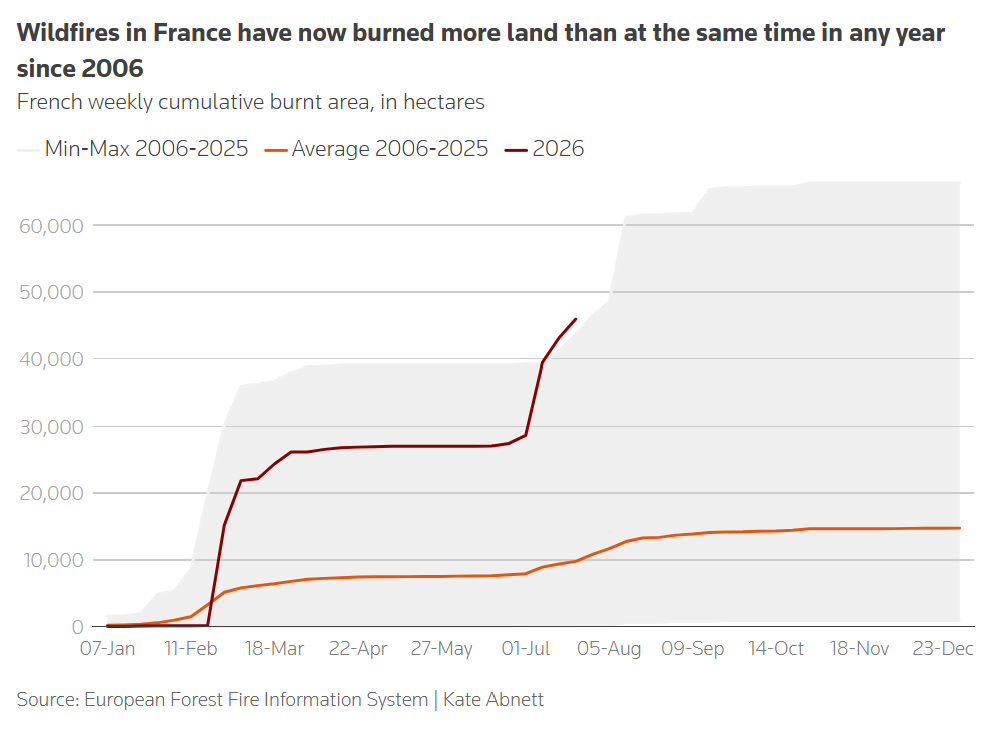
Over in France, more than 10,000 people were evacuated as a rapidly spreading wildfire ripped through at least 2,400 hectares of land west of the city of Bordeaux in the nation's southwest, officials said.

Five hundred firefighters are battling to control the blaze, the prefecture said, adding that no one had been injured so far.

The wildfire is located near the Arcachon Bay area, a tourist hotspot, and many of those evacuated are visitors staying in camping sites. "Overnight, the fire spread more quickly than we had imagined," said Philippe de Gonneville, the mayor of Lège-Cap Ferret.

Experts say abundant vegetation growth following unusually heavy spring rainfall has dried out in extreme summer heat, creating fuel for rapidly spreading fires.


Climate Buzz

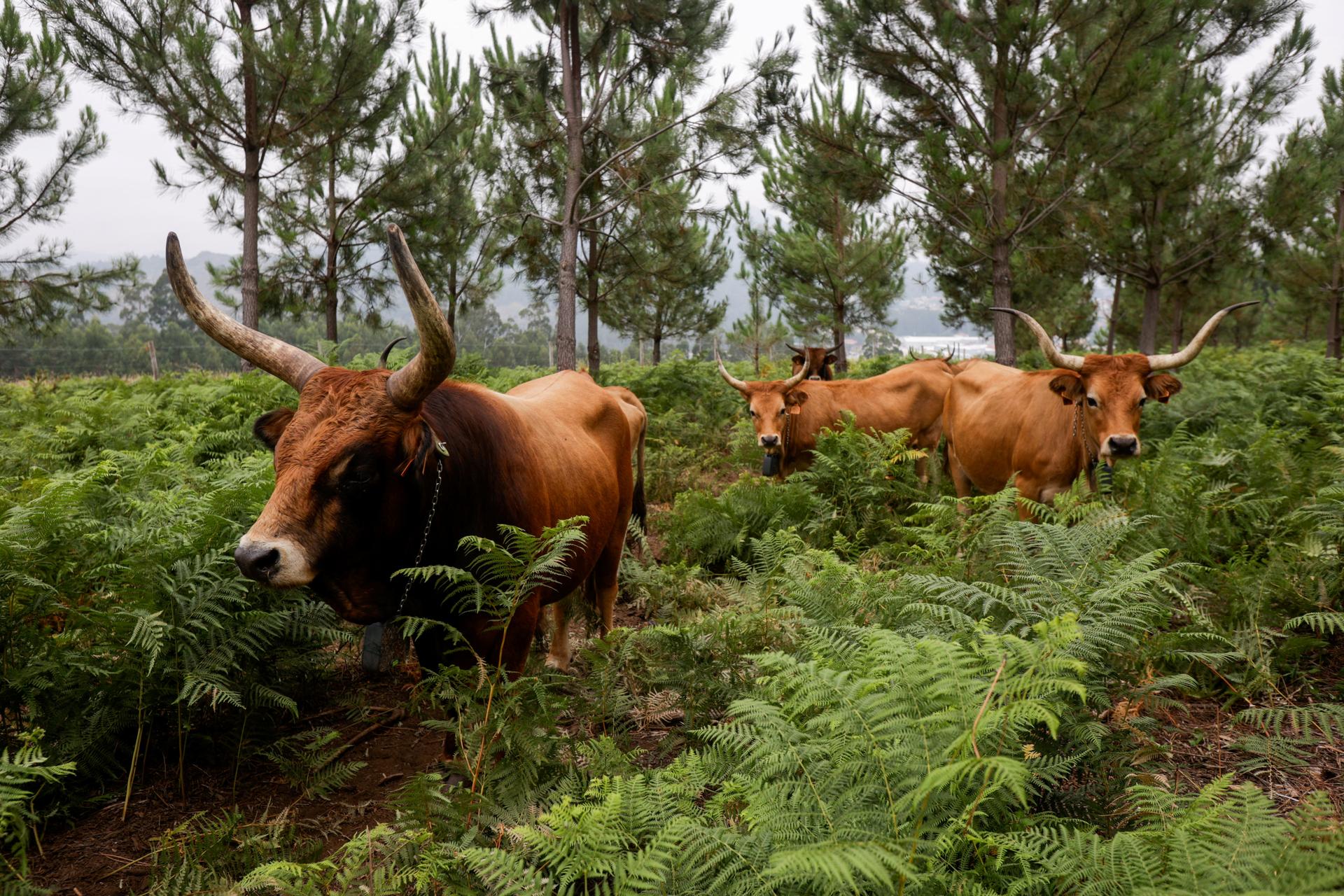
1. In wildfire-ravaged Spain, farmers revive native sheep and cows to graze on flammable plants

A Spanish cow breed, the Cachena, known locally as "goat-cows", has regained popularity for its ability to eat almost anything, especially flammable shrubs like brambles, gorse and broom, which contain oils that burn intensely and can carry ‌fires from ⁠the ground into the tree canopy. Click here for the full story.


Cachena cows in the Sierra do Galineiro, feed on shrubs to rebalance ecosystems and reduce the risk of wildfires, in Gondomar, Spain. REUTERS/Miguel Vidal

2. Landslide death toll rises to 11 in southwest China, 50 still missing

The death toll from a landslide in the southwestern Chinese city of Chongqing last week has risen to 11, with 50 people still missing and 10 injured, following torrential rain on July 17, China’s Xinhua news agency said. The confirmed death toll from the collapse of the mountainside previously stood at eight, with 34 reported ‌missing.

3. China braces for heavy rain as tropical storm Noul edges closer

China warned of heavy rain and severe flood risks as the third tropical cyclone this month, Storm Noul, tracked closer to the country's southern coast. As of Friday morning, Noul was northeast of Manila, the capital of the Philippines, and was forecast to move within 800 km (497 miles) of Hong Kong by the evening, according to the city’s observatory.

4. Tropical Storm Bertha moves inland near Texas-Louisiana border

The U.S. National Hurricane Center said that Tropical Storm Bertha had moved inland near the ‌Texas-Louisiana border about 75 miles (121 km) from Galveston, Texas. The U.S. weather forecaster said the storm had maximum sustained winds of 45 miles per hour (75 kph), spreading ⁠heavy rain across portions of coastal Texas.

5. US tests GMO flies in rush to fight flesh-eating livestock pest

Scientists are preparing to launch the first outdoor tests of genetically modified screwworm flies, in an effort to develop a more effective weapon against the flesh-eating parasite that has spread through Central America and into the United States. Click here to learn more about the research and the NovoFly developments.


What to Watch

 
Play 
 

In keeping with the main focus on wildfires, smoke and flames from a blaze in the Bordj Okhriss area of northern Algeria's Bouira province rose as firefighters and volunteers worked to contain it. Click here for the video.


Climate Commentary

  • Did you know that wildfire smoke is emerging as a new source ‌of operational uncertainty for the U.S. renewable-energy expansion? Click here to learn about the five reasons wildfires are increasingly affecting the U.S. power system, in a piece by Reuters global energy transition columnist Gavin Maguire.
  • Can one German city really be a litmus test for whether the entire European Union bloc has a chance of meeting its ambitious climate goals? Click here to find out more in a piece by Ethical Corp Magazine contributor Angeli Mehta.
 

Climate Lens


A rapidly spreading wildfire ripped through at least 2,400 hectares of land west of the city of Bordeaux, France, officials said. Five hundred firefighters are battling to control the blaze, the prefecture said, adding that no one had been injured so far.

The Cap Ferret peninsula, often likened to the upscale Hamptons in the United States, is home to some of France's expensive properties for wealthy Parisians and Bordelais. Click here for the full story on wildfires in Europe.


Number of the Week