|
|
|
|
|
|
|
|
|
The home of the week combines light, art and landscape in Forest Hill. Supplied
|
|
|
|
|
This week: New tariff turmoil hits home construction forecast and Toronto’s shrinking population signals a housing reckoning. Plus, some B.C. developers are suing pre-sale buyers who back out, and one property worth a look. |
|
|
|
|
|
|
|
|
|
|
CMHC predicts drop in home starts as new tariffs stoke turmoil |
|
|
|
|
|
|
|
|
Fewer houses will be built in the next two years despite Ottawa’s assurances it’s “turbocharging” construction, and U.S. President Donald Trump’s latest tariffs are adding even more doubt. The Canadian Mortgage and Housing Corp. is now forecasting that annual housing starts will fall 7 per cent this year to 241,400 units, 7.5 per cent in 2027 and a further 5 per cent to just 211,900 in 2028. |
|
|
|
|
The decline contradicts what Prime Minister Mark Carney outlined in his recent budget, as Rachelle Younglai reports, but trade turmoil isn’t the only driving factor. Buyer hesitation, high construction and materials costs, slowing population growth and a surplus of unsold condos are all contributing, too. “There is a very heightened level of uncertainty,” Kevin Hughes, CMHC’s deputy chief economist, told Rachelle. “There is uncertainty for businesses but also from households.” |
|
|
|
|
|
|
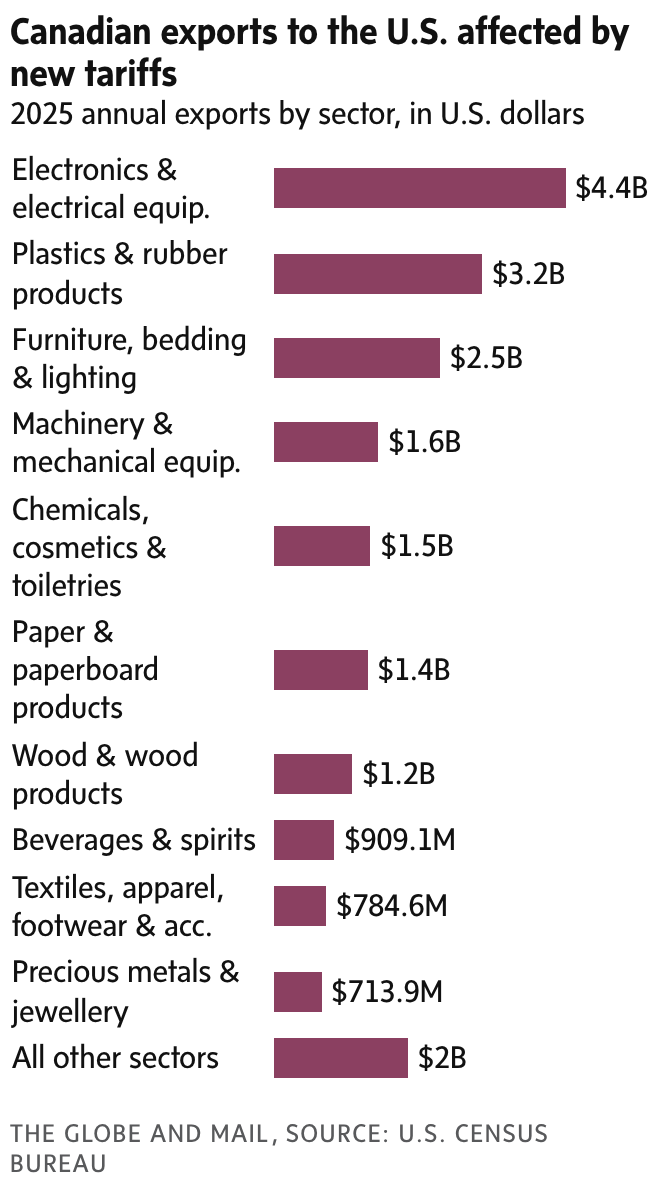
And the new tariffs will also hit the bedrooms of homeowners on both sides of the border,
as Jason Kirby and Sophia Bertuzzi report, targeting furniture, bedding and lighting industries – among other industries – many of which are already reeling from previous U.S. tariffs. Durham Furniture Inc. president Luke Simpson said the solid wood bedroom furnisher is already fielding calls from anxious U.S. customers. “We assume it’s a negotiating tactic but no one has any idea what is going to happen,” he told Jason and Sophia. “The uncertainty of it means how do you possibly add new customers?” |
|
|
|
|
|
|
|
|
|
|
Presale buyers are backing out in B.C. – and developers are suing |
|
|
|
|
|
|
|
|
|
B.C. developers are suing buyers who don't close on their sales, including a suit involving the Lynn project by Mosaic Homes in North Vancouver, rendered here. Mosaic Homes
|
|
|
|
|
Imagine this: You bought a presale home for $715,000 when prices were higher with a $68,000 deposit, but it’s almost done and its value has plummeted closer to $585,000. You’re caught between a rock (completing the purchase and cementing the six-figure loss) and a hard place (backing out and losing your deposit). Then the developer makes it even harder: they’re suing you for an additional $70,000. |
|
|
|
|
This is just one of many sales-gone-wrong playing out in B.C. courts as Metro Vancouver developers have begun to file dozens of lawsuits against buyers who don’t close. Howard Chai combed through court filings to find that major developers like Zentarra, Marcon, Dawson + Sawyer, Mosaic Homes and Westbank are suing individual buyers for trying to cut their losses and breaching contracts on projects from Vancouver to Port Moody. Mosaic said they have made efforts to work with buyers to support their closings, and all of the other developers declined to comment or did not respond. |
|
|
|
|
As Howard reports, it’s a sign that larger market forces are at play. This wasn’t happening much when the market was strong, but times are different. “Developers are not messing around anymore,” Vancouver-based realtor Mike Stewart told Howard. “They are going after people because their costs are so high and their losses are so high. So they need to sue people.”
Read Howard’s full story and why buyers might not have a legal leg to stand on. |
|
|
|
|
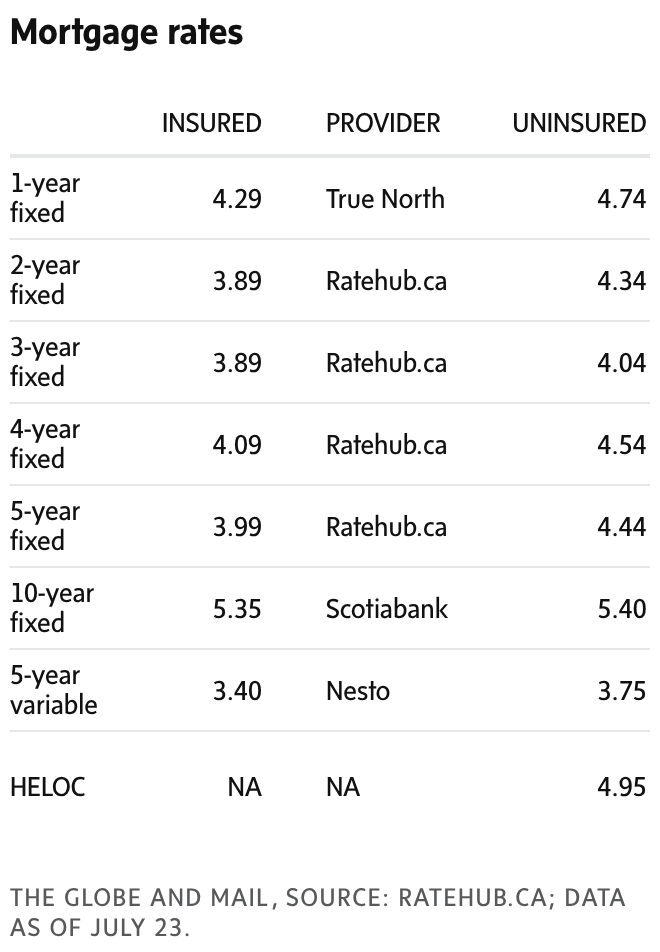
This week’s lowest fixed and variable mortgage rates in Canada |
|
|
|
|
|
|
Rates shown are the lowest available for each term/type and category (insured vs. uninsured) as of market close on Thursday, July 23. |
|
|
|
|
|
|
|
|
|
|
Toronto’s population whiplash signals an unaffordability reckoning |
|
|
|
|
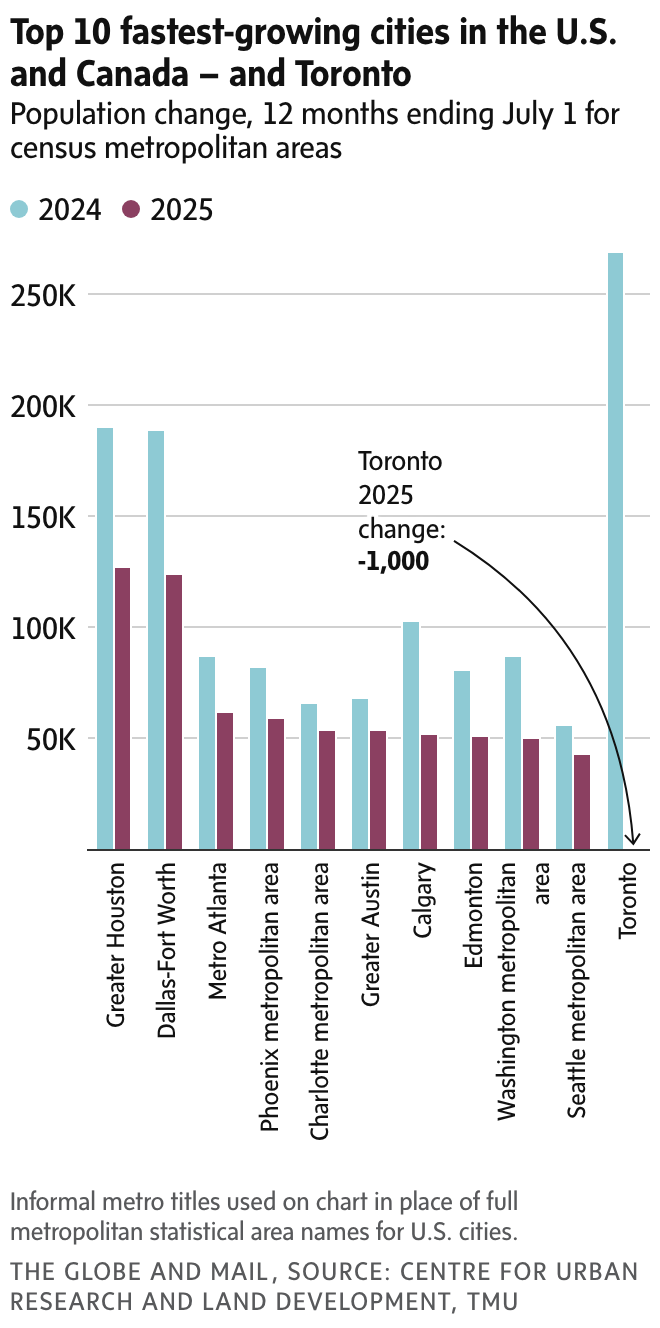
For the first time outside of the pandemic, Toronto’s population has shrank
as the rubber hit the road and sent many residents in search of cheaper housing elsewhere. In the 12 months before July 1, 2025, 1,000 more people left Toronto than moved there, and unaffordability was a driving factor. As Jason Kirby reports, just a year after topping a fastest-growing city ranking in Canada and the U.S., the Six has plunged near the bottom of the list by researchers at Toronto Metropolitan University. |
|
|
|
|
|
|
Jason has written a lot about the historic reversal of Canada’s population growth and its implications for the housing market, but this data still caught him by surprise. “It’s one thing to talk about Greater Toronto’s wild swing in population growth on its own, it’s another to see it in the broader North American context,” he told me. “To realize Toronto swung from adding the most people among 400-plus Canadian or U.S. metros to close to last place in the span of one year is stunning.” |
|
|
|
|
And while 1,000 people in a year may seem like a small net loss, the ripple effects are huge. “It’s already creating a reckoning,” Jason told me. “Rental vacancies are soaring. Rental rates are plunging. House prices have already experienced a significant correction. Not all of that is population, but a large part of it is.” Read Jason’s deep-dive into the data. |
|
|
|
|
|
|
|
|
|
|
7 tricks to make your home as relaxing as a hotel |
|
|
|
|
|
|
|
|
|
Hotel rooms, like this one at the Fogo Island Inn, can offer a lesson in how to make our homes more relaxing. ALEX FRADKIN/Supplied
|
|
|
|
|
Do you ever walk into a beautiful hotel room and wonder why you never feel quite as at-peace at home? It’s no fluke. Hotels are carefully designed to help you relax, down to the smallest detail – and research backs it up. |
|
|
|
|