
|
 |


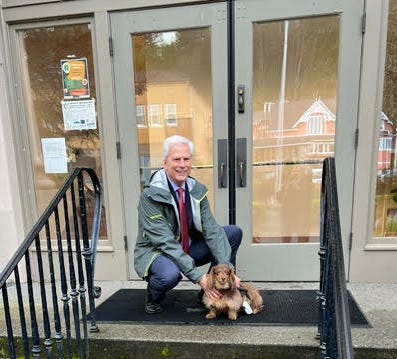
John McKay was George W. Bush’s U.S. Attorney in Seattle, the Western District of Washington. There is no one better to weigh in on a challenge to the Trump administration’s most recent efforts to circumvent the constitutional requirement that Congress confirm presidential nominees for U.S. Attorney positions, which is happening in his old District.
 |
We’ve seen issues involving whether U.S. Attorneys are properly in their jobs before this: in New Jersey with Alina Habba, in the Eastern District of Virginia with Lindsey Halligan. Under intricate federal rules, the president can only keep a temporary appointee in place for 120 days without a Senate confirmation; if that doesn’t happen, the local federal court steps in and appoints a U.S. Attorney to serve until such time as the Senate confirms the president’s nominee.
In Seattle last week, the court appointed Roger Rogoff, who has previously served as a state court judge, state prosecutor, and federal prosecutor, to serve as the U.S. Attorney. The time had lapsed for the Trump administration’s interim appointee to hold office, and no nominee had been Senate confirmed. But Todd Blanche fired Rogoff less than an hour after he was sworn in, taking the position that while the court might be able to appoint a replacement, the president is free to fire them, effectively permitting a president to keep in place the person of his choosing in place despite the lack of Senate confirmation.
Rogoff sued the Trump administration. The case sets up a novel issue: Can a President immediately remove a U.S. Attorney appointed by a federal court under a statute enacted by Congress? Can a president remove a court appointed U.S. Attorney by firing, as opposed to through nomination and confirmation of their replacement?
As Trump sought to expand presidential power early in this term in office, other cases arose exploring the executive’s ability to fire and hire at will, despite laws passed by Congress constraining that ability. Following after last term at SCOTUS, we might shorthand this as whether this situation is more like Cook (the president can’t fire a fed governor for no reason) or more like Slaughter (the president can fire an FTC commissioner for no reason), with a twist involving specific rules for U.S. Attorneys.
It’s complicated, and it’s also important. So tonight, former U.S. Attorney John McKay joins us to help clarify the situation. Today, John is a Pro Bono Lawyer with Northwest Justice Project, where he partners with a women’s shelter in southwest Washington and represents low-income tenants facing eviction. He is a Professor from Practice at Seattle University Law School. From 2013 to 2015, he led the State Department’s rule of law project in Ramallah, Palestine, where he advised prosecution, police, and security services and provided human rights training. I’m grateful to John for joining us tonight to shine his expertise on this aspect of presidential power.
“Five Questions” is a periodic feature for paid subscribers, my way of thanking those who are able to support this work so that I can devote the necessary time and resources to it. Whether you’re a paid subscriber or not, I’m happy to have you here. I appreciate everyone who reads the newsletter and works to stay informed in this pivotal moment. Free subscriptions, with access to all of the other nightly posts, will always be available, so anyone can subscribe.
Keep reading with a 7-day free trial
Subscribe to Civil Discourse with Joyce Vance to keep reading this post and get 7 days of free access to the full post archives.
A subscription gets you:
| Subscriber-only posts and full archive | |
| Forums for commenting & community interaction |
|
