Why health authorities don't have a handle on the Ebola outbreak
GLOBAL HEALTH & DEVELOPMENT
editor's note
Emmanuel Osodi/Anadolu/via Getty Images
I remember when my wife was diagnosed with breast cancer over a decade ago. A routine mammogram yielded a result that prompted a radiographer to say, "Sure looks like cancer to me." (Yikes!) Next came a biopsy; an oncologist confirmed that there was indeed a malignant tumor in the right breast. We went for a second opinion and that oncologist saw something concerning in the left breast. Turned out to be a cancerous tumor as well.
A surgeon recommended a double mastectomy because as he told my wife, "I can tell you'll always worry about recurrence if you have lumpectomies." That seemed a bit presumptuous considering he'd only just met her. Again, we went for a second opinion and were told that survival odds were comparable with either surgical procedure.
I'm sharing this story to point up how cancer is a complicated and sometimes confusing disease, very common and very personal all at the same time. And in some parts of the world, the challenge of facing cancer is even more daunting because of a lack of healthcare resources.
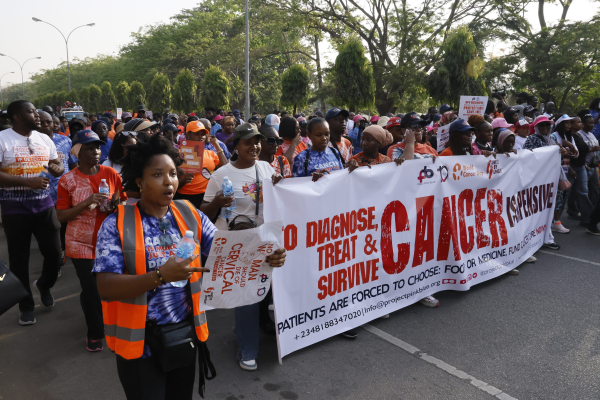
This week, reporter Durrie Bouscaren reports on on how cancer plays out in Nigeria, where the World Health Organization indicates that the number of new cases is rapidly rising.
One woman said she had to wait weeks for her diagnosis because the biopsy had to be sent to a facility far from her hometown. Just finding a cancer specialist can be daunting. In Nigeria, where she lives, there are approximately 80 oncologists for a population of 240 million. This breast cancer patient even had to go out and purchase her chemo drugs. She also faced the stigma that breast cancer carries in her community.
Despite these obstacles, this mother of three girls went through treatment and is today in good health. Reflecting on her experience, she says, "“I still insist that my life is worth more than any trauma or emotional issue” -- and she wants to make sure the women around her feel the same.
The World Cup can't even begin to compete with the unique prize for a soccer tournament run by India's Ho people: three male goats to the winning team. Al Jazeera has the story. “Most teams slaughter the goats, but some also keep them as livestock and trophy prize,” says 18-year-old player Manish Kudada. Apart from the goat element, the teams say they play by FIFA rules and view the competition as a way of strengthening communal bonds.
What do you think of today's email? We'd love to hear your thoughts, questions and feedback:globalhealth@npr.org
Enjoying this newsletter? Forward to a friend! They cansign up here.
You received this message because you're subscribed to Global Health emails. This email was sent by National Public Radio, Inc., 1111 North Capitol Street NE, Washington, DC 20002