Plus: How HOAs could support sustainability ‌ ‌ ‌ ‌ ‌ ‌ ‌ ‌ ‌ ‌ ‌ ‌ ‌ ‌ ‌ ‌ ‌ ‌ ‌ ‌ ‌ ‌ ‌ ‌ ‌ ‌ ‌ ‌ ‌ ‌ ‌ ‌ ‌ ‌ ‌ ‌ ‌ ‌ ‌ ‌ ‌ ‌ ‌ ‌ ‌ ‌ ‌ ‌ ‌ ‌ ‌ ‌ ‌ ‌ ‌ ‌ ‌ ‌ ‌ ‌ ‌ ‌ ‌ ‌ ‌ ‌ ‌ ‌ ‌ ‌ ‌ ‌ ‌ ‌ ‌ ‌ ‌ ‌ ‌ ‌ ‌ ‌ ‌ ‌ ‌ ‌ ‌ ‌ ‌ ‌ ‌ ‌ ‌ ‌ ‌ ‌ ‌ ‌ ‌ ‌ ‌ ‌ ‌ ‌ ‌ ‌ ‌ ‌ ‌ ‌ ‌ ‌ ‌ ‌ ‌ ‌ ‌ ‌ ‌ ‌ ‌ ‌ ‌ ‌ ‌ ‌ ‌ ‌ ‌ ‌ ‌ ‌ ‌ ‌ ‌ ‌ ‌ ‌ ‌ ‌ ‌ ‌ ‌ ‌ ‌ ‌ ‌ ‌ ‌ ‌ ‌ ‌ ‌ ‌ ‌ ‌ ‌ ‌ ‌ ‌ ‌ ‌ ‌ ‌ ‌ ‌ ‌ ‌ ‌ ‌ ‌ ‌ ‌ ‌ ‌ ‌ ‌ ‌ ‌ ‌ ‌ ‌ ‌ ‌ ‌ ‌ ‌ ‌ ‌ ‌ ‌ ‌ ‌ ‌ ‌ ‌ ‌ ‌ ‌ ‌ ‌ ‌ ‌ ‌ ‌ ‌ ‌ ‌ ‌ ‌ ‌ ‌ ‌ ‌ ‌ ‌ ‌ ‌ ‌ ‌ ‌ ‌ ‌ ‌ ‌ ‌ ‌ ‌ ‌ ‌ ‌ ‌ ‌ ‌ ‌ ‌ ‌ ‌ ‌ ‌ ‌ ‌ ‌ ‌ ‌ ‌ ‌ ‌ ‌ ‌

US Edition - Today's top story: Trump administration moves to block public from enforcing environmental protection laws View in browser

3 August 2026

US Edition

The Conversation
 

Top headlines

Lead story

Surveys consistently show that most Americans care about the environment and want it to be protected. So in the 1960s and 1970s, when Congress passed much of the country’s landmark environmental protection legislation, lawmakers set up a system to use that passion for the public’s benefit.

Congress realized that the executive branch might not always use its power to enforce environmental regulations, explains Sarah J. Morath, a professor of environmental law at Wake Forest University. That’s why, in key laws like the Clean Air Act, Clean Water Act and Safe Drinking Water Act, lawmakers included provisions that let regular people file lawsuits against polluters and federal agencies that don’t enforce antipollution regulations.

One of the most recent of these lawsuits was filed by the NAACP, a national civil rights group, alleging that Elon Musk’s xAI is excessively polluting the air with natural gas turbines powering an artificial intelligence data center in Mississippi.

But the Trump administration has asked a judge to dismiss the case, with what Morath explains is a new argument against letting citizens exercise the rights that Congress explicitly gave them.

[ Understand what’s going on in Washington and around the world. Get our Politics Weekly newsletter. ]

 

Jeff Inglis

Environment + Energy Editor

 
A citizen-initiated lawsuit under the Clean Air Act forced a cleanup at ExxonMobil’s Baytown, Texas, refinery and chemical complex. AP Photo/Ashley Landis

Trump administration moves to block public from enforcing environmental protection laws

Sarah J. Morath, Wake Forest University

For decades, regular citizens and advocacy groups have filed suits that forced companies and the federal government to clean up the environment. Trump officials have moved to limit that power.

Ethics + Religion

Why Arbaeen – the Shiite Muslim pilgrimage of mourning – has a deep significance that brings millions to Iraq each year

Iqbal Akhtar, Florida International University

Each year, millions of Shiite Muslims walk to Karbala to honor Husayn, the prophet’s grandson, whose death continues to shape their faith.

Environment + Energy

HOAs are often barriers to sustainable landscaping and solar energy – here’s how they could be bridges instead

Daniel Kramer, Michigan State University; Madeline Carr, Michigan State University

Climate change, biodiversity loss and water conservation are often framed as problems in need of national policies. However, there is an often more important level of governance: the neighborhood.

Health + Medicine

In memory care deserts, senior centers can help close the gap in brain-related healthcare

Rasheera Dopson, Northern Arizona University; Eric Cerino, Northern Arizona University; Megan McCoy, Northern Arizona University; Paulina German, Northern Arizona University

Specialized health care for brain-related issues can be lacking in rural areas, but collaborative, community-based approaches can help address these inequities.

Trump administration is withholding more than $1B in Medicaid funds from California and Minnesota, in latest example of weaponizing real and imagined fraud

Ben Zdencanovic, University of Cambridge

For six decades, politicians have blurred the distinction between protecting Medicaid from abuse and using abuse to discredit Medicaid itself.

Science + Technology

When expressive humanoid robots are awkward, people become wary – new brain study

Hasan Ayaz, Drexel University; Ewart J. de Visser, United States Air Force Academy; Frank Krueger, George Mason University; Yigit Topoglu, United States Air Force Academy

People who interact with expressive robots that make mistakes react with suspicion rather than seeing the bots as malfunctioning machines.

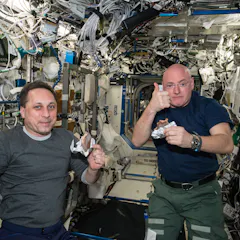
Spaceflight could change how astronauts swallow, eat and drink in subtle ways

Sundeep Venkatesan, Binghamton University, State University of New York

A speech-language pathologist on how complex swallowing is – and how small changes from gravity can complicate the process.

Can we remove or decrease spaces between atoms or molecules?

Robin Macaluso, University of Texas at Arlington

Turns out, changing the way atoms and molecules are arranged in a substance can give it new and fascinating properties.

Economy + Business

Detroit has a shortage of national retailers. What can officials do to attract more chains to the city?

Keion Harris, University of Michigan; Stephanie Leiser, University of Michigan

The city of Detroit has hired a senior director of retail attraction to bring national and regional chains into the city.

International

A new Houthi front and expanded Iranian attacks risk sinking Gulf nations’ choke-point workaround and widening shipping risks

Kristian Coates Ulrichsen, Rice University

The ongoing war in Iran has created an expanding zone of risk for shipping, including for Saudi Arabia’s strategy of redirecting oil exports away from Hormuz.

FIFA and Infantino face an uncertain future as leading soccer nations fight for change

James Skinner, University of Newcastle

Recent FIFA controversies have exposed structural tensions within world soccer, which may result in significant change at the top.

Trending on site

Reader Comment

This article again exemplifies the constraints, both on doctors, and patients, that current medical practice, and the burden of medical malpractice, places on the system.

As physicians, we can only advise our patients on the best information available to us at the time. That information evolves almost daily now. I believe that as doctors, we must always also allow for patient agency, based on as full information as we can provide.

Bill Bilek
Flawed studies linking hormone