Near twilight on a Saturday in May, my kids and I met up with a few other families on the lawn behind the New York Hall of Science, the site of the Queens Night Market, a weekly gathering of around seventy food venders and almost as many cuisines from around the globe. I gave my nine-year-old son a respectable fold of cash to spend among the stalls; after a goodly interval, he returned with a fun-sized bamboo steamer that held a single, perfectly pinched bao. The dough was, upon inspection, actually polyurethane. A growing boy could extract no calories or nutritional value from this variety of dumpling. My son told me not to worry, though, as he’d also purchased a can of ginger ale.
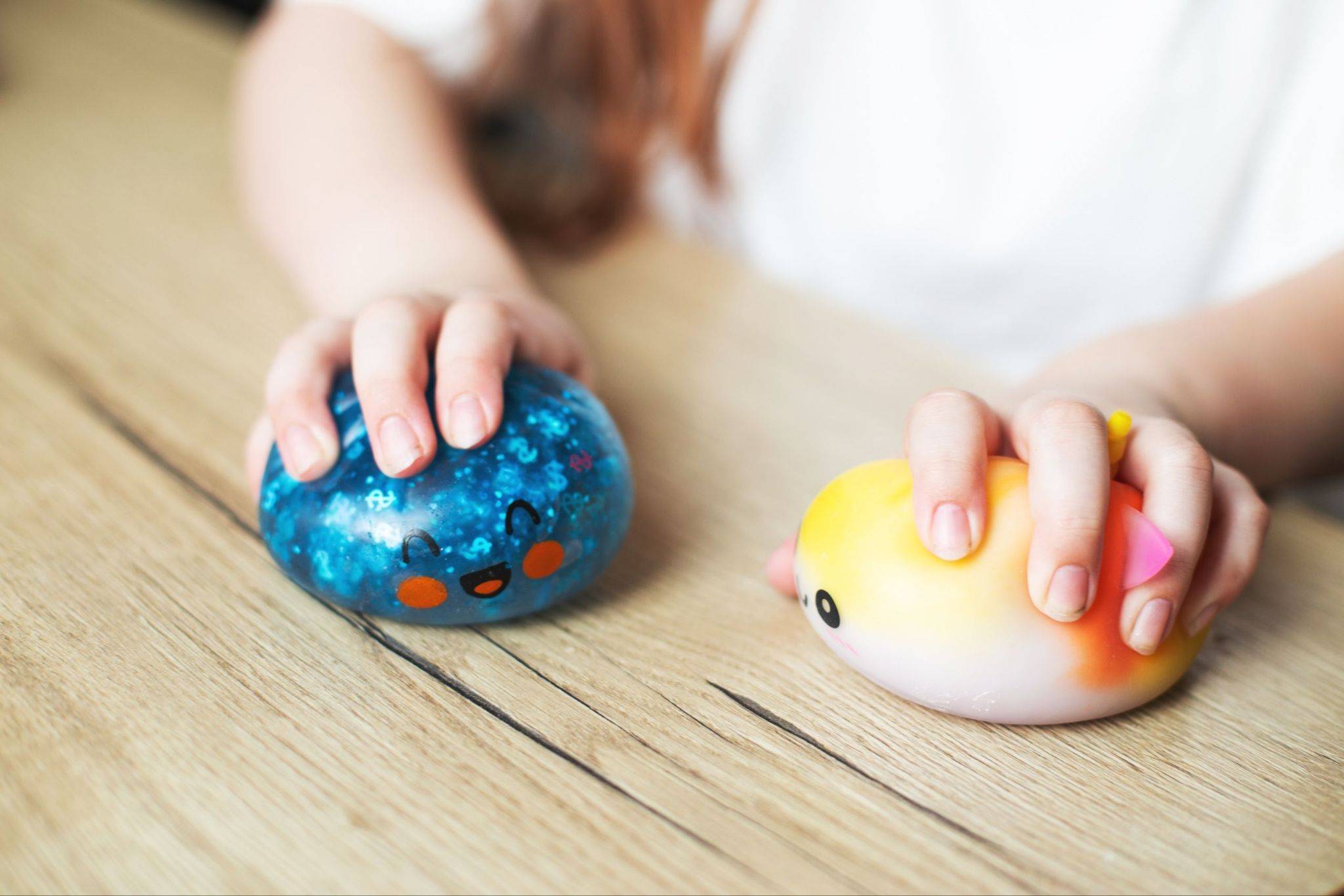
Why would a kid be willing to skip dinner in the name of fake food? It speaks to the inscrutable sway of childhood fads, even if our summer of the squishy-food toy has not quite reached the unhinged heights of last year’s Labubu mania. The squish menu is extremely narrow, dominated by facsimile dumplings and uncanny sticks of butter, whose “slow-rise foam” allows for hours of satisfying compression and expansion. The aesthetic and qualitative range is somewhat wider: the bao on offer may come in a realistic wheaty hue, or in neon pink or bedazzled gold, or it might wear a friendly emoji face. In many ways, these doodads seem like an offshoot of the ongoing craze for NeeDoh squish toys, which likewise offer the comforts of the stress ball and vital early lessons in consumerism. Young squish hunters, like all savvy shoppers, value scarcity and authenticity—the “real” squish bao, it seems, are made by a company called RMS. All the other dumplings, I am told, are fake.
I sent a letter to my eleven-year-old, still at sleepaway camp, asking for her feedback from out in the wild on the squishy-food phenomenon. She wrote back that squishies, “like most trends, have died out (or are dying out),” but that their rise and fall had a salutary effect, as the “fad raised attention about our over-consumption and how desperate people are to fit in.” The news of squishy foods’ death had not yet reached her younger brother, however. A few days later, on a grocery run, he asked me to check if the store had a stick of butter, and I knew exactly which kind he meant.