The Week in Breakingviews |
|
| |
|
The Week in Breakingviews |
|
| |
|
Insights from Reuters global financial commentary team |
|
|
|
By Liam Proud, Associate Editor |
|
|
|
Welcome back! Liam here, filling in for Peter Thal Larsen. So Prince Harry and Meghan Markle may move back to Britain. Ever in search of the financial angle, our columnists wondered: will any UK companies that shifted their listings to New York return too? Bankers have raised the idea to us many times, and London’s rules are laxer now. Any names spring to mind? Email me. If this newsletter was forwarded to you, sign up here to get it in your inbox every weekend.
Note: Links in this newsletter require a Breakingviews subscription. Subscribe here for you or your team to get full access. |
|
|
Five things I learned from Breakingviews this week |
|
|
|
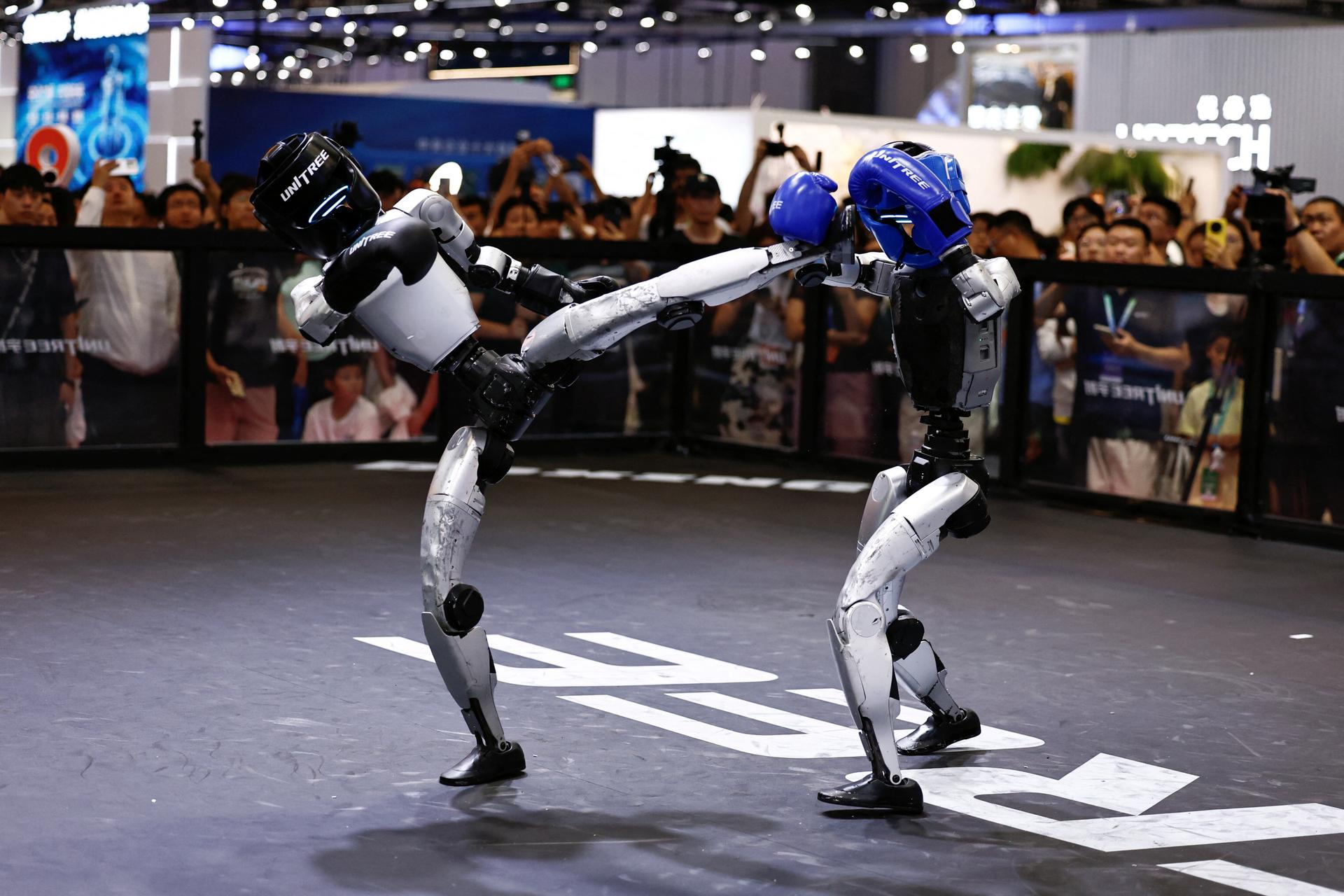
Humanoid robots by Unitree Robotics demonstrate kickboxing during the 2026 World Robot Conference, in Beijing, China August 19, 2026. REUTERS/Tingshu Wang |
Soda pop tastes sweet to start with but ultimately is unsatisfying. The same often goes for IPO pops, the term used to describe first-day rises for stock-market debutants.
Just look at SpaceX. On its first day of trading in June, the price of shares in Elon Musk’s rockets-to-routers group gained 19%, right around the increase that investment bankers generally try to engineer. From then until Thursday’s close, however, they dropped 17%, leaving them slightly below the initial public offering price. A staggered tide of lockup expirations hasn’t helped.
In China, recent pops have been much bigger and, for now at least, more sustainable. Hudson Lockett took a look at the stock sale of humanoid robot-maker Unitree, which ended on Wednesday worth 460% above the offer price. The shares plummeted by a fifth the following day, but they’re still multiples above the pre-IPO value. Mainland China listings this year, including chipmaker CXMT, have experienced an average first-day spike of almost 280%. Hence, Hudson’s punchy take: Nobody knows how to price Chinese IPOs anymore.
|
|
|
|
There are several ways of thinking about all this. The first is that companies are leaving money on the table. A first-day rise implies that the initial price could have been higher. The difference between the two numbers is effectively money handed from private owners to any IPO investors who sold quickly. The University of Florida’s Jay Ritter calculates that U.S. companies listing between 1980 and 2025 forfeited $250 billion this way.
There is no good reason for a new equity issuer to raise money at a small fraction of what the market thinks it is worth. It’s a bad look for the underwriters and their hedge-fund clients, who in such cases jointly benefit at the company’s expense. It is one reason why IPO alternatives like direct listings, where companies simply make their shares tradeable on an exchange without a classic roadshow, might be better in many cases. Jeffrey Goldfarb wrote as much last year after U.S. software developer Figma’s 250% first-day pop.
When companies seek to raise tons of money, however, the traditional IPO remains the only game in town. And there’s a manifest danger in trying to avoid the pop, which is the risk issuers run by pushing hard on the valuation. The average IPO stock price this decade jumped 32% on the first day of trading but was down 26% a year later, relative to the offer, JPMorgan analysts calculated in June. One conclusion is that, rather than being underpriced to engineer a pop, IPOs may be systemically overvalued relative to where the market eventually settles.
It’s a lesson that SpaceX’s artificial-intelligence rivals will confront ahead of widely anticipated floats. Karen Kwok wrote on Tuesday that Anthropic’s apparent growth deceleration needn’t be a problem for the Claude developer’s IPO. Both it and OpenAI may be counting on additional access to equity capital markets to fund their future losses.
If they price out the pop, and the stock goes on to underperform the broader market, investors may sit out the next cash call. Any sensible buyout baron will say the same: when planning to sell more shares down the line, it’s better to price too low than too high. In some cases, the best way to keep investors sweet is with a pop. |
|
|
|