On September 1, 1987, a military train loaded with munitions coursed out of Diablo Valley, in the East Bay of Northern California. President Ronald Reagan would, through his extralegal maneuvering, put the Marxist Sandinistas in Nicaragua down by force. In the city of Concord, a network of pacifists—many of whom were converts to the path, being veterans of the Vietnam War—organized nonviolent protests of this circuit, the flow of weapons to the Contras, American-backed insurgents in Central America. That day in September, the train came upon an obstruction on the track: veterans who had lain down on the rail. The train did not stop. It struck S. Brian Willson, an Air Force veteran, severing both of his legs.
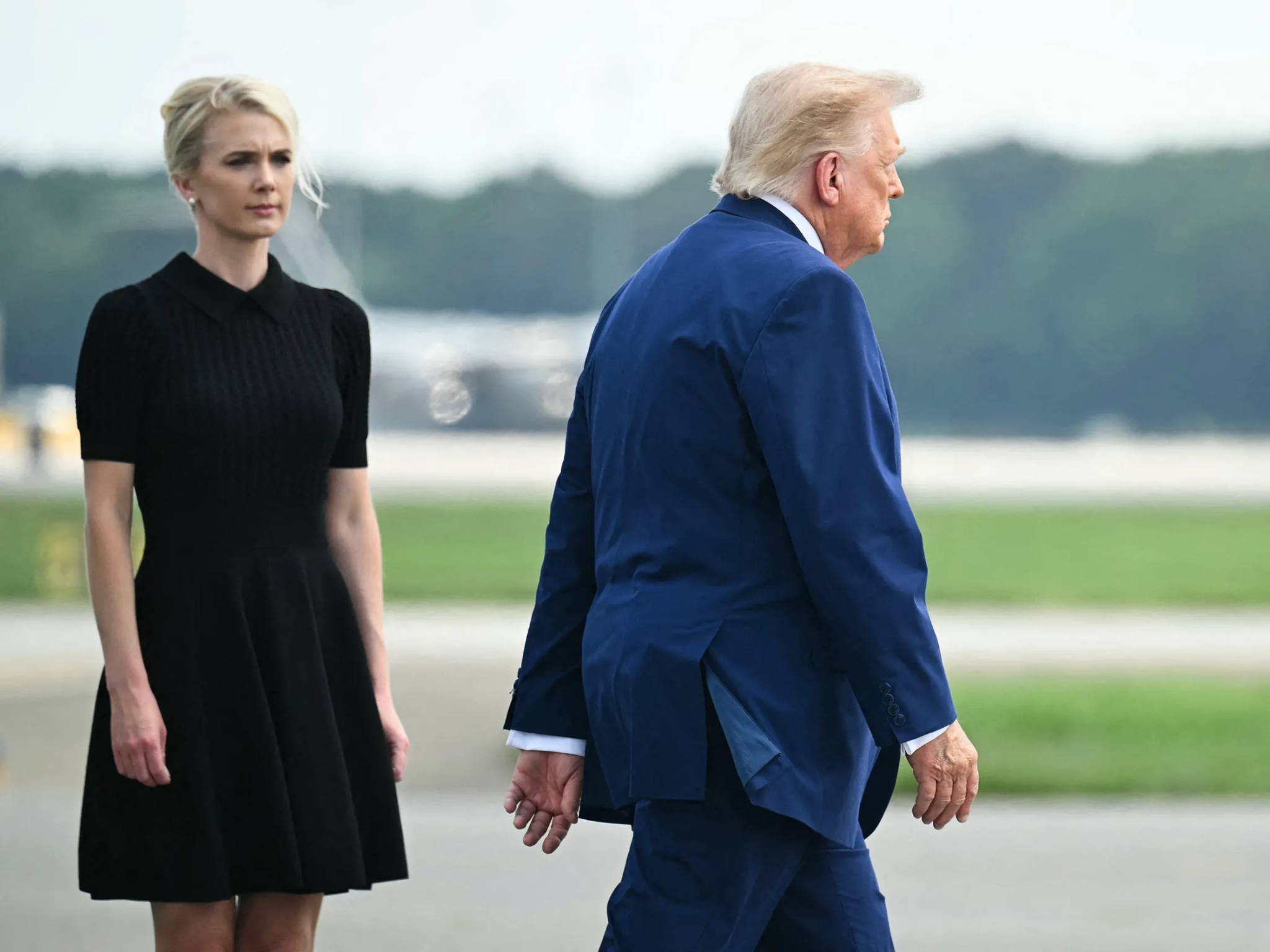
Willson, who is now eighty-five, has lived in Nicaragua for years. The word from one of his documentarians is that he is more famous there than the other Brian Wilson, of the Beach Boys. A figure like that attracts a village, notwithstanding his secular vow of “living simply so others may simply live,” and one of his votaries is Preston Harp, a thirty-eight-year-old Californian who left the States a few years ago for Managua, where he works with Willson on his manuscripts. Harp was called out of his voluntary defection, recently, to comment on the news spewing out of Washington, D.C., given that it concerned him personally, as the older brother of the subject in question, Natalie Harp, the thirty-five-year-old executive assistant to Donald Trump.
“Trump is everything that my mom taught us to respect,” Preston Harp said, on CNN. “My mom raised us with the idea that American exceptionalism was the correct way of looking at things, that the United States is the boss of the world. That slavery was—back then—that was normal. People weren’t bad because they had slaves.” Preston and Natalie were homeschooled and raised in a strain of evangelicalism. In 2020, their father, who worked as a real-estate broker, killed himself. Natalie and her mother, perhaps fearing the wrath incurred by the cardinal sin, denied the cause of his death. Preston soon stopped talking to his nuclear family, with whom he diverged politically. His pitying psychological reading of his sister was that her elaborate journey to Trumpworld was like a spiriting toward home, a towhead girl stumbling through dense thicket, awestruck by her first glimpse of thatched roof where surrogate father lives.