|
|
|
|
Good morning. Labour Day is approaching, which means back to the grind for a lot of people – and increasingly, back to the office instead of working from home. We’ll unpack how return-to-office mandates are helping revive downtown Toronto’s office market, and its economy. |
|
|
|
|
|
|
|
|
|
|
|
|
|
|
|
|
Mining: Iron ore giant Vale is shelving the planned IPO of its base-metals unit as the Brazilian government presses the company to retain control of its assets, sources say. |
|
|
|
|
|
|
|
|
|
|
|
|
|
|
|
|
Programming note
There will be no newsletter on Monday, Sept. 7 as the team takes a break for Labour Day. However, our website will be staffed throughout the long weekend so please visit us online. We’ll be back in your inbox on Tuesday. Enjoy your long weekend. |
|
|
|
|
|
|
|
|
|
|
Pedestrians during the weekday commute in downtown Toronto on Tuesday. Will Cox/The Globe and Mail
|
|
|
|
|
|
|
|
|
|
|
The office is back (in Toronto, at least) |
|
|
|
|
Hi, I’m Jason Kirby, an economics reporter with The Globe. |
|
|
|
|
If you’ve spent time in downtown Toronto lately, you’ll have noticed the area has got a lot of its buzz back after a prolonged pandemic slump. Restaurants and coffee shops are bustling again, as is the underground path network that links the city’s skyscrapers. |
|
|
|
|
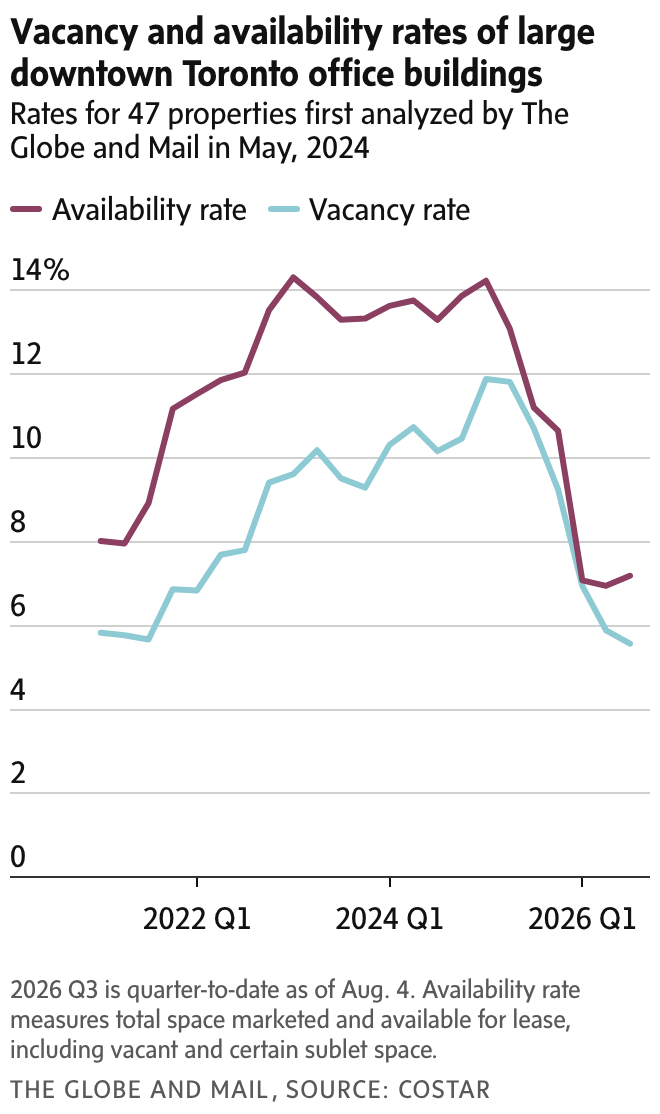
Behind the shimmering glass facades of those buildings, there’s been tremendous change over the past year, with many of the largest, premium towers swinging from a glut of empty space to the tightest commercial real estate market in years. |
|
|
|
|
My colleagues and I dug into the numbers. Real estate reporter Rachelle Younglai and labour reporter Vanmala Subramaniam joined me in writing our Saturday long read to understand what’s happening in the world of work. |
|
|
|
|
|
|
|
|
|
|
|
|
|
|
Back in May, 2024, The Globe tapped commercial real estate firm CoStar Group to crunch the vacancy and availability numbers on the 47 large office towers in downtown Toronto. One in three buildings were sitting one-fifth empty, and several were only half full. |
|
|
|
|
|
|
We revisited those same buildings with CoStar again, and most of that empty space has been grabbed by companies – especially banks – scrambling to find enough room for their employees. As real estate advisers and others repeatedly told us, the power balance has swung hard from a market in which tenants could set the terms to a landlord’s market. |
|
|
|
|
The memo heard across Bay Street |
|
|
|
|
Another power dynamic has flipped – the one between employers and workers – and it directly explains everything we’re seeing. |
|
|
|
|
As far back as 2022 and 2023, there were grumblings among businesses and bank executives about the Zoom economy, and about all of us office drones attending meetings in dress shirts and pajama bottoms. The banks called on their employees to spend two to three days in the office, but the uptake was slow. |
|
|
|
|
Then in May last year, Royal Bank of Canada sent a memo informing its employees they’d need to be back at their desks four days a week, starting that September. Other banks and businesses quickly followed suit. |
|
|
|
|
By then, unemployment rates were on the rise, job vacancy numbers had plummeted, and forces including the Canada-U.S. trade war and the rise of artificial intelligence were leaving workers uneasy about their job security. |
|
|
|
|
But the downtown rebound isn’t all stick and no carrot. Return-to-office mandates created a critical mass of people downtown on a regular basis, providing a gravitational draw for other workers. And as several younger employees told us, there’s career value to being seen in the office – even if it means shelling out money again for lunches and commuting. |
|
|
|
|
Not all office markets are alike |
|
|
|
|
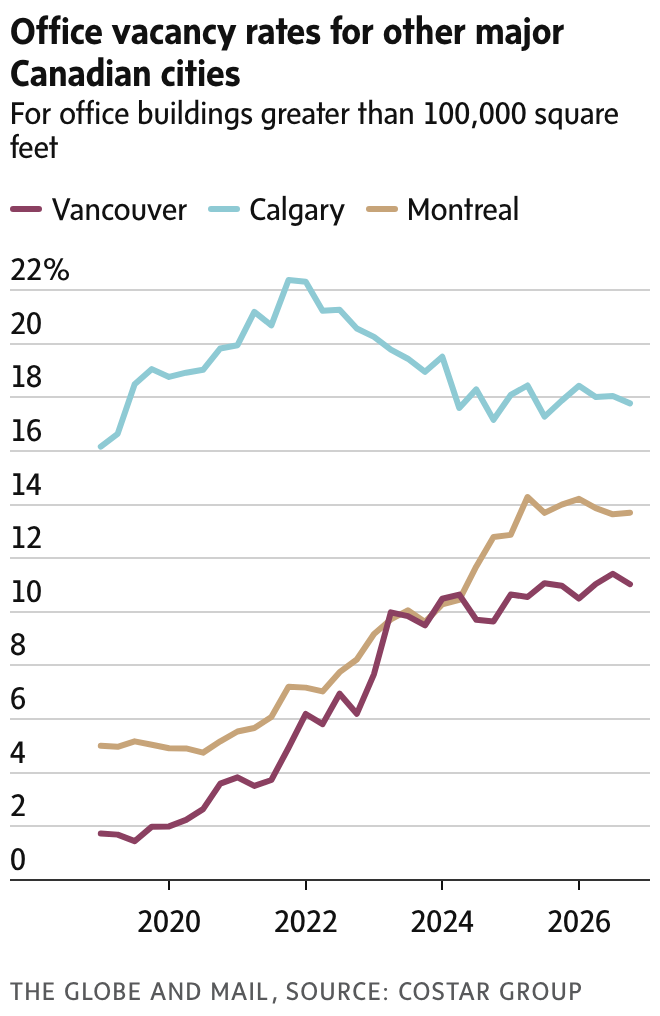
Not all cities have seen the same rebound. Vacancy rates in large office buildings in Vancouver and Montreal have levelled off, but are still higher than before the pandemic. By the vacancy metric, Calgary’s core has recovered to pre-pandemic levels, but the city was already dealing with a glut of empty space in 2019. |
|
|
|
|
|
|
Even in the broader Toronto area and nearby smaller cities, office vacancies remain elevated. |
|
|
|
|
But to the extent that any other parts of the country want to take their cue from Toronto, Hogtown’s downtown experience shows there’s a path back to something akin to the economic vibrancy cities offered before the pandemic. |
|
|
|
|
|
|
|
|
|
|
|
|
|
|
|
|
|
|
|
|
|
|
|
|
|