|
|
|
|
Good morning. And happy long weekend. Today, we’re looking at the surprisingly high cost of taking time away from work. |
|
|
|
|
|
|
|
|
|
|
When I first started at The Globe, I wrote about young people taking “mini-retirements” – quitting their jobs for a few months to travel, pursue hobbies or simply take a break. Their savings took a hit, but everyone I spoke with told me the experience was worth it. |
|
|
|
|
But new research shows just how costly stepping away from work, or even cutting back your hours, can be for your future retirement income. |
|
|
|
|
A recent U.S. study from the Pew Charitable Trusts modelled outcomes for public-sector employees who move in and out of the workforce or work part-time and have pensions. It found that, depending on the type of retirement plan they have, workers with non-traditional career paths can end up with significantly lower retirement benefits. |
|
|
|
|
In the most extreme scenario, someone working part-time for their entire career could receive 75 per cent less in annual retirement benefits than a full-time worker in the same defined-benefit pension plan. |
|
|
|
|
Many people are forced to cut back their hours or leave the workforce because of caregiving and other family responsibilities. In 2025, roughly 11 per cent of the employed population ages 25 to 44 worked part-time, according to Statistics Canada. That jumps to about 13 per cent for those ages 45 to 64. |
|
|
|
|
Even a five-year career break can leave a noticeable hole. The Pew study found that workers who stepped away between ages 35 and 39 saw projected retirement benefits fall by roughly 18 per cent with a defined-benefit pension, 21 per cent with a defined-contribution plan and 19 per cent with a hybrid plan. |
|
|
|
|
With a DC plan, time away means missing both contributions and years of potential investment growth. A DB pension works differently, because if you return to full-time work and your pension is based partly on your final or highest-earning years, the damage from an earlier break may be somewhat cushioned. |
|
|
|
|
The takeaway here isn’t that you shouldn’t take time off, or that you can’t step away from work. As the study notes, retirement systems are largely built around full-time careers that go uninterrupted. But life happens, and sometimes taking time away from work isn’t a choice. |
|
|
|
|
If you know a career break is coming, it’s worth thinking about the effect on your retirement savings before you step away. Find out what happens to your pension while you’re gone, including whether you can continue making contributions or make up for lost savings elsewhere. |
|
|
|
|
|
|
|
|
It can also help to build the cost of those missed retirement contributions into your plan for the break. Along with setting aside enough to cover your expenses while you’re not working, consider how much you would normally have contributed toward retirement and whether you can replace some of those savings before or after your leave. |
|
|
|
|
Subscribe to the Retire Rich newsletter
Are you reading this newsletter on the web or did someone forward the e-mail version to you? If so, you can sign up for Retire Rich here. |
|
|
|
|
|
|
|
|
|
|
|
|
|
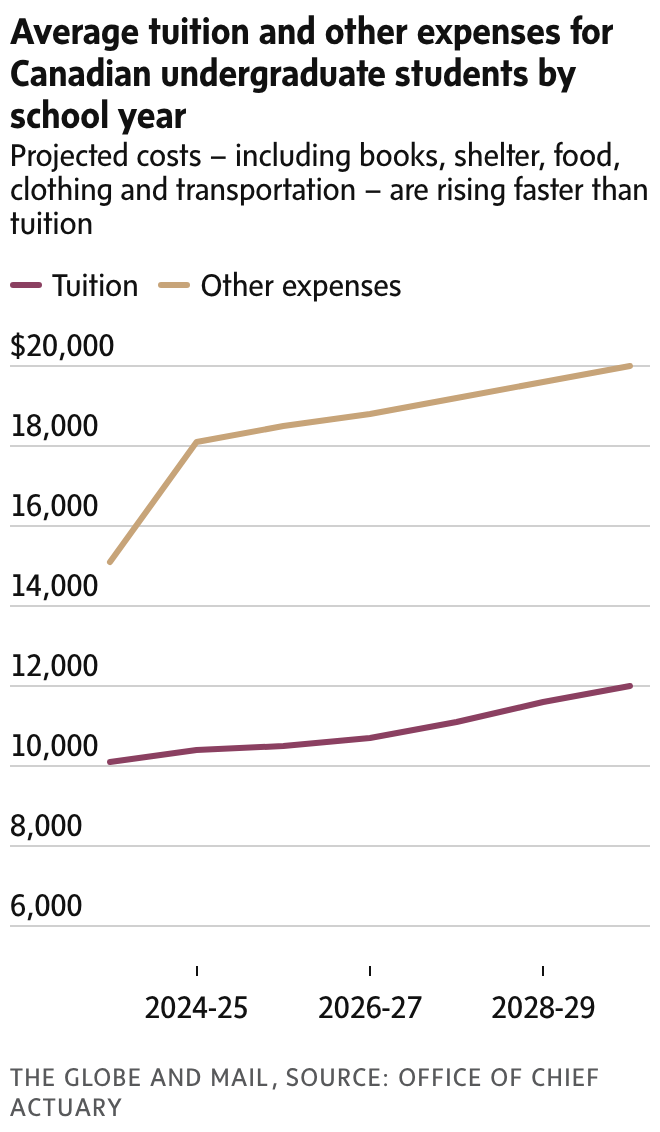
What’s happening: Projected costs, including books, shelter, food, clothing and transportation, are rising faster than tuition, meaning families who budget only for headline tuition costs can still be caught off guard by hundreds or even thousands of dollars in extras. |
|
|
|
|
|
|
|
|
|
|
|
|
|
|
|
Luther earns $237,000 a year as a manager in the private sector and Bethany earns $200,000 as a health care executive. Amanda Erickson/The Globe and Mail
|
|
|
|
|
|
|
|
|
|
|
The numbers: Luther and Bethany have about $5.8-million in assets, including a $1.6-million Alberta home, a $300,000 cottage and nearly $3.6-million in investments. They earn a combined $437,000 a year, and Bethany also has a defined-benefit pension. |
|
|
|
|
The situation: The couple want to retire comfortably in about five years, spending $105,000 a year after tax, while still leaving at least $2-million in today’s dollars to each of their two children. Before retiring, they also want to pay off their $225,000 mortgage and buy two new vehicles, and they’re wondering whether continuing to make large RRSP contributions makes sense given the taxes they’ll eventually pay on withdrawals. |
|
|
|
|
Key takeaways from a financial planner: Luther and Bethany are comfortably on track to meet both their retirement and inheritance goals. Despite their large RRSP balances, they should keep maximizing contributions while they’re in high tax brackets, then draw down registered savings strategically at lower tax rates in retirement. Their investments are projected to grow enough to leave each child at least $2-million in today’s dollars, while preserving their TFSAs as a tax-free source for unexpected expenses or an eventual inheritance. |
|
|
|
|
|
|
|
|
|
|
|
|