
| Forwarded this email? Subscribe for more |



 |
| By Lindsay Crouse | PREVIEW |
Americans are stressed about work. For some, it’s because the machines might be coming for their jobs. For others, 40 years of the 9-to-5 with a gold watch at the end seems like a quaint fantasy from a bygone era. When anyone can strike it rich as an influencer or prediction markets bettor, is the grind even worth it?
It’s Labor Day, and work is on our minds. How do we make our work meaningful? And how much is too much? The Front Page will be back tomorrow, but today we’re publishing an essay by reformed workaholic Lindsay Crouse. She once gave up nights and weekends writing for The New York Times about how perseverance makes successful people—until she “started to recognize another, darker trend in this relentless compulsion to stay and strive.” In an excerpt of her new book, The Case for Quitting: The Surprising Benefits of Opting Out, she argues for a new way of thinking that all of us would do well to consider—workaholics, slackers, and everyone in between. “Quitting is not simply a failure of resolve or easy way out,” she writes. “Often, it’s the courageous first step to something better.” —The Editors
 |
For a long time, I was an eager disciple of the grind. One night, I hit a dead end.
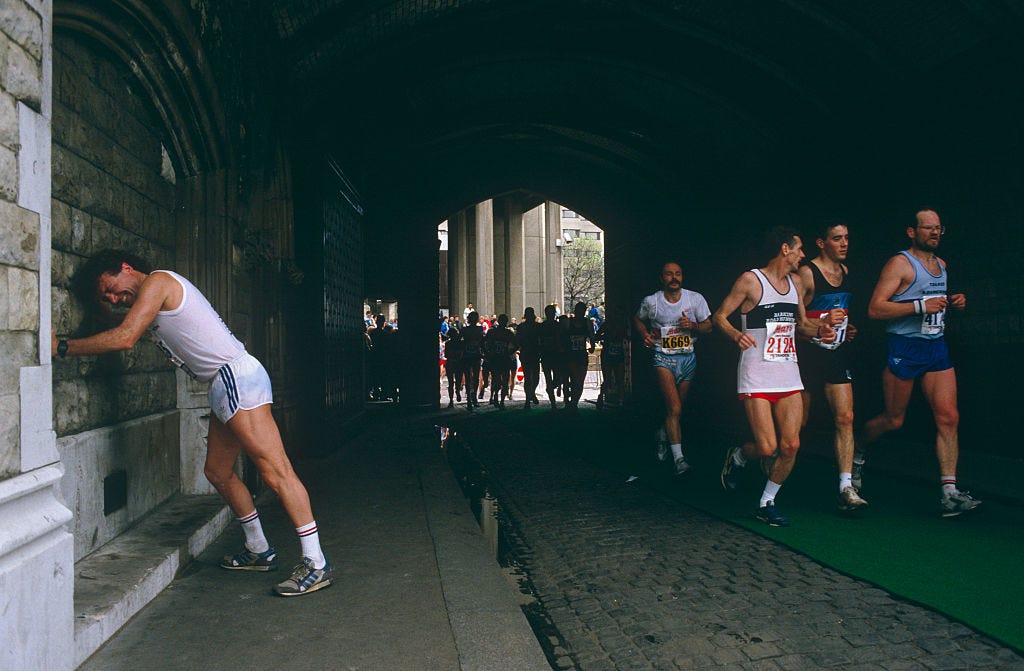
I was pregnant and exhausted. I had just run a marathon, because I’d registered and paid and I don’t quit, but I hadn’t trained enough and days later, my legs still felt like stilts. It was midnight, Thanksgiving weekend, and I was still working.

I was nearly 40, and yet I related to how students at pressure-cooker universities sometimes describe themselves: like ducks, gliding along on the surface while my legs churned furiously below. It wasn’t that I was failing, at least not if you asked the internet. I had a good job at The New York Times, and raced marathons on the weekends, for fun.
Every spring break, students would send messages asking how to be like me, and I’d usually shoot back the same advice I told myself: Keep showing up. Never, ever quit. But it was starting to feel a little like a lobotomy. The harder I worked, the duller I grew. Instead of moving forward, I was spinning and stuck.
I desperately wanted to stop. I needed to stop...
Continue reading 'I Was a Workaholic. Quitting Changed My Life.' | |||||||||||||||||||||||||||
Or | |||||||||||||||||||||||||||
|


