
|
 |
The open houses at the edge of disaster
What are buyers being told about climate risk in Miami? I posed as one to find out.
|

| |||||||||||||||


This story is part of Betting the House, a pop-up climate newsroom bringing together independent journalists to cover climate and housing. Learn more, and read other stories from the project here.
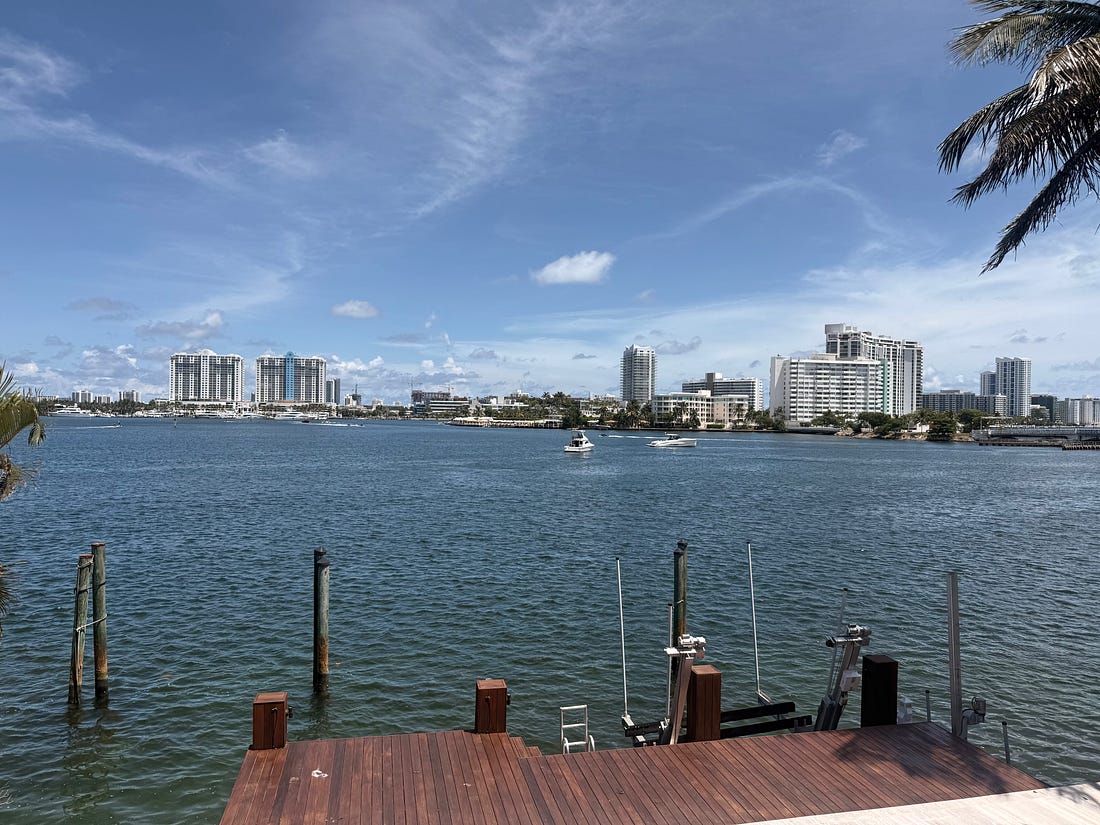 |
I am not meant to be in Miami in August. The thick air, the searing cement, the tepid ocean—it’s all teaching me what scientists mean when they say some places are becoming too hot for the human body to survive. Is Miami technically one of those places? No. But my dripping knee pits don’t care about technicalities. I’m miserable here. I want to leave.
Unfortunately, I have traveled to Miami with exactly one job: to pretend this is where I want to live forever.
I’m repeating an experiment the writer Sarah Miller performed seven years ago. In 2019, she posed as a prospective homebuyer and toured several properties in Miami Beach’s most climate-threatened areas, asking realtors whether each place might one day flood, or worse, be swallowed by the rising sea.
The resulting story, published by Popula, is one of my all-time favorite pieces of climate writing. Titled “Heaven or High Water,” it shines absurd light on what it’s like to be an average buyer considering investing in deeply precarious real estate. As Miller toured high-risk properties, realtors confidently assured her that pumps and raised roads had “fixed” the flooding; that Miami’s millionaires and billionaires wouldn’t allow large-scale climate damage to occur; and that in spite of all scientific projections, “nothing is going to happen.”
Afterwards, Miller checked those assurances with actual scientists. You can imagine what they had to say.
I have no intentions to match Miller’s prose (I could not if I tried). But I did want to rerun the experiment. Because even though projections have remained roughly the same (scientists still expect 10 to 17 inches of sea level rise above 2000 levels by 2040, and 21 to 54 inches by 2070), Miami’s climate reality has gotten darker over the last seven years.
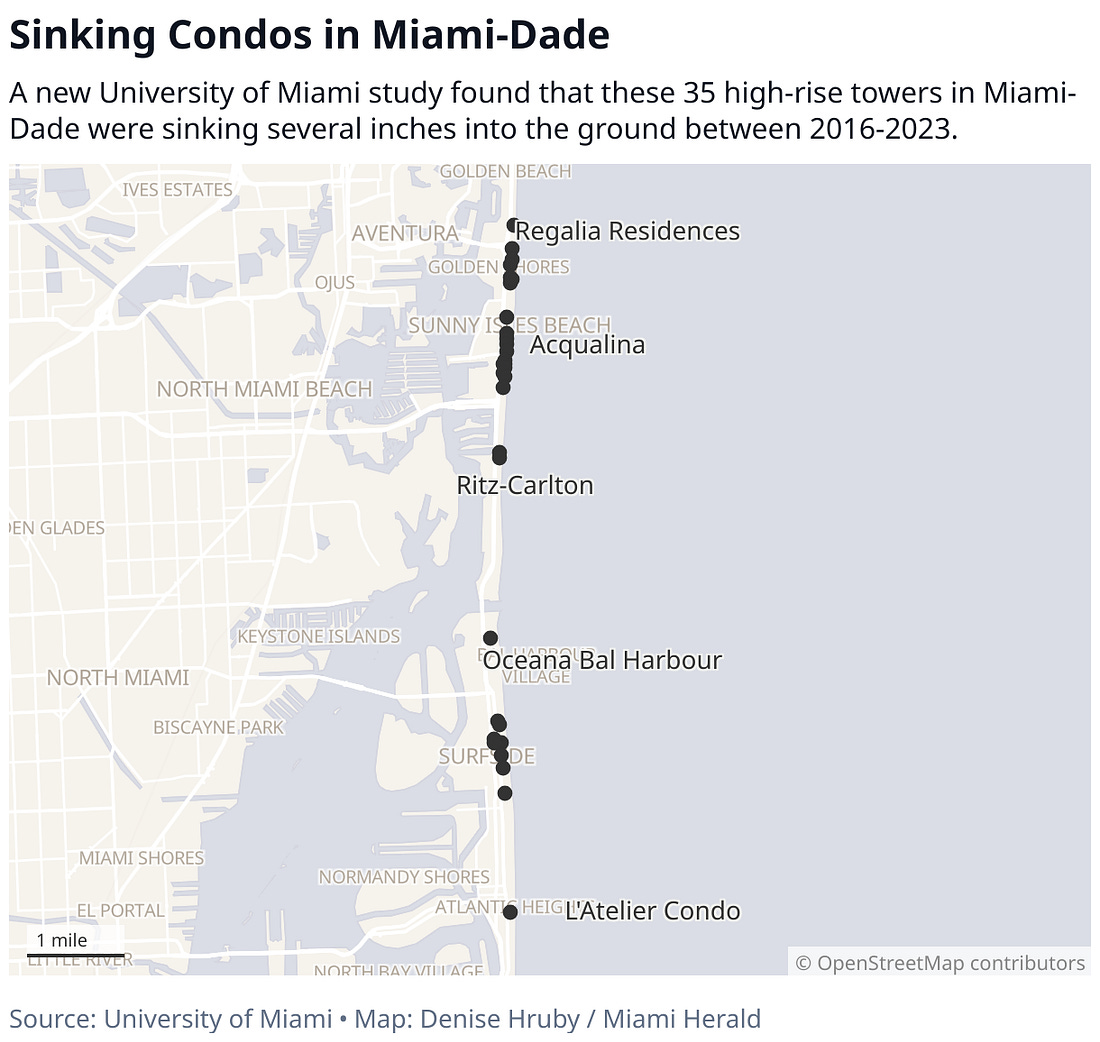
Since 2019, the ocean surrounding Miami has risen roughly another inch. Seawater is also rising through Miami’s porous limestone bedrock, pushing it ever-closer to the foundations of coastal buildings. In 2021, the 12-story beachfront condominium suddenly collapsed, killing 98 people; a University of Florida research center cited “severe seawater penetration” as a contributing factor to the building’s deterioration. In 2024, a University of Miami study found that dozens of luxury beachfront condos and hotels in and around Miami Beach are sinking into the ground at “unexpected” rates—a sign that climate change “is accelerating the erosion of the limestone on which South Florida is built,” experts said.
 |
Major players are also ringing louder alarm bells than they were in 2019. In 2024, real estate firm Cushman & Wakefield ranked Miami as the most climate-threatened city in the Americas. A year later, Realtor.com found that nearly $307 billion worth of homes in the Miami area faced severe or extreme flood risk—more than any other major U.S. housing market.
Yet people just keep buying and buying. In July alone, 394 homes in Miami-Dade County sold for at least $1 million—15 percent more than a year earlier, according to the local Realtors association. Buyers also snapped up 1,026 existing condos that month, an 11.4 percent increase.
So what’s happening? Are Miami buyers these days simply deciding they can afford to take on the risk of the ever-rising sea?
Or could it be that buyers are still being told there isn’t much risk to take?
Absolutely, 100 percent, no puddles in Brickell Key
My first stop today is a high-rise condo on Brickell Key, a manmade island in Biscayne Bay that holds some of the city’s tallest buildings.