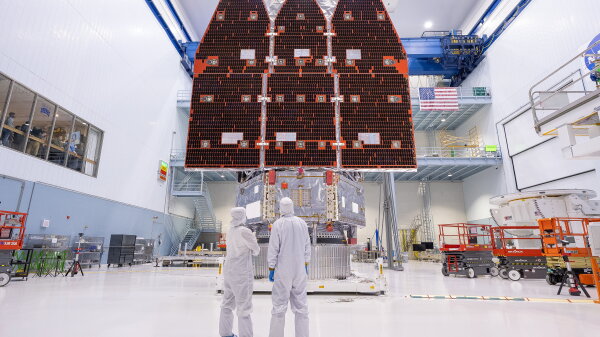
For decades, NASA’s Goddard facility in Maryland has been famous for one thing: engineering spacecraft that try to answer big questions. Questions like: Are we alone? How many other planets might be able to support life? Why is the universe expanding?
It takes billions of dollars, custom-built rooms and teams of experienced engineers to make the telescopes and satellites that can shed some light on those questions. But last year, NASA’s management started forcing engineers out of those specialized labs. In some cases, NASA leaders gave them less than a week to pack up their devices and designate what equipment they would have to lose in order to fit into the smaller spaces they were told to move to. Other times, sources told me, the teams’ equipment was moved — and even donated to other institutions — without the scientists’ knowledge.
After lawmakers asked the government’s independent watchdog office overseeing NASA to investigate the impact of those moves, the agency in June found that those relocations hadn’t hurt ongoing projects and would “not impact NASA’s anticipated missions.”
But I spoke with seven current and former NASA scientists and engineers at Goddard who said that wasn’t true. Some of NASA’s most ambitious projects, like the Nancy Grace Roman Space Telescope, launched in August, were affected, NPR found.
Experts told me that it signals danger for NASA’s future.
“That only adds a whole lot of risk to an already risky endeavor,” said Jack Kiraly, chief of advocacy at The Planetary Society, a nonprofit that champions space science and exploration. “These are potentially billions of dollars worth of taxpayer investment. We don't do ourselves any favors by putting the people that make this happen in precarious situations.” |