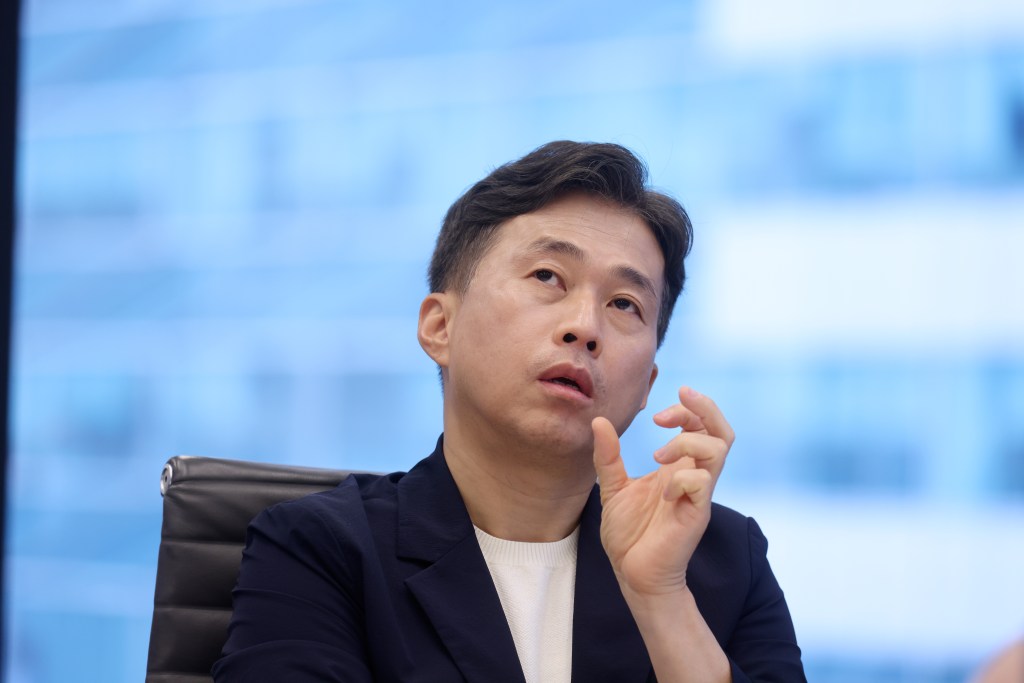
Kwak Noh-jung, CEO of SK Hynix, in New York City on July 10, 2026.Michael Nagle/Bloomberg/Getty Images
The world’s second-largest memory maker is reportedly in talks with Intel to manufacture memory chips in the U.S.
Though it has a chip packaging plant under construction in Indiana, South Korea’s SK Hynix—which joins compatriot Samsung and American peer Micron as the Big Three of computer memory—hasn’t made memory chips in the U.S. before.
But the go-to supplier of American tech giants Apple, Google, Meta, Microsoft, and Nvidia has been talking with Silicon Valley icon Intel—in which the federal government has a 10% equity stake, you may recall—about leasing one of its Ohio factories to spin up more supply,
according to Reuters.That’s good news because we remain in the midst of a global memory crunch. Add the U.S.-China trade war and Intel’s in-progress turnaround and it’s a seeming win for everyone.
Except Seoul, that is. There’s a real chance the Korean government objects to one of its crown jewels making nationally important goods beyond its shores, especially given the Trump administration’s evolving tariffs on its semiconductors—presently 25%, with recent threats of up to 100%.
Add in some regional jealousy about the deal Taiwan, home to contract chip leader TSMC, worked out with the U.S. and there’s tinder for a trade war. And no one wants another one of
those.
It’s not yet clear what kind of chips SK Hynix might want to make stateside. Though the company makes lots of different kinds—DRAM for short-term memory in your favorite gadgets, NAND flash for long-term storage in those same devices—it’s the company’s HBM, or high-bandwidth memory, used in AI chips that attracts the headlines (and the hefty profits).
However things turn out, SK Hynix has certainly been in the spotlight lately. It completed a secondary listing on the Nasdaq in July and is—like its peers—under tremendous pressure from customers and countries to churn out more chips.
—AN