Why did a high-profile fashion CEO physically restrain Peta protesters?
͏ ‌      ͏ ‌      ͏ ‌      ͏ ‌      ͏ ‌      ͏ ‌      ͏ ‌      ͏ ‌      ͏ ‌      ͏ ‌      ͏ ‌      ͏ ‌      ͏ ‌      ͏ ‌      ͏ ‌      ͏ ‌      ͏ ‌      ͏ ‌      ͏ ‌      ͏ ‌      ͏ ‌      ͏ ‌      ͏ ‌      ͏ ‌      ͏ ‌      ͏ ‌      ͏ ‌      ͏ ‌      ͏ ‌      ͏ ‌      ͏ ‌      ͏ ‌      ͏ ‌      ͏ ‌      ͏ ‌      ͏ ‌      ͏ ‌      ͏ ‌      ͏ ‌      ͏ ‌      ͏ ‌      ͏ ‌      ͏ ‌      ͏ ‌      ͏ ‌      ͏ ‌      ͏ ‌      ͏ ‌      ͏ ‌      ͏ ‌      ͏ ‌      ͏ ‌      ͏ ‌      ͏ ‌      ͏ ‌      ͏ ‌      ͏ ‌      ͏ ‌      ͏ ‌      ͏ ‌      ͏ ‌      ͏ ‌      ͏ ‌      ͏ ‌      ͏ ‌      ͏ ‌      ͏ ‌      ͏ ‌      ͏ ‌      ͏ ‌      ͏ ‌      ͏ ‌      ͏ ‌      ͏ ‌      ͏ ‌      ͏ ‌      ͏ ‌      ͏ ‌      ͏ ‌      ͏ ‌      ͏ ‌      ͏ ‌      ͏ ‌      ͏ ‌      ͏ ‌      ͏ ‌      ͏ ‌      ͏ ‌      ͏ ‌      ͏ ‌      ͏ ‌      ͏ ‌      ͏ ‌      ͏ ‌      ͏ ‌      ͏ ‌      ͏ ‌      ͏ ‌      ͏ ‌      ͏ ‌     

Why did a high-profile fashion CEO physically restrain Peta protesters at New York fashion week? | The Guardian

Support the Guardian

Fund independent journalism

Fashion Statement - The Guardian
Steven Kolb wears a sparkling black tuxedo with white bow tie, smiling at a red carpet event

Why did a high-profile fashion CEO physically restrain Peta protesters at New York fashion week?

Steven Kolb tried to stop people protesting against the use of wool – but he can’t block consumers’ growing curiosity about where their clothes come from

Chloe Mac Donnell Chloe Mac Donnell
 

On Sunday afternoon, Mason Melito took a front row seat at the Cos show at New York fashion week. A campaigner at Peta (People for the Ethical Treatment of Animals), Melito wasn’t on the guest list – instead, he and four other activists had planned to briefly disrupt the catwalk show with the aim of drawing attention to the use of wool by the Swedish brand.

Protests on the catwalk have a long, rich history. Since the 90s, Peta have regularly stormed shows in an attempt to draw attention to the industry’s use of fur and leather. It’s a typically peaceful practice that happens regularly – during some shows, the catwalk is so long and security so swift that show-goers don’t even notice. (Sometimes, Peta take a different approach: in 1996, during a lunch, a protester famously dropped a dead raccoon on to Anna Wintour’s plate.)

However, rather than causing a temporary interruption during the Cos show, Melito and a fellow protester found themselves being physically restrained by Steven Kolb, the chief executive of the Council of Fashion Designers of America (CFDA). A video of the incident went viral, and has since led to the Cos show unexpectedly becoming one of the most talked about events at fashion week.

Melito, speaking to the Guardian by phone from New York City, described his shock at how the incident unfolded.

A person wearing a bloodied jumper holding up a model of a bloodied sheep outside a H&M store
camera A Peta activist staging a protest outside a H and M store in the Harajuku district of Tokyo in Japan this week. Photograph: Franck Robichon/EPA

As the show started and the models emerged, one of the activists on the other side of the room took to the catwalk holding a poster and shouting their concerns about the wool trade. They were quickly escorted away by security.

Shortly afterwards, Melito signalled to Andrija Barak, a fellow disruptor who was sitting close to Kolb, that it was their time to take to the catwalk. “As soon as she got up, Kolb assaulted her,” Melito claims.

In a video captured by the news site Fashionista, Kolb can be seen seemingly wrestling Barak to the ground. He snatches a poster out of her hands and then covers her mouth with his hand while restraining her using his arms and a leg.

After Barak freed herself, Melito stood up. “I attempted to follow her to console her and make sure that she was OK,” he says. Instead, he too found himself being restrained by Kolb in another incident that was also captured on camera.

On Monday, Kolb issued a statement on Instagram saying he had “inappropriately restrained” two activists, and that “there is no justification” for his actions. “As I review the videos, I understand the reaction they have generated,” he added. “Frankly, I don’t recognise that person. As a result, I am taking a voluntary leave from work and meeting with a professional to ensure it never happens again.”

On Tuesday, Kolb was placed on leave by the CFDA, pending a full review. In a statement, the organisation said it is “committed to working with dissenting voices to find commonality and is engaged in efforts to move the American fashion industry forward while upholding the values of our membership, including respectful engagement with differing viewpoints”. A spokesperson for the H&M Group, which owns Cos added that the company was “deeply sorry” about the confrontation.

Melito describes the situation as “a scary one”. Asked if he felt unsafe, he said: “Absolutely – Kolb just went completely rogue and decided to take matters into his own hands.”

The confrontation has opened a can of worms. But, most of all, the incident must be a reminder of the issues fashion has with some of its supply chains. From the illusion of Made In Italy to waste and alleged “wage theft”, whether it’s a giant global corporation that sells pieces for less than £30 or a luxury house that sells items for four figures, when it comes to failures to protect people and animals, the industry is quick to pass the buck. For many, what will have been most alarming about the incident isn’t the pinning of protesters to the floor, but the fact that its consumers will now be questioning just exactly how their clothes are made.

Melito, for what it’s worth, considers this a victory for sheep who he describes as the “real victims”. “Wool belongs to sheep and it should stay on sheep.”

The Measure

What’s hot – and what’s most definitely not – this week

Oysters, the Medoc marathon, Charlie XCX in a House of Holland T shirt on stage in New York, a fish scale pattern fabric dress at Connor Ives RTW Spring/Summer 2027, and Diasy Edgar-Jones bonnet-less in a Sense and Sensibility photocall
camera Oysters as marathon fuel, slogan tees, fish-scale patterns, and a bonnet-less Daisy Edgar-Jones. Composite: Christophe Archambault/AFP/ASMR/Henry Redcliffe/Giovanni Giannoni/WWD/Wiktor Szymanowicz/Anadolu

Going up

Hydration breaks | Move over electrolytes and gels, this marathon through the vineyards of Bordeaux features stops for oysters and red wine. Almost makes 26.2 miles sound enticing. Almost!

The basic bucket bag | The everywoman of handbags takes centre stage in the first pictures of season three of Nobody Wants This. Perfect costume design from Negar Ali Kline – it hangs in wardrobes around the world with good reason.

Slogan Tees | Charli xcx persuaded Henry Holland to revisit his one-liner T-shirt roots for the opening look of her Music, Fashion, Film tour. And now we’re all hunting secondhand sites for the originals.

Going down

Freshers’ flu | Students are leaning into “wellness darties” – daytime parties geared around workouts, cold plunging and alcohol-free beers. Each to their own.

Bonnets | Don’t expect to see Daisy Edgar-Jones and co sauntering around in them in the new Sense and Sensibility. Turns out its director Georgia Oakley has a dislike of the regency-era headwear.

Oncorhynchus mykiss | Fish scales are the new animal print thanks to Conner Ives, who showed dresses covered in watercolour fish-scale prints in New York this week. Move over leopards, rainbow trout are here.

 
The Guardian

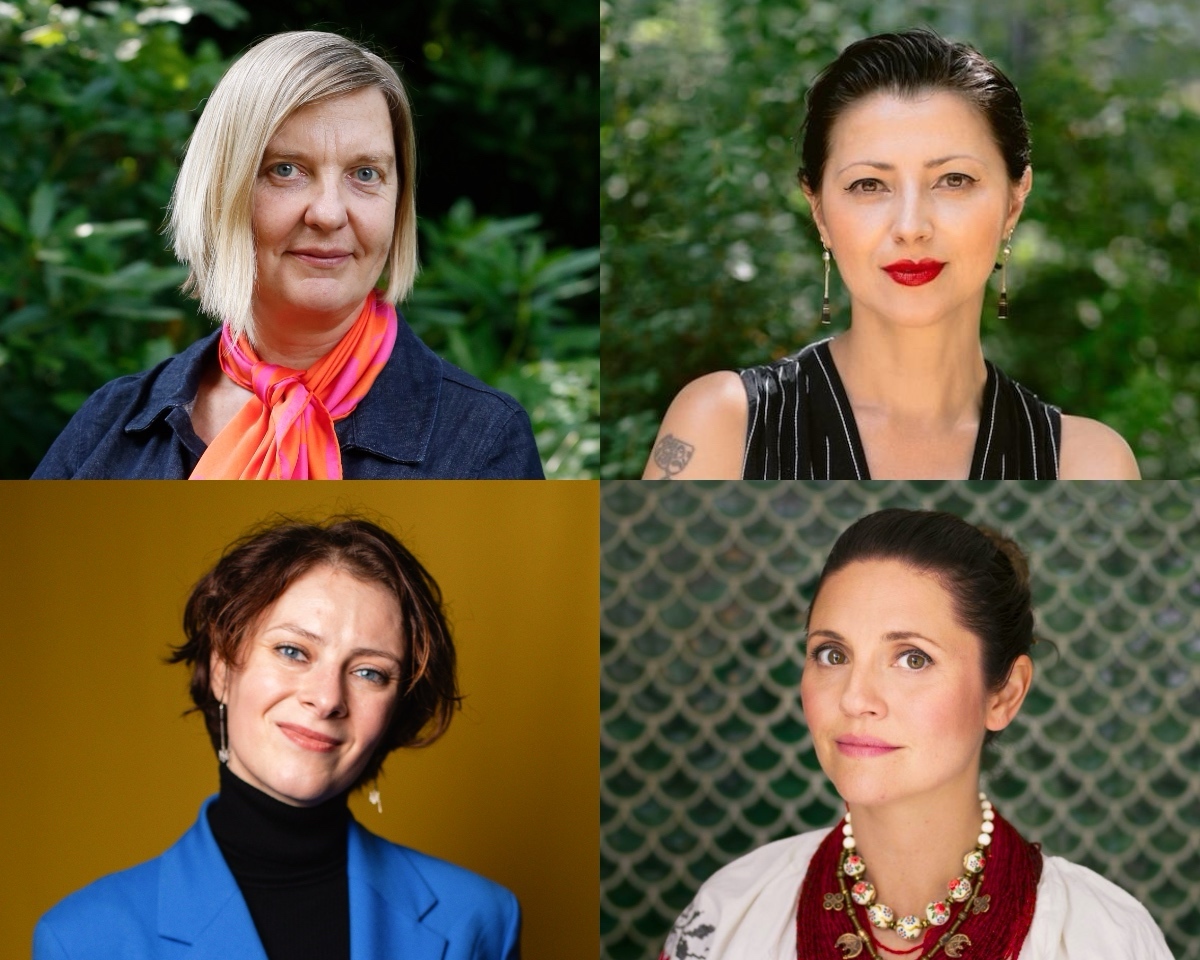
Ukrainian Lessons: Art in a time of war with Charlotte Higgins and guests
The Guardian’s Charlotte Higgins joins our panel of acclaimed Ukrainian writers to reflect on the profound connections between war, art and life.

Live in London and online
Wednesday 30 September 2026
7.30pm-9pm (BST)

The Guardian Live
 

What to click

Hard parties, cheap rents and horrible flats: how 90s art and fashion redefined British culture Hard parties, cheap rents and horrible flats: how 90s art and fashion redefined British culture
Sequins, Cher and showgirls: costume designer Bob Mackie – a life in pictures Sequins, Cher and showgirls: costume designer Bob Mackie – a life in pictures
Jess Cartner-Morley on fashion: pair a little skirt with a chunky jumper for the perfect balancing act Jess Cartner-Morley on fashion: pair a little skirt with a chunky jumper for the perfect balancing act
Emmys 2026: red carpet looks and outfits at TV’s biggest night – in pictures Emmys 2026: red carpet looks and outfits at TV’s biggest night – in pictures

Small-brand spotlight

A Bug Clothing shoot.
camera A Bug Clothing shoot. Photograph: Sarah Victoria Bates

Amy Ward started Bug Clothing in 2019 after becoming disillusioned with “the waste and stress and overconsumption of ready-to-wear brands”. By only using deadstock fabrics and natural fibres and making every piece individually, each item is slightly different to the last. Her classics include high-waisted button-through trousers and one-shoulder tops with pretty bow detailing, while her one-of-a-kind midi skirts are made from a mixture of deadstock cotton and vintage fabrics found at French markets. “My aim has always been to create garments with intention and that reflect the ideology that we should all admire quality and ethics over quantity and ignorance,” Ward says.

 
Person Image

Save on an All-access digital subscription

For a limited time only you can become an All-access digital supporter for just $7.50 a month for the first six months.

Unlock unlimited access to the Guardian news app and Feast cooking app, all while supporting the free press for less.

 
Get in touch
If you have any questions or comments about any of our newsletters please email fashionstatement@theguardian.com
https://www.theguardian.com/uk
You are receiving this email because you are a subscriber to Fashion Statement. Guardian News & Media Limited - a member of Guardian Media Group PLC. Registered Office: Kings Place, 90 York Way, London, N1 9GU. Registered in England No. 908396