Hello! Today’s newsletter focuses on the major climate lawsuit taking place in the US Supreme Court, as opening arguments begin against Big Oil companies including ExxonMobil and Suncor Energy. The lawsuit is brought by officials in Boulder, Colorado, seeking monetary damages for harms caused by climate change.
US-based Exxon and Canada-based Suncor appealed after the Colorado Supreme Court let Boulder's lawsuit accusing them of state law violations proceed. The Trump administration has backed Exxon and Suncor, arguing that federal law precludes Boulder's claims. We’ll unpack the claimant and defendant’s arguments and what the verdict may mean for future climate cases.
But before we dive into the details of the case, here are some more environmental stories that are also on my radar today: |
|
|
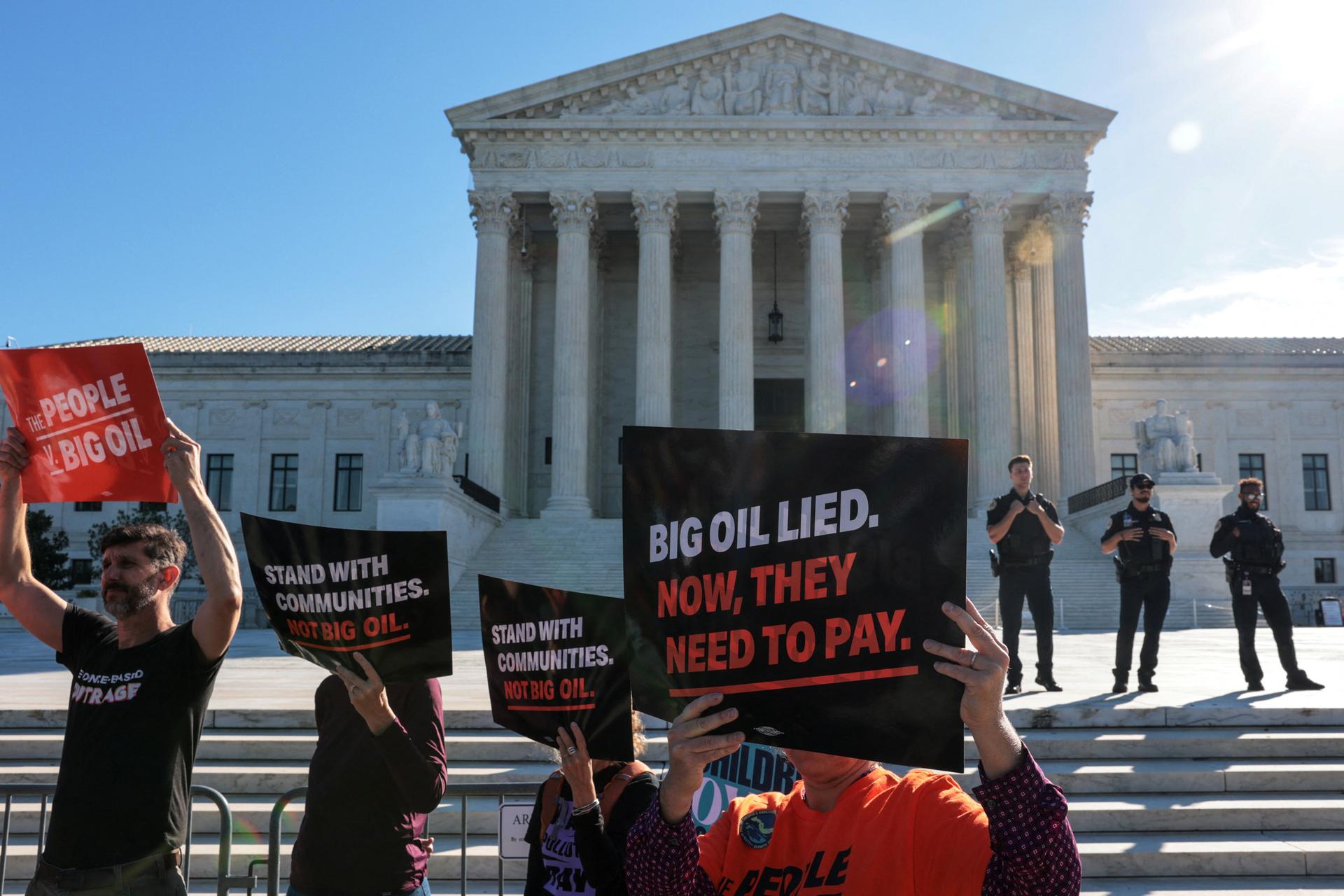
Climate activists protest amid a hearing by oil firms against officials in Boulder, Colorado, at the US Supreme Court building in Washington, D.C., US. REUTERS/Jonathan Ernst |
What are the claimants’ arguments? |
Boulder's city and county governments have accused the two companies of helping drive climate change and misleading the public about the risks of fossil fuels. The burning of fossil fuels releases greenhouse gases including carbon dioxide into the atmosphere, trapping heat and raising average global temperatures over time.
Boulder aims to hold the companies liable for past and future costs associated with climate change such as infrastructure repairs, environmental damage, emergency management and harms to public health.
The court has a 6-3 conservative majority. But conservative Justice Samuel Alito has recused himself from participating in this case, as he owns stocks in oil majors including Exxon and Suncor, meaning the ruling will be made by eight justices and not nine.
The claimants argue that the Justices siding with the oil companies could mean unduly limiting the authority of states to pursue climate-related litigation, while the defendants say that Boulder's claims intrude on an area governed by the Clean Air Act.
Liberal Justice Sonia Sotomayor questioned the oil companies' claim that the Clean Air Act prevents states from suing them. She said the court has allowed similar cases under the Clean Water Act and suggested the same reasoning could apply here. "I don't see why we wouldn't permit it under the Clean Air Act either," Sotomayor said.
Liberal Ketanji Brown Jackson said some of the questions asked by her colleagues during the arguments "make me think that we're really early in this case" and "that this is sort of premature from the standpoint of this court exercising its jurisdiction." | |
|
|
What will it mean if the defendants win? |
Nearly 60 state and local governments have brought similar suits seeking billions of dollars from fossil fuel companies, with more continuing to be filed, Exxon and Suncor told the justices.
The defendants argue that the case has the potential to unleash chaos if local governments across the country were permitted to sue these companies. Conservative Chief Justice John Roberts pressed Kevin Russell, a lawyer for the Boulder officials, on the practical implications of siding with his position.
"Presumably, if you prevail, the next day a municipality in every single state will file a lawsuit, they'll probably copy your pleadings, and then there will be at least 50 ... causes of action filed," Roberts said. "How do you think that would work out on the ground?"
Conservative Justice Brett Kavanaugh, who seemed to favor the arguments of the oil companies, said the court's prior rulings make "crystal clear that interstate air and water pollution are matters for federal law unless Congress specifically preserves state law." Kavanaugh pressed Russell to address "a wall of precedent" that could undermine Boulder's stance.
A ruling by the Supreme Court in favor of the companies could lead to many similar climate cases being dismissed. Energy companies and trade groups, along with states allied with them, have built a largely winning record before the justices over the past two decades in cases involving climate liability and the reach of federal environmental regulation.
The Supreme Court's decision is expected by the end of June. |
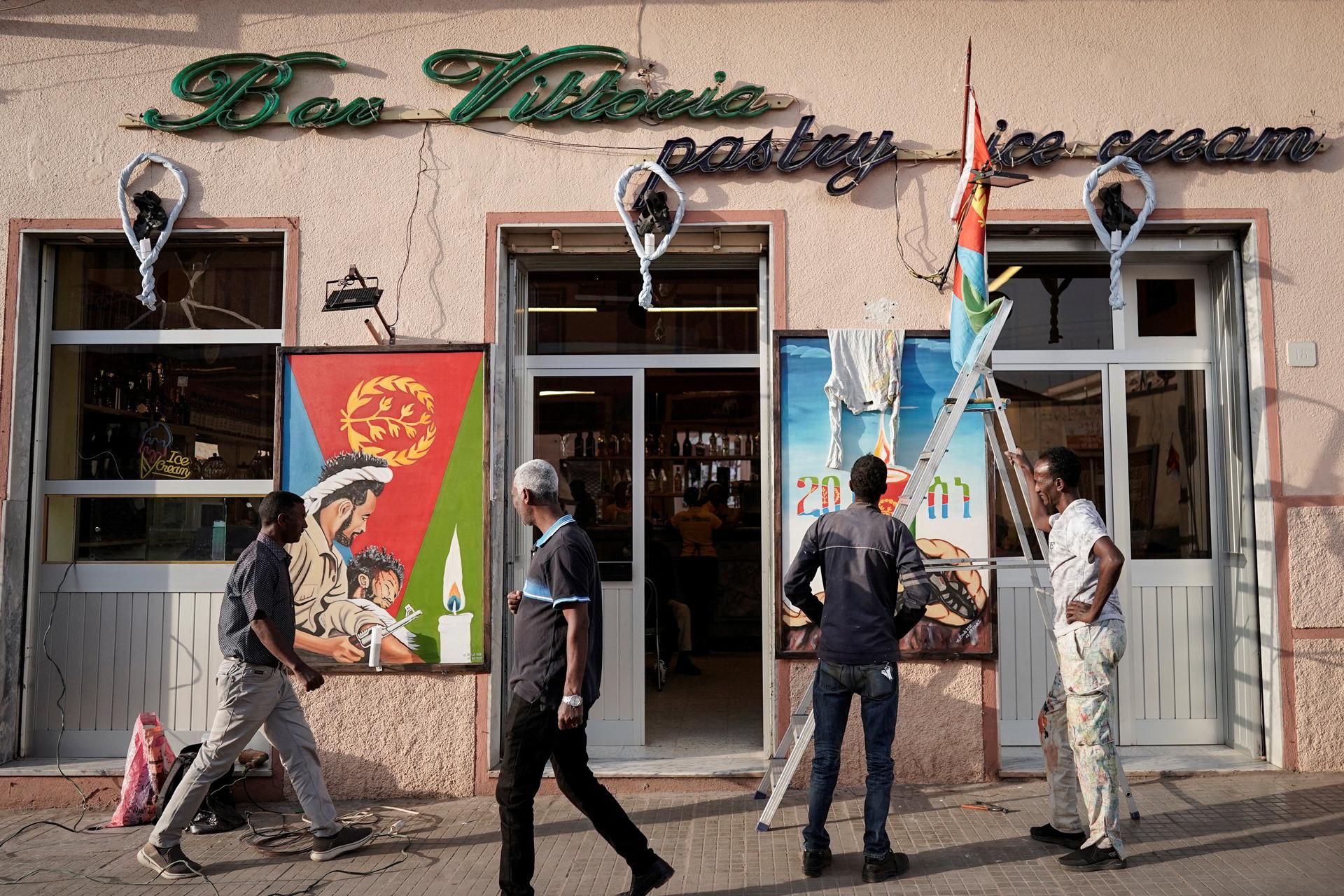
Workers paint images for Martyrs' Day, which marks the Eritrean War of Independence at Bar Vittoria, a historic cafe in central Asmara, Eritrea. REUTERS/Giulia Paravicini |
-
Eritrea’s newfound prominence: Eritrea, an East African country of fewer than 4 million people, has acquired new geopolitical significance this year during the Iran war, owing to its 1,000 km coastline along the Red Sea shipping route between the Mediterranean and Asia. Click here for a really insightful Reuters special report and documentary on how Eritrean waters are an alternative to the Strait of Hormuz and potentially the region’s most secure transit corridor.
-
Gaza homecoming: More than 100,000 Gazans who left the enclave during the war that was triggered by the Hamas attack on Israel on October 7, 2023, remain stranded overseas, according to Palestinian Authority figures. They still mourn dead relatives and their destroyed homes and neighborhoods. Click here for a moving video on how a three-year-old Gazan girl finally reconnected with her mother after she was separated from her due to an airstrike that killed her sister and caused her early birth.
-
LGBT migrant deportations: US President Donald Trump's administration has deported tens of thousands of people to third countries, under deals reached with governments willing to accept deportees. Click here to read a few case studies where migrants granted US legal protection after being persecuted for their LGBT status were deported to third countries that either criminalize same-sex relations or have been described by the State Department as hostile to LGBT people.
-
Women’s rights in US: The woman who has alleged she was drugged and raped by Cornell University students has been the target of threats, according to Thomas Giuffra, a lawyer who represents the woman identified as "Jane Doe". Women on social media have been posting #IamJaneDoe in solidarity with the accuser and to counter some who have sought to publicly name her. Cornell University students also staged a mass protest on Monday voicing solidarity with their classmate.
-
McDonald’s consumer rights suit: McDonald's has been sued in federal court in Chicago in a proposed nationwide class action alleging the fast-food company violated US antitrust law by conspiring with independent franchisees to fix prices using algorithms trained on nonpublic data. Reuters reported last week that McDonald’s pricing engine uses machine-learning algorithms to continually analyze data from millions of daily transactions across its nearly 14,000 restaurants.
-
France school protests: France braced on Tuesday for a day of nationwide high-school blockades and trade union-led street protests in support of students demanding that President Emmanuel Macron's cash-strapped government tackle understaffed and dilapidated schools. Click here to follow Reuters live-page coverage of the protests.
|
|
|
|
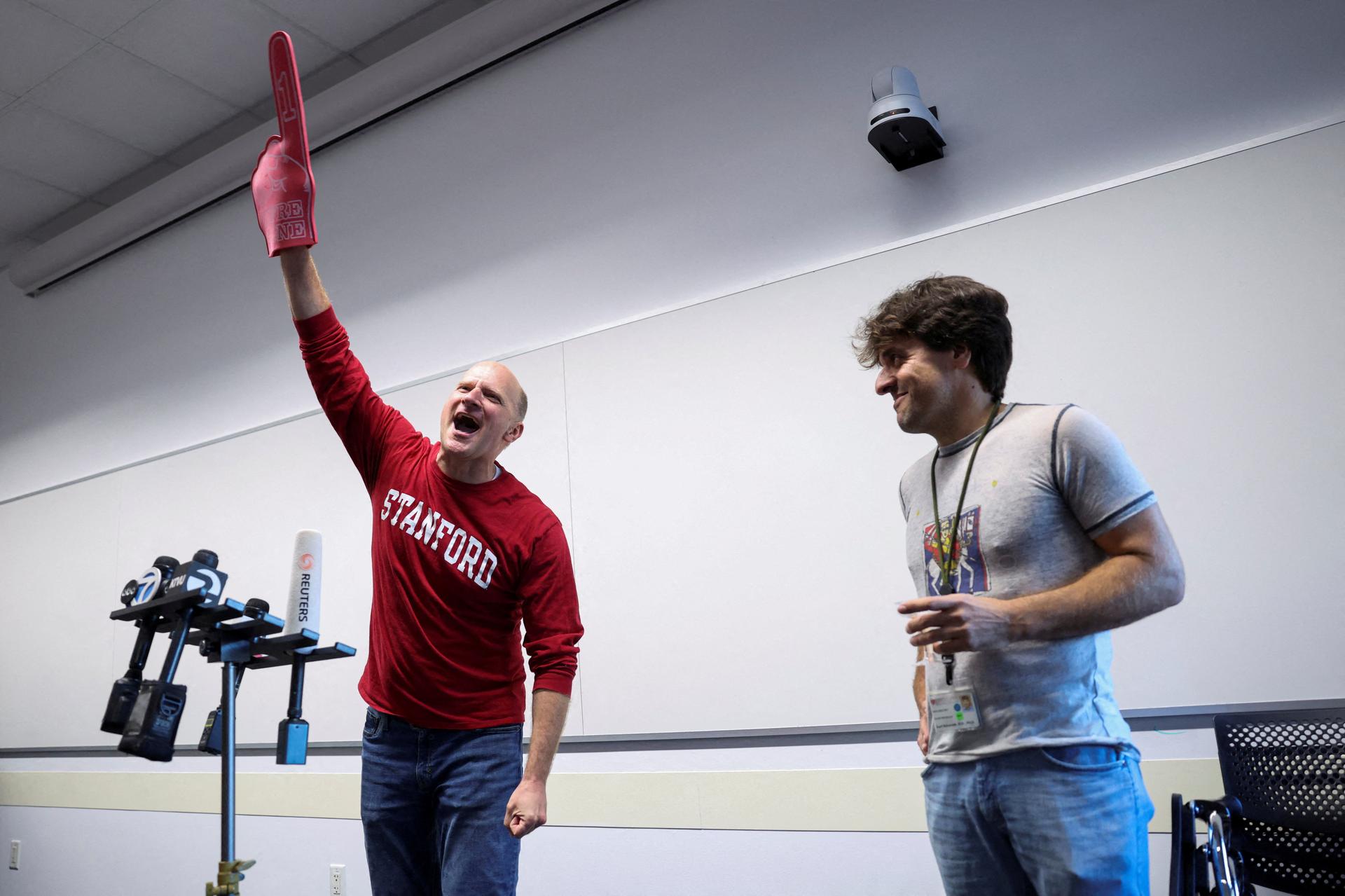
Markus Covert, professor of bioengineering at Stanford University, celebrates with Karl Deisseroth, a co-winner of the 2026 Nobel Prize in Physiology or Medicine, at Stanford University's James H. Clark Center in Stanford, California, U.S. REUTERS/Manuel Orbegozo |
Today’s spotlight shines a light on the winners of this year’s Nobel Prize in Physiology or Medicine, American Karl Deisseroth and Germans Peter Hegemann and Georg Nagel for |
|
|
|
|