Novolife’s minimalist HQ, architect David Montalba and a modernist Japanese armchair.
|
Wednesday 7/10/26
|

|
|
London
Paris
Zürich
Milan
Bangkok
Tokyo
Toronto
|
|
|
|

on the road again
We begin this week’s dispatch at
Novolife’s minimalist HQ in Bangkok, with a plant-filled courtyard and large apertures that bathe the building in sunlight. We then find ourselves in the unexpected but calming, natural space between Swiss and Californian design with
architect David Montalba, before settling down in
Ubunji Kidokoro’s modernist Japanese armchair and flicking through
paper invitations worth keeping by Sonderegger. Embarking first on the adventure is Monocle’s Europe editor at large, Ed Stocker.
|
|
OPINION: ed stocker
Tour de force
The furniture market hasn’t been an easy business to be in recently. Economic shocks and geopolitical uncertainty – especially in the all-important Middle East – have been affecting exports and making life tricky, which is why a tried-and-tested fair is arguably more important than ever. Enter the immaculately oiled machine that is Milan’s Salone del Mobile. It might not be taking place until April but now that the sleepy summer is out of the way, it already feels as though a new Salone cycle is upon us. On Tuesday at Bovisa’s Fondazione Sozzani, the kick-off press conference for the 2027 edition gave us a taster of what’s to come.
So what can a design fair do in uncertain times? The short answer is that it can become more resilient. Dating back to 1961, Salone might be an international showcase of everything from lighting to furniture but there’s no doubt that a large part of its mission is to support the “made in Italy” sector (about 60 per cent of exhibitors come from the
Bel Paese). One of the most important aspects of the fair takes place long before it begins: months of outreach work, taking a Salone roadshow around the world in a bid to explore new markets. Cities such as London and New York remain vital destinations for Salone events – and there’s an increasing desire to explore Africa. The roadtrip will stop in Lagos later this month, marking the first time that Salone has touched down in Nigeria, and Cape Town in February.
|
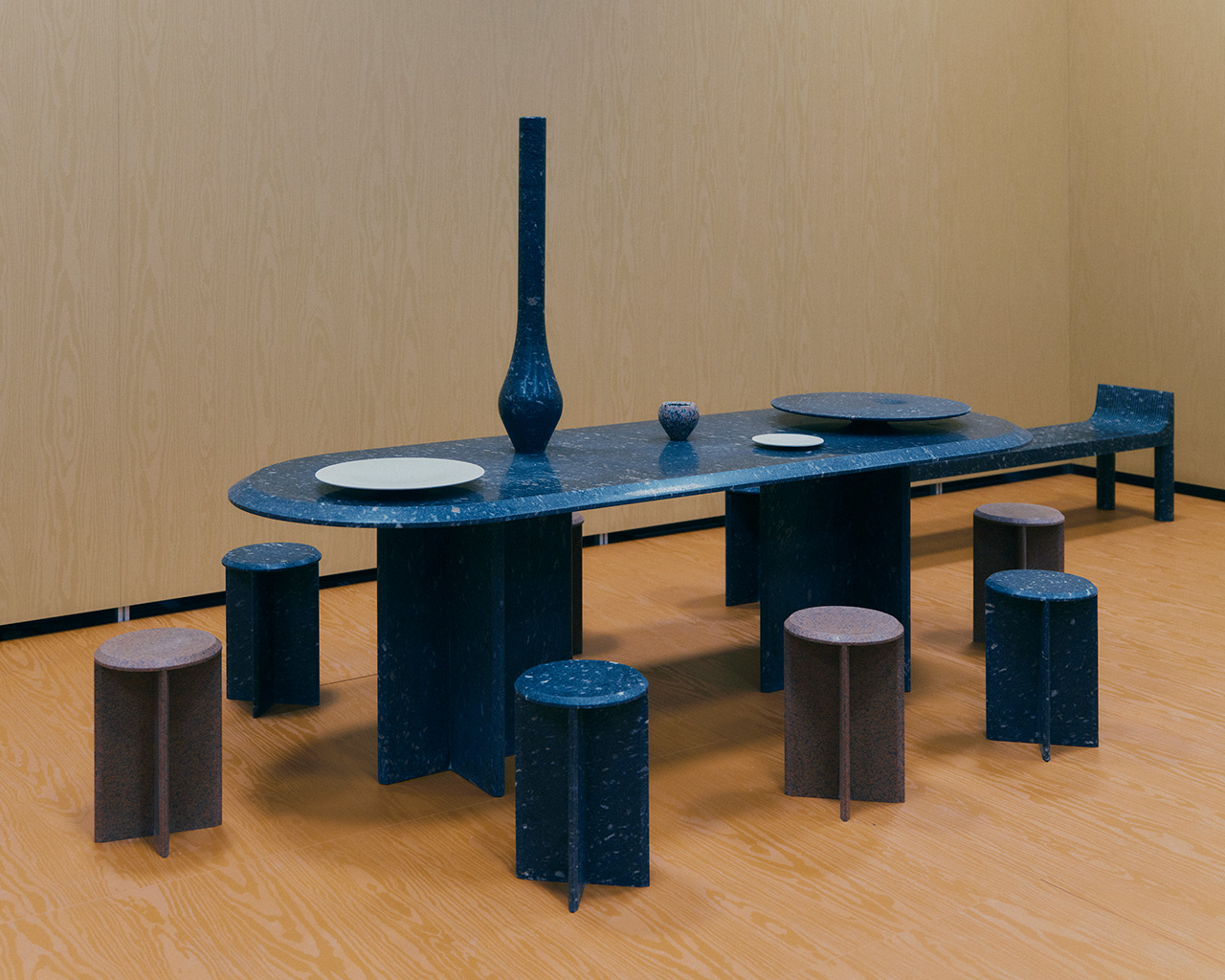
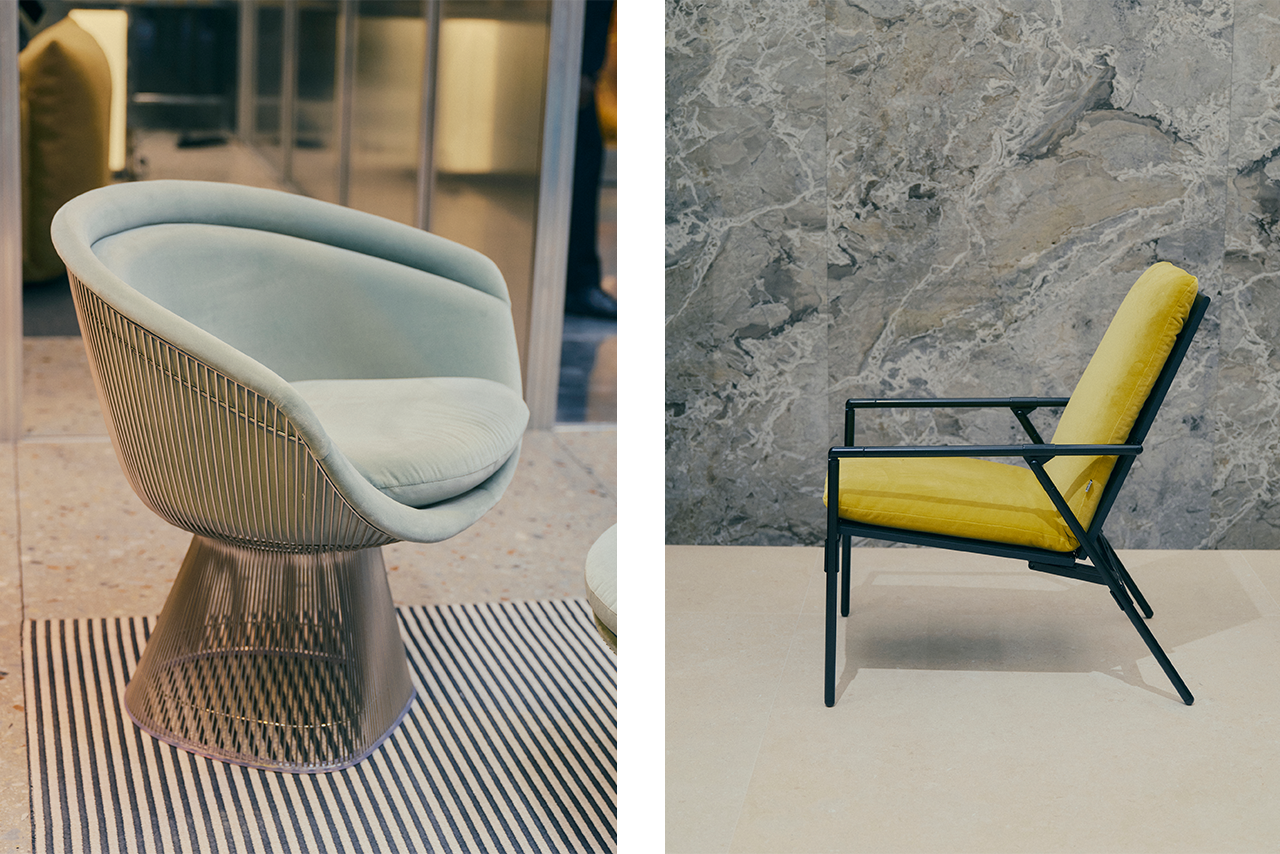
Another way that a fair can become more resilient is by constantly thinking about programming – and covering bases. It’s already a mainstay for international high-end furniture brands like Knoll (pictured below, left) and B&B Italia (pictured below, right).We have already seen Salone move into collectable design through its Raritas initiative, which debuted this year (pictured, above) and will return next year. It also organised the Euroluce International Lighting Forum (another 2027 returnee) to entice more people through the door. But the biggest punt this time around is the inaugural Salone Contract, which aims to connect design brands with a network of people who help to bring a contract job to life, from a hospital or education centre to an office or residential block.
|
Rather than a fair within a fair, Salone president Maria Porro calls it “a new marketplace”. Designed by Rem Koolhaas’s OMA practice, we know that it will mix supply and demand, bringing together designers with everyone from architects to developers. The Contract space will operate around a central plaza called The Dome, surrounded by different “neighbourhoods” representing sectors such as boating and office.
Salone Contract is a huge endeavour that involves the fair stepping outside its comfort zone. No one really knows how it will turn out at this stage – with Porro calling it a “large work in progress” – but the point is to be ambitious. Pull it off and Salone del Mobile will be all the more resilient for it.
Ed Stocker is Monocle’s Europe editor at large. For more insight and analysis, subscribe to Monocle today.
|
|
the project: Novolife Headquarters, Thailand
A place in the sun
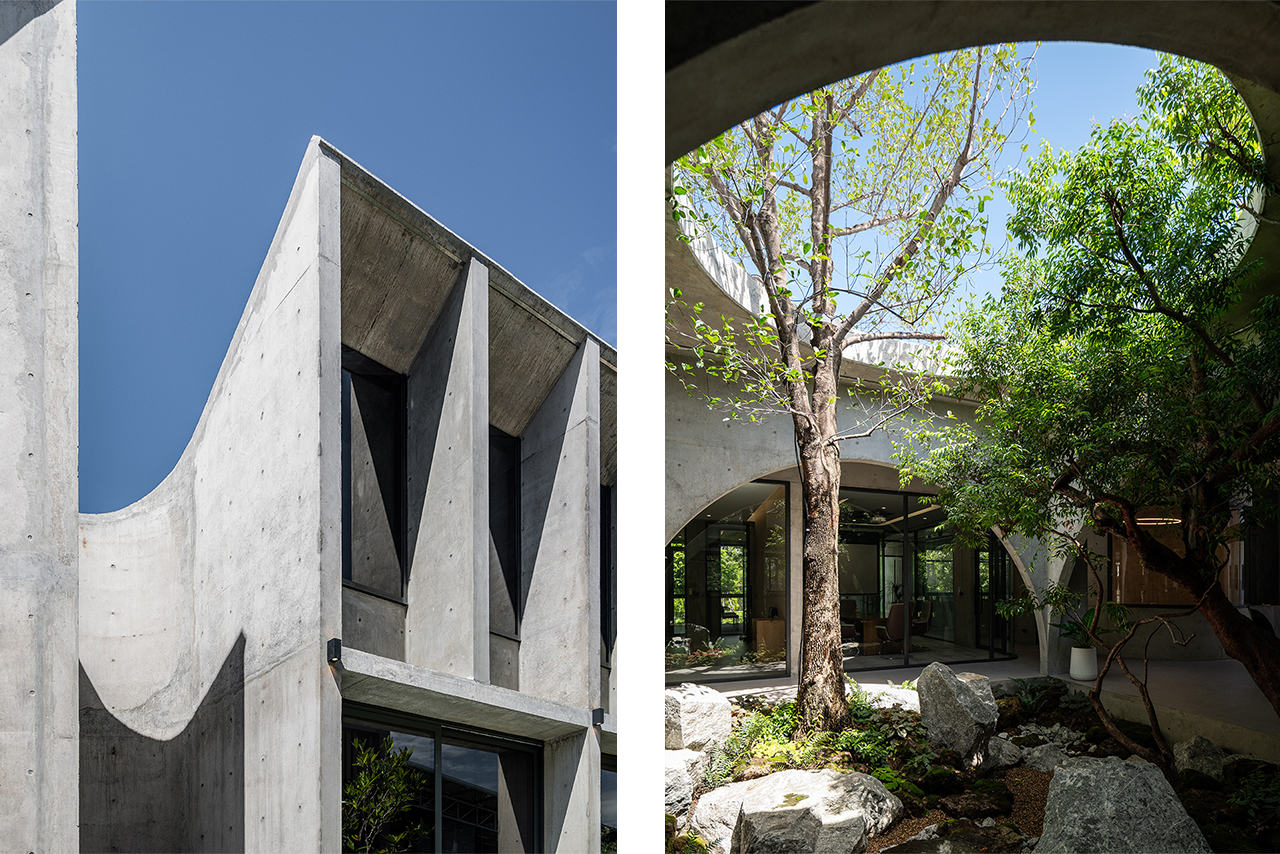
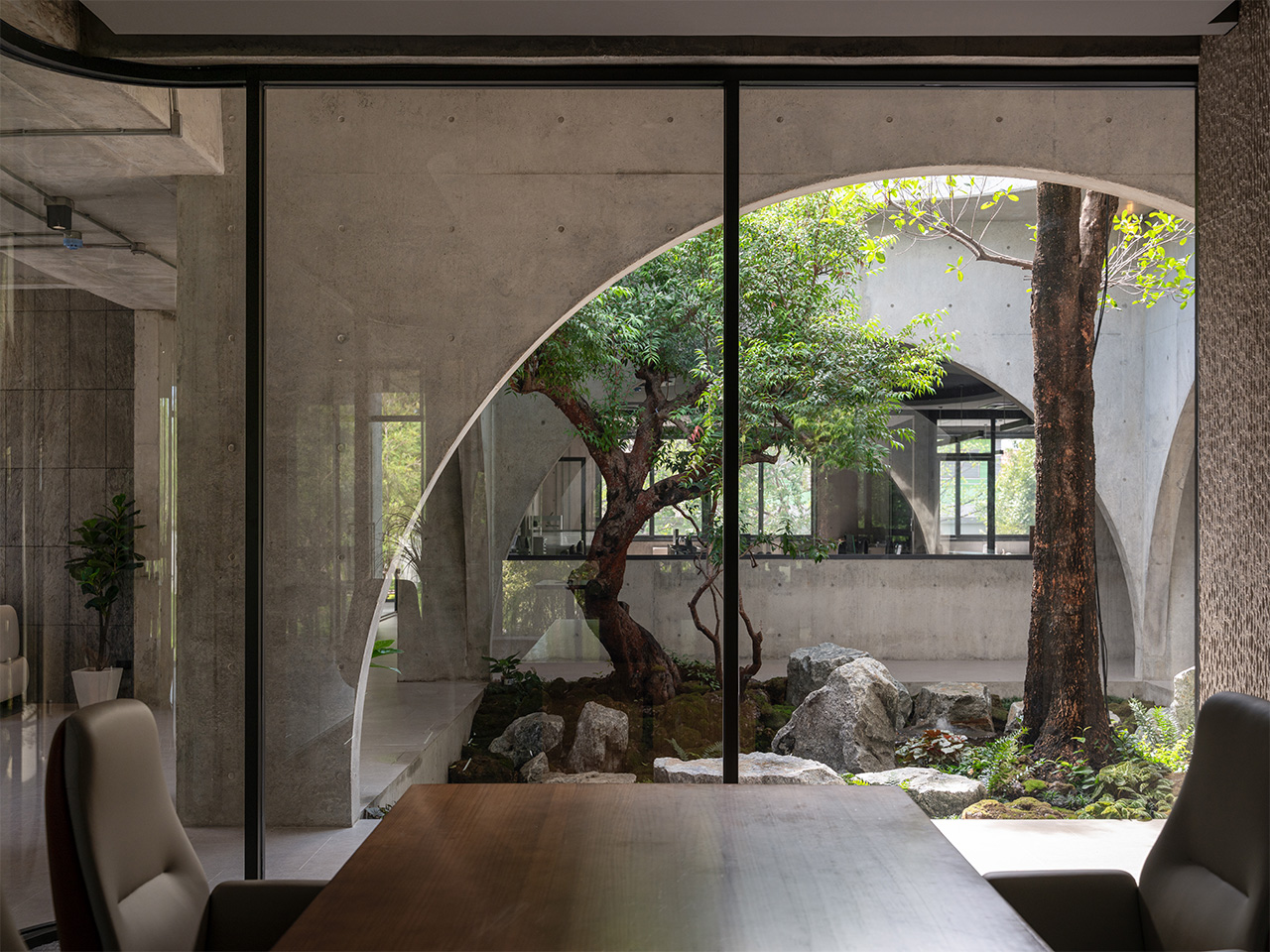
The new HQ of natural pharmaceutical company Novolife is a striking concrete structure on the outskirts of the Thai capital. Designed by Bangkok-based Studio Krubka, it features lofty curved roofs and large, rectangular apertures – some of them windows, others portals to a richly planted internal courtyard. Its layout also encourages a blurring of indoors and out, prompting employees to encounter the lush courtyard as they move through the building.
|
|
Though the building has a strikingly minimalist concrete form, it also pays tribute to Thailand’s vernacular wooden architecture. Life in a Southeast Asian climate means dealing with heavy rainfall, so the office has a traditional bowed butterfly roof that channels rainwater to a central collecting spine. “Thai architecture has long developed ways of responding to the region’s heavy rain and tropical climate,” says Danai Surasa, co-founder of Studio Krubka. “We wanted to reinterpret that in a modern way.” The result is a building that makes a compelling case for the beauty of a workplace shaped around nature and connected to its environment and place.
studiokrubka.weebly.com
|
|
WORDS WITH: David Montalba, USA
Best of both worlds
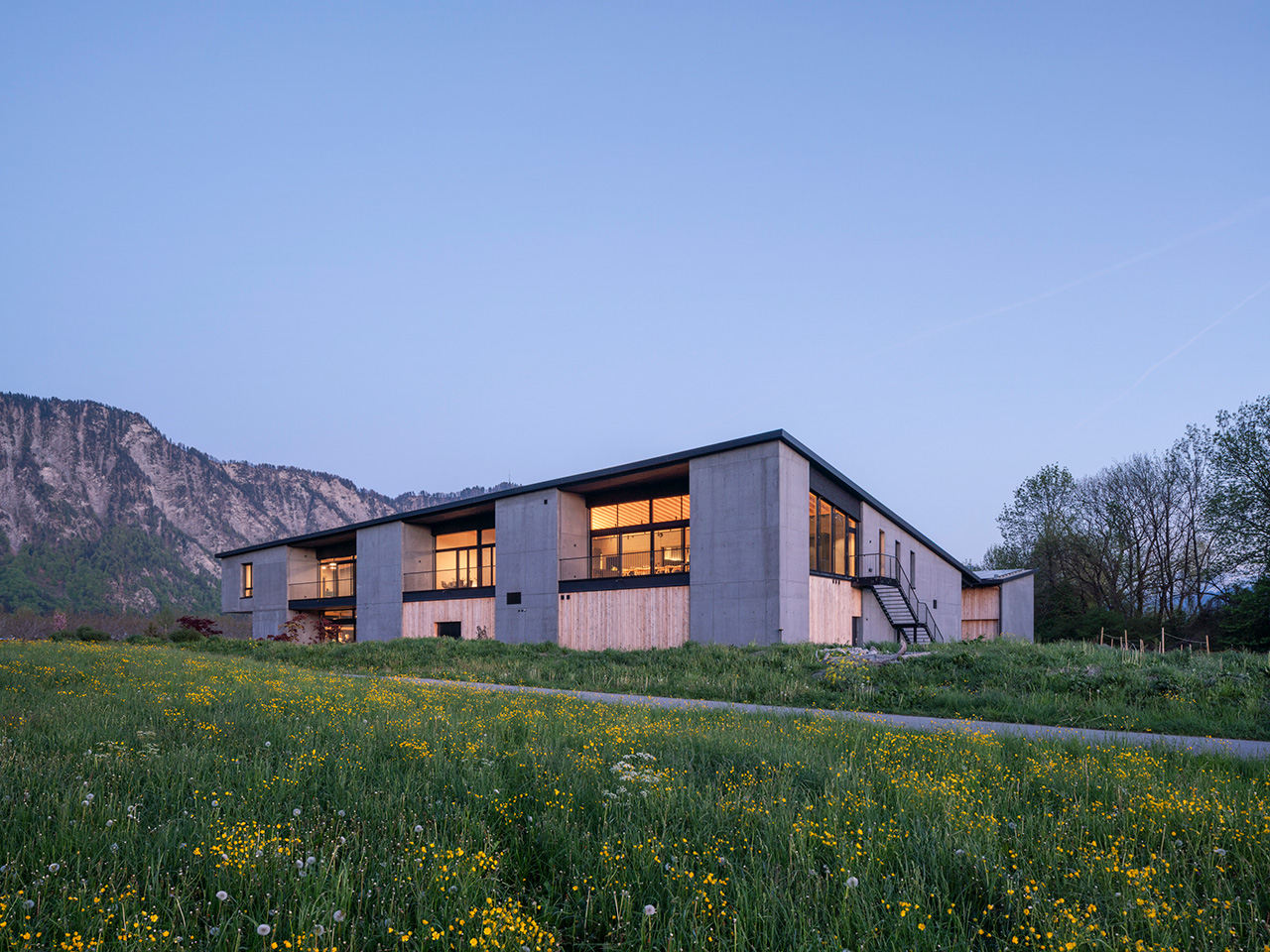
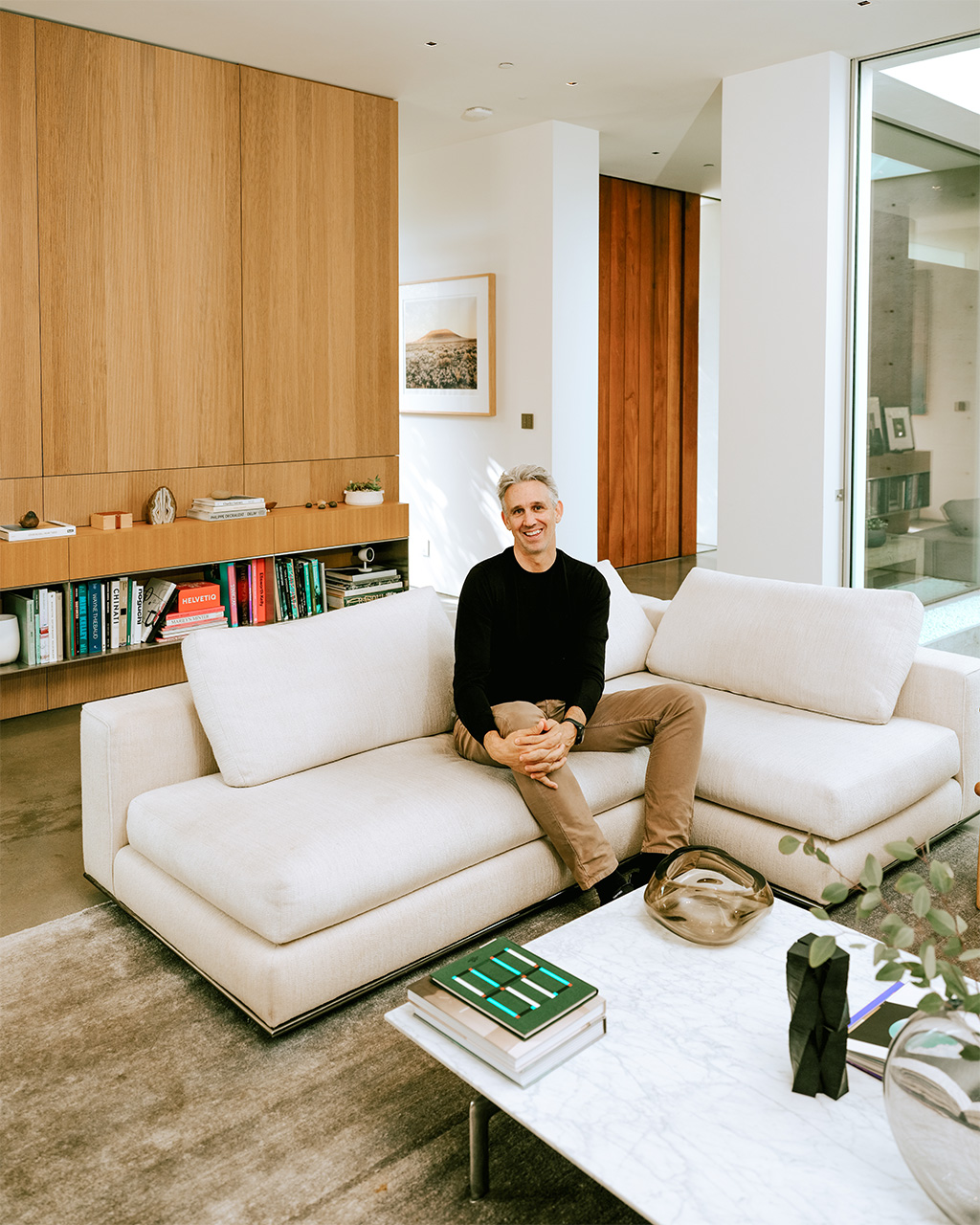
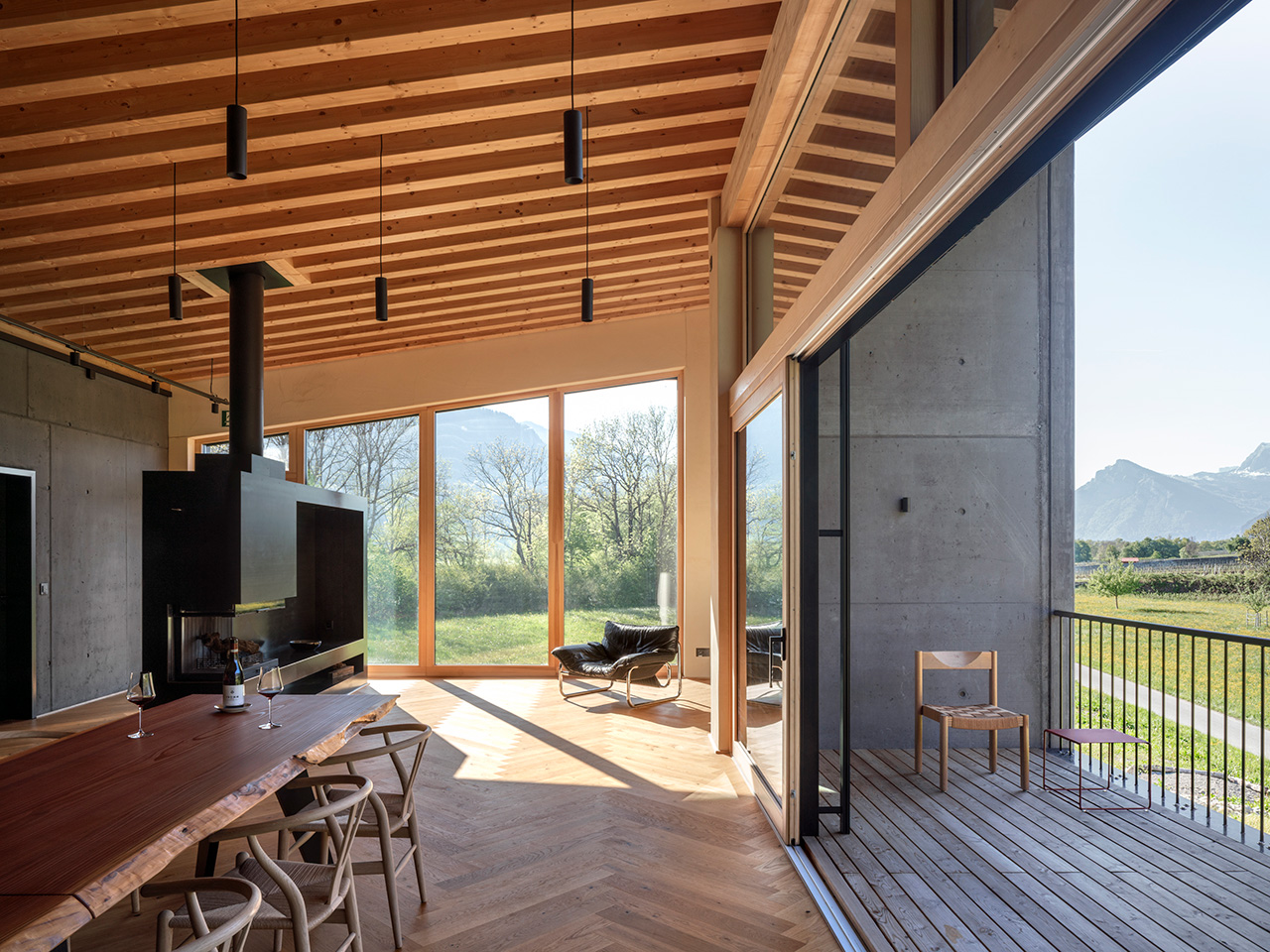
Swiss-American architect David Montalba bridges the design cultures of his two nationalities, combining Californian experimentation with Swiss precision. His work is characterised by volumetric forms that connect indoors and outdoors. A fine example of his work is his newly completed Weingut Fromm. “About an hour’s drive from Zürich, it mimics the mountain ridge surrounding it,” says Montalba. “When we’re able to be playful with an industrial programme while balancing simplicity in an environment that is truly unique, this is where we tend to thrive and those projects almost always become favourites.”
|
Design movement that has influenced you the most?
I’ve always been drawn to modernism and its relationship, or contrast, with nature – particularly the Swiss and Californian regional interpretations of it. What resonates with me is the clarity and restraint. I love this idea that architecture can be reduced to its essential elements while still creating a strong emotional experience. I’m very interested in how light, landscape, material and space come together, rather than any particular style or period.
The sky’s the limit: which piece of furniture would you love to own?
There’s a bench that was a collaboration between Guy Rey-Millet and Jean Prouvé, which was originally designed for an alpine refuge in the early 1970s and has a timeless and pure sensibility to it. I would also love to own a piece by Ido Yoshimoto, who is a woodworker making elements that are both furniture and objects. Frankly, they feel more like art but are truly one of a kind and have a gravitas to them that transcends furniture.
A favourite project that you’ve worked on?
That’s always a difficult question because every project has a different story but Carla Ridge House is particularly meaningful to me as it brings you to a quiet place emotionally. It’s a one-storey house and is both fluid and calming. Many of the ideas that we try to push in our work are things captured in this project; things such as framing the landscape, sculpting natural light, an intentionality with materiality, and creating a strong connection between interior and exterior.
|
A recurring source of inspiration?
Landscape, the beauty and intentionality of it, and the organic forces of nature. I’m also continually inspired by artists and the way that they see and interpret the world. I’ve been collecting art over the years and feel so inspired by their perspective and interpretation of it.
A priority for you and the industry going forward?
Making great things with great people. I think we need to continue putting human experience and the long-term impact of what we build at the centre of the conversation. Sustainability shouldn’t be an added layer to architecture, especially after what we’ve seen here in California with the fires. It should be inherent to how we think about place, materials, longevity and energy. We also need to value craft and collaboration and continue making spaces that are meaningful rather than simply chasing novelty. We need to keep finding, cultivating and cherishing the craftspeople who help us make great things, buildings, furniture and spaces.
Which city has the best design scene?
If I had to pick one I would actually say Paris as its diverse mix of history, architecture, art, landscape, fashion, food and culture is so broad and unique that it makes a lot of other cities seem like villages. The vastness of the city allows for different influences to permeate into design movements that have continued on in the city for centuries.
For more from designers such as David Montalba, tune in to ‘Monocle on Design’ on Monocle Radio.
|
|
from the archive: Armchair by Ubunji Kidokoro, Japan
Ahead of the curve
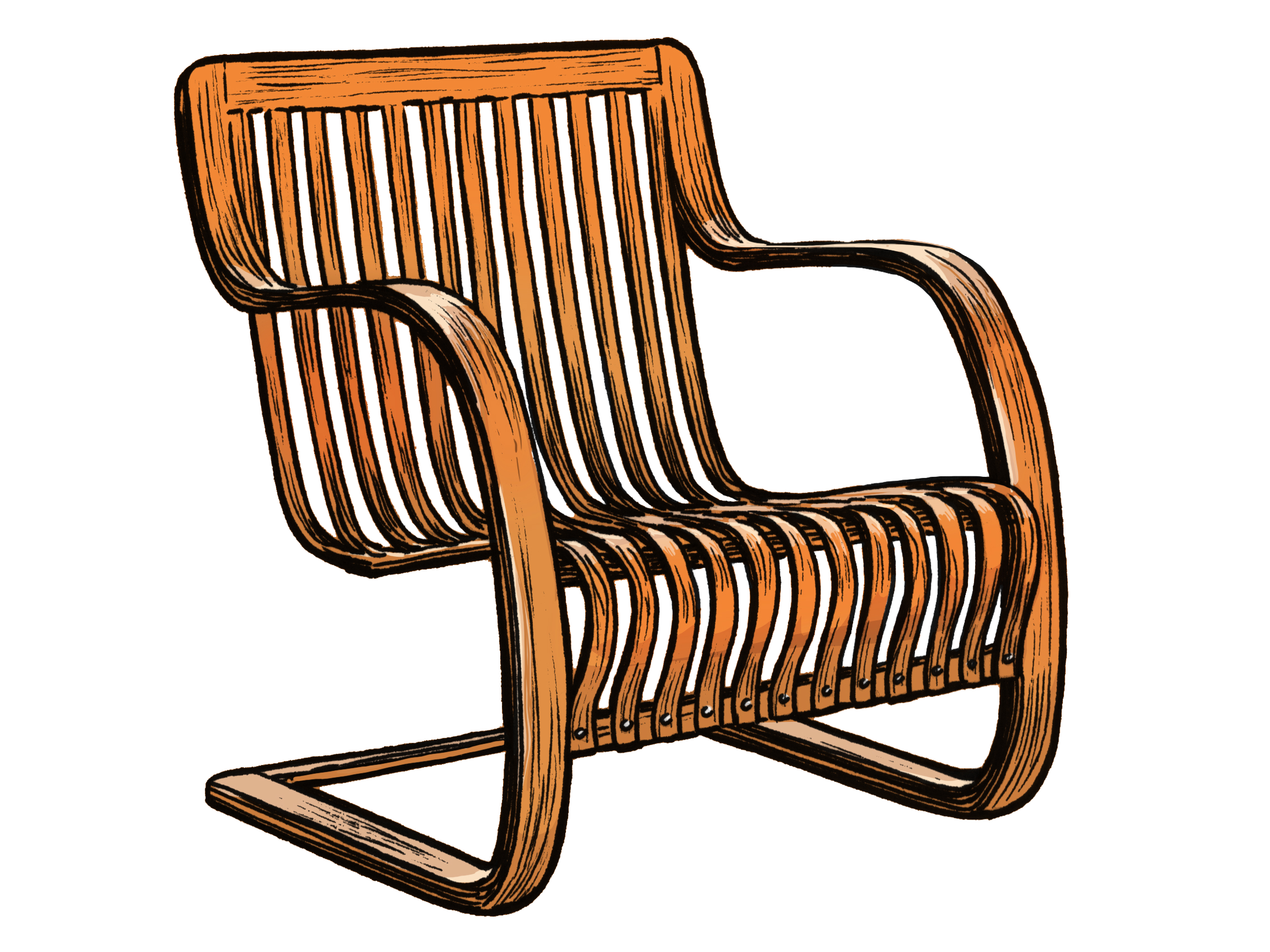
This armchair looks unassuming but it might be one of the most cosmopolitan designs of the 20th century. When its designer, Ubunji Kidokoro, was tasked with creating furniture for Japanese department store Mitsukoshi, he looked to Finland where Alvar Aalto had just started making bentwood chairs out of birch. Kidokoro was clearly inspired by the form of the Paimio armchair but by working with bamboo, a timber native to his country, he conceived a whole new design. Years later, Kidokoro’s chairs inspired French architect Charlotte Perriand, who went on to design a whole series of furniture using the same bent-bamboo slats.
|
Kidokoro’s armchair is just one example of how cultural exchange between Europe and Japan shaped 20th-century modernism. The Japanese were inspired by the new, lighter types of furniture in the West and adapted them to tatami-floored households. In turn, European designers returned from Japan with a new conception of simplicity, craftsmanship and quality. Some of Kidokoro’s cross-continental pieces have ended up in Spain, where they are currently on exhibition at Side Gallery in Barcelona.
|
|
around the house: Sonderegger, Switzerland
Hot off the press
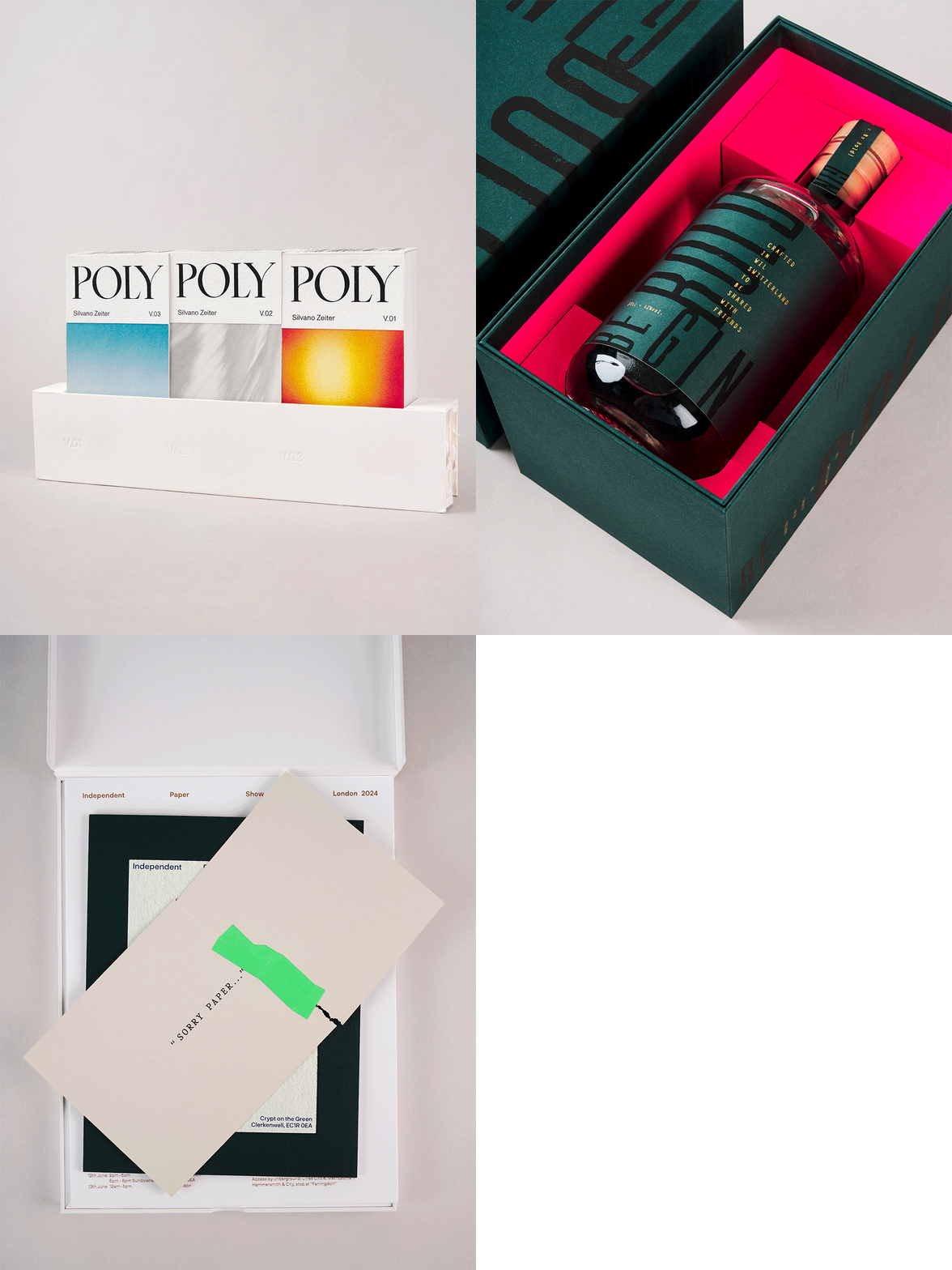
“You wouldn’t print an email event invitation and frame it on your wall,” says Bruno Sonderegger. “But if you receive a well-made physical one and it later reminds you of some good times that you had, you might keep it.” This sums up the core mission of Sonderegger’s family-run business. Established by his father, Ernst, in 1966, Sonderegger is a Swiss packaging manufacturer based in Bronschhofen, a small town about an hour’s drive east of Zürich.
|
Its client list includes fashion brands such as Hermès International, watchmakers including Switzerland’s Richard Mille and banks such as the Liechtenstein Global Trust. The company’s success is proof that brands are waking up to the importance of physical packaging for positioning and communication. Here are three outstanding products:
1.
Independent Paper Show: Relief hot-foil-stamped invitation
2.
Be Bold Gin: Box featuring custom-made precise geometric edging
3.
Poly: Honeycomb cardboard packaging for Silvano Zeiter’s photo books
For more on Sonderegger, pick up Monocle’s October issue, on newsstands now, or at monocle.com/shop.
|
|
Image credits:
Nicolas Sedlatchek, Andrea Pugiotto, Beer Signoi, Peyton Fulford, Romain Mader
| | |