Japan and India’s railway feud, Jaguar’s new model and a worldwide accessibility initiative.
|
Thursday 8/10/26
|

|
|
London
Paris
Zürich
Milan
Bangkok
Tokyo
Toronto
|
|
|
|

Good morning. As we gear up for Monocle’s upcoming Mobility Special, today’s Minute turns its gaze toward the day’s transport news. For more insights and analysis, tune in to Monocle Radio. Here’s what’s coming up in today’s Minute:
THE OPINION: The F-35 is the fighter jet that every government wants
DIPLOMATIC SPAT: Can Japan and India’s railway project get back on track?
DAILY TREAT: Jaguar’s monolithic new model
TRANSPORT: How Bolt is making streets more accessible
THE LIST: Stories that you might have missed
|
|
In a period of geopolitical turbulence, F-35 sales are in a holding pattern
By Charlotte McDonald-Gibson
|

|
Piloting an F-35 over the Nevada desert, your Monocle correspondent attempts a barrel roll. It proves surprisingly easy, so she does a few more, prompting the former Marine Corps pilot overseeing the flight to nudge the aircraft in the direction of the enemy. Finger on the trigger, I follow his directions and gently press the red button, sending a few small dots flying across the screen towards another vague target in the distance.
Considering that I’m in the seat of a simulator of one of the most advanced fighter jets in the world, it is a little lacking in drama. But there is no lack of tension when it comes to the F-35’s position in geopolitics today. With a raft of new orders from Europe and controversy over potential sales elsewhere, the symbol of US air superiority is having a moment.
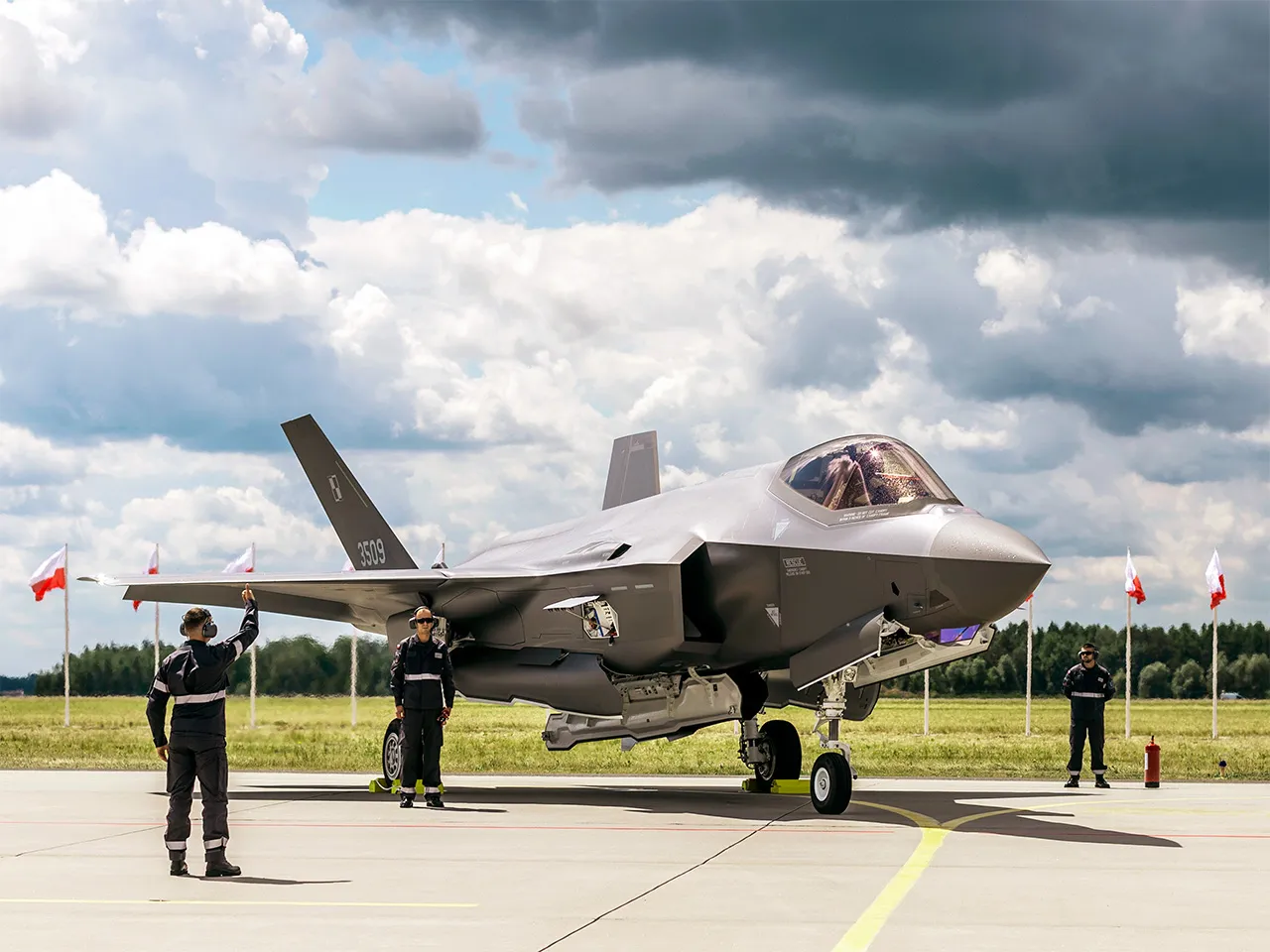
In September, Lockheed Martin handed over Germany’s first F-35A Lightning II, with 34 more to come. A week later, Finland welcomed its first of 64 F-35As. Poland, meanwhile, got the first delivery of its F-35s in May.
| |
|
Fight or flight: Demand for the F-35 is surging globally
|
|
“We are getting very strong international demand,” says James King, director of the US Navy F-35C programme at Lockheed Martin, adding that the company can currently produce 156 of the aircraft each year. “That is what the Joint Program Office wants us to execute. We obviously believe that we could do more. We would like to do more but that’s going to take a consistent demand signal to increase that capacity.”
It’s no surprise that Europe is clamouring for the best US military technology. With Russia’s assault on Ukraine in its fifth year, concerns are growing about spillover into the rest of Europe. Germany’s intelligence chief warned this week that the country risked getting into a “violent conflict” with Russia, with a drone attack on Leipzig airport in August raising tensions.
Last month, Polish prime minister Donald Tusk cautioned that Moscow could be planning drone and missile strikes on European nations supporting Ukraine. An uptick in F-35 orders is understandable, given that the plane is considered to be one of the most advanced stealth fighters in the skies right now, with more than 1,355 operational around the globe.
Speaking at the Lockheed Martin Global Vision Center in Arlington, Virginia, senior vice-president for global business development and strategy Dan Tenney referred to the countries that they sell their F-35s to as “allies”. But who those allies are is not up to Lockheed Martin: the sale of F-35s is strictly controlled by the US government. A country wishing to acquire the fighters must do so via an application to the State Department and face a lengthy vetting and approval process.
The F-35A Lightning II was developed by the US with financial assistance from seven other nations in the Joint Strike Fighter programme – the UK, Canada, Italy, the Netherlands, Australia, Denmark and Norway. Sales to 12 other countries have been approved. Turkey was initially part of the Joint Strike Fighter scheme but it was removed in 2019 after purchasing Russian-made air defences. But Trump has suggested that Turkey might yet receive the jets, telling reporters at July’s Nato summit that he had “no concerns” over the Russian systems.
The State Department also approved a potential $24.3bn (€21.7bn) sale of 48 F-35s to Saudi Arabia last month. Right now, Israel is the only nation in the Middle East with F-35s, a strategic decision by the US to ensure that it has a military advantage in the region. This potential sale has raised concern in Tel Aviv as well as in some corners of Washington. Saudi Arabia has conducted joint military exercises with China, igniting fears that Beijing could gain access to the elite US technology. The US Congress can review the sale and that process is currently ongoing.
Lockheed Martin executives would not address questions on who gets the F-35s, given that it’s a government decision. But with ongoing security concerns in Europe, and a US administration searching for allies in a region that has been thrown into turmoil by the country’s assault on Iran, King might soon get his wish for more orders.
Charlotte McDonald-Gibson is a Washington-based journalist and regular Monocle contributor. For more opinion, analysis and insight, subscribe to Monocle today.
|
|
Diplomatic spat: Japan & India
Mumbai’s lagging railway project is running out of steam – and testing Tokyo’s patience
Who vs who: India vs Japan
What it’s about: A train. Specifically a svelte, swift, shinkansen-style bullet train zipping the 508km between Mumbai and Ahmedabad in a couple of hours or so. India asked Japan for help with the project and the two countries made a $15bn (€13.4bn) deal. More than a decade later, the train is yet to carry its first passenger. Former justice minister Hideki Makihara harrumphed that the delays were “100 per cent” the fault of the Indian side and that “they just don’t keep their promises”. Japan’s foreign ministry has gone so far as to create a new role to get the project back on track.
| |
|
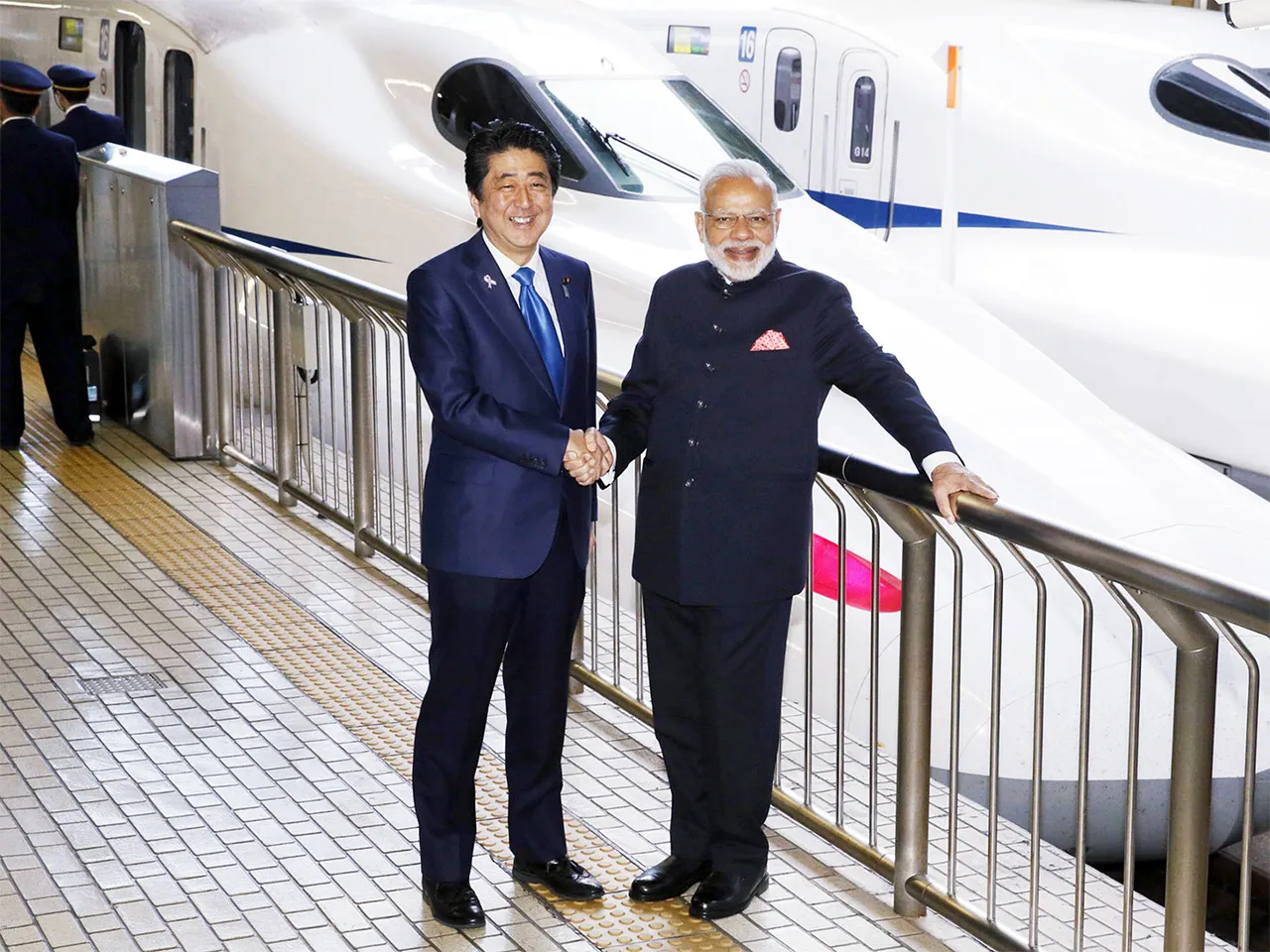
Strained smiles: Former Japan prime minister Shinzo Abe and India prime minister Narendra Modi
|
|
What it’s really about: Major transport infrastructure is not easy to build. Even Japan’s most recent shinkansen line, which operates between Kanazawa and Tsuruga, took almost 12 years from groundbreaking to first service – though almost all of its 125km span bridges, tunnels or viaducts. But India’s tradition of arcane and obdurate bureaucracy has eroded the will to live of many before now.
Likely resolution: The Mumbai-Ahmedabad link will probably be complete sometime before the sun dies but only a fool would bet on when. Japanese politicians will continue gritting their teeth behind rictus smiles, remembering that India wants to build – and pay for – at least 7,000km of high-speed rail. The communiqué issued after a Japan-India summit in July was that Japan “remains committed to extending the necessary co-operation”. For now, the journey from Mumbai to Ahmedabad takes a little more than an hour by plane, five and a half hours on India’s extant Vande Bharat Express trains or – for the old-school adventurers – an overnight bus.
|
|
• • • • • DAILY TREAT • • • • •
Be among the first to hop into Jaguar’s new model

Who remembers Jaguar’s rebrand, which launched a thousand polarising columns about its new concept car? Well, the team has now revealed its new model, Type 01, which will soon go on sale so you can judge it for yourself.
Type 01 might not appear as svelte and lithe as the 1960s E-Type or its apex-predator namesake. But it is, in fact, the brand’s most aerodynamic vehicle to date and its four-door, grand tourer arrangement ensures luxurious comfort. Its monolithic frame might not appease critics but this is not a vehicle for the school run. Nor is it a typical Jag. But that’s not the point, is it?
jaguar.com
|
|
transport: global
Bolt’s accessibility initiative is opening up streets around the world
In 1959, Volvo patented the three-point seat belt (writes Rory Jones). After realising the lifesaving potential of its creation, the car manufacturer later removed the patent and made it free for other companies to use. Today, when it comes to technological developments, artificial intelligence tends to hog the limelight – and not always for the right reasons. But that doesn’t mean that subtle, life-bettering projects beyond AI aren’t happening. Tallinn-based Wheels4wheels, for example, is an initiative owned by global taxi and mobility platform Bolt.

| |
|
Scoot ahead: Bolt is bringing street accessibility up to speed
|
|
“The project began with a brief to raise awareness about Bolt’s accessibility work,” says Serviceplan Innovation’s global executive creative director, Lorenz Langgartner. “While exploring the topic, we realised that the bottleneck for wheelchair mobility is the extremely low availability of critical data.” Part urban-design survey, part civic-tech development, the accessibility-mapping initiative is primarily designed to improve wheelchair users’ quality of life. It uses the sensors in Bolt’s 230,000-strong e-scooter fleet across cities worldwide to map street surface conditions in real time, helping wheelchair users, stroller-pushers and other pedestrians to navigate the urban landscape.
Like the three-point seat belt, this technology has been made openly available. “The Wheels4wheels processing method is open source,” says Langgartner. “Other fleet operators can use it to process and contribute their own data.” It’s a small gesture – but one that makes our collective journey that little bit smoother.
|
|
| | |