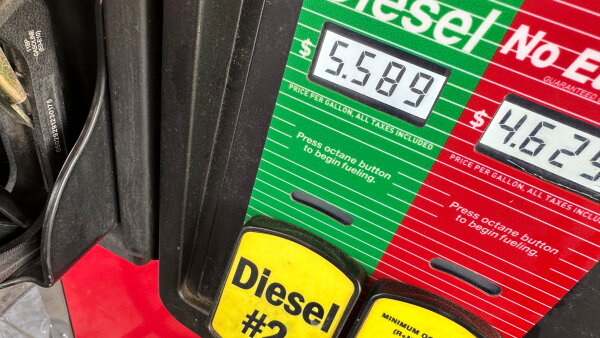
The cost of diesel fuel is breaking records left and right. The previous record was $5.85/gallon. A few weeks ago, it hit $6.53/gallon. If I drove a diesel car, I might stay home.
At the Indicator, we’ve been watching whether President Trump would try to lower prices by banning exports of diesel fuel. He did not do that, though he did make diesel cheaper by expanding the use of tax-exempt diesel for highway vehicles through the end of the year. Still, I wondered why diesel prices are so consistently higher than regular gas.
We have a weekly newsletter at The Indicator where we track what’s driving the economy and how it affects your life. It was the right platform to ask: Is diesel fuel inherently more expensive than regular gas?
The answer: NO! Before 2004, diesel was actually cheaper. But step by step, the price got higher.
The first domino to fall: taxes. In 1993, the federal excise tax on diesel increased to 24.4 cents, 6 cents more than the regular gas tax.
Soon after, demand for diesel began to skyrocket. China and India were ramping up industrialization, agriculture and new infrastructure to new levels. The world saw diesel vehicles take off.
In the U.S., the last major domino to fall was air quality standards. In 2006, diesel fuel needed to have less sulfur, which required new — and more expensive — refining and distribution methods.
One lesson that stuck with me is how diesel is essential for the modern economy. It’s needed in shipping, long-haul trucking, mining and backup generators. Whether the cost is high or low, the demand is there. Regular gasoline? Demand is a little squishier.
You can check out the full segment here. And if you liked this story, subscribe to The Indicator newsletter here! |