And an urgent plea from Turkey's COP31 president.

See how companies and governments are responding to climate change and social challenges. Subscribe to Reuters.com for $1/week.


Sustainable Switch

Sustainable Switch

Climate Focus

By Sharon Kimathi, Energy and ESG Editor, Reuters Digital

Hello!

Thank you to all of you Switchies for sending such positive feedback and interacting with yesterday’s newsletter on data centres.

Click here to revisit part one of my deep dive on whether data centres can be built sustainably and stay tuned for part two next Thursday.

Today’s newsletter is all about climate policy and whether our planet is headed in the right direction.

It will move from disputes in the world’s top climate body about releasing the latest scientific review on a warming planet to an exploration of how one country’s politics can change the tide. There will also be an urgent plea from this year’s COP31 hosts. Tensions are high, and so is the world’s temperature.

Let’s start with the disputes from the world’s leading authority on climate change, where members of the Intergovernmental Panel on Climate Change (IPCC) still can’t agree on a timeline to publish its next review of the latest science on the warming planet after nearly three years of debate.

The impasse over publication dates could leave countries to decide the next phase of action without consensus on critical issues – including the extent to which some global warming might be reversible – according to interviews ‌with more than a dozen current and former IPCC scientists, government negotiators and meeting observers. Click here to read the full exclusive story.

Over in Brazil, the tight presidential election has some investors, executives and climate-focused businesses worried that a government led by conservative Senator Flavio Bolsonaro may not maintain the policies underpinning its emerging green economy.

Bolsonaro topped the first-round vote on the weekend with a stronger-than-expected performance, ‌after a campaign in which he promised to strengthen the regulated carbon market but did not criticize the climate track record of his father, former President Jair Bolsonaro, under whom deforestation soared.

Additionally, a study by climate advocacy group Observatorio do Clima found that Brazil's next Congress is likely to pose a greater obstacle to legislation to protect the environment after elections this month. The study found that almost 70% of elected lawmakers have little or no commitment to environmental issues.

Meanwhile, Murat Kurum, Turkey's climate minister and president of this year's UN COP conference, COP31, urged delegates at a pre-COP meeting in Fiji to focus on restricting global warming, stating that the "1.5-degree goal ... is a matter of survival".

"Today is a time where everyone is running away from responsibility," Kurum told a press conference. "We do not have a single minute, a single day to lose."

He said countries needed to protect oceans and get better access to funding for resilience projects. The UN Environment Programme has said holding warming beneath 1.5 degrees Celsius (2.7 degrees Fahrenheit) above pre-industrial levels is impossible in the near term but could be achieved ‌over time ⁠with emissions reduction. 


Climate Buzz

1. Tropical Storm Simon expected to become a major category-4 hurricane

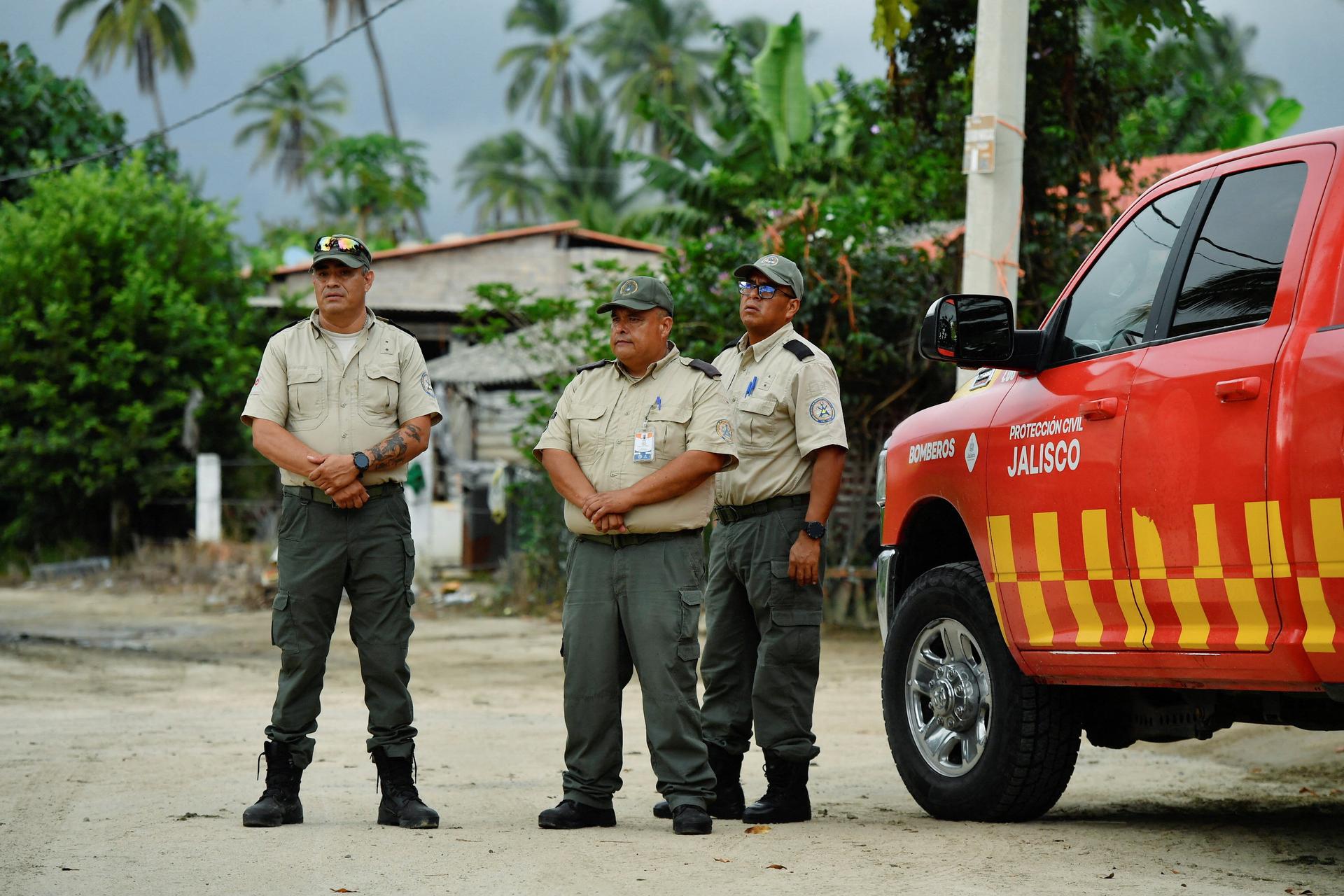
Storm Simon is forecast to rapidly strengthen into a "very dangerous" category-4 hurricane before striking Mexico's Pacific coast this weekend, according to the US National Hurricane Center. It said Simon was likely to become a ⁠hurricane with destructive winds of 65 mph (100 kph) and life-threatening flooding.


The Civil Protection of Jalisco members carry out an evacuation of residents ahead of Tropical Storm Simon in Cihuatlan, Jalisco state, Mexico. REUTERS/Luis Fernando Toris Perez

2. Is it here yet? The US, China and Japan’s El Niño weather predictions 

The US Climate Prediction Center said El Niño continues to strengthen, with a greater than 83% chance that a strong-to-very strong El Niño is likely through January to March 2027. China's National Climate Centre said that a super El Niño event officially formed last month, after rapid warming of the Pacific Ocean from May to September.

Meanwhile, Japan's weather bureau said that the El Niño phenomenon has strengthened to ‌its strongest on record since September, ⁠adding that there was a 100% chance the conditions will continue into the Northern hemisphere by winter.

 Click here to revisit the Reuters El Niño explainer.

3. Asia races to speed up renewables in response to Iran war

Members of the Association ‌of Southeast ⁠Asian Nations have pledged to increase the share of clean energy in power generation in response to energy supply risks laid bare by the Iran war. Renewables make up 14.1% of primary energy, well short of a 2025 target ⁠of 25%, while green power has made up 33.7% of total capacity since 2020 against a 2025 target of 35%, according to a recent ASEAN energy outlook.

4. US sued over plan to blast Utah canyon inscribed by Black American ‘Buffalo Soldiers’

Conservation groups sued the US Bureau of Land Management over plans to replace a winding dirt ‌track with a paved road through Gate Canyon in eastern Utah. The blast would destroy 100-foot (30-metre) cliffs covered in historic inscriptions near world-renowned Native rock art. There are also 19th-century inscriptions by Black American "Buffalo Soldiers" in the US Army and European pioneers, according to the lawsuit. Click here for the full Reuters report.

5. Thousands of European wind and solar power systems exposed online

Thousands of wind and solar power administrative systems in Europe are exposed to the ‌internet, potentially giving attackers access to interfaces that can stop turbines and raising the risk of sabotage, Dutch researchers warned. The findings come amid concerns about Europe's critical infrastructure, which has faced suspected sabotage and cyberattacks frequently attributed by Western governments to Russia since its invasion of Ukraine in 2022. Russia denies any involvement.


What to Watch

 
Play 
 

From the suburbs of Virginia to the outskirts of Amsterdam and Dublin, people around the world have increasingly rebelled against the spread of artificial intelligence data centres due to concerns around noise, surging electricity consumption, water stress and industrialization of residential neighbourhoods.

The same tale is unfolding in India where major tech giants Amazon, Google and Meta are planning to build their data centres in Mumbai. Click here for the full Reuters story and video.


Climate Commentary

  • Can the tyre industry clean up its rubber supply chains? Click here to find out if it can in a piece by Ethical Corp Magazine contributor Robin Hicks.
  • Record renewables output in the US has helped carry much of the extra load from data centres and air conditioning, according to Reuters global energy transition columnist Gavin Maguire. Click here to read more about the United States’ clean energy surge.